

1949. Oil, 646.0 x 1070.0 cm. National Gallery of Modern Art.

§ 1Catalogue data

- 646.0 x 1070.0 cm


Detta konstverk är upphovsrättsligt skyddat
Konstverket som visas på denna sida skyddas av upphovsrättslagen, vilket innebär att vi inte lagligt kan skapa eller sälja en identisk reproduktion. Detta skydd upprätthålls genom internationella avtal såsom den Bernkonventionen och genom nationella lagar, inklusive de som fastställs av Amerikansk upphovsrättslag – Titel 17. Alla rättigheter förbehållna. Återgivning av konstverk är förbjuden utan skriftligt tillstånd från WahooArt.
Som ett respektfullt och lagligt alternativ erbjuder vi skräddarsydda, handmålade konstverk inspirerade av originalet. Våra skickliga och professionella konstnärer studerar noggrant originalets stil, stämning och konstnärliga essens för att skapa ett nytt, unikt verk som väcker samma känsla – samtidigt som det förblir en originell skapelse i egen rätt.
Denna metod följer fullt ut upphovsrättsliga regler eftersom den inte innebär kopiering eller duplicering av det skyddade konstverket. Istället är det en kreativ nytolkning – en ny målning som är influerad av originalet men inte identisk med det.
 Läs mer
§ 2Abstract
Beskrivning av samlarobjekt
Experience the captivating inner conflict of Binodini, a striking portrait by Ramkinkar Baij (1949), whose textured oil work invites you to discover its depth.
Konstnärens biografi
Ramkinkar Baij (1906-1980) was a pioneering Indian sculptor & painter, considered the father of modern Indian sculpture. Known for contextual modernism and blending Western & Indian styles in works like 'Santal Family'. Explore his legacy at AllPaintingsStore
§ 3Commentary
The Enigma in White: Exploring Ramkinkar Baij's 'Binodini'
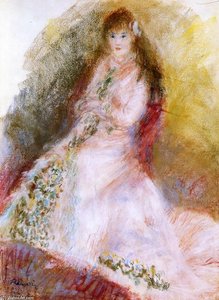
To stand before Binodini is not merely to observe a portrait; it is to step into a moment of profound, suspended contemplation. This masterful work by Ramkinkar Baij captures the essence of an inner life—a beautiful young woman from Manipur’s aristocratic lineage, caught in what seems to be a delicate confluence of thought and emotion. The painting transcends simple representation, offering instead a window into the complexities of the human spirit. Baij, whose genius was rooted in his ability to perceive the soul beneath the surface, has gifted us an image that resonates with both timeless elegance and modern psychological depth.
Technique and Tactility: A Masterclass in Medium
What immediately draws the eye is the remarkable texture achieved by Baij. Executed in oil upon gunny cloth—a material choice that speaks to his daring experimentation—the surface itself becomes a participant in the artwork’s narrative. He has not simply painted; he has built up layers of pigment, creating a palpable, almost sculptural quality to the paint. This thick application gives the slim figure an undeniable volume, making the portrait feel intensely present. The artist's handling is both tender and robust, allowing the viewer to sense the physical weight of the subject while simultaneously feeling the lightness of her dilemma.
Symbolism and the Gaze: Capturing Inner Conflict
The subject’s gaze is perhaps the most arresting element. Her eyes, wide and directed straight out of the canvas, meet the viewer's scrutiny with an unnerving directness. It is a look that seems to ask questions without uttering a single word. The flowing white dress enhances this sense of ethereal vulnerability, contrasting beautifully with the warm, yellowish embrace of the background. Noticeable details, such as the books placed near her—one in the lower left and another toward the upper right—suggest themes of knowledge, study, or perhaps conflicting narratives vying for her attention. These elements anchor the emotional ambiguity, suggesting that her internal conflict is intellectual as much as it is emotional.
Historical Resonance and Enduring Appeal
Painted in 1949, Binodini stands at a pivotal moment in Indian modern art. Ramkinkar Baij was not content with tradition; he was forging a new visual language for India. This portrait exemplifies his lifelong fascination with capturing the subject’s inner self rather than merely documenting her outward appearance. For collectors and designers alike, this piece offers more than mere decoration; it is an heirloom of artistic revolution. Reproducing this work allows one to bring home not just a painting, but a tangible connection to the pioneering spirit of modern Indian art.
Frågor och svar
Varför är upphovsrättsläget för "Binodini" som det är?
"Binodini" av Ramkinkar Baij är fortfarande skyddat av upphovsrätt. Upphovsrätten löper från konstnärens dödsår, vilket var 1980.
Hur förhåller sig "Binodini" till Ramkinkar Baijs samlade konstnärskap?
"Binodini" delar med Ramkinkar Baijs övriga verk sin Modern Indian Art-stil och de återkommande temana: santiniketan art school influence, study of inner self, manipur aristocratic life depiction, exploration of human emotion.
Hur samverkar kontrast och harmoni i "Binodini"?
I "Binodini" förenas en Gentle kontrast med en Unified Palette harmoni.




 Byt till tryck


 För konstverk eller reproduktioner som är större än 105 cm (cirka 41 tum) på någon sida, levereras ramen som ett isärplockat kit. Denna metod säkerställer en trygg leverans och förhindrar skador under transport.


