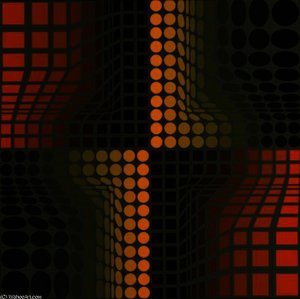
Acrylic On Canvas.

§ 1Catalogue data


Detta konstverk är upphovsrättsligt skyddat
Konstverket som visas på denna sida skyddas av upphovsrättslagen, vilket innebär att vi inte lagligt kan skapa eller sälja en identisk reproduktion. Detta skydd upprätthålls genom internationella avtal såsom den Bernkonventionen och genom nationella lagar, inklusive de som fastställs av Amerikansk upphovsrättslag – Titel 17. Alla rättigheter förbehållna. Återgivning av konstverk är förbjuden utan skriftligt tillstånd från WahooArt.
Som ett respektfullt och lagligt alternativ erbjuder vi skräddarsydda, handmålade konstverk inspirerade av originalet. Våra skickliga och professionella konstnärer studerar noggrant originalets stil, stämning och konstnärliga essens för att skapa ett nytt, unikt verk som väcker samma känsla – samtidigt som det förblir en originell skapelse i egen rätt.
Denna metod följer fullt ut upphovsrättsliga regler eftersom den inte innebär kopiering eller duplicering av det skyddade konstverket. Istället är det en kreativ nytolkning – en ny målning som är influerad av originalet men inte identisk med det.
 Läs mer
§ 2Abstract
Beskrivning av samlarobjekt
Vibrant abstract composition by Victor Vasarely, a key figure in Op Art, showcases dynamic geometric shapes and bold colors – yellow, orange, blue, and purple. Explore this captivating kinetic artwork and bring its visual energy into your space.
Konstnärens biografi
The Swedish meta description is optimized for search engines and aims to be engaging while adhering to the character limit.
§ 3Commentary
A Symphony of Geometric Perception: Exploring Victor Vasarely’s ‘Abstract Composition 6’
Victor Vasarely's “Abstract Composition 6” is more than just a colorful painting; it’s an invitation to reconsider the very nature of visual perception. Created by one of the foremost figures in Op Art, this vibrant work embodies the artist’s lifelong fascination with geometry and its impact on how we experience the world. Painted primarily in a dynamic palette of yellows, oranges, blues, and purples, the composition immediately draws the eye into a mesmerizing dance of shapes and patterns – triangles, squares, circles, and more – meticulously arranged to create an illusion of movement and depth. This isn't simply decorative art; it’s a rigorously constructed exploration of optical illusions, reflecting Vasarely’s deep engagement with scientific principles and his desire to translate mathematical concepts into tangible artistic forms.
The Genesis of Op Art: Bauhaus Roots and Kinetic Vision
Born in 1906 in Pécs, Croatia (then part of Austria-Hungary), Vasarely’s artistic trajectory began unexpectedly. Initially pursuing a medical degree, he abandoned this path in 1927 to embrace painting, ultimately finding his true calling within the burgeoning movement of Op Art – Optical Art. This pivotal shift was profoundly influenced by his studies at Sándor Bortnyik’s “Műhely” workshop, a school deeply rooted in the principles of functional design and geometric abstraction championed by the Bauhaus. The Bauhaus, with its emphasis on reducing form to its essential elements and exploring the relationship between art and industry, provided Vasarely with the theoretical framework for his groundbreaking work. He wasn't merely creating abstract images; he was attempting to capture the *effect* of visual perception – the way our eyes and brains interpret shapes and colors – a concept that would become central to Op Art’s success.
Technique and Illusion: A Masterclass in Visual Deception
Vasarely's technique was remarkably precise, relying on meticulous layering and the careful manipulation of color and scale. He employed a method he termed “static illusion,” creating the impression of movement through precisely controlled geometric forms. The seemingly random arrangement of shapes is, in fact, a carefully calculated system designed to trick the eye. Each element is rendered with exceptional clarity, contributing to the overall sense of depth and dynamism. The use of contrasting colors further enhances this effect, guiding the viewer’s gaze across the canvas and reinforcing the illusion of movement. This technique demanded not just artistic skill but also a deep understanding of optics and visual psychology – qualities that Vasarely possessed in abundance.
Symbolism and Emotional Resonance: Beyond Pure Geometry
While rooted in geometric abstraction, “Abstract Composition 6” possesses an undeniable emotional resonance. The vibrant colors evoke feelings of energy, excitement, and perhaps even a sense of wonder. Vasarely’s work isn't about representing the external world; it’s about exploring the internal landscape of perception itself. The dynamic composition can be interpreted as a reflection of the constant flux and change inherent in our experience – a visual representation of the ever-shifting patterns of thought and emotion. The piece invites contemplation on how we actively construct our reality through our sensory perceptions, making it a powerful statement about the subjective nature of vision.
Frågor och svar
Använder "Abstract composition 6" av Victor Vasarely starka kontraster eller mjuka harmonier?
Färgkompositionen i "Abstract composition 6" av Victor Vasarely förenar en Statement kontrast med en Discordant Palette harmoni.
Vilket motiv och vilken atmosfär förenar "Abstract composition 6" av Victor Vasarely?
"Abstract composition 6" av Victor Vasarely skildrar abstract art, geometric shapes, color field, op art, victor vasarely, visual perception, dynamic design i en Calm stämning. Motiv och atmosfär beskriver tillsammans verket.
Vilken är den rekommenderade tryckstorleken för "Abstract composition 6" av Victor Vasarely?
Rekommenderad tryckstorlek för "Abstract composition 6" av Victor Vasarely är Large.


 Byt till tryck


 För konstverk eller reproduktioner som är större än 105 cm (cirka 41 tum) på någon sida, levereras ramen som ett isärplockat kit. Denna metod säkerställer en trygg leverans och förhindrar skador under transport.