


 Önizle
 Gönder
 Paylaş
 Detaylar
 Rehber

 Dosyayı İndir
 Benzerleri
 X-Işını
 Slayt Gösterisi
 İstatistikler
Nemesis


 Devamını Oku
Giclée / Sanat Baskısı
Hızlı üretim ve esnek bitiş seçenekleriyle müze kalitesinde giclée veya kanvas baskı. ( El Yapımı Tablo Satın Al Dijital Görsel Satışına Geç)




P118B ₺10

P118H ₺10

P118W ₺10

P438Z ₺10

P508JH ₺12

P508YH ₺12

P805H ₺10

P805Z ₺10

P919BZ ₺10

P919G ₺10

P919XJ ₺10

P959ZH ₺10

P968JZ ₺12

W106C ₺8

W218G ₺10

W218JH ₺8

W218Y ₺10

W307PJ ₺10

W316G ₺10

W316PJ ₺8

W316Y ₺10

W398PJ ₺8

W4111J ₺10

W500HY ₺15

W500JH ₺15

W692G ₺12

W849H ₺8

W940BG ₺15

W953PJ ₺8




Eserin orijinal oranlarıyla uyumlu, önceden belirlenmiş boyutlarımız arasından seçim yapın.

Çerçevenize veya duvarınıza uygun olması için ihtiyacınız olan genişlik ve yüksekliği yazın. Bir baskı yalnızca kesilebilir, görselden daha büyük hale getirilemez; bu nedenle farklı bir formdaki boyut seçimi, görselin bir kısmının kaybına neden olur. Herhangi bir baskı yapmadan önce onaylamanız için size bir dijital taslak gönderiyoruz. Bu sayfada gösterilen resim gerçek kesimi göstermez — bunu yalnızca taslak gösterir.
Dünya Çapında Teslimat (); standart 4/5 hafta yerine 2 haftada. (25 Ekim)

Dünya Çapında Ücretsiz Ekspres Kargo

Yüksek Kaliteli Keten Tuval

Tam Nakliye Sigortası

Gümrük Vergisi İadesi Garantisi

Gerçek Renk Uyumu Garantisi

100 Günlük İade Koşulları (Sadece Üretim Hatalı Ürünler İçin)

%100 Para İade Garantisi

Toplu Alım Avantajı
 Cam seçeneği yalnızca 110 cm altındaki boyutlar için mevcuttur.

Nemesis
Giclée / Sanat Baskısı
Baskı Boyutu
-


Toplam Fiyat
₺ 3131
The Haunting Majesty of “Nemesis”
Albrecht Dürer’s “Nemesis,” etched in stark black and white in 1502, isn't merely a depiction of a figure; it’s an experience. This engraving, now housed within the collections of esteemed museums worldwide, possesses a visceral power that transcends its technical execution. It’s a work steeped in Renaissance anxieties – a meditation on justice, divine retribution, and the precarious balance between earthly power and celestial judgment. The image immediately commands attention with its dramatic composition: a winged female figure, poised atop a swirling sphere, dominates the scene, her posture radiating both authority and sorrow. The sheer intensity of the monochrome palette amplifies the emotional weight, creating an atmosphere of profound contemplation.
Dürer’s masterful use of engraving technique is immediately apparent. The intricate detail, achieved through meticulously cut lines, reveals a remarkable understanding of light and shadow. Notice how he renders the texture of the woman's wings – not with smooth, idealized forms, but with a deliberate roughness that suggests both vulnerability and strength. The sphere beneath her feet isn’t simply a pedestal; it’s a dynamic vortex, hinting at the chaotic forces underlying order and stability. The precision of each line speaks to Dürer’s dedication to his craft, showcasing not just artistic skill, but also an almost obsessive attention to detail.
A Renaissance Symbolism of Justice
“Nemesis” is deeply rooted in the symbolic language of the Renaissance. The figure herself embodies Nemesis, the Greek goddess of retribution – a force that punishes wrongdoing and balances the scales of justice. Her wings are not those of an angel, but rather evoke the imagery of a storm cloud, suggesting the turbulent nature of divine judgment. The cup she holds is often interpreted as representing the chalice of sorrow, symbolizing the suffering inflicted upon humanity by this relentless pursuit of justice. The presence of the surrounding figures – two individuals at the bottom left and another near the top right – adds layers of complexity to the narrative. They could represent those awaiting judgment, or perhaps even Dürer himself contemplating his own role within this cosmic drama.
Interestingly, the image draws upon classical mythology but also incorporates elements of Christian iconography. The winged figure’s posture and bearing align with depictions of angels, while the overall theme of divine retribution echoes biblical narratives of punishment for sin. This blending of influences reflects the intellectual climate of the Renaissance – a period marked by a renewed interest in classical learning alongside a fervent embrace of Christian faith.
Historical Context and Dürer’s Artistic Journey
Created during a pivotal moment in Dürer's career, “Nemesis” exemplifies his evolving artistic style. Born in Nuremberg in 1471, Albrecht Dürer was a product of the thriving artisan city known for its goldsmithing and printing industries. His early training under Michael Wolgemut exposed him to the techniques of illuminated manuscripts and woodcut illustration, providing a solid foundation for his later innovations. “Nemesis” represents a shift towards greater independence and experimentation – a move away from purely decorative work toward more complex and conceptually driven imagery. The engraving’s meticulous detail and profound symbolism demonstrate Dürer's growing mastery of the medium and his ambition to create works that would resonate with viewers on both an aesthetic and intellectual level.
Dürer’s exploration of humanism, a dominant philosophical movement during the Renaissance, is also evident in “Nemesis.” The work prompts reflection on humanity's place within the universe, its relationship to divine authority, and the consequences of its actions. It’s a powerful reminder that even in an age of burgeoning scientific inquiry, the concepts of morality, justice, and the supernatural remained deeply ingrained in the collective consciousness.
A Timeless Masterpiece for Collectors and Designers
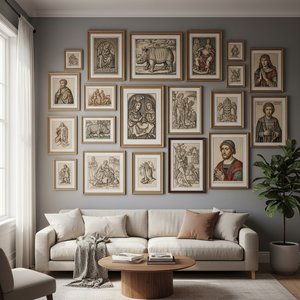
Reproductions of “Nemesis” offer a remarkable opportunity to bring this iconic image into any setting. The dramatic composition and evocative symbolism make it an ideal choice for galleries, studies, or even grand living rooms. The stark monochrome palette provides a sophisticated contrast against a wide range of interior design styles – from minimalist modern spaces to richly decorated historic homes. Whether you’re an art collector seeking a piece of Renaissance history or an interior designer searching for a statement artwork, “Nemesis” remains a timeless masterpiece that continues to captivate and inspire.
Soru ve Cevaplar
"Nemesis" eserini kim ve hangi yılda yarattı?
Albrecht Dürer, "Nemesis" adlı eseri 1502 yılında yaptı.
"Nemesis" eserinde kontrast ve uyum nasıl bir araya geliyor?
Albrecht Dürer imzalı "Nemesis" eserinin renk kompozisyonu, Bold bir kontrast ile Strong Color Unity bir uyumu bir araya getiriyor.
Albrecht Dürer imzalı "Nemesis" ne düzeyde bir kontrasta sahip?
Albrecht Dürer imzalı "Nemesis", açık ve koyu alanlar arasında Bold bir kontrast sergiliyor.
İlgili Eserler


Sanatçı Biyografisi
Nürnberg’in Kalbinden Yükselen Bir Deha: Albrecht Dürer'in Hayatı ve Sanat Yolculuğu
Albrecht Dürer, 15. yüzyılın sonu ve 16. yüzyılın başlarında Avrupa sanatını derinden etkileyen bir isimdir. Nürnberg’de, kuyumcu babası Albrecht Dürer the Elder’ın atölyesinde büyüyen genç Albrecht, hem zanaatkârlık geleneğini hem de sanata olan tutkusunu içinde taşıyordu. 1471 yılında doğan bu dahi, kısa sürede Nürnberg sanat sahnesinin ötesine geçerek Avrupa çapında tanınacak ve Rönesans’ın en önemli figürlerinden biri haline gelecekti. Babasının atölyesinde edindiği temel beceriler, onu genç yaşta Michael Wolgemut'un atölyesine giden bir yol açtı. Wolgemut’un yanında hem resim hem de ahşap baskı tekniklerini öğrenen Dürer, Nürnberg Kroniği gibi büyük projelerde çalışarak deneyim kazandı ve sanatsal yeteneğini geliştirdi. Bu dönemde ortaya çıkan ilk eserleri, özellikle gümüş kalemle yaptığı portreler, onun olağanüstü yeteneğinin erken bir göstergesiydi.İtalya’nın Cazibesi ve Sanatın Evrimi
Dürer'in sanatsal yolculuğu, İtalya seyahatiyle yeni bir boyut kazandı. 1494 yılında başlayan bu keşif yolculuğu, onu Rönesans sanatının kalbine götürdü. Floransa, Venedik ve Roma gibi şehirlerde Raphael, Giovanni Bellini ve Leonardo da Vinci gibi dönemin önde gelen sanatçıların eserlerini yakından görme fırsatı buldu. İtalyan sanatının klasik formları, uyumlu kompozisyonları ve ince sfumato tekniği Dürer'i derinden etkiledi. Ancak bu etkiye rağmen, Kuzey Avrupa’ya özgü detaylara gösterdiği özen ve sembolizm anlayışından vazgeçmedi. İtalya seyahatleri, onun sanatını daha da olgunlaştırdı ve hem teknik becerilerini geliştirmesine hem de sanatsal vizyonunu genişletmesine olanak sağladı. 1505-1507 yılları arasındaki ikinci İtalya seyahati, antik Roma kalıntılarını incelemesi ve insan anatomisi konusundaki bilgisini derinleştirmesi için bir fırsat oldu. Bu iki farklı sanat anlayışını harmanlayarak Dürer, kendine özgü ve benzersiz bir tarz yarattı.Çeşitli Ortamlarda Ustalık: Resim, Gravür ve Ahşap Baskı
Dürer, yalnızca ressam değil, aynı zamanda olağanüstü bir gravürcü ve ahşap baskı sanatçısıydı. Yağlı boya tabloları daha az sayıda olsa da, renk kullanımı ve insan psikolojisini yakalama yeteneği takdire şayandı. *Gül Çelenk Şöleni* gibi eserleri, Venedik etkilerini taşıyan canlı bir paletle dikkat çekiyor. Ancak Dürer'in gerçek ustalığı, baskı tekniklerinde kendini gösteriyordu. Ahşap baskılarla karmaşık anlatıları ve derin duyguları aktarırken, gravürler ise eşsiz bir ayrıntı ve hassasiyet sunuyordu. *Vahiy Dizisi* (1498), ahşap baskı tekniğinin sınırlarını zorlayan bir başyapıt olarak kabul edilirken, *Melankoli I* (1514) ve *Aziz Hieronymus'un Çalışması* (1514) gibi gravürleri, sembolizmle dolu karmaşık kompozisyonları ve olağanüstü teknik becerisiyle sanat tarihine adını altın harflerle yazdırdı. Dürer, sadece bir ressam değil, aynı zamanda baskı sanatının sınırlarını genişleten bir yenilikçiydi.Teorisyen ve Yenilikçi: Albrecht Dürer'in Mirası
Dürer, sanatsal yeteneğinin yanı sıra, bir teorisyen ve düşünür olarak da öne çıktı. Sanatın altında yatan matematiksel prensipleri anlamaya çalıştı ve insan oranları üzerine yaptığı çalışmalarla sanat pratiğine bilimsel bir yaklaşım getirdi. *İnsan Oranları Üzerine Dört Kitap* (1528) adlı eseri, dönemin sanatçıları için çığır açıcı nitelikteydi. Bu eser, yalnızca akademik bir çalışma değil, aynı zamanda sanatçıların statüsünü yükseltmeyi amaçlayan bir manifesto gibiydi. Dürer'in Kuzey Avrupa geleneklerini İtalyan Rönesansı idealleriyle birleştirmesi, sanat dünyasında yeni bir sentez yarattı. Onun teknik ustalığı, yenilikçi ruhu ve derin vizyonu, nesilden nesile sanatçıları ilhamlandırmaya devam ediyor.Etkiler ve Kalıcı Miras
- Michael Wolgemut: Dürer'in ilk hocası, resim ve ahşap baskı teknikleri konusunda temel beceriler kazandırdı.
- Leonardo da Vinci: Anatomiyi, perspektifi ve sfumato tekniğini keşfetmesinde etkili oldu.
- Raphael: Kompozisyon uyumu ve idealize edilmiş formlar konusunda ilham kaynağı oldu.
- Giovanni Bellini: Renk kullanımı ve Venedik resim gelenekleri hakkında bilgi edindi.

Albrecht Dürer
1471 - 1528 , İtalya
Kısa Bilgiler
- Artistic Movement Or Style: Geç Gotik, Rönesans
- Artists Or Movements Influenced By This Artist: ['Kuzey Rönesansı']
- Artists Who Influenced This Artist:
- Leonardo da Vinci
- Raphael
- Giovanni Bellini
- Date Of Birth: 21 Mayıs 1471
- Date Of Death: 6 Nisan 1528
- Full Name: Albrecht Dürer
- Nationality: Alman
- Notable Artworks:
- Apocalypse Serisi
- Melankoli I
- Aziz Hieronymus'un Çalışması
- Place Of Birth: Nürnberg, Almanya
İlgili Yazılar
Albrecht Dürer's Masterpieces: 25 Iconic Artworks for Your Home | AllPaintingsStore
Explore 25 iconic artworks by Albrecht Dürer, a master of the German Renaissance. Discover the stories behind Melencolia I, Knight Death and Devil & more. Find museum-quality art reproductions for your home at AllPaintingsStore.com.

British Müzesi'nin En İkonik 25 Eseri: Sanat Tarihine Yolculuk
British Müzesi'nin en değerli 25 eserini keşfedin! Leonardo da Vinci, Van Gogh ve daha fazlasının hikayeleriyle sanat tarihine yolculuk yapın. Evinizi müze kalitesinde tablolarla süsleyin. AllPaintingsStore.com’da tüm şaheserleri inceleyin.

Engraving's Golden Age: 10 Masterpieces That Redefined Art | AllPaintingsStore
Journey through art history with our Top 10 Legendary Engravings! Explore masterpieces by Dürer, Rembrandt & Goya. Discover the stories behind these iconic prints and find museum-quality reproductions for your home at AllPaintingsStore.com.

White on Canvas: 10 Masterpieces & Timeless Elegance for Your Home Decor
Explore 10 iconic white paintings by Monet, Whistler & Rothko! Discover the stories behind these serene masterpieces and their impact on art history. Find museum-quality reproductions for your home decor at .

Albrecht Dürer: A Renaissance Master's Legacy of Innovation and Self-Portraiture
Explore the life & art of Albrecht Dürer, a pivotal German Renaissance master. Discover his groundbreaking printmaking techniques, iconic self-portraits, and lasting influence on Western art history. A deep dive into innovation & symbolism.


