Egon Schiele'nin Hayatı
Egon Schiele'nin yaşamının ilk yılları, Aşağı Avusturya'nın Tulln şehriyle şekillenir. 12 Haziran 1890'da dünyaya gelen sanatçı, Avusturya-Macaristan İmparatorluğu'nun katı yapılarıyla tanımlanan bir dünyaya adım atar. Babası Adolf Schiele, Avusturya Federal Demiryolları'nda istasyon şefi olarak görev yaparken; annesi Marie, kızlık soyadı Soukup ile tanınır. Aile içinde Egon; kız kardeşleri Elvira, Melanie ve Gertrude ile birlikte büyür.
Bu ev içindeki huzurlu yaşam, çok erken yaşlarda sarsılır. Hastalığın gölgesi evin içine çökerken, genç sanatçının ruhunda silinmez izler bırakır. Yaşanan bu kişisel yıkımlar sadece gelip geçici birer anı olarak kalmaz; gelecekteki eserlerinin en derinlerine, iliklerine kadar işler. Ölümün ve faniliğin farkındalığıyla dünyayı, Avusturya Ekspresyonizmi'ndeki yerini belirleyecek olan o hassas duyarlılıkla algılamaya başlar. Onun varoluşu, içsel gerilimi tuvalin yüzeyine aktarma çabasıyla dolu bir mücadeleye dönüşür.
Sanatçının izlediği yol, onu değişen bir Avrupa manzarasının tam merkezine sürükler. Geleneksel akademik beklentiler ile ham, psikolojik bir hakikate duyulan o yükselen ihtiyaç arasındaki gerilimde yolunu bulmaya çalışır. Egon Schiele'nin hayatı, insanlık durumuyla kurulan yoğun ve çoğu zaman rahatsız edici yüzleşmelerden ibarettir. O, dünyayı gözün gördüğü gibi tasvir etmeyi değil, sinir sisteminin içinde nasıl titreştiğini resmetmeyi amaçlar.
Erken Yaşam, Aile ve Eğitim
Schiele'nin gençlik yıllarındaki o kırılgan denge, 1904 yılında paramparça olur. Bir istasyon şefi olan babası Adolf Schiele, sifiliz hastalığına yenik düşer. Trieste'deki bir balayı sırasında kapılan bu hastalık, aileyi yoksulluğa sürüklerken genç sanatçının ruhunda babasının zihinsel karmaşasının ve öfkesinin karanlık gölgesini bırakır. Egon; kız kardeşleri Elvira, Melanie ve Gertrude ile birlikte, eniştesi Leopold Czihaczek'in himayesinde büyür. Bu çalkantılı yıllarda bile, trenlere olan tutkusu hiç sönmez; bu motif, ilerleyen yıllarda eserlerinde kendini yeniden gösterecek bir imge olarak kalbinde yer eder.
Resmi eğitimi, özel ders veren Ludwig Karl Strauch'un rehberliğinde başlar. 1906 yılına gelindiğinde Schiele, Güzel Sanatlar Akademisi'nde (Akademie der bildenden Künste) eğitim görmek üzere Viyana'ya taşınır. Ancak buradaki atmosfer oldukça katı ve kısıtlayıcıdır. Kendisini, Profesör Christian Griepenkerl'in aşırı muhafazakâr öğretileriyle giderek daha fazla çatışırken bulur. Bu sürtüşme, bir noktadan sonra katlanılamaz bir hal alır. Üç yıl boyunca bu katı akademik geleneklerin içinde yolunu bulmaya çalışan Schiele, kendi özgün yolunu çizmek adına Akademiyi tamamen terk eder.
Her şey, Gustav Klimt ile tanışmasıyla köklü bir değişime uğrar. Köklü ve saygın sanatçı, genç ressam için bir akıl hocasına dönüşür; ona modeller sağlar ve onu Viyana Sezession çevreleriyle tanıştırır. Bu bağ, geleneklere karşı mücadele eden bir öğrenciden, yükselen avangart hareketin merkezi figürlerinden birine dönüşümün dönüm noktası olur.
Viyana'da Sanatsal Gelişim
Viyana, Egon Schiele'nin yaratıcı sürtünmelerinin merkez üssü haline gelir. Şehrin sanatsal çevrelerinde mekik dokuyan sanatçı, nihayet Gustav Klimt ile tanışır. Bu karşılaşma, sanatçının izlediği yolda çok önemli bir kırılma noktasını temsil eder. Mentorunun etkisini bünyesine katarken, Schiele sadece Secession'ın dekoratif desenlerini kopyalamakla yetinmez; aksine, süslemeden arınmaya başlar. O, çok daha içsel ve ham bir hakikatin peşine düşer. 1909 yılına gelindiğinde, Neues Wiener Kunstgruppe ve Neukunstgruppe'un kurucu üyeleri arasında yer alarak yerleşik düzene aktif bir şekilde meydan okumaktadır. Bu hareketler, onun gelenekle olan bağlarını koparışının birer işaretidir.
Sanatçının şehirdeki varlığı, kentsel merkezler ile daha sakin dış mahalleler arasında gidip gelen huzursuz bir devinimle karakterize edilir. Viyana, Krems, Klosterneuburg, Neulengbach ve Prag arasında mekik dokuyarak eserlerini üretir. Bu coğrafi yayılım, aslında psikolojik bir genişlemenin yansımasıdır. Sanatı, ilk eğitim yıllarının biçimsel kısıtlamalarından sıyrılarak, insanlık durumunun çıplak ve korumasız bir keşfine doğru evrilir. Dönemin ruhundaki o yoğun gerilim, sanatçının gelişen eskizlerinde ve kompozisyonlarında tüm çıplaklığıyla görünür hale gelir.
Teknik ve Ekspresyonist Üslup
Çizgi, Egon Schiele’nin vizyonunun temel motorudur. Onun fırçası bir formu yalnızca dış hatlarıyla belirlemekle kalmaz; çizgi, sinirli ve huzursuz bir enerjiyle titreşir. Psikolojik gerilimi haritalandırmak için dışavurumcu hatlar kullanan sanatçı, bu yaklaşımıyla sıklıkla bükülmüş pozlar ve çarpıtılmış vücut formları yaratır. Figürler uzatılmış bir yapıda görünür; uzuvlar, bir huzursuzluk hissi uyandırmak amacıyla doğal oranların ötesine doğru gerilir. Bu, anatomik bir mükemmellik arayışı değil, aksine öznenin içsel durumunu gün yüzüne çıkarma çabasıdır. Ten renkleri genellikle zayıflamış veya hastalıklı bir tonda görünerek, kırılganlık ve fiziksel savunmasızlık hissini pekiştirir.
Teknik yaklaşımı kullanılan malzemeye göre değişiklik gösterse de, yarattığı yoğunluk her zaman sabittir. Suluboya çalışmalarında, derinlik ve ruh hali yaratmak için gevşek renk yıkamalarından yararlanır; izolasyon hissini artırmak için kağıdın büyük bir kısmını boş bırakır. Tuval üzerinde yağlı boya ile çalışırken ise fırça darbeleri, çizimlerinde rastladığımız o keskin ve acil dürtüselliği taşır. İki boyutlu düzlemin ötesinde, insan varlığının ağırlığını yakalamak için kil ve alçı kullanarak heykel yoluyla da formu keşfetmiştir.
Temel Eserler ve Konu Seçimi
Tuval, Egon Schiele için adeta psikolojik bir kazı alanına dönüşür. Sanatçı; ölümün, cinselliğin, kaygının ve yalnızlığın ağır varlığıyla sarsılmaz bir dürüstlükle yüzleşir. 1915 yılında ortaya koyduğu Ölüm ve Genç Kız (Death and the Maiden), ölümlülüğün erotizmle kesiştiği çarpıcı bir eserdir. Figürler, sanatçının vizyonunu tanımlayan içsel çatışmaları yansıtacak şekilde gergin bir halde var olurlar. Egon Schiele, bu görünmez ruhsal durumları haritalandırmak için sık sık insan formuna geri döner ve bedeni, varoluşun karmaşıklıklarını taşıyan bir kap olarak kullanır.
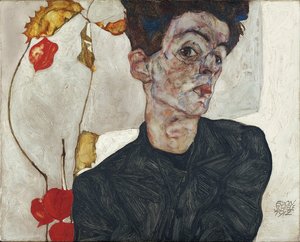
Otoportre çalışmak, sanatçı için sürekli bir içsel gözlem yöntemi işlevi görür. Kusursuz veya parlatılmış bir imaj sunmak yerine, genellikle bükülmüş veya zayıflamış halleriyle kırılgan bir benliği ortaya çıkarır. Physalis ile Otoportre eserinde, Physalis bitkisini tekrarlanan bir motif olarak kullanır. Hassas ve kağıdımsı kabuğuyla bu bitki, geçiciliği ve hayatın kırılganlığını simgeler. Bu botanik unsur, sanatçının çürüme ve insanlık durumunun uçucu doğası üzerine olan saplantılı düşüncelerini temellendirir.
Sanatçının en mahrem bağları da kompozisyonlarında kendine yer bulur. 1915 yılında, eşini kendi özgün dışavurumcu diliyle betimlediği Edith Schiele Portresi adlı eseri resmeder. Konuları nadiren durağandır; dönemin değişen sosyal ve psikolojik manzaralarını yansıtan sinirli bir enerjiyle nabız gibi atarlar. Aşağıdaki eserler, bu temaların keşfinde önemli dönüm noktalarını temsil eder:
- Ölüm ve Genç Kız (1915)
- Physalis ile Otoportre
- Edith Schiele Portresi (1915)
Son Yıllar ve Ölüm
Birinci Dünya Savaşı yaklaşırken, Schiele'nin hayatının manzarası köklü bir değişime uğrar. Edith Harms ile evlenmesi, sanatçının yaşamında önemli bir kişisel dönüm noktasını temsil eder. Ancak evliliğin getirdiği huzur, savaşın amansız talepleriyle kısa sürede kesintiye uğrar. Askerlik hizmetine çağrılan sanatçı, kendisini savaşın yarattığı o büyük kaosun tam ortasında bulur.
Son, ani ve biyolojik bir şiddetle gelir. 1918 yılında, İspanyol gribinin yarattığı pandemi Viyana sokaklarını kasıp kavururken, virüs Schiele'yi henüz 28 yaşındayken aramızdan ayırır. Sanatçı, 31 Ekim 1918 tarihinde hayata gözlerini yumar. Bu veda, aynı hastalıktan hayatını kaybeden eşi Edith'in ölümünden kısa bir süre sonra gerçekleşir. Egon Schiele'nin yaşamı, çökmekte olan bir dünyanın gerilimini ve sancılarını ölümsüzleştiren devasa bir sanat mirası bırakarak aniden sona erer.
Miras ve Sanatsal Etki
Egon Schiele, 20. yüzyılın başlarında Avusturya Ekspresyonizmi'nin öncü figürlerinden biri olarak yükselir. Secession hareketinin o dekoratif altın varaklı dünyasından koparak insan formunun daha içsel ve psikolojik bir keşfine yönelmesi, figüratif resmin seyrini kökten değiştirmiştir. O, yüzeydeki süslemleri bir kenara itip sinir sistemini haritalandırmak adına, kaygının ve arzunun titremelerini yakalamak için keskin, huzursuz çizgiler kullanmıştır. İdealize edilmiş güzellik yerine içsel manzaraya odaklanması, onu döneminin en önemli figüratif ressamlarından biri haline getirmiştir.
Eserlerinin etkisi Viyana sınırlarının çok ötesine uzanır. Sanatın sonraki nesilleri, özellikle insan psişesinin daha karanlık ve karmaşık katmanlarına ilgi duyanlar, onun radikal dürüstlüğünde kendilerine bir yol gösterici bulurlar. Kişisel travmaları ve varoluşsal gerilimi evrensel bir görsel dile dönüştürme yeteneği, modern sanat söylemindeki yerini sarsılmaz kılar. Bugün tabloları, kendi döneminin psikolojik dönüşümlerinin vazgeçilmez kayıtları olarak dünyanın dört bir yanındaki önemli müze koleksiyonlarında korunmaktadır.
- Self-Portrait with Physalis
- Couple Embracing
- Field Landscape (Kreuzberg near Krumau)
- Death and the Maiden
Eserleri Bugün Nerede Görebilirsiniz?
Egon Schiele’nin sanat mirasının ağırlığı, en çok Viyana’nın sokaklarında hissedilir. Leopold Müzesi, sanatçının eskizlerindeki ve tablolarındaki o ham enerjiyi koruyarak, eserlerinin çok büyük bir kısmına ev sahipliği yapar. Hemen yakınlardaki Österreichische Galerie Belvedere ise, Death and the Maiden (1915) gibi çok önemli tuvalleri bünyesinde barındırır. Şehrin kültürel dokusu, sanatçının külliyatından vazgeçilmez parçalar sunan Kunsthistorisches Museum ve Albertina aracılığıyla onun mirasını korumaya devam etmektedir.
Avusturya'nın başkentinin ötesinde, Çek Cumhuriyeti'nin Český Krumlov kentindeki Egon Schiele Sanat Merkezi, sanatçının dünyasına adanmış özel bir alan sunar. Bu müze, suluboyalar ve mürekkep çizimlerini içeren kalıcı koleksiyonuyla onun sanatsal evrimini izleyiciye aktarır. Ziyaretçiler, ekspresyonist üslubunun gelişimine odaklanan bu mekanda, Schiele'nin çizgilerindeki o kendine has ve sarsıcı yoğunlukla yüzleşme fırsatı bulurlar.
- Death and the Maiden (1915)
- Self-Portrait with Physalis
- Couple Embracing
- The Family


 Tümünü Gör


 Baskı Satışına Geç


 Herhangi bir kenarı 105 cm'den (yaklaşık 41 inç) büyük olan sanat eserleri veya reprodüksiyonlar için çerçeve, demonte edilmiş bir kit halinde gönderilecektir. Bu yöntem, güvenli teslimat sağlar ve taşıma sırasında oluşabilecek hasarları önler.


