Para İadesi Garantisi · 100 gün Dünya Çapında Ücretsiz Teslimat
449.587sanat eserleri 30.613sanatçılar 4.660müzeler 32Dil Seçenekleri
Catalogue entry

Cripples

Acrylic On Canvas.

Fig. 1. Jheronimus Bosch, Cripples. Shown as the reproduction you are specifying: , .

§ 1Catalogue data

§ 2Abstract

Koleksiyon Açıklaması

Sanatçı Özgeçmişi

Feeri̇k ve sembolik dünyasıyla Hieronymus Bosch (1450-1516), Rönesans'ın en gizemli sanatçılarından. 'Dünyevi Zevkler Bahçesi' gibi eserleriyle tanınan Bosch, dini temaları çarpıcı imgelerle yorumlayarak sanat tarihine damgasını vurmuştur.

§ 3Commentary

A Vision of Suffering and Divine Judgment

Hieronymus Bosch’s “Cripples” stands as a chilling testament to the anxieties of the Northern Renaissance, capturing not merely physical deformity but a profound psychological unease. Painted around 1500, this enigmatic triptych—a monumental work measuring approximately 31.4 × 21 cm (12.3 × 8.3 inches)—immediately confronts the viewer with an unsettling panorama of grotesque figures engaged in bizarre activities within a meticulously crafted architectural setting.

Bosch’s artistic genius resided in his ability to fuse religious allegory with fantastical imagery, creating scenes that simultaneously depict earthly suffering and foreshadow divine retribution. The composition is dominated by rows of crippled individuals—men, women, and children—each bearing visible signs of injury or disability. These figures are not merely presented as victims of misfortune; they embody a broader critique of human weakness and vulnerability in the face of God’s judgment.

Technical Mastery: Line and Texture

The painting's remarkable detail is achieved through masterful draughtsmanship utilizing ink and pen on paper—a technique characteristic of Bosch’s workshop. Lines are employed with astonishing precision, establishing a grid-like structure that lends order to the chaotic scene while simultaneously emphasizing the contours of each figure. Crosshatching creates rich textures, conveying the roughness of clothing and skin, adding depth and visual interest.

Bosch's meticulous attention to detail extends beyond mere representation; it serves as a conduit for conveying emotion. The muted palette—primarily browns, ochres, and blacks—contributes to an atmosphere of gloom and despair. Light is diffused, lacking any dramatic highlights, reinforcing the painting’s solemn mood.

Symbolism and Interpretation

“Cripples” overflows with symbolic references rooted in medieval Christian thought. The crippled figures represent humanity's fallen state—burdened by sin and destined for eternal punishment. Their postures convey helplessness and despair, mirroring the theological concept of purgatory—a realm of purification where souls endure torment before entering heaven.

Furthermore, Bosch’s depiction of fantastical creatures—winged demons, grotesque animals—underscores the pervasive influence of folklore and superstition during his time. These elements serve as reminders that earthly existence is fraught with peril and that salvation requires unwavering faith. The painting's unsettling imagery continues to fascinate scholars and artists alike, prompting ongoing debate about its precise meaning and enduring legacy.

A Legacy of Horror

“Cripples” remains one of Bosch’s most arresting works—a haunting portrayal of human suffering and divine judgment that transcends its historical context. Its meticulous technique, combined with its profound symbolic content, secures its place as a cornerstone of Northern Renaissance art and a timeless exploration of the darker recesses of the human psyche.

Soru ve Cevaplar

"Cripples" adlı eserin Northern Renaissance akımının arkasındaki ulusal köken nedir?

"Cripples", Hollanda doğumlu Jheronimus Bosch tarafından Northern Renaissance akımı içerisinde yaratılmıştır. Sanatçının kökeni, eseri Northern Renaissance akımının Hollandali sanatçılar tarafından uygulanan biçimine bağlamaktadır."

"Cripples" ne hakkında ve nasıl bir atmosfere sahip?

"Cripples", medieval, disability, symbolism, surrealism, religious allegory, detail, line drawing konularını sergilemekte olup, yansıttığı duygu Dramatic şeklindedir.

Jheronimus Bosch imzalı "Cripples" hangi akıma ve hangi döneme yerleştirilmektedir?

Jheronimus Bosch imzalı "Cripples" eserinde, Northern Renaissance akımı Rönesans dönemiyle buluşuyor.
§ 4The artist

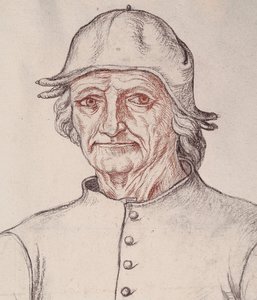
Jheronimus Bosch

Jheronimus Bosch

1450 - 1516, Hollanda

Quick facts about Jheronimus Bosch

  • Artistic Movement Or Style: Surrealizm ve Sembolizm
  • Artists Or Movements Influenced By This Artist: ['Pieter Bruegel']
  • Date Of Birth: c. 1450
  • Date Of Death: 1516
  • Full Name: Hieronymus Bosch
  • Nationality: Hollandalı
  • Notable Artworks:
    • Dünyanın Bahçesi
    • Son Yargı Triptiği
    • Tanrısal Çıkış
  • Place Of Birth: Den Bosch, Netherlands

Sanatçı Biyografisi

A Netherlandish Enigma: The Life and Art of Hieronymus Bosch

Hieronymus Bosch, born around 1450 in ’s-Hertogenbosch, Netherlands—then part of Brabant—remains one of art history’s most perplexing figures. His world pulsed with late medieval religious fervor, folklore, and a creeping unease about societal change – forces that fueled his extraordinary artistic imagination. Descended from a family steeped in painting tradition—his grandfather, Jan van Aken, and father, Anthonius van Aken—Bosch likely honed his skills within the family workshop, absorbing the conventions of Netherlandish art while simultaneously forging his own distinctive path. Biographical details are frustratingly sparse; records offer tantalizing glimpses but leave much to speculation, enhancing the artist’s aura of mystery. He married Aleyt Goyaerts van den Meerveen sometime before 1481, securing a degree of financial stability through her family's holdings—though little else is known about his personal life.

Fantastical Visions and Symbolic Depth

Bosch’s artistic style captivated audiences with its jarring juxtaposition of meticulous detail and hallucinatory imagery. Primarily working on oak panels using oil paint, he achieved luminous colors and intricate textures, surpassing the stylistic norms of his time. While early works mirrored traditional Netherlandish painting's realism, Bosch swiftly moved beyond mere imitation, developing a profoundly original vision rooted in medieval folklore and apocalyptic anxieties. His canvases aren’t simply representations; they are allegorical landscapes populated by bizarre creatures—grotesque demons, fantastical animals—and unsettling scenes that seem ripped from dreams. Religious themes dominate much of his oeuvre, but these are rarely straightforward depictions of biblical narratives. Instead, Bosch employed symbolism to explore complex moral and theological concepts, confronting viewers with the perils of sin, the allure of earthly pleasures, and the inevitability of divine judgment. His figures—human and monstrous alike—embodied vice, temptation, and spiritual corruption, creating a disconcerting effect that continues to resonate centuries later.

Masterpieces of Moral Allegory

Bosch’s most celebrated achievement is undoubtedly *The Garden of Earthly Delights* (c. 1490-1510)—a triptych that remains one of art history's most debated works. When unfolded, it presents a panoramic vision of paradise, earthly life, and hell—a complex allegorical representation of humanity’s fall from grace. The left panel depicts Eden, brimming with fantastical flora and fauna; the central panel portrays a hedonistic world consumed by sensual desire; and the right panel offers a terrifying glimpse into infernal torment. Alongside *The Garden*, *The Last Judgement Triptych* (c. 1480-1490) powerfully conveys both heavenly bliss and divine retribution, while *Ascent of the Blessed* (c. 1480-1490) captures ethereal beauty—a testament to Bosch’s mastery of oil paint and his ability to evoke profound psychological states. Smaller works like *Epiphany* (c. 1495) showcase his innovative technique and intricate symbolism, revealing a mind perpetually wrestling with existential questions about faith, morality, and human nature.

Influence and Legacy

Identifying Bosch’s direct influences is challenging due to the originality of his vision—though scholars suggest connections to medieval folklore, religious texts emphasizing apocalyptic themes, and societal anxieties surrounding heresy. Nevertheless, Bosch decisively surpassed stylistic conventions, establishing himself as a pioneer of Netherlandish painting and forging an artistic legacy that transcends time. His impact on subsequent artists is undeniable: Pieter Bruegel the Elder adopted similar thematic concerns and compositional approaches; Surrealist painters like Salvador Dalí and Max Ernst drew inspiration from Bosch’s dreamlike imagery and exploration of the subconscious. Even today, Bosch's unsettling visions continue to fascinate and provoke discussion—solidifying his place as a singular artist whose influence persists across artistic movements and generations. His paintings serve as invaluable windows into the intellectual and spiritual landscape of the late fifteenth and early sixteenth centuries, questioning established norms and paving the way for groundbreaking artistic expression. He died in 1516, leaving behind a body of work that continues to haunt and inspire—ensuring Bosch’s enduring status as one of art history's most unforgettable voices.

§ 5Comparanda

§ 6Questions

Kısa Bilgiler

  • Subject or theme: Religious allegory; Disability
  • Artistic style: Surrealism & Symbolism
  • Artist: Hieronymus Bosch
  • Medium: Oil on oak wood

Sanat Bilgisi Testi

Her soru için yalnızca bir doğru cevap bulunmaktadır.

Soru 1:
What is the predominant artistic style of Hieronymus Bosch’s painting ‘Cripples’?
Soru 2:
The composition of 'Cripples' is characterized by:
Soru 3:
What technique is primarily used to render the figures’ clothing and skin in ‘Cripples’?
Soru 4:
The lighting in 'Cripples' contributes to:
Soru 5:
What is a notable symbolic element likely present in Bosch’s painting ‘Cripples’?

§ 7Cite this entry

AllPaintingsStore.com, “Jheronimus Bosch, Cripples”, https://allpaintingsstore.com/tr/art/hieronymus-bosch-cripples-8XY83U-en/ArtistReproduction/ (accessed 3 Ekim 2026).

§ 8The reproduction

El Yapımı Yağlı Boya Reproduksiyon

Sanatçılarımız tarafından sipariş üzerine hazırlanan; istediğiniz boyut ve çerçevede, tuval üzerine el boyaması yağlı boya. ( Baskı Satışına Geç Dijital Görsel Satışına Geç)

It is specified on the order sheet in the margin; the present state of that sheet reads as follows.

Cripples

Baskı Tekniği

Baskı Boyutu

-

Seçkin Kıdemli Sanatçı

Daha fazla detay, incelik ve ek üretim süresi

-

Reproduksiyon Çerçeve Seçenekleri

-

-

Herhangi bir kenarı 105 cm'den (yaklaşık 41 inç) büyük olan sanat eserleri veya reprodüksiyonlar için çerçeve, demonte edilmiş bir kit halinde gönderilecektir. Bu yöntem, güvenli teslimat sağlar ve taşıma sırasında oluşabilecek hasarları önler.

Profesyonel montaj gereklidir; bu ürün kendin yap (DIY) tarzı bir ürün değildir.
Kit; ahşap tutkalı (pakete dahil değildir), kanvas germe pensi ve tutkal kururken çıtaların dik durmasını sağlayacak işkenceler kullanılarak, deneyimli bir profesyonel çerçeveci tarafından monte edilmeli ve kanvas gerilmelidir. Hatalı montaj veya dengesiz kanvas gerginliği sanat eserine kalıcı zarar verebilir ve bu durum garantimiz kapsamında değildir.

  • Tüm masif ahşap çıtalar dahildir, montaj için hassas bir şekilde ölçülmüştür.

  • Paket içeriğinde bulunan vidalar ve köşe birleşimleri için çerçeve ustanız tarafından temin edilmesi gereken, ancak pakete dahil olmayan ahşap tutkalı ile monte edilir.

  • Profesyonel araçlar gereklidir ve pakete dahil değildir: bir tuval germe aparatı (gerdirici) ve yapıştırıcı kururken çıtaların dik durmasını sağlayacak kıskaçlar.

Önemli:
Köşe bağlantıları için ahşap tutkalı gereklidir; tutkal tamamen kuruyana kadar çıtalar işkenceler ile sabitlenmelidir ve monte edilmiş çerçeve üzerindeki kanvasın gerilmesi için bir kanvas germe pensine ihtiyaç duyulur. Bunların hiçbiri kit içerisinde yer almamaktadır. Lütfen bu boyutu sipariş etmeden önce deneyimli bir profesyonel çerçeve ustası ile anlaşın.

İsimlik

-

-

Koruyucu Vernik

Parlak Vernik (renkleri canlandırır; ışığa ve neme karşı koruma sağlar)

-

Eserimi Özelleştir

Değiştirilebilecek örneklere göz atın: Yüzü müşteri fotoğrafıyla değiştirin; Evcil hayvan ekleyin (örneğin, kediyi köpek ile değiştirin); Arka plana gizli bir mesaj dahil edin; Arka plan manzarasını veya öğelerini değiştirin.

-

Acil

Dünya Çapında Teslimat (); standart 5 hafta yerine 3/4 hafta içinde. (31 Ekim). Kaliteden ödün verilmez.

-

Hızlı Teslimat

için dünya çapında teslimat süresi 5 haftadır. (7 Kasım).

Dahil

Toplam Fiyat

₺ 42162

Included with every order

  • Dünya Çapında Ücretsiz Ekspres Kargo
  • Yüksek Kaliteli Keten Tuval
  • Tam Nakliye Sigortası
  • Gümrük Vergisi İadesi Garantisi
  • Gerçek Renk Uyumu Garantisi
  • 100 Günlük İade Koşulları (Sadece Üretim Hatalı Ürünler İçin)
  • %100 Para İade Garantisi
  • Toplu Alım Avantajı
Order sheet