


 Önizle
 Gönder
 Paylaş
 Detaylar
 Rehber

 Dosyayı İndir
 Benzerleri
 X-Işını
 Slayt Gösterisi
 İstatistikler
Carnaval sur la plage 1


 Devamını Oku
El Yapımı Yağlı Boya Reproduksiyon
Sanatçılarımız tarafından sipariş üzerine hazırlanan; istediğiniz boyut ve çerçevede, tuval üzerine el boyaması yağlı boya. ( Baskı Satışına Geç Dijital Görsel Satışına Geç)




P118B ₺10

P118H ₺10

P118W ₺10

P438Z ₺10

P508JH ₺12

P508YH ₺12

P805H ₺10

P805Z ₺10

P919BZ ₺10

P919G ₺10

P919XJ ₺10

P959ZH ₺10

P968JZ ₺12

W106C ₺8

W218G ₺10

W218JH ₺8

W218Y ₺10

W307PJ ₺10

W316G ₺10

W316PJ ₺8

W316Y ₺10

W398PJ ₺8

W4111J ₺10

W500HY ₺15

W500JH ₺15

W692G ₺12

W849H ₺8

W940BG ₺15

W953PJ ₺8




Eserin orijinal oranlarıyla uyumlu, önceden belirlenmiş boyutlarımız arasından seçim yapın.

Çerçevenize veya duvarınıza uygun olması için ihtiyacınız olan genişliği ve yüksekliği yazın. Bu eser el boyamasıdır; bu nedenle farklı bir formdaki boyutlar için sanatçı, resmin etrafına biraz daha fazla boya ekleyebilir veya biraz daha kırpabilir — seçim sizin. Boyama işlemi başlamadan önce onaylamanız için size bir dijital taslak gönderiyoruz. Bu sayfada gösterilen resim gerçek sonucu yansıtmamaktadır — gerçek sonucu yalnızca taslak göstermektedir.
Siparişten sonra, AllPaintingsStore.com ekibi talimatlar için müşteriye e-posta gönderecek ve bir taslak önizleme sunacaktır
Dünya Çapında Teslimat (); standart 5 hafta yerine 3/4 haftada. (25 Ekim). Kaliteden ödün verilmez.

Dünya Çapında Ücretsiz Ekspres Kargo

Yüksek Kaliteli Keten Tuval

Tam Nakliye Sigortası

Gümrük Vergisi İadesi Garantisi

Gerçek Renk Uyumu Garantisi

100 Günlük İade Koşulları (Sadece Üretim Hatalı Ürünler İçin)

%100 Para İade Garantisi

Toplu Alım Avantajı
 Cam seçeneği yalnızca 110 cm altındaki boyutlar için mevcuttur.

Carnaval sur la plage 1
Baskı Tekniği
Baskı Boyutu
-


Toplam Fiyat
₺ 12619
A Glimpse into the Grotesque: The World of James Ensor
James Ensor’s “Carnaval sur la Plage” (Carnival on the Beach), painted around 1887, isn't merely a depiction of a seaside gathering; it’s an immersive plunge into the artist’s uniquely unsettling and profoundly evocative world. Born in Ostend, Belgium, a town renowned for its exuberant Carnival celebrations, Ensor was inextricably linked to this spectacle from his childhood. His parents operated a souvenir shop overflowing with masks, curiosities, and the paraphernalia of a festive gathering – a veritable treasure trove that fueled his imagination and became the cornerstone of his artistic vocabulary. This early exposure to the theatricality of disguise and the unsettling beauty of the bizarre profoundly shaped his approach to painting, leading him away from conventional academic styles and toward a deeply personal and often disconcerting vision.
Ensor’s work is characterized by a deliberate rejection of naturalism in favor of psychological intensity. He wasn't interested in faithfully rendering reality; instead, he sought to capture the *feeling* of an event – the sense of unease, mystery, and perhaps even madness that can permeate such gatherings. This approach aligns him with the burgeoning Symbolist movement, though his style is distinctly singular, marked by a bold palette, distorted figures, and a pervasive atmosphere of theatricality.
The Language of Masks: Form and Symbolism
Central to “Carnaval sur la Plage” are the masks themselves. Ensor’s subjects aren't simply individuals enjoying a day at the beach; they are enveloped in layers of disguise, their identities obscured and transformed. These aren’t charming or celebratory masks—they possess an unsettling quality, hinting at hidden desires, anxieties, and perhaps even sinister intentions. The repetition of mask motifs throughout his oeuvre suggests a preoccupation with the duality of self – the visible persona versus the concealed inner world. The figures are rendered in a flattened perspective, almost like stage characters, further emphasizing the theatrical nature of the scene.
Beyond the masks, the composition itself is laden with symbolic weight. The blurred background, dominated by the sea and distant boats, creates a sense of disorientation and isolation. The foreground figures, though numerous, seem strangely detached from one another, lost in their own private dramas. The use of vibrant, almost jarring colors – reds, yellows, blues – contributes to the painting’s overall unsettling effect, amplifying the feeling that something is fundamentally *wrong* with this seemingly idyllic scene.
Technique and Atmosphere: A Masterclass in Expressive Painting
Ensor's technique in “Carnaval sur la Plage” is both meticulous and deliberately rough. He employs a layered approach, building up the image through multiple glazes of paint, creating a rich surface texture that seems to shimmer with an inner light. The brushstrokes are visible, adding to the sense of immediacy and spontaneity. Notably, Ensor’s treatment of space departs from traditional perspective; he utilizes atmospheric effects—particularly in the depiction of the sea—to create a dreamlike quality, blurring the boundaries between reality and illusion.
The painting's emotional impact is profound. It evokes a sense of both fascination and unease, inviting the viewer to contemplate the hidden depths beneath the surface of social interaction. “Carnaval sur la Plage” isn’t simply a record of a seaside event; it’s a powerful meditation on identity, performance, and the unsettling beauty of the human condition – a testament to James Ensor's unique vision and enduring legacy as one of art history's most original and challenging figures.
Soru ve Cevaplar
James Ensor imzalı "Carnaval sur la plage 1" hangi tarihi döneme aittir?
"Carnaval sur la plage 1", 19th Century dönemine aittir.
"Carnaval sur la plage 1" hangi renk paletini ve hangi duyguyu bir araya getiriyor?
James Ensor imzalı "Carnaval sur la plage 1" eserinin Neutrals paleti, Mysterious duygusal tonuyla bir bütünlük sergiliyor. Renk, bir eserin duyguyu aktarma yollarından biridir.
"Carnaval sur la plage 1" eserinin renk paleti ne kadar doygun?
James Ensor imzalı "Carnaval sur la plage 1" eserinin renkleri Subtle Color doygunluğa sahiptir. Doygunluk, renklerin ne kadar canlı veya mat olduğunu ifade eder.
İlgili Eserler


Sanatçı Biyografisi
James Ensor: A Pioneer of Expressionism and Surrealism
James Sidney Edouard Ensor (Ostend, 13 April 1860-19 November 1949) was a Belgian painter and printmaker, an important influence on expressionism and surrealism who lived in Ostend for almost his entire life. He was associated with the artistic group Les XX.
Early Life and Artistic Training
Ensor’s father, James Frederic Ensor, born in Brussels to English parents, was a cultivated man who studied engineering in England and Germany. Ensor’s mother, Maria Catharina Haegheman, was Belgian. Ensor himself lacked interest in academic study and left school at the age of fifteen to begin his artistic training with two local painters. From 1877 to 1880 he attended the Académie Royale des Beaux-Arts in Brussels, where one of his fellow students was Fernand Khnopff. Ensor first exhibited his work in 1881.
The Emergence of Expressionist Style
During the late 19th century much of Ensor’s work was rejected as scandalous, particularly his painting Christ’s Entry Into Brussels (1888–89). The Belgium art critic Octave Maus famously summed up the response from contemporaneous art critics to Ensor's innovative (and often scathingly political) work: “Ensor is the leader of a clan. Ensor is the limelight. Ensor sums up and concentrates certain principles which are considered to be anarchistic. In short, Ensor is a dangerous person who has great changes. ... He is consequently marked for blows. It is at him that all the harquebuses are aimed. It is on his head that are dumped the most aromatic containers of the so-called serious critics.” Some of Ensor's contemporaneous work reveals his defiant response to this criticism.
Key Works and Recurring Themes
Ensor’s artistic style evolved dramatically over time, reflecting a profound engagement with psychological exploration and social critique. Initially influenced by Rembrandt, Redon, Goya, Japanese woodcuts, Brueghelian images and contemporary spoofs, Ensor developed a highly personal iconography and design. He rejected French Impressionism and Symbolism and lent himself to the expressive qualities of light, line, colour and the grotesque and macabre motifs such as carnival masks and skeletons, which he rendered in massive tableaux such as *The Aureoles of Christ* (1885–86) and *Skeletons Fighting over a Hanged Man* (1891). These grotesque metamorphoses culminate in Ensor’s most well-known and monumental mask tableau: *Christ’s Entry Into Brussels* (1888–89, oil on canvas, Los Angeles, J. Paul Getty Museum).
Legacy and Influence
Ensor is now widely recognized as a pivotal figure in the transition from 19th-century Symbolism to early 20th-century Expressionism and Surrealism—a true pioneer of modern art. His fearless exploration of the subconscious, his embrace of grotesque imagery, and his rejection of academic conventions paved the way for future generations of artists who dared to challenge artistic norms. Despite facing initial resistance, Ensor eventually gained recognition in his later years, being named a Baron by King Albert I in 1929 and awarded the Légion d’honneur in 1933. He died in Ostend in 1949, leaving behind a body of work that continues to captivate, disturb, and inspire.
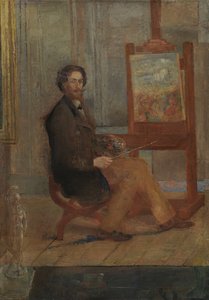
James Ensor
1860 - 1949 , Belçika
Kısa Bilgiler
- Artistic Movement Or Style: Expressionism, Surrealism
- Artists Who Influenced This Artist:
- Bruegel the Elder
- Francisco Goya
- Whistler
- Date Of Birth: April 13, 1860
- Date Of Death: November 19, 1949
- Full Name: James Sidney Edouard Ensor
- Nationality: Belgian
- Notable Artworks:
- The Scandalized Masks
- Skeletons Fighting...
- Christ's Entry into Brussels
- Place Of Birth: Ostend, Belgium
İlgili Yazılar

Oil on Canvas: The Professional Guide to Durable, High-Quality Art Reproductions for Hospitality and Large-Scale Interior Projects
A professional guide for hotel designers and procurement managers on selecting durable, high-quality oil on canvas reproductions. Learn about material longevity, custom multi-panel layouts, and efficient bulk ordering solutions for large-scale hospitality projects.


