


 Önizleme yap
 Paylaş
 Paylaş
 Detayları Gör

 İndir
İndir
 Benzerlerini gör
 X-Işını
 Slayt Gösterisi
Cercle du phare et restaurant


 Tümünü Gör
Giclée / Sanat Baskısı
Hızlı üretim ve esnek bitiş seçenekleriyle müze kalitesinde giclée veya kanvas baskı. ( El yapımı tablo satın al Görsel satın al)




P118B $10

P118H $10

P118W $10

P438Z $10

P508JH $12

P508YH $12

P805H $10

P805Z $10

P919BZ $10

P919G $10

P919XJ $10

P959ZH $10

P968JZ $12

W106C $8

W218G $10

W218JH $8

W218Y $10

W307PJ $10

W316G $10

W316PJ $8

W316Y $10

W398PJ $8

W4111J $10

W500HY $15

W500JH $15

W692G $12

W849H $8

W940BG $15

W953PJ $8




Eserin orijinal oranlarıyla uyumlu, önceden belirlenmiş boyutlarımız arasından seçim yapın.

Belirli bir çerçeveye veya alana uyması için kendi ölçülerinizi girebilirsiniz. Seçtiğiniz boyut orijinal görüntünün oranlarıyla eşleşmiyorsa, sanat eserini kırpacağız veya görüntüyü aynalanmış ya da düz dolgulu bir kenarlıkla genişleteceğiz. Üretim başlamadan önce onayınız için bir dijital taslak gönderilecektir.
Lütfen ekrandaki önizlemenin gerçek kırpma veya genişletmeyi yansıtmadığını unutmayın. Nihai kompozisyonu yalnızca taslak doğru bir şekilde gösterecektir.
Özel boyutlar mevcut olsa da, orijinal oranları korumak için önceden tanımlanmış listeden bir boyut seçmenizi öneririz.
Dünya Çapında Teslimat (); standart 4/5 hafta yerine 2 haftada. (24 Ağustos)

Dünya Çapında Ücretsiz Ekspres Kargo

Yüksek Kaliteli Keten Tuval

Tam Kapsamlı Nakliye Sigortası

Gümrük Vergisi İade Garantisi

Gerçek Renk Uyumu Garantisi

60 Günlük İade Politikası (Sadece Kusurlu Ürünler İçin)

%100 Para İade Garantisi

Toplu Alım İndirimi
 Cam seçeneği yalnızca 110 cm altındaki boyutlar için mevcuttur.

Cercle du phare et restaurant
Giclée / Sanat Baskısı
Reproduksiyon Boyutu
-


Toplam Tutar
$ 64
Eser Açıklaması
A Vision of Quiet Resilience
In the delicate, translucent layers of James Ensor’s “Cercle du phare et restaurant,” we encounter a world that breathes with a soft, melancholic grace. Painted around 1890, this watercolor masterpiece transcends its humble subject matter—a coastal streetscape—to offer a profound meditation on solitude and the passage of time. At first glance, the viewer is greeted by a tranquil seaside scene, where a lighthouse stands sentinel over a small restaurant nestled among quiet buildings. Yet, there is an unmistakable tension beneath this placid surface; it is a landscape that feels suspended in a moment of eternal waiting, capturing a sense of psychological depth that would eventually position Ensor as a pioneer of the Expressionist movement.
The artist’s technique in this work is nothing short of masterful. Eschewing the heavy, opaque textures often associated with late 19th-century oil painting, Ensor utilizes the ethereal qualities of watercolor to create an atmosphere of dreamlike luminosity. By layering subtle washes of color, he softens the architectural edges of the buildings, allowing them to bleed almost imperceptibly into the surrounding light. This flattened perspective and emphasis on tonal harmony rather than rigid realism invite the observer to look beyond the physical structures and instead feel the temperature and mood of the coastal air. It is a technique that transforms a simple street scene into an evocative, atmospheric experience.
Symbolism and the Shadows of Ostend
To understand the soul of this painting, one must look toward the historical currents flowing through Ensor’s life in Ostend. Growing up in a souvenir shop filled with carnival masks and exotic curiosities, Ensor developed a lifelong fascination with the duality of appearance and reality. While “Cercle du phare et restaurant” lacks the overt, unsettling masks found in his more famous works, the symbolism remains deeply embedded in its composition. The lighthouse serves as a powerful metaphor for guidance and vigilance amidst an encroaching darkness, mirroring Ensor’s own artistic mission to illuminate the hidden truths of the human condition. Meanwhile, the empty restaurant stands as a poignant symbol of human connection—a place designed for gathering that, in this moment, remains hauntingly vacant.
This absence of figures is a deliberate and powerful choice. By removing the bustle of people, Ensor directs our focus toward introspection and the quietude of the landscape itself. This reflects the broader anxieties of the turn of the century—a period of rapid industrialization and social upheaval in Europe. The painting captures that specific, bittersweet feeling of being an observer on the periphery, watching a world that is both beautiful and profoundly lonely. For the collector or the lover of fine art, this piece offers more than just visual beauty; it offers a window into the complex emotional landscape of a man who found profound meaning in the shadows.
An Elegant Addition to the Modern Interior
For the discerning interior designer or art enthusiast, a high-quality reproduction of “Cercle du phare et restaurant” serves as a sophisticated anchor for any curated space. Its muted palette and serene composition make it an incredibly versatile piece, capable of bringing a sense of calm and intellectual depth to a contemporary living room, a quiet study, or a minimalist gallery setting. The artwork does not demand attention through loud colors or jarring imagery; instead, it commands the room through its subtle elegance and the way it invites long, contemplative gazes.
Integrating this work into a home decor scheme allows for a dialogue between historical significance and modern aesthetics. Whether paired with sleek, mid-century furniture or nestled within a more classical, traditional setting, Ensor’s watercolor brings an unmistakable air of prestige and soulful storytelling. It is an investment in atmosphere—a way to surround oneself with the quiet resilience and enduring beauty of one of Belgium's most visionary masters.
Benzer Eserler


Sanatçı Özgeçmişi
James Ensor: A Pioneer of Expressionism and Surrealism
James Sidney Edouard Ensor (Ostend, 13 April 1860-19 November 1949) was a Belgian painter and printmaker, an important influence on expressionism and surrealism who lived in Ostend for almost his entire life. He was associated with the artistic group Les XX.
Early Life and Artistic Training
Ensor’s father, James Frederic Ensor, born in Brussels to English parents, was a cultivated man who studied engineering in England and Germany. Ensor’s mother, Maria Catharina Haegheman, was Belgian. Ensor himself lacked interest in academic study and left school at the age of fifteen to begin his artistic training with two local painters. From 1877 to 1880 he attended the Académie Royale des Beaux-Arts in Brussels, where one of his fellow students was Fernand Khnopff. Ensor first exhibited his work in 1881.
The Emergence of Expressionist Style
During the late 19th century much of Ensor’s work was rejected as scandalous, particularly his painting Christ’s Entry Into Brussels (1888–89). The Belgium art critic Octave Maus famously summed up the response from contemporaneous art critics to Ensor's innovative (and often scathingly political) work: “Ensor is the leader of a clan. Ensor is the limelight. Ensor sums up and concentrates certain principles which are considered to be anarchistic. In short, Ensor is a dangerous person who has great changes. ... He is consequently marked for blows. It is at him that all the harquebuses are aimed. It is on his head that are dumped the most aromatic containers of the so-called serious critics.” Some of Ensor's contemporaneous work reveals his defiant response to this criticism.
Key Works and Recurring Themes
Ensor’s artistic style evolved dramatically over time, reflecting a profound engagement with psychological exploration and social critique. Initially influenced by Rembrandt, Redon, Goya, Japanese woodcuts, Brueghelian images and contemporary spoofs, Ensor developed a highly personal iconography and design. He rejected French Impressionism and Symbolism and lent himself to the expressive qualities of light, line, colour and the grotesque and macabre motifs such as carnival masks and skeletons, which he rendered in massive tableaux such as *The Aureoles of Christ* (1885–86) and *Skeletons Fighting over a Hanged Man* (1891). These grotesque metamorphoses culminate in Ensor’s most well-known and monumental mask tableau: *Christ’s Entry Into Brussels* (1888–89, oil on canvas, Los Angeles, J. Paul Getty Museum).
Legacy and Influence
Ensor is now widely recognized as a pivotal figure in the transition from 19th-century Symbolism to early 20th-century Expressionism and Surrealism—a true pioneer of modern art. His fearless exploration of the subconscious, his embrace of grotesque imagery, and his rejection of academic conventions paved the way for future generations of artists who dared to challenge artistic norms. Despite facing initial resistance, Ensor eventually gained recognition in his later years, being named a Baron by King Albert I in 1929 and awarded the Légion d’honneur in 1933. He died in Ostend in 1949, leaving behind a body of work that continues to captivate, disturb, and inspire.
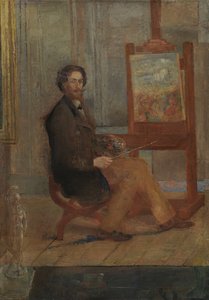
James Ensor
1860 - 1949 , Belçika
Kısa Bilgiler
- Artistic Movement Or Style: Expressionism, Surrealism
- Artists Who Influenced This Artist:
- Bruegel the Elder
- Francisco Goya
- Whistler
- Date Of Birth: April 13, 1860
- Date Of Death: November 19, 1949
- Full Name: James Sidney Edouard Ensor
- Nationality: Belgian
- Notable Artworks:
- The Scandalized Masks
- Skeletons Fighting...
- Christ's Entry into Brussels
- Place Of Birth: Ostend, Belgium
İlgili Makaleler

Watercolor Art Guide: Mastering Transparency and Light for Professional Hospitality Decor
Elevate hospitality interiors with our professional guide to watercolor art. Discover how transparency and light enhance hotel decor through expert selection of high-quality, custom reproductions and large-scale murals tailored for designers and procurement managers.


