Önizleme yap
 Paylaş
 Paylaş
 Detayları Gör

 İndir
İndir
 Benzerlerini gör
 X-Işını
 Slayt Gösterisi
Death Pursuing the Human Herd


 Tümünü Gör
El Yapımı Yağlı Boya Reproduksiyon
Sanatçılarımız tarafından sipariş üzerine hazırlanan; istediğiniz boyut ve çerçevede, tuval üzerine el boyaması yağlı boya. ( Baskı satın al Görsel satın al)




P118B $10

P118H $10

P118W $10

P438Z $10

P508JH $12

P508YH $12

P805H $10

P805Z $10

P919BZ $10

P919G $10

P919XJ $10

P959ZH $10

P968JZ $12

W106C $8

W218G $10

W218JH $8

W218Y $10

W307PJ $10

W316G $10

W316PJ $8

W316Y $10

W398PJ $8

W4111J $10

W500HY $15

W500JH $15

W692G $12

W849H $8

W940BG $15

W953PJ $8




Eserin orijinal oranlarıyla uyumlu, önceden belirlenmiş boyutlarımız arasından seçim yapın.

Belirli bir çerçeveye veya alana uyması için kendi boyutlarınızı girebilirsiniz. Seçtiğiniz boyut orijinal görüntünün oranlarıyla eşleşmiyorsa, sanat eserini kırparak veya ek el boyaması öğelerle resmi uzatarak ayarlayacağız. Üretim başlamadan önce onayınız için dijital bir taslak gönderilecektir.
Lütfen ekrandaki önizlemenin gerçek kırpmayı veya uzatmayı yansıtmadığını unutmayın. Nihai kompozisyonu yalnızca hazırlanan taslak doğru şekilde gösterecektir.
Özel boyutlar mevcut olsa da, orijinal oranları korumak adına önceden tanımlanmış listeden bir boyut seçmenizi öneririz.
Siparişten sonra, AllPaintingsStore.com ekibi talimatlar için müşteriye e-posta gönderecek ve bir taslak önizleme sunacaktır
Dünya Çapında Teslimat (); standart 5 hafta yerine 3/4 haftada. (17 Ağustos). Kaliteden ödün verilmez.

Dünya Çapında Ücretsiz Ekspres Kargo

Yüksek Kaliteli Keten Tuval

Tam Kapsamlı Nakliye Sigortası

Gümrük Vergisi İade Garantisi

Gerçek Renk Uyumu Garantisi

60 Günlük İade Politikası (Sadece Kusurlu Ürünler İçin)

%100 Para İade Garantisi

Toplu Alım İndirimi
 Cam seçeneği yalnızca 110 cm altındaki boyutlar için mevcuttur.

Death Pursuing the Human Herd
Reproduksiyon Tekniği
Reproduksiyon Boyutu
-


Toplam Tutar
$ 258
Eser Açıklaması
A Vision of Mortality: Decoding James Ensor’s ‘Death Pursuing the Human Herd’
James Ensor's *Death Pursuing the Human Herd* is a visceral and unforgettable statement on the human condition, rendered with the unsettling energy that defines his unique contribution to Expressionism. Painted in the late 19th century, this large-scale oil painting doesn’t offer comfort; it confronts us with the inescapable reality of mortality and the anxieties of modern life. The work is a powerful example of Ensor's ability to blend grotesque imagery with profound philosophical questioning.Subject & Composition: A Chaotic Flight from Fate
The canvas explodes with a frenzied scene – a mass of figures, seemingly representing all of humanity, desperately fleeing a skeletal figure embodying Death. The skeleton, wielding a scythe, actively cuts down members of the crowd, emphasizing the indiscriminate nature of fate. Ensor masterfully creates a sense of claustrophobia and panic through the tightly packed composition and dynamic movement. A bizarre element – a figure riding atop a dragon-like creature – adds to the overall feeling of surreal chaos and societal upheaval. The scene isn’t simply about physical death, but also the decay of values and the anxieties surrounding modernity.Style & Technique: Expressionist Intensity
*Death Pursuing the Human Herd* is a prime example of Expressionism, characterized by its bold colors, distorted forms, and emotionally charged brushwork. Ensor doesn’t aim for realistic representation; instead, he utilizes vibrant, often jarring hues and energetic strokes to convey inner turmoil and psychological states. The painting's surface is alive with texture, contributing to the overall sense of unease and urgency. His technique prioritizes emotional impact over precise detail, creating a raw and immediate connection with the viewer. The deliberate crudeness in some areas further amplifies the feeling of desperation and societal breakdown.Symbolism & Interpretation: Masks, Mortality, and Modernity
Ensor’s work is rich in symbolism. The skeleton is an obvious *memento mori*, a reminder of death's inevitability. However, the painting goes deeper. The crowd represents not just individuals but society as a whole, blindly rushing towards its doom. The masks frequently found in Ensor’s oeuvre – though less prominent here than in some other works – hint at the artificiality and hypocrisy he perceived within societal structures. The dragon-like creature could symbolize destructive forces or perhaps the irrationality of power. The painting can be interpreted as a commentary on social injustice, political corruption, and the anxieties surrounding rapid industrialization during the late 19th century.Historical Context & Ensor’s Legacy
James Ensor (1860-1949) was a Belgian painter who anticipated many of the themes and techniques later embraced by Expressionist and Surrealist artists. He rejected academic conventions, forging his own path with intensely personal and often disturbing imagery. His work was initially met with criticism and misunderstanding, but he is now recognized as a pivotal figure in modern art history. *Death Pursuing the Human Herd* exemplifies Ensor’s unique vision – a blend of dark humor, social critique, and profound existential questioning. His influence can be seen in the works of artists like Egon Schiele and Max Beckmann.Emotional Impact & Interior Design Considerations
This painting is not intended to be passively observed; it demands a reaction. It evokes feelings of anxiety, fear, and perhaps even a morbid fascination. Its dramatic composition and intense color palette make it a striking focal point for any space. While its subject matter is dark, the vibrant colors can surprisingly complement modern or eclectic interiors. Consider pairing this reproduction with neutral tones to allow the artwork’s intensity to truly shine. It's a conversation starter, a piece that invites contemplation and challenges conventional perspectives – perfect for those who appreciate art with depth and meaning.- Explore more of James Ensor’s work at AllPaintingsStore.com.
- Discover high-quality oil painting reproductions of *Death Pursuing the Human Herd* at AllPaintingsStore.com.
- Learn about other Expressionist masters like Egon Schiele through AllPaintingsStore.com.
Benzer Eserler




Sanatçı Özgeçmişi
James Ensor: A Pioneer of Expressionism and Surrealism
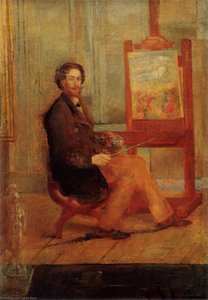
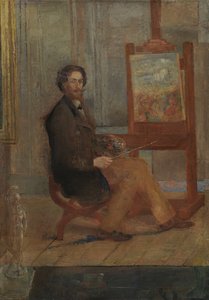
James Sidney Edouard Ensor (Ostend, 13 April 1860-19 November 1949) was a Belgian painter and printmaker, an important influence on expressionism and surrealism who lived in Ostend for almost his entire life. He was associated with the artistic group Les XX.
Early Life and Artistic Training
Ensor’s father, James Frederic Ensor, born in Brussels to English parents, was a cultivated man who studied engineering in England and Germany. Ensor’s mother, Maria Catharina Haegheman, was Belgian. Ensor himself lacked interest in academic study and left school at the age of fifteen to begin his artistic training with two local painters. From 1877 to 1880 he attended the Académie Royale des Beaux-Arts in Brussels, where one of his fellow students was Fernand Khnopff. Ensor first exhibited his work in 1881.
The Emergence of Expressionist Style
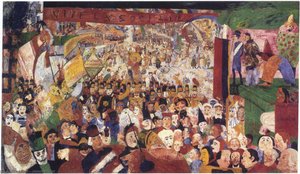
During the late 19th century much of Ensor’s work was rejected as scandalous, particularly his painting Christ’s Entry Into Brussels (1888–89). The Belgium art critic Octave Maus famously summed up the response from contemporaneous art critics to Ensor's innovative (and often scathingly political) work: “Ensor is the leader of a clan. Ensor is the limelight. Ensor sums up and concentrates certain principles which are considered to be anarchistic. In short, Ensor is a dangerous person who has great changes. ... He is consequently marked for blows. It is at him that all the harquebuses are aimed. It is on his head that are dumped the most aromatic containers of the so-called serious critics.” Some of Ensor's contemporaneous work reveals his defiant response to this criticism.
Key Works and Recurring Themes
Ensor’s artistic style evolved dramatically over time, reflecting a profound engagement with psychological exploration and social critique. Initially influenced by Rembrandt, Redon, Goya, Japanese woodcuts, Brueghelian images and contemporary spoofs, Ensor developed a highly personal iconography and design. He rejected French Impressionism and Symbolism and lent himself to the expressive qualities of light, line, colour and the grotesque and macabre motifs such as carnival masks and skeletons, which he rendered in massive tableaux such as *The Aureoles of Christ* (1885–86) and *Skeletons Fighting over a Hanged Man* (1891). These grotesque metamorphoses culminate in Ensor’s most well-known and monumental mask tableau: *Christ’s Entry Into Brussels* (1888–89, oil on canvas, Los Angeles, J. Paul Getty Museum).
Legacy and Influence
Ensor is now widely recognized as a pivotal figure in the transition from 19th-century Symbolism to early 20th-century Expressionism and Surrealism—a true pioneer of modern art. His fearless exploration of the subconscious, his embrace of grotesque imagery, and his rejection of academic conventions paved the way for future generations of artists who dared to challenge artistic norms. Despite facing initial resistance, Ensor eventually gained recognition in his later years, being named a Baron by King Albert I in 1929 and awarded the Légion d’honneur in 1933. He died in Ostend in 1949, leaving behind a body of work that continues to captivate, disturb, and inspire.
James Ensor
1860 - 1949 , Belçika
Kısa Bilgiler
- Artistic Movement Or Style: Expressionism, Surrealism
- Artists Who Influenced This Artist:
- Bruegel the Elder
- Francisco Goya
- Whistler
- Date Of Birth: April 13, 1860
- Date Of Death: November 19, 1949
- Full Name: James Sidney Edouard Ensor
- Nationality: Belgian
- Notable Artworks:
- The Scandalized Masks
- Skeletons Fighting...
- Christ's Entry into Brussels
- Place Of Birth: Ostend, Belgium
İlgili Makaleler

James Abbott McNeill Whistler'ın En İyi 25 Eseri: Sanat ve Dekorasyon Rehberi | AllPaintingsStore
James Abbott McNeill Whistler'ın en iyi 25 eserini keşfedin! Amerikan empresyonizminin öncüsü Whistler'ın nocturne resimleri, portreleri ve sanat tarihine damga vuran diğer başyapıtları AllPaintingsStore.com'da. Ev dekorasyonunuz için lüks tabloları inceleyin.
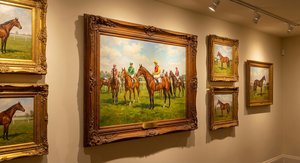
Sir Alfred Munnings' Masterpieces: 25 Paintings That Define Equine Art | AllPaintingsStore
Explore 25 iconic Sir Alfred Munnings paintings! Discover the beauty of British Impressionism, equine art & rural England. Find museum-quality reproductions and elevate your home decor with AllPaintingsStore. Explore the full collection online.

James Ensor's Grotesque Visions: Social Commentary & Artistic Innovation
Explore the unsettling yet captivating world of James Ensor, a pioneer of Expressionism. Discover his satirical masterpieces, symbolic imagery & lasting influence on modern art. High-quality reproductions available at AllPaintingsStore.

The Enduring Legacy of Oil on Canvas: Technique, History & Aesthetic Impact
Explore the rich history & techniques of oil painting – from Renaissance masters to Impressionism. Discover pigments, layering methods, and why this timeless medium endures. Expert insights for artists & art enthusiasts.

Oil on Canvas: A Historical & Technical Exploration of a Timeless Artistic Medium
Explore the rich history & enduring techniques of oil painting on canvas. Discover the science behind its longevity, conservation practices, and contemporary relevance. Expert insights for art enthusiasts.