


 Önizle
 Gönder
 Paylaş
 Detaylar
 Rehber

 Dosyayı İndir
 Benzerleri
 X-Işını
 Slayt Gösterisi
 İstatistikler
La Mangeuse d' huitres


 Devamını Oku
Giclée / Sanat Baskısı
Hızlı üretim ve esnek bitiş seçenekleriyle müze kalitesinde giclée veya kanvas baskı. ( El Yapımı Tablo Satın Al Dijital Görsel Satışına Geç)




P118B ₺10

P118H ₺10

P118W ₺10

P438Z ₺10

P508JH ₺12

P508YH ₺12

P805H ₺10

P805Z ₺10

P919BZ ₺10

P919G ₺10

P919XJ ₺10

P959ZH ₺10

P968JZ ₺12

W106C ₺8

W218G ₺10

W218JH ₺8

W218Y ₺10

W307PJ ₺10

W316G ₺10

W316PJ ₺8

W316Y ₺10

W398PJ ₺8

W4111J ₺10

W500HY ₺15

W500JH ₺15

W692G ₺12

W849H ₺8

W940BG ₺15

W953PJ ₺8




Eserin orijinal oranlarıyla uyumlu, önceden belirlenmiş boyutlarımız arasından seçim yapın.

Çerçevenize veya duvarınıza uygun olması için ihtiyacınız olan genişlik ve yüksekliği yazın. Bir baskı yalnızca kesilebilir, görselden daha büyük hale getirilemez; bu nedenle farklı bir formdaki boyut seçimi, görselin bir kısmının kaybına neden olur. Herhangi bir baskı yapmadan önce onaylamanız için size bir dijital taslak gönderiyoruz. Bu sayfada gösterilen resim gerçek kesimi göstermez — bunu yalnızca taslak gösterir.
Dünya Çapında Teslimat (); standart 4/5 hafta yerine 2 haftada. (25 Ekim)

Dünya Çapında Ücretsiz Ekspres Kargo

Yüksek Kaliteli Keten Tuval

Tam Nakliye Sigortası

Gümrük Vergisi İadesi Garantisi

Gerçek Renk Uyumu Garantisi

100 Günlük İade Koşulları (Sadece Üretim Hatalı Ürünler İçin)

%100 Para İade Garantisi

Toplu Alım Avantajı
 Cam seçeneği yalnızca 110 cm altındaki boyutlar için mevcuttur.

La Mangeuse d' huitres
Giclée / Sanat Baskısı
Baskı Boyutu
-


Toplam Fiyat
₺ 3131
La Mangeuse d' Huitres: A Glimpse into James Ensor’s Unsettling World
James Ensor’s *La Mangeuse d’Huitres* (The Oyster Eater), painted around 1888, is not merely a depiction of a woman enjoying her meal; it’s a carefully constructed tableau brimming with psychological tension and social commentary—a quintessential example of the artist's unique and profoundly unsettling vision. The painting immediately draws the viewer in with its vibrant, almost jarring palette: deep reds, blues, and yellows clash dramatically against the muted tones of the dining table and background. This deliberate discord reflects Ensor’s broader artistic philosophy – a rejection of academic realism in favor of expressing raw emotion and challenging conventional perceptions. The subject herself, seated at a richly appointed but slightly decaying table, is rendered with an unsettling ambiguity. Her expression is difficult to decipher; is she truly enjoying her meal, or does a subtle hint of unease flicker beneath the surface? This deliberate vagueness is key to understanding Ensor’s work – he rarely offers easy answers, preferring instead to provoke contemplation and discomfort. The presence of scattered books suggests an intellectual pursuit, yet their disarray hints at a mind struggling with conflicting ideas.A Masterclass in Symbolism and Masked Reality
Ensor's fascination with masks is central to interpreting *La Mangeuse d’Huitres*. The oyster shells scattered across the table are not simply decorative elements; they function as visual metaphors for concealment, deception, and the hidden aspects of human nature. His childhood spent amidst the exotic wares of his parents’ souvenir shop in Ostend, filled with carnival masks and peculiar objects, undoubtedly fueled this obsession. These masks weren't just theatrical props; they represented a way to escape identity, to embody different roles, and to explore the darker corners of the psyche. The woman herself could be seen as wearing a mask – a carefully constructed facade designed to conceal her true feelings or intentions. Furthermore, the background figure, partially obscured by the main scene, adds another layer of mystery and suggests an unseen presence, perhaps representing societal judgment or the weight of expectation.The Expressionist Roots of a Troubled Vision
*La Mangeuse d’Huitres* firmly places Ensor within the burgeoning movement of Expressionism, predating its formal recognition by decades. His use of distorted forms, exaggerated colors, and emotionally charged imagery anticipates the key tenets of this artistic approach. Unlike traditional portraiture which aimed to capture a likeness, Ensor prioritized conveying an internal state – a sense of anxiety, alienation, and perhaps even madness. The painting’s composition is deliberately claustrophobic, drawing the viewer into the confined space of the dining room and intensifying the feeling of unease. The brushwork itself is loose and expressive, contributing to the overall sense of dynamism and unrest. It's a deliberate departure from the smooth, polished surfaces favored by academic painters of the time.Historical Context and Lasting Influence
Painted during a period of significant social and political upheaval in Europe – the late 19th century – *La Mangeuse d’Huitres* can be interpreted as a commentary on Victorian society's rigid conventions and its hypocrisy. Ensor, a fiercely independent artist who often challenged societal norms with his provocative work, used his art to expose the darker side of human existence. His rejection of academic tradition and his embrace of unconventional subject matter made him a controversial figure during his lifetime, but today he is recognized as one of the most important and influential artists of the 20th century. Reproductions of *La Mangeuse d’Huitres* continue to resonate with viewers because they tap into universal themes of identity, deception, and the complexities of human relationships – a testament to Ensor's enduring artistic vision. AllPaintingsStore offers exceptional hand-painted reproductions that capture the full intensity and unsettling beauty of this remarkable masterpiece.Soru ve Cevaplar
James Ensor imzalı "La Mangeuse d' huitres" eserini satın almadan önce kendi duvarımda görebilir miyim?
Uyumlu bir cihazda artırılmış gerçekliği kullanarak, eserin AR Önizleme sayfası aracılığıyla James Ensor imzalı "La Mangeuse d' huitres" adlı çalışmayı kendi duvarınızda önizleyebilirsiniz.
James Ensor imzalı "La Mangeuse d' huitres" neyi betimliyor?
James Ensor imzalı "La Mangeuse d' huitres" şunları betimler: woman, dining, masks, carnival, belgium, table, shadows.
James Ensor imzalı "La Mangeuse d' huitres" eserinin renklerine hangi alan uyum sağlıyor?
Earthy paletiyle James Ensor imzalı "La Mangeuse d' huitres", bir Dining Room için önerilmektedir. Bu önerinin nedenlerinden biri de renkleridir.
İlgili Eserler


Sanatçı Biyografisi
James Ensor: A Pioneer of Expressionism and Surrealism
James Sidney Edouard Ensor (Ostend, 13 April 1860-19 November 1949) was a Belgian painter and printmaker, an important influence on expressionism and surrealism who lived in Ostend for almost his entire life. He was associated with the artistic group Les XX.
Early Life and Artistic Training
Ensor’s father, James Frederic Ensor, born in Brussels to English parents, was a cultivated man who studied engineering in England and Germany. Ensor’s mother, Maria Catharina Haegheman, was Belgian. Ensor himself lacked interest in academic study and left school at the age of fifteen to begin his artistic training with two local painters. From 1877 to 1880 he attended the Académie Royale des Beaux-Arts in Brussels, where one of his fellow students was Fernand Khnopff. Ensor first exhibited his work in 1881.
The Emergence of Expressionist Style
During the late 19th century much of Ensor’s work was rejected as scandalous, particularly his painting Christ’s Entry Into Brussels (1888–89). The Belgium art critic Octave Maus famously summed up the response from contemporaneous art critics to Ensor's innovative (and often scathingly political) work: “Ensor is the leader of a clan. Ensor is the limelight. Ensor sums up and concentrates certain principles which are considered to be anarchistic. In short, Ensor is a dangerous person who has great changes. ... He is consequently marked for blows. It is at him that all the harquebuses are aimed. It is on his head that are dumped the most aromatic containers of the so-called serious critics.” Some of Ensor's contemporaneous work reveals his defiant response to this criticism.
Key Works and Recurring Themes
Ensor’s artistic style evolved dramatically over time, reflecting a profound engagement with psychological exploration and social critique. Initially influenced by Rembrandt, Redon, Goya, Japanese woodcuts, Brueghelian images and contemporary spoofs, Ensor developed a highly personal iconography and design. He rejected French Impressionism and Symbolism and lent himself to the expressive qualities of light, line, colour and the grotesque and macabre motifs such as carnival masks and skeletons, which he rendered in massive tableaux such as *The Aureoles of Christ* (1885–86) and *Skeletons Fighting over a Hanged Man* (1891). These grotesque metamorphoses culminate in Ensor’s most well-known and monumental mask tableau: *Christ’s Entry Into Brussels* (1888–89, oil on canvas, Los Angeles, J. Paul Getty Museum).
Legacy and Influence
Ensor is now widely recognized as a pivotal figure in the transition from 19th-century Symbolism to early 20th-century Expressionism and Surrealism—a true pioneer of modern art. His fearless exploration of the subconscious, his embrace of grotesque imagery, and his rejection of academic conventions paved the way for future generations of artists who dared to challenge artistic norms. Despite facing initial resistance, Ensor eventually gained recognition in his later years, being named a Baron by King Albert I in 1929 and awarded the Légion d’honneur in 1933. He died in Ostend in 1949, leaving behind a body of work that continues to captivate, disturb, and inspire.
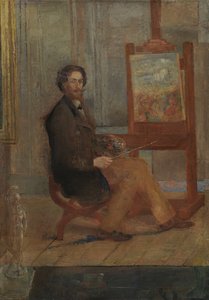
James Ensor
1860 - 1949 , Belçika
Kısa Bilgiler
- Artistic Movement Or Style: Expressionism, Surrealism
- Artists Who Influenced This Artist:
- Bruegel the Elder
- Francisco Goya
- Whistler
- Date Of Birth: April 13, 1860
- Date Of Death: November 19, 1949
- Full Name: James Sidney Edouard Ensor
- Nationality: Belgian
- Notable Artworks:
- The Scandalized Masks
- Skeletons Fighting...
- Christ's Entry into Brussels
- Place Of Birth: Ostend, Belgium
İlgili Yazılar

Unveiling the Mystery: A Journey Through the World's Most Iconic Mask Artworks
Embark on a profound journey through the world's most iconic mask artworks. Explore the spiritual depth, intricate craftsmanship, and rich cultural heritage of global traditions, from Chhau to Gomira, in this expert-led exploration of ancestral artistry and symbolic beauty.

James Ensor's Grotesque Visions: Social Commentary & Artistic Innovation
Explore the unsettling yet captivating world of James Ensor, a pioneer of Expressionism. Discover his satirical masterpieces, symbolic imagery & lasting influence on modern art. High-quality reproductions available at AllPaintingsStore.
Sir Alfred Munnings' Masterpieces: 25 Paintings That Define Equine Art | AllPaintingsStore
Explore 25 iconic Sir Alfred Munnings paintings! Discover the beauty of British Impressionism, equine art & rural England. Find museum-quality reproductions and elevate your home decor with AllPaintingsStore. Explore the full collection online.

Surrealist Expressionism: A Definitive Guide to the Intersection of Dream Logic and Raw Emotion
Explore the profound history of Surrealist Expressionism. Discover how artists blended dream logic with raw emotion to navigate post-war trauma through masterful, evocative imagery and psychological depth.
James Abbott McNeill Whistler'ın En İyi 25 Eseri: Sanat ve Dekorasyon Rehberi | AllPaintingsStore
James Abbott McNeill Whistler'ın en iyi 25 eserini keşfedin! Amerikan empresyonizminin öncüsü Whistler'ın nocturne resimleri, portreleri ve sanat tarihine damga vuran diğer başyapıtları AllPaintingsStore.com'da. Ev dekorasyonunuz için lüks tabloları inceleyin.


