


 Önizle
 Gönder
 Paylaş
 Detaylar
 Rehber

 Dosyayı İndir
 Benzerleri
 X-Işını
 Slayt Gösterisi
 Q&A
Q&A İstatistikler
Lust


 Devamını Oku
El Yapımı Yağlı Boya Reproduksiyon
Sanatçılarımız tarafından sipariş üzerine hazırlanan; istediğiniz boyut ve çerçevede, tuval üzerine el boyaması yağlı boya. ( Baskı Satışına Geç Dijital Görsel Satışına Geç)




P118B ₺10

P118H ₺10

P118W ₺10

P438Z ₺10

P508JH ₺12

P508YH ₺12

P805H ₺10

P805Z ₺10

P919BZ ₺10

P919G ₺10

P919XJ ₺10

P959ZH ₺10

P968JZ ₺12

W106C ₺8

W218G ₺10

W218JH ₺8

W218Y ₺10

W307PJ ₺10

W316G ₺10

W316PJ ₺8

W316Y ₺10

W398PJ ₺8

W4111J ₺10

W500HY ₺15

W500JH ₺15

W692G ₺12

W849H ₺8

W940BG ₺15

W953PJ ₺8




Eserin orijinal oranlarıyla uyumlu, önceden belirlenmiş boyutlarımız arasından seçim yapın.

Çerçevenize veya duvarınıza uygun olması için ihtiyacınız olan genişliği ve yüksekliği yazın. Bu eser el boyamasıdır; bu nedenle farklı bir formdaki boyutlar için sanatçı, resmin etrafına biraz daha fazla boya ekleyebilir veya biraz daha kırpabilir — seçim sizin. Boyama işlemi başlamadan önce onaylamanız için size bir dijital taslak gönderiyoruz. Bu sayfada gösterilen resim gerçek sonucu yansıtmamaktadır — gerçek sonucu yalnızca taslak göstermektedir.
Siparişten sonra, AllPaintingsStore.com ekibi talimatlar için müşteriye e-posta gönderecek ve bir taslak önizleme sunacaktır
Dünya Çapında Teslimat (); standart 5 hafta yerine 3/4 haftada. (28 Ekim). Kaliteden ödün verilmez.

Dünya Çapında Ücretsiz Ekspres Kargo

Yüksek Kaliteli Keten Tuval

Tam Nakliye Sigortası

Gümrük Vergisi İadesi Garantisi

Gerçek Renk Uyumu Garantisi

100 Günlük İade Koşulları (Sadece Üretim Hatalı Ürünler İçin)

%100 Para İade Garantisi

Toplu Alım Avantajı
 Cam seçeneği yalnızca 110 cm altındaki boyutlar için mevcuttur.

Lust
Baskı Tekniği
Baskı Boyutu
-


Toplam Fiyat
₺ 12647
James Ensor’s *Lust*: A Descent into Grotesque Carnival
James Ensor's 1888 painting, *Lust*, is not merely a depiction of a clandestine encounter; it’s a meticulously constructed descent into the unsettling heart of human desire and societal anxieties. Born in Ostend, Belgium, during a period of rapid social change and burgeoning artistic experimentation, Ensor was deeply influenced by his upbringing amidst the vibrant chaos of seaside carnivals – an experience that profoundly shaped his visual language and thematic obsessions. This painting, part of his “Seven Deadly Sins” series, embodies his signature style: a jarring blend of realism and surrealism, populated with grotesque figures, symbolic imagery, and a palpable sense of unease. The work immediately confronts the viewer with a scene both intimate and profoundly disturbing – a young man, partially obscured and skeletal in appearance, seemingly crawling towards a woman whose face is averted, her body swollen and exposed.
Ensor’s technique is masterful in its deliberate ambiguity. He employs a predominantly black-and-white palette, intensifying the drama and stripping away any potential for romanticization. The figures are rendered with sharp, angular lines, contributing to their unsettling quality. Notice the meticulous detail applied to the woman's form – a stark contrast to the almost skeletal depiction of the man, suggesting perhaps an imbalance of power or a critique of societal expectations surrounding female sexuality. The use of heightened white pigment creates a ghostly luminescence, further amplifying the painting’s dreamlike and slightly nightmarish atmosphere. The background is deliberately blurred, drawing attention to the central figures and creating a sense of claustrophobia.
The Carnival of Masks and Mortality
*Lust* is inextricably linked to Ensor's fascination with masks – objects he’d encountered frequently in his childhood spent amidst Ostend’s bustling carnival scene. These masks, representing hidden identities and concealed emotions, became a recurring motif throughout his oeuvre. In this painting, they are not simply decorative elements but rather symbolic representations of the deceptive nature of desire. The man's obscured features, combined with the woman’s averted gaze, suggest a deliberate concealment, a performance of sorts – a carefully constructed facade masking deeper anxieties and vulnerabilities. The presence of a skeletal figure lurking in the background reinforces the theme of mortality, reminding us that even within the fleeting pleasures of lust, death and decay are ever-present.
Furthermore, *Lust* can be interpreted as a commentary on Victorian societal constraints surrounding sexuality. The scene unfolds in secrecy, hinting at repressed desires and the hypocrisy prevalent in bourgeois society. The inclusion of a time skeleton – a recurring figure in Ensor’s work – serves as a visual reminder of the relentless passage of time and the inevitable consequences of indulging in such forbidden impulses. It's a potent symbol of judgment and the awareness that our actions have repercussions.
Symbolism and Emotional Resonance
Beyond its immediate depiction, *Lust* is rich with symbolic meaning. The umbrella, positioned centrally within the composition, could represent protection or concealment – perhaps shielding the illicit encounter from observation. The bird perched above, a common motif in Ensor’s work, often symbolizes both freedom and danger, adding another layer of complexity to the scene. The overall effect is profoundly unsettling, evoking feelings of anxiety, vulnerability, and moral ambiguity. It's not a painting that offers easy answers or comforting resolutions; instead, it compels us to confront uncomfortable truths about human nature.
James Ensor’s *Lust* remains a powerfully evocative work, demonstrating his mastery of unsettling imagery and symbolic representation. It is a testament to the artist's ability to capture the darker aspects of the human experience – desire, guilt, and mortality – within a meticulously crafted and deeply resonant composition. AllPaintingsStore offers exceptional hand-painted reproductions that faithfully capture the nuances of this extraordinary painting, allowing you to bring its haunting beauty into your home or office.
Soru ve Cevaplar
James Ensor imzalı "Lust" eserinin röntgen görüntüsünü görebilir miyim?
James Ensor imzalı "Lust" eserinin X-Işını sayfası, röntgen tarzı bir görünüm de dahil olmak üzere, eserin görüntüsündeki on bir optik katman arasında kaydırma yapmanıza olanak tanıyan etkileşimli bir görüntüleyicidir.
James Ensor imzalı "Lust" sanat tarihinde nerede konumlanıyor?
James Ensor imzalı "Lust" eserinin sanat tarihi sınıflandırması, 19th Century dönemine ait Surrealist Expressionism akımıdır.
James Ensor imzalı "Lust" hangi duyguyu uyandırıyor?
James Ensor imzalı "Lust", genel olarak Dramatic bir ruh hali içinde Somber bir duygu aktarıyor.
İlgili Eserler


Sanatçı Biyografisi
James Ensor: A Pioneer of Expressionism and Surrealism
James Sidney Edouard Ensor (Ostend, 13 April 1860-19 November 1949) was a Belgian painter and printmaker, an important influence on expressionism and surrealism who lived in Ostend for almost his entire life. He was associated with the artistic group Les XX.
Early Life and Artistic Training
Ensor’s father, James Frederic Ensor, born in Brussels to English parents, was a cultivated man who studied engineering in England and Germany. Ensor’s mother, Maria Catharina Haegheman, was Belgian. Ensor himself lacked interest in academic study and left school at the age of fifteen to begin his artistic training with two local painters. From 1877 to 1880 he attended the Académie Royale des Beaux-Arts in Brussels, where one of his fellow students was Fernand Khnopff. Ensor first exhibited his work in 1881.
The Emergence of Expressionist Style
During the late 19th century much of Ensor’s work was rejected as scandalous, particularly his painting Christ’s Entry Into Brussels (1888–89). The Belgium art critic Octave Maus famously summed up the response from contemporaneous art critics to Ensor's innovative (and often scathingly political) work: “Ensor is the leader of a clan. Ensor is the limelight. Ensor sums up and concentrates certain principles which are considered to be anarchistic. In short, Ensor is a dangerous person who has great changes. ... He is consequently marked for blows. It is at him that all the harquebuses are aimed. It is on his head that are dumped the most aromatic containers of the so-called serious critics.” Some of Ensor's contemporaneous work reveals his defiant response to this criticism.
Key Works and Recurring Themes
Ensor’s artistic style evolved dramatically over time, reflecting a profound engagement with psychological exploration and social critique. Initially influenced by Rembrandt, Redon, Goya, Japanese woodcuts, Brueghelian images and contemporary spoofs, Ensor developed a highly personal iconography and design. He rejected French Impressionism and Symbolism and lent himself to the expressive qualities of light, line, colour and the grotesque and macabre motifs such as carnival masks and skeletons, which he rendered in massive tableaux such as *The Aureoles of Christ* (1885–86) and *Skeletons Fighting over a Hanged Man* (1891). These grotesque metamorphoses culminate in Ensor’s most well-known and monumental mask tableau: *Christ’s Entry Into Brussels* (1888–89, oil on canvas, Los Angeles, J. Paul Getty Museum).
Legacy and Influence
Ensor is now widely recognized as a pivotal figure in the transition from 19th-century Symbolism to early 20th-century Expressionism and Surrealism—a true pioneer of modern art. His fearless exploration of the subconscious, his embrace of grotesque imagery, and his rejection of academic conventions paved the way for future generations of artists who dared to challenge artistic norms. Despite facing initial resistance, Ensor eventually gained recognition in his later years, being named a Baron by King Albert I in 1929 and awarded the Légion d’honneur in 1933. He died in Ostend in 1949, leaving behind a body of work that continues to captivate, disturb, and inspire.
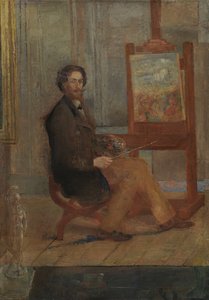
James Ensor
1860 - 1949 , Belçika
Kısa Bilgiler
- Artistic Movement Or Style: Expressionism, Surrealism
- Artists Who Influenced This Artist:
- Bruegel the Elder
- Francisco Goya
- Whistler
- Date Of Birth: April 13, 1860
- Date Of Death: November 19, 1949
- Full Name: James Sidney Edouard Ensor
- Nationality: Belgian
- Notable Artworks:
- The Scandalized Masks
- Skeletons Fighting...
- Christ's Entry into Brussels
- Place Of Birth: Ostend, Belgium
İlgili Yazılar

James Ensor's Grotesque Visions: Social Commentary & Artistic Innovation
Explore the unsettling yet captivating world of James Ensor, a pioneer of Expressionism. Discover his satirical masterpieces, symbolic imagery & lasting influence on modern art. High-quality reproductions available at AllPaintingsStore.
Sir Alfred Munnings' Masterpieces: 25 Paintings That Define Equine Art | AllPaintingsStore
Explore 25 iconic Sir Alfred Munnings paintings! Discover the beauty of British Impressionism, equine art & rural England. Find museum-quality reproductions and elevate your home decor with AllPaintingsStore. Explore the full collection online.
Mars Black Masterpieces: 10 Iconic Paintings & Timeless Art Decor Ideas
Delve into the power of 'Mars Black' with 10 iconic paintings by masters like Rembrandt & Caravaggio. Explore dramatic chiaroscuro, gothic art, and timeless beauty. Find museum-quality reproductions & elevate your home decor on .

James Abbott McNeill Whistler'ın En İyi 25 Eseri: Sanat ve Dekorasyon Rehberi | AllPaintingsStore
James Abbott McNeill Whistler'ın en iyi 25 eserini keşfedin! Amerikan empresyonizminin öncüsü Whistler'ın nocturne resimleri, portreleri ve sanat tarihine damga vuran diğer başyapıtları AllPaintingsStore.com'da. Ev dekorasyonunuz için lüks tabloları inceleyin.

Dark Masterpieces: 10 Iconic Paintings Dominated by Black Tones |
Explore 10 iconic paintings dominated by black tones, from Rembrandt’s chiaroscuro to Goya's dark expressions. Discover the stories behind these masterpieces & find museum-quality art reproductions for your home at .


