


 Önizle
 Gönder
 Paylaş
 Detaylar
 Rehber

 Dosyayı İndir
 Benzerleri
 X-Işını
 Slayt Gösterisi
 Q&A
Q&A İstatistikler
Petites chinoiseries bleues

 Devamını Oku
Giclée / Sanat Baskısı
Hızlı üretim ve esnek bitiş seçenekleriyle müze kalitesinde giclée veya kanvas baskı. ( El Yapımı Tablo Satın Al Dijital Görsel Satışına Geç)




P118B ₺10

P118H ₺10

P118W ₺10

P438Z ₺10

P508JH ₺12

P508YH ₺12

P805H ₺10

P805Z ₺10

P919BZ ₺10

P919G ₺10

P919XJ ₺10

P959ZH ₺10

P968JZ ₺12

W106C ₺8

W218G ₺10

W218JH ₺8

W218Y ₺10

W307PJ ₺10

W316G ₺10

W316PJ ₺8

W316Y ₺10

W398PJ ₺8

W4111J ₺10

W500HY ₺15

W500JH ₺15

W692G ₺12

W849H ₺8

W940BG ₺15

W953PJ ₺8




Eserin orijinal oranlarıyla uyumlu, önceden belirlenmiş boyutlarımız arasından seçim yapın.

Çerçevenize veya duvarınıza uygun olması için ihtiyacınız olan genişlik ve yüksekliği yazın. Bir baskı yalnızca kesilebilir, görselden daha büyük hale getirilemez; bu nedenle farklı bir formdaki boyut seçimi, görselin bir kısmının kaybına neden olur. Herhangi bir baskı yapmadan önce onaylamanız için size bir dijital taslak gönderiyoruz. Bu sayfada gösterilen resim gerçek kesimi göstermez — bunu yalnızca taslak gösterir.
Dünya Çapında Teslimat (); standart 4/5 hafta yerine 2 haftada. (31 Ekim)

Dünya Çapında Ücretsiz Ekspres Kargo

Yüksek Kaliteli Keten Tuval

Tam Nakliye Sigortası

Gümrük Vergisi İadesi Garantisi

Gerçek Renk Uyumu Garantisi

100 Günlük İade Koşulları (Sadece Üretim Hatalı Ürünler İçin)

%100 Para İade Garantisi

Toplu Alım Avantajı
 Cam seçeneği yalnızca 110 cm altındaki boyutlar için mevcuttur.

Petites chinoiseries bleues
Giclée / Sanat Baskısı
Baskı Boyutu
-


Toplam Fiyat
₺ 3145
A World Woven with Masks and Shadows: James Ensor’s “Petites Chinoiseries Bleues”
James Ensor's "Petites Chinoiseries Bleues" isn’t merely a still life; it’s a meticulously constructed tableau of unsettling beauty, a window into the artist’s uniquely fractured vision. Painted in 1906, this work embodies the core of Ensor’s artistic philosophy – a deliberate blurring of reality and dream, a fascination with the grotesque, and an exploration of the human psyche through carefully arranged objects. The painting depicts a tabletop laden with a collection of Chinese artifacts: porcelain bowls, delicate figurines, intricately patterned fans, and a scattering of bottles and cups. Yet, it’s not the objects themselves that hold primary interest, but rather their arrangement, their colors, and the subtle, almost menacing presence of figures lurking just beyond the frame. The dominant hue is a cool, melancholic blue – a color often associated with introspection, mourning, and the uncanny – which permeates the scene, lending it an atmosphere of quiet unease. This deliberate use of color, combined with Ensor’s signature style, immediately establishes a mood far removed from simple representation.The Language of Masks and Exoticism
Ensor's preoccupation with masks is central to understanding his work, and “Petites Chinoiseries Bleues” provides a particularly potent example. The artist’s childhood spent in his parents’ souvenir shop, overflowing with carnival masks and exotic curiosities from around the world, profoundly shaped his artistic sensibility. These objects weren’t simply souvenirs; they were portals into other cultures, representations of hidden identities, and symbols of disguise. In this painting, the Chinese artifacts – particularly the porcelain figurines and the intricately patterned fans – function as metaphorical masks, concealing deeper meanings and inviting speculation about their origins and significance. The inclusion of Japanese elements—the fans and prints—further emphasizes this exoticism, reflecting Ensor’s interest in both Eastern cultures and the allure of the ‘other.’ The arrangement itself suggests a theatrical stage, with the objects positioned to create a narrative, albeit an ambiguous one.Technique and Composition: A Deliberate Discomfort
Ensor's technique is characterized by a bold, expressive brushstroke and a masterful manipulation of color. He employs a broken, almost fragmented approach, layering paint in thick impasto to create texture and depth. The composition is carefully balanced, yet unsettlingly off-kilter. The objects are arranged with a deliberate asymmetry, creating a sense of visual tension. Notice the way the blue dominates, subtly shifting and reflecting light in unexpected ways. The figures glimpsed behind the table – often interpreted as shadowy servants or perhaps even distorted reflections of Ensor himself – contribute to this feeling of unease and suggest a hidden drama unfolding just beyond our perception. The use of light is particularly noteworthy; it’s not naturalistic but rather serves to heighten the painting's emotional impact, casting long shadows and creating areas of darkness that invite the viewer’s imagination.Symbolism and the Artist’s Psyche
“Petites Chinoiseries Bleues” resonates with themes of isolation, mortality, and the anxieties of modern life – concerns that were increasingly prevalent in Ensor's time. The presence of skeletons (implied through the porcelain figurines) subtly references death and decay, while the overall atmosphere evokes a sense of melancholy and introspection. The painting can be interpreted as a meditation on the artificiality of appearances, the illusion of comfort, and the hidden darkness beneath the surface of everyday life. It’s a work that rewards close observation and invites repeated viewing, revealing new layers of meaning with each encounter. The title itself – “Petites Chinoiseries” – suggests a focus on small details, hinting at Ensor's ability to find profound significance in seemingly insignificant objects. Ultimately, "Petites Chinoiseries Bleues" is a testament to Ensor’s unique artistic vision—a hauntingly beautiful and deeply unsettling exploration of the human condition.Soru ve Cevaplar
James Ensor imzalı "Petites chinoiseries bleues" ev dekorasyonunda nasıl kullanılabilir?
"Petites chinoiseries bleues" eseri Statement için önerilmektedir; kullanım için en uygun alan ise bir Living Room'dur.
"Petites chinoiseries bleues" genel olarak daha mı açık yoksa daha mı koyu tonlarda?
James Ensor imzalı "Petites chinoiseries bleues", shadow parlaklık ve Dark düzeyinde bir lüminans ile kaydedilmiştir.
"Petites chinoiseries bleues" hangi duyguyla ilişkilendiriliyor?
"Petites chinoiseries bleues", Melancholic bir duyguyla ilişkilendirilir. Duygusal ton, eserin uyandırdığı izlenimi tanımlar.
İlgili Eserler


Sanatçı Biyografisi
James Ensor: A Pioneer of Expressionism and Surrealism
James Sidney Edouard Ensor (Ostend, 13 April 1860-19 November 1949) was a Belgian painter and printmaker, an important influence on expressionism and surrealism who lived in Ostend for almost his entire life. He was associated with the artistic group Les XX.
Early Life and Artistic Training
Ensor’s father, James Frederic Ensor, born in Brussels to English parents, was a cultivated man who studied engineering in England and Germany. Ensor’s mother, Maria Catharina Haegheman, was Belgian. Ensor himself lacked interest in academic study and left school at the age of fifteen to begin his artistic training with two local painters. From 1877 to 1880 he attended the Académie Royale des Beaux-Arts in Brussels, where one of his fellow students was Fernand Khnopff. Ensor first exhibited his work in 1881.
The Emergence of Expressionist Style
During the late 19th century much of Ensor’s work was rejected as scandalous, particularly his painting Christ’s Entry Into Brussels (1888–89). The Belgium art critic Octave Maus famously summed up the response from contemporaneous art critics to Ensor's innovative (and often scathingly political) work: “Ensor is the leader of a clan. Ensor is the limelight. Ensor sums up and concentrates certain principles which are considered to be anarchistic. In short, Ensor is a dangerous person who has great changes. ... He is consequently marked for blows. It is at him that all the harquebuses are aimed. It is on his head that are dumped the most aromatic containers of the so-called serious critics.” Some of Ensor's contemporaneous work reveals his defiant response to this criticism.
Key Works and Recurring Themes
Ensor’s artistic style evolved dramatically over time, reflecting a profound engagement with psychological exploration and social critique. Initially influenced by Rembrandt, Redon, Goya, Japanese woodcuts, Brueghelian images and contemporary spoofs, Ensor developed a highly personal iconography and design. He rejected French Impressionism and Symbolism and lent himself to the expressive qualities of light, line, colour and the grotesque and macabre motifs such as carnival masks and skeletons, which he rendered in massive tableaux such as *The Aureoles of Christ* (1885–86) and *Skeletons Fighting over a Hanged Man* (1891). These grotesque metamorphoses culminate in Ensor’s most well-known and monumental mask tableau: *Christ’s Entry Into Brussels* (1888–89, oil on canvas, Los Angeles, J. Paul Getty Museum).
Legacy and Influence
Ensor is now widely recognized as a pivotal figure in the transition from 19th-century Symbolism to early 20th-century Expressionism and Surrealism—a true pioneer of modern art. His fearless exploration of the subconscious, his embrace of grotesque imagery, and his rejection of academic conventions paved the way for future generations of artists who dared to challenge artistic norms. Despite facing initial resistance, Ensor eventually gained recognition in his later years, being named a Baron by King Albert I in 1929 and awarded the Légion d’honneur in 1933. He died in Ostend in 1949, leaving behind a body of work that continues to captivate, disturb, and inspire.
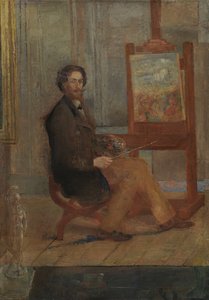
James Ensor
1860 - 1949 , Belçika
Kısa Bilgiler
- Artistic Movement Or Style: Expressionism, Surrealism
- Artists Who Influenced This Artist:
- Bruegel the Elder
- Francisco Goya
- Whistler
- Date Of Birth: April 13, 1860
- Date Of Death: November 19, 1949
- Full Name: James Sidney Edouard Ensor
- Nationality: Belgian
- Notable Artworks:
- The Scandalized Masks
- Skeletons Fighting...
- Christ's Entry into Brussels
- Place Of Birth: Ostend, Belgium
İlgili Yazılar
Slate Blue Masterpieces: 10 Iconic Paintings & Timeless Home Decor Ideas
Immerse yourself in the captivating world of slate blue! Explore 10 iconic paintings by Monet, Van Gogh & Renoir. Discover their stories, techniques & find museum-quality art reproductions for your home at .
Sir Alfred Munnings' Masterpieces: 25 Paintings That Define Equine Art | AllPaintingsStore
Explore 25 iconic Sir Alfred Munnings paintings! Discover the beauty of British Impressionism, equine art & rural England. Find museum-quality reproductions and elevate your home decor with AllPaintingsStore. Explore the full collection online.

The Allure of Azure: Exploring the Symbolic & Aesthetic Depths of Blue in Art History
Explore the rich history of blue in art! Discover its symbolism, from ancient pigments to modern masterpieces by Kandinsky & Seurat. Uncover the psychological impact and cultural meanings behind this captivating hue.
James Abbott McNeill Whistler'ın En İyi 25 Eseri: Sanat ve Dekorasyon Rehberi | AllPaintingsStore
James Abbott McNeill Whistler'ın en iyi 25 eserini keşfedin! Amerikan empresyonizminin öncüsü Whistler'ın nocturne resimleri, portreleri ve sanat tarihine damga vuran diğer başyapıtları AllPaintingsStore.com'da. Ev dekorasyonunuz için lüks tabloları inceleyin.

James Ensor's Grotesque Visions: Social Commentary & Artistic Innovation
Explore the unsettling yet captivating world of James Ensor, a pioneer of Expressionism. Discover his satirical masterpieces, symbolic imagery & lasting influence on modern art. High-quality reproductions available at AllPaintingsStore.


