Para İadesi Garantisi · 100 gün Dünya Çapında Ücretsiz Teslimat
449.564sanat eserleri 30.613sanatçılar 4.660müzeler 32Dil Seçenekleri
Katalog kaydı

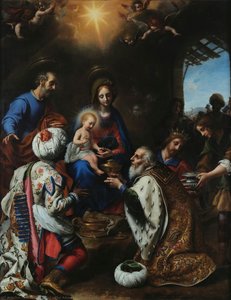
Circumcision

1580. Yağlı boya, 95.0 x 73.0 cm. Hermitage Müzesi.

Şekil 1. Luis De Carbajal, Circumcision, 1580. Belirttiğiniz reprodüksiyon olarak gösterilmektedir: , .

§ 1Katalog verileri

Boyutlar
95.0 x 73.0 cm

§ 2Soyut

Eser Açıklaması

Luis de Carbajal'ın İspanyol Rönesansı döneminde Toledo katedralleri için yarattığı etkileyici dini tablolarıyla tanınan ustalık eseridir. El Greco etkisiyle Gothik geleneklerini humanist ruhla buluşturan Carbajal, sanat tarihine önemli bir figür olarak yerleşmiştir.

Sanatçı Biyografisi

Explore the masterful works of Luis de Carbajal, a Spanish painter renowned for religious scenes & cathedral art. Discover his legacy in Toledo & beyond!

§ 3Yorumlar

Luis de Carbajal: Toledo’s Gothic Soul Transformed

Luis de Carbajal (c. 1531 – after 1618), born in Toledo, Spain, stands as one of the most prolific and influential painters of the Spanish Renaissance, particularly renowned for his monumental cathedral altarpieces that embody the grandeur and spiritual fervor of the era. While overshadowed by contemporaries like El Greco—with whom he shared a formative artistic connection—Carvajal’s distinctive style cemented his place in art history as a pivotal figure in Toledo’s artistic revival and a masterful interpreter of Gothic sensibilities adapted to the burgeoning humanist spirit. His output spanned decades, leaving behind an impressive legacy that continues to inspire admiration for its meticulous detail and emotive power. ### The Crucible of Influence: Early Training & El Greco's Legacy Carvajal’s formative years coincided with El Greco’s arrival in Toledo, establishing himself as a teacher and fostering a stylistic dialogue that would profoundly shape Carbajal's artistic vision. This mentorship instilled in him a fascination for dramatic lighting—a hallmark of El Greco’s Mannerist style—and an unwavering commitment to conveying spiritual depth through meticulously rendered figures. The influence of Villoldo, another prominent Toledo artist, contributed to his understanding of classical proportions and compositional balance, grounding his work in humanist principles alongside religious devotion. This confluence of artistic traditions ensured that Carbajal's oeuvre would never be merely decorative; it would always strive for profound emotional resonance. ### Cathedral Altarpieces: Monumental Expressions of Faith – A Synthesis of Tradition & Innovation Carvajal’s fame rests primarily on his monumental cathedral altarpieces—a genre that flourished during the Habsburg reign and served as a powerful vehicle for disseminating theological narratives. His most celebrated commissions included seven canvases depicting saints for the Escorial Cathedral, commissioned by Philip II to commemorate the Holy Spirit. These works exemplify Carbajal's mastery of technique: he employed oil paint on canvas with painstaking precision, layering translucent glazes to achieve luminous effects and capturing subtle nuances of expression in his figures. The composition—characterized by pyramidal structures and dramatic diagonals—mirrors the architectural grandeur of the cathedral itself, reinforcing its symbolic significance as a locus of divine presence. Each saint is portrayed with palpable emotion, conveying not merely doctrinal correctness but also spiritual contemplation. He skillfully blended Gothic stylistic elements – elongated figures, stylized drapery – with Renaissance humanist ideals to create images that were both aesthetically compelling and spiritually profound. ### Symbolism & Emotion: Decoding the Visual Language Carvajal’s artistic approach wasn't simply about replicating religious iconography; it was about reimagining Gothic traditions within the framework of Renaissance humanism. He deliberately incorporated elements reminiscent of medieval art—such as stylized drapery and elongated figures—to evoke a sense of solemn reverence and to honor Toledo’s rich ecclesiastical heritage. The saints depicted are not merely representations of biblical figures but embodiments of virtues – compassion, humility, courage – reflecting the moral values championed by humanist thinkers. Furthermore, Carbajal's meticulous attention to detail—from the folds of robes to the expressions on faces—demonstrates a profound understanding of human psychology and elevates his paintings beyond mere visual spectacle into emotionally resonant experiences. The artist’s masterful use of chiaroscuro—the interplay of light and shadow—intensifies these emotional effects, drawing viewers into the spiritual drama unfolding before their eyes. ### Rediscovery & Legacy: Toledo's Artistic Soul Preserved Today, Carbajal’s canvases reside primarily in the Museo del Prado in Madrid, where they continue to captivate audiences with their breathtaking beauty and spiritual depth. Recent scholarship has illuminated the significance of his work within the broader context of Toledo’s artistic revival—a period marked by a renewed interest in classical ideals alongside an enduring devotion to Christian faith. His paintings stand as testament to Carbajal's skill, creativity, and unwavering commitment to conveying the sublime—a legacy that secures his place among Spain’s greatest artists and ensures that his masterpieces endure for generations to come. They represent not just artistic achievement but also a vital connection to Toledo’s cultural heritage and a timeless expression of faith and human emotion.

Soru ve Cevaplar

"Circumcision" adlı eser, Luis De Carbajal’in temaları ve üslubuyla nasıl bir bütünlük sağlıyor?

"Circumcision", Luis De Carbajal'in diğer eserleriyle birlikte Baroque Revival üslubunu ve işlenen temaları paylaşmaktadır: religious symbolism, gothic revival, patron saint imagery, cathedral decoration, baroque tradition.

Baroque Revival akımına ait "Circumcision" adlı eser hangi duyguyu yansıtıyor?

"Circumcision" eserinin Melankolik duygusu, Baroque Revival üslubuyla birleşiyor.

Luis De Carbajal imzalı "Circumcision" eserine benzer sanat eserlerini nasıl keşfedebilirim?

"Circumcision" ile benzer eserler, eserin Benzer Eserler sayfasında listelenmektedir.

§ 4Sanatçı

Luis De Carbajal

Luis De Carbajal

1531 - 1618, Spain

Luis De Carbajal hakkında kısa bilgiler

  • Full Name: Luis de Carbajal y de la Cueva
  • Nationality: Spanish
  • Date Of Birth: 1531
  • Date Of Death: 1618
  • Place Of Birth: Toledo, Spain
  • Notable Artworks: ['Circumcision']
  • Artistic Movement Or Style: Religious Painting; Gothic Art Style
  • Artists Who Influenced This Artist: ['Alonso Berruguete']
  • Artists Or Movements Influenced By This Artist: ['El Greco']

Sanatçı Özgeçmişi

The Radiant Legacy of Luis de Carbajal

In the heart of Toledo, a city where the echoes of medieval devotion meet the burgeoning light of the Renaissance, the life of Luis de Carbajal unfolded as a profound testament to spiritual and artistic endurance. Born around 1531, Carbajal emerged from the vibrant, intellectually charged atmosphere of Spain’s most storied religious center. While history often casts a long shadow through the ethereal mysticism of El Greco, Carbajal stands as a monumental figure in his own right—a master who bridged the gap between the soaring, structural grandeur of the Gothic tradition and the nuanced, humanistic spirit of the Spanish Renaissance. His journey was one of deep connection to the sacred, moving through the halls of cathedrals and royal monasteries, leaving behind a visual legacy that captured the very soul of an era defined by faith.

The foundations of Carbajal’s artistry were laid within the prestigious workshops of Toledo, under the guidance of masters like Juan de Villoldo. This early training provided him with a rigorous understanding of classical proportions and compositional balance, yet it was his encounter with the transformative energy of El Greco that truly ignited his creative vision. From this connection, Carbajal embraced the dramatic power of chiaroscuro, learning to manipulate light and shadow to evoke deep emotional resonance. Unlike the more otherworldly, elongated figures of his contemporary, Carbajal’s work maintained a grounded, architectural dignity. He drew inspiration from the very bones of Toledo—its ribbed arches, vaulted ceilings, and stained glass—incorporating these Gothic elements into his canvases to create spaces that felt both physically immense and spiritually intimate.

A Master of the Altarpiece and Royal Commission

Carbajal’s career was marked by an extraordinary level of productivity, with estimates suggesting he produced over 300 works during his long life. His talent earned him the prestigious distinction of being named a painter for King Philip II of Spain, a role that placed him at the epicenter of the Spanish Golden Age. His brush traveled through the most sacred corridors of the empire, from the intimate oratories of the Pardo Palace to the imposing halls of the monastery in El Escorial. One of his most significant achievements was the creation of seven large-scale canvases for the church of the Escorial in 1570, where he masterfully paired saints such as Cosme and Damián, and Cecilia and Barbara, weaving complex theological narratives into single, cohesive compositions.

His ability to command large-scale religious subjects allowed him to become a primary architect of visual devotion. His works were not merely decorations but were essential tools for the dissemination of Catholic doctrine during a period of intense religious fervor. Through his meticulous attention to detail and his ability to render the divine within a tangible, earthly framework, he achieved several notable milestones:

  • Monumental Altarpieces: He specialized in massive cathedral commissions that served as the focal points for liturgical worship, embodying the grandeur of the Habsburg reign.
  • Narrative Depth: His paintings, such as the Circumcision, utilized dramatic lighting to guide the viewer's eye through complex biblical stories.
  • Ecclesiastical Influence: By decorating the Archbishop's chapel in Toledo and various convent cloisters, he shaped the visual identity of the Spanish Church.

Historical Significance and Enduring Spirit

The historical importance of Luis de Carbajal lies in his role as a stabilizer of tradition during a time of radical artistic change. While the art world moved toward the more distorted and emotive Mannerism, Carbajal provided a sense of continuity, anchoring the new humanist ideas within the familiar, comforting language of Gothic architecture and classical balance. He was a painter who understood that to move the heart, one must first respect the structure of the faith. His work remains a vital link in the evolution of Spanish art, representing a moment when the medieval past and the Renaissance future existed in perfect, painted harmony.

Today, the traces of his genius can still be found in the great repositories of Spanish heritage, including the Museo del Prado in Madrid. To study Carbajal is to witness the pulse of Toledo itself—a master who took the stone and light of his homeland and transformed them into an eternal dialogue between the human and the divine. His life, stretching well into the 17th century, serves as a bridge across eras, ensuring that the spiritual gravity of the Spanish Renaissance would never be forgotten.

§ 5İlgili eserler

§ 6Sorular

Hızlı Bilgiler

  • Influences: El Greco
  • Location: Museo del Prado
  • Year: 1580
  • Title: Circumcision
  • Movement: Mannerism
  • Subject or theme: Religious ceremony

Sanat Bilgisi Testi

Her soru için yalnızca bir doğru cevap bulunmaktadır.

Soru 1:
Bu eserin adı nedir?
Soru 2:
Luis de Carbajal doğum yeri olarak hangi şehirdir?
Soru 3:
Bu eser yaklaşık olarak ne zaman yaratılmıştır?
Soru 4:
Bu sanat eserinde hangi sanat akımı baskın bir şekilde temsil edilmektedir?
Soru 5:
Bu eserin bulunduğu müze hangisidir?

§ 7Bu çalışmaya atıf yapın

AllPaintingsStore.com, “Luis De Carbajal, Circumcision (1580)”, https://allpaintingsstore.com/tr/art/luis-de-carbajal-circumcision-8Y35H8-tr/ArtistReproduction/ (erişim tarihi 8 Ekim 2026).

§ 8Reproduksiyon

El Yapımı Yağlı Boya Reproduksiyon

Sanatçılarımız tarafından sipariş üzerine hazırlanan; istediğiniz boyut ve çerçevede, tuval üzerine el boyaması yağlı boya. ( Baskı Satışına Geç Dijital Görsele Geç)

Sipariş fişinin kenar notunda belirtilmiştir; söz konusu fişin güncel durumu şu şekildedir:

Circumcision

Reproduksiyon Tekniği

Reproduksiyon Boyutu

-

Seçkin Kıdemli Sanatçı

Daha fazla detay, incelik ve ek üretim süresi

-

Reproduksiyon Çerçevesi

-

-

Herhangi bir kenarı 105 cm'den (yaklaşık 41 inç) büyük olan sanat eserleri veya reprodüksiyonlar için çerçeve, demonte edilmiş bir kit halinde gönderilecektir. Bu yöntem, güvenli teslimat sağlar ve taşıma sırasında oluşabilecek hasarları önler.

Profesyonel montaj gereklidir; bu ürün kendin yap (DIY) tarzı bir ürün değildir.
Kit; ahşap tutkalı (pakete dahil değildir), kanvas germe pensi ve tutkal kururken çıtaların dik durmasını sağlayacak işkenceler kullanılarak, deneyimli bir profesyonel çerçeveci tarafından monte edilmeli ve kanvas gerilmelidir. Hatalı montaj veya dengesiz kanvas gerginliği sanat eserine kalıcı zarar verebilir ve bu durum garantimiz kapsamında değildir.

  • Tüm masif ahşap çıtalar dahildir, montaj için hassas bir şekilde ölçülmüştür.

  • Paket içeriğinde bulunan vidalar ve köşe birleşimleri için ustanız tarafından temin edilmesi gereken, ancak pakete dahil olmayan ahşap tutkalı ile monte edilir.

  • Profesyonel araçlar gereklidir ve pakete dahil değildir: bir tuval germe aparatı (gerdirici) ve yapıştırıcı kururken çıtaların dik durmasını sağlayacak kıskaçlar.

Önemli:
Köşe bağlantıları için ahşap tutkalı gereklidir; tutkal tamamen kuruyana kadar çıtalar işkenceler ile sabitlenmelidir ve monte edilmiş çerçeve üzerindeki kanvasın gerilmesi için bir kanvas germe pensine ihtiyaç duyulur. Bunların hiçbiri kit içerisinde yer almamaktadır. Lütfen bu boyutu sipariş etmeden önce deneyimli bir profesyonel çerçeve ustası ile anlaşın.

Eser Etiketi

-

-

Koruyucu Vernik Katmanı

Parlak Vernik (renkleri canlandırır; ışığa ve neme karşı koruma sağlar)

-

Eserimi Özelleştir

Değiştirilebilecek örneklere göz atın: Yüzü müşteri fotoğrafıyla değiştirin; Evcil hayvan ekleyin (örneğin, kediyi köpek ile değiştirin); Arka plana gizli bir mesaj dahil edin; Arka plan manzarasını veya öğelerini değiştirin.

-

Hızlı Teslimat

Dünya Çapında Teslimat (); standart 5 hafta yerine 3/4 hafta içinde. (5 Kasım). Kaliteden ödün verilmez.

-

Hızlı Gönderim

için dünya çapında 5 haftalık teslimat süresi. (12 Kasım).

Dahil

Toplam Tutar

₺ 12699

Her siparişle birlikte gelir

  • Dünya Çapında Ücretsiz Ekspres Kargo
  • Yüksek Kaliteli Keten Kanvas
  • Tam Nakliye Sigortası
  • Gümrük Vergisi İadesi Garantisi
  • Gerçek Renk Uyumu Garantisi
  • 100 Günlük İade Politikası (Sadece Kusurlu Ürünler İçin)
  • %100 Para İade Garantisi
  • Toplu Alım İndirimi
Temalara, stillere ve özelliklere göre düzenlenmiş sanat eserlerini keşfedin.
Sipariş formu