


 Önizleme yap
 Paylaş
 Paylaş
 Detayları Gör

 İndir
İndir
 Benzerlerini gör
 X-Işını
 Slayt Gösterisi
Vase


 Tümünü Gör
Giclée / Sanat Baskısı
Hızlı üretim ve esnek bitiş seçenekleriyle müze kalitesinde giclée veya kanvas baskı. ( El yapımı tablo satın al Görsel satın al)




































Eserin orijinal oranlarıyla uyumlu, önceden belirlenmiş boyutlarımız arasından seçim yapın.

Belirli bir çerçeveye veya alana uyması için kendi ölçülerinizi girebilirsiniz. Seçtiğiniz boyut orijinal görüntünün oranlarıyla eşleşmiyorsa, sanat eserini kırpacağız veya görüntüyü aynalanmış ya da düz dolgulu bir kenarlıkla genişleteceğiz. Üretim başlamadan önce onayınız için bir dijital taslak gönderilecektir.
Lütfen ekrandaki önizlemenin gerçek kırpma veya genişletmeyi yansıtmadığını unutmayın. Nihai kompozisyonu yalnızca taslak doğru bir şekilde gösterecektir.
Özel boyutlar mevcut olsa da, orijinal oranları korumak için önceden tanımlanmış listeden bir boyut seçmenizi öneririz.
Dünya Çapında Teslimat (); standart 4/5 hafta yerine 2 haftada. (22 Ağustos)

Dünya Çapında Ücretsiz Ekspres Kargo

Yüksek Kaliteli Keten Tuval

Tam Kapsamlı Nakliye Sigortası

Gümrük Vergisi İade Garantisi

Gerçek Renk Uyumu Garantisi

60 Günlük İade Politikası (Sadece Kusurlu Ürünler İçin)

%100 Para İade Garantisi

Toplu Alım İndirimi
 Cam seçeneği yalnızca 110 cm altındaki boyutlar için mevcuttur.

Vase
Giclée / Sanat Baskısı
Reproduksiyon Boyutu
-


Toplam Tutar
$ 64
Benzer Eserler


Sanatçı Özgeçmişi
Maija Grotell: The Pioneer of American Studio Pottery
Maija (Majlis) Grotell (August 19, 1899 — December 6, 1973) was an influential Finnish-American ceramic artist and educator. She is often described as the “Mother of American Ceramics,” a title earned through her tireless advocacy for studio pottery and her transformative role in establishing it as a respected artistic discipline within the United States.
Born in Helsinki, Finland, Grotell’s early life was marked by a passion for art instilled by her father, who encouraged her to pursue painting and sculpture alongside design studies. She excelled at The Ateneum, Helsinki’s Central School of Industrial Art, where she honed her technical skills while simultaneously exploring artistic expression.
Unable to find suitable employment after graduation, Grotell bravely embarked on a journey across the Atlantic in 1927, choosing America as her destination due to its relative openness and burgeoning ceramic industry. Recognizing that Finland lacked resources for ceramics education, she sought opportunities for herself and fellow artists.
Her formative experience at Alfred University solidified her commitment to studio pottery, where she encountered Charles Fergus Binns, a visionary educator who championed the potter’s wheel as opposed to more conventional construction methods. This encounter profoundly shaped Grotell's artistic philosophy and teaching approach—a dedication to mastering fundamental techniques that would define her career.
Early Artistic Development & Scandinavian Influences
Grotell’s artistic style emerged from a synthesis of Scandinavian design principles and American modernist aesthetics. She embraced simplicity, geometric forms, and textural surfaces – elements characteristic of the Bauhaus movement and influential in shaping European ceramics during the interwar years.
Her distinctive glaze techniques—particularly her innovative use of copper reds, ash glazes, and crackle glazes—became hallmarks of her oeuvre. These explorations were driven by a desire to push boundaries and challenge established conventions within the ceramic art world.
The Cranbrook Legacy & Shaping Ceramic Education
In 1938 Grotell accepted the prestigious position as Head of Ceramics Department at Cranbrook Academy of Art in Bloomfield Hills, Michigan—a pivotal moment that cemented her reputation as a champion of artistic education. At Cranbrook she mentored generations of students, fostering a collaborative environment where experimentation and innovation thrived.
She established Cranbrook’s ceramics program as a national leader in studio pottery instruction, emphasizing the importance of mastering fundamental skills alongside exploring conceptual ideas. Her influence extended beyond the academy walls, shaping the trajectory of ceramic art education for decades to come.
Major Achievements & Recognition
Grotell's contributions to American ceramics were recognized through numerous awards and honors throughout her lifetime. Notably, she received a Silver Medal at the Paris International Exhibition (1937), demonstrating her artistic prowess on an international stage.
Her work was exhibited extensively across the United States and Europe, garnering critical acclaim for its elegance, craftsmanship, and conceptual depth. Among her most celebrated pieces is *Vase*, a stunning example of Scandinavian modernist studio pottery that exemplifies her mastery of form and glaze technique—a testament to her enduring legacy as “The Mother of American Ceramics.”
Concluding Thoughts: An Enduring Influence
Maija Grotell’s unwavering dedication to ceramic art, combined with her pioneering role in establishing studio pottery as a respected artistic discipline, ensured her place among the most influential figures in 20th-century ceramics. Her legacy continues to inspire artists and educators alike—a reminder that true innovation stems from embracing tradition while daring to forge new paths.

majlis grotell
1899 - 1973 , Finland
Kısa Bilgiler
- Artistic Movement Or Style: Scandinavian Modernism
- Artists Or Movements Influenced By This Artist: ['Charles Fergus Binns']
- Artists Who Influenced This Artist: ['Alfred William Finch']
- Date Of Birth: August 19, 1899
- Full Name: Maija Grotell
- Nationality: Finnish Naturalized U.S.
- Notable Artworks: ['Leopard Skin Vase']
- Place Of Birth: Helsinki, Finland
İlgili Makaleler
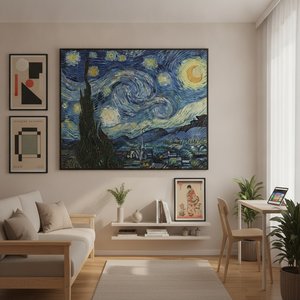
Maximizing Small Spaces: A Professional Guide to High-Impact Art Reproductions for Studio Apartments
Master small space design with high-impact art reproductions. Learn how professional decorators use scale, texture, and multi-panel layouts to transform studio apartments into expansive, sophisticated environments using premium hand-painted oils and modern geometric wall art.


