

1971. Ink On Paper.

§ 1Katalog verileri


Bu Eser Telif Hakkı Koruması Altındadır
Bu sayfada sergilenen eser telif hakkı yasasıyla korunmaktadır; bu da yasal olarak eserin birebir kopyasını oluşturamayacağımız veya satamayacağımız anlamına gelir. Bu koruma, aşağıdakiler gibi uluslararası anlaşmalar kapsamında uygulanmaktadır: Bern Sözleşmesi ve aşağıdakiler de dahil olmak üzere ulusal yasalarca belirlenen ABD Telif Hakkı Kanunu - 17. Başlık.
Saygılı ve yasal bir alternatif olarak, orijinalinden ilham alan, kişiye özel, el boyaması sanat eserleri sunuyoruz. Deneyimli ve profesyonel sanatçılarımız, aynı duyguyu uyandıran yeni ve benzersiz bir eser yaratmak için orijinalin stilini, ruhunu ve sanatsal özünü titizlikle inceler; üstelik bu eser, kendi başına özgün bir üretim olarak kalır.
Bu yöntem, koruma altındaki sanat eserinin kopyalanmasını veya çoğaltılmasını içermediği için telif hakkı düzenlemelerine tam uyum sağlar. Bunun yerine, yaratıcı bir yeniden yorumlamadır; orijinalinden etkilenen ancak onunla aynı olmayan yeni bir tablodur.
 Daha fazla bilgi edinin
§ 2Soyut
Eser Açıklaması
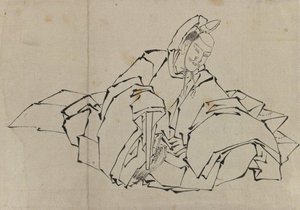
A striking Cubist monochrome drawing by Pablo Picasso from 1971 explores the surreal tension between a regal figure and a nude form through geometric abstraction, inviting you to explore this masterpiece of duality.
Sanatçı Biyografisi
Pablo Picasso (1881-1973), Kübizm'in kurucularından devrimci bir İspanyol ressam ve heykeltıraştı. Guernica ve Les Demoiselles d'Avignon gibi ikonik eserleriyle tanınan mirası, ilham vermeye devam ediyor.
§ 3Yorumlar
A Surreal Dialogue Between Power and Vulnerability
In the vast, revolutionary canon of Pablo Picasso, few works capture the profound tension of the human condition as intimately as "Untitled (63)". Created in 1971, during the twilight of his extraordinary life, this monochrome masterpiece serves as a hauntingly beautiful meditation on duality. The drawing does not merely present figures; it stages a silent, psychological drama between two opposing forces. On one side, we encounter a figure of imposing authority—a queen-like presence seated upon a throne of sharp, geometric precision. Her form is constructed from rigid, angular planes that evoke the unyielding nature of power and tradition. Yet, this structural strength finds its perfect, poignant counterpoint in the nude female figure positioned to the right. Rendered with flowing, organic contours and soft, curvilinear lines, she embodies a sense of raw vulnerability and natural grace. It is a composition that breathes with an unspoken exchange, inviting the viewer to witness a subtle challenge to established norms.
The emotional resonance of this piece lies in its ability to evoke both unease and profound contemplation. As one gazes upon the bifurcated canvas, the eye is drawn into the friction between the architectural stability of the seated figure and the fluid, ephemeral beauty of the nude form. This juxtaposition creates a sense of surrealism that transcends simple figuration, touching upon universal themes of dominance and fragility. For the collector or the interior designer, this artwork offers more than just visual interest; it provides a focal point of intellectual depth. It is a piece that demands presence in a room, acting as a window into the complexities of perception and the eternal dance between the structured world we build and the organic reality we inhabit.
Mastery of Line and the Cubist Legacy
Technically, "Untitled (63)" is a triumph of Picasso’s late-period mastery, showcasing his ability to manipulate the simplest of mediums—pen and ink on paper—to achieve extraordinary depth. The artwork is a testament to the enduring influence of Cubism, yet it moves beyond mere fragmentation into a more lyrical, expressive territory. Picasso utilizes a sophisticated array of hatching and cross-hatching techniques to sculpt light and shadow from the void. These meticulous lines do not merely define edges; they create texture and volume, giving weight to the throne's heavy geometry while lending a soft, tactile quality to the flowing hair and skin of the female figure. The monochromatic palette, stripped of the distractions of color, forces the viewer to focus entirely on the rhythm of the strokes and the interplay of black and white.
The flattened perspective, a hallmark of the Cubist movement, serves a vital symbolic purpose here. By disrupting conventional spatial depth, Picasso prevents the viewer from becoming a passive observer; instead, we are forced to navigate multiple viewpoints simultaneously, much like the multifaceted nature of truth itself. The use of sharp triangles and rectangles in the left portion of the composition reinforces a sense of structural permanence, while the more fluid, organic shapes on the right suggest movement and life. This technical brilliance ensures that every time one views a high-quality reproduction of this work, new details emerge from the shadows—a new layer of texture, a sharper angle, or a softer curve—making it an endlessly captivating addition to any curated collection of modern art.
Soru ve Cevaplar
"Untitled (63)" eserinin yazarı ve yapım yılı nedir?
"Untitled (63)", Pablo Picasso tarafından 1971 yılında yaratılmıştır."
"Untitled (63)" genel olarak daha mı açık yoksa daha mı koyu tonlarda?
Pablo Picasso imzalı "Untitled (63)", brilliant parlaklık ve Luminous düzeyinde bir lüminans ile kaydedilmiştir.
Pablo Picasso imzalı "Untitled (63)" hangi tarihi döneme aittir?
"Untitled (63)", Modern dönemine aittir.





 Baskı Satışına Geç


 Herhangi bir kenarı 105 cm'den (yaklaşık 41 inç) büyük olan sanat eserleri veya reprodüksiyonlar için çerçeve, demonte edilmiş bir kit halinde gönderilecektir. Bu yöntem, güvenli teslimat sağlar ve taşıma sırasında oluşabilecek hasarları önler.


