

Acrylic On Canvas.

§ 1Catalogue data

§ 2Abstract
Koleksiyon Açıklaması
Sun Qifeng (1583-1675) was a renowned Ming Dynasty Confucian scholar & official, famed for his ethical writings & defense of Rongcheng. Later life focused on teaching near Suzhou. Discover works by this influential master. The Sun is the star at the centre of the Solar System. It is a massive, nearly perfect sphere of hot plasma, heated to incandescence by nuclear fusion reactions in its core, rad
 Devamını Oku
Sanatçı Özgeçmişi
Soyut sanatın öncüsü Piet Mondrian'ı keşfedin! Neoplastisizm, geometrik resimler ve modern tasarıma olan kalıcı etkisi hakkında bilgi edinin. 'Broadway Boogie Woogie' gibi ikonik eserleriyle tanışın.
§ 3Commentary
The Architectonics of Emotion: Piet Mondrian’s Exploration of Universal Beauty
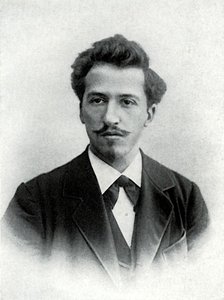
Piet Mondrian (1872–1944), born Pieter Cornelis Mondriaan in Amersfoort, Netherlands, wasn't simply a painter; he was an architect of feeling. His artistic journey began with landscapes steeped in Dutch Impressionism – canvases like *The Red Mill*, capturing the serene beauty of his homeland with meticulous observation and vibrant hues—a deliberate homage to the Hague School’s legacy. Yet, even amidst these familiar forms, Mondrian harbored a restless spirit, driven by an insistent desire for simplification and abstraction. This early experimentation with Pointillism and Fauvism wasn't merely stylistic exploration; it represented a crucial step in his quest to distill nature’s essence into its purest visual elements.- Early Influences: Mondrian’s formative years were profoundly shaped by the artistic currents of his time, notably Impressionism and Post-Impressionism. These movements instilled in him a sensitivity to color and light—qualities he would later champion as foundational to achieving universal aesthetic harmony.
- The Pursuit of Geometric Clarity: As Mondrian matured, he increasingly rejected representational painting in favor of geometric abstraction. This decisive shift stemmed from his conviction that true beauty resided not in mimicking reality but in expressing underlying spiritual principles through pure forms—a radical departure from prevailing artistic conventions.
Neoplasticism: A Manifesto for Universal Harmony
Mondrian’s breakthrough came with the development of Neoplasticism, a term he coined alongside Theo van Doesburg in 1914. This wasn't merely an aesthetic preference; it was a philosophical declaration—a belief that art should transcend subjective experience and communicate objective truths about the cosmos. He envisioned a visual language stripped down to its essentials: horizontal and vertical lines intersecting at right angles, combined with primary colors (red, blue, yellow) and their corresponding achromatic values (black, white). This austere palette wasn’t born of nihilism but rather from an earnest attempt to capture the fundamental building blocks of existence—a reflection of his deeply held spiritual convictions.- Formal Reduction: Mondrian meticulously reduced his artistic vocabulary to these three geometric elements, rejecting any decorative or expressive additions that might distract from their inherent purity.
- Symbolic Significance: The horizontal and vertical lines represented stability and dynamism respectively—symbols of the opposing forces governing the universe according to Mondrian’s cosmological worldview.
The Influence of Eastern Philosophy
Mondrian's artistic vision extended beyond Western abstraction; he drew inspiration from Eastern philosophies, particularly Zen Buddhism. He saw parallels between the meditative practice of emptying the mind and his own process of simplifying form—a deliberate effort to achieve a state of spiritual contemplation through visual art. This influence is evident in the balanced compositions of his later works, where lines intersect with unwavering precision, creating an atmosphere of serene stillness.- Zen Buddhism: Mondrian admired Zen’s emphasis on mindfulness and acceptance—principles that resonated deeply with his desire to transcend ego and embrace the interconnectedness of all things.
- Compositional Balance: The harmonious arrangement of lines and colors in his paintings reflected Zen's pursuit of equilibrium—a visual manifestation of spiritual serenity.
A Legacy of Pure Aesthetics
Piet Mondrian’s uncompromising commitment to geometric abstraction cemented his place as one of the most influential artists of the 20th century. His work continues to inspire designers, architects, and artists alike—a testament to the enduring power of pure aesthetics—a belief that art could elevate human consciousness and reveal the underlying order of the universe. He died in Paris in 1944, leaving behind a body of paintings that remain remarkably consistent with his initial artistic principles—a timeless expression of universal beauty achieved through radical simplification.Soru ve Cevaplar
Piet Mondriaan imzalı "Sun" eserinin renklerine hangi alan uyum sağlıyor?
Piet Mondriaan imzalı "Sun" eserinin Dark renkleri, önerilen mekanı olan Living Room ile mükemmel bir uyum içindedir.
Piet Mondriaan imzalı "Sun" adlı eser kamu malı mıdır ve neden?
Piet Mondriaan imzalı "Sun" adlı eser kamu malıdır - telif hakkı süresi dolmuştur statüsündedir. Telif hakları süresi sanatçının ölüm tarihinden itibaren hesaplanmaktadır ve Piet Mondriaan, 1944 yılında vefat etmiştir.
Piet Mondriaan imzalı "Sun" eserinin renkleri ne kadar uyumlu?
"Sun" eserinin renk uyumu Unified Palette olarak kaydedilmiştir.


 Baskı Satışına Geç


 Herhangi bir kenarı 105 cm'den (yaklaşık 41 inç) büyük olan sanat eserleri veya reprodüksiyonlar için çerçeve, demonte edilmiş bir kit halinde gönderilecektir. Bu yöntem, güvenli teslimat sağlar ve taşıma sırasında oluşabilecek hasarları önler.


