


 Önizle
 Gönder
 Paylaş
 Detaylar
 Rehber

 Dosyayı İndir
 Benzerleri
 X-Işını
 Slayt Gösterisi
 İstatistikler
Le printemps


 Devamını Oku
Bu sayfada sergilenen eser telif hakkı yasasıyla korunmaktadır; bu da yasal olarak eserin birebir kopyasını oluşturamayacağımız veya satamayacağımız anlamına gelir. Bu koruma, aşağıdakiler gibi uluslararası anlaşmalar kapsamında uygulanmaktadır: Bern Sözleşmesi ve aşağıdakiler de dahil olmak üzere ulusal yasalarca belirlenen ABD Telif Hakkı Kanunu - 17. Başlık.
Saygılı ve yasal bir alternatif olarak, orijinalinden ilham alan, kişiye özel, el boyaması sanat eserleri sunuyoruz. Deneyimli ve profesyonel sanatçılarımız, aynı duyguyu uyandıran yeni ve benzersiz bir eser yaratmak için orijinalin stilini, ruhunu ve sanatsal özünü titizlikle inceler; üstelik bu eser, kendi başına özgün bir üretim olarak kalır.
Bu yöntem, koruma altındaki sanat eserinin kopyalanmasını veya çoğaltılmasını içermediği için telif hakkı düzenlemelerine tam uyum sağlar. Bunun yerine, yaratıcı bir yeniden yorumlamadır; orijinalinden etkilenen ancak onunla aynı olmayan yeni bir tablodur.
El Yapımı Yağlı Boya Reproduksiyon
Sanatçılarımız tarafından sipariş üzerine hazırlanan; istediğiniz boyut ve çerçevede, tuval üzerine el boyaması yağlı boya. ( Baskı Satışına Geç Dijital Görsel Satışına Geç)




P118B ₺10

P118H ₺10

P118W ₺10

P438Z ₺10

P508JH ₺12

P508YH ₺12

P805H ₺10

P805Z ₺10

P919BZ ₺10

P919G ₺10

P919XJ ₺10

P959ZH ₺10

P968JZ ₺12

W106C ₺8

W218G ₺10

W218JH ₺8

W218Y ₺10

W307PJ ₺10

W316G ₺10

W316PJ ₺8

W316Y ₺10

W398PJ ₺8

W4111J ₺10

W500HY ₺15

W500JH ₺15

W692G ₺12

W849H ₺8

W940BG ₺15

W953PJ ₺8




Eserin orijinal oranlarıyla uyumlu, önceden belirlenmiş boyutlarımız arasından seçim yapın.

Çerçevenize veya duvarınıza uygun olması için ihtiyacınız olan genişliği ve yüksekliği yazın. Bu eser el boyamasıdır; bu nedenle farklı bir formdaki boyutlar için sanatçı, resmin etrafına biraz daha fazla boya ekleyebilir veya biraz daha kırpabilir — seçim sizin. Boyama işlemi başlamadan önce onaylamanız için size bir dijital taslak gönderiyoruz. Bu sayfada gösterilen resim gerçek sonucu yansıtmamaktadır — gerçek sonucu yalnızca taslak göstermektedir.
Siparişten sonra, AllPaintingsStore.com ekibi talimatlar için müşteriye e-posta gönderecek ve bir taslak önizleme sunacaktır
Dünya Çapında Teslimat (); standart 5 hafta yerine 3/4 haftada. (26 Ekim). Kaliteden ödün verilmez.

Dünya Çapında Ücretsiz Ekspres Kargo

Yüksek Kaliteli Keten Tuval

Tam Nakliye Sigortası

Gümrük Vergisi İadesi Garantisi

Gerçek Renk Uyumu Garantisi

100 Günlük İade Koşulları (Sadece Üretim Hatalı Ürünler İçin)

%100 Para İade Garantisi

Toplu Alım Avantajı
 Cam seçeneği yalnızca 110 cm altındaki boyutlar için mevcuttur.

Le printemps
Baskı Tekniği
Baskı Boyutu
-


Toplam Fiyat
₺ 12629
A Glimpse of Renewal: Exploring René Magritte’s *Le Printemps*
René Magritte's *Le Printemps* (“Spring”) is a captivating example of his signature Surrealist style, offering a poetic and subtly unsettling vision of nature and rebirth. Painted sometime during his prolific career (1898-1967), this work transcends a simple depiction of birds and trees, inviting viewers into a realm where the familiar becomes wonderfully strange.Subject & Composition
The painting centers around a vibrant bird in mid-flight, dominating much of the canvas. Its colorful plumage immediately draws the eye, creating a focal point that suggests energy and movement. A lush tree with verdant leaves provides a backdrop, grounding the scene while simultaneously enhancing its dreamlike quality. Two smaller birds are subtly integrated into the composition – one perched near the upper left corner, the other in the middle right – adding depth and a sense of quiet observation to the dynamic central image. The arrangement isn’t merely representational; Magritte carefully balances elements to guide the viewer's gaze and evoke a specific emotional response.Style & Technique
*Le Printemps* exemplifies Magritte’s meticulous approach to painting. While his earlier works showed Impressionistic tendencies, by this point he had fully embraced Surrealism. He employs a precise, almost hyperrealistic technique, rendering the bird and foliage with remarkable clarity. This sharp detail contrasts beautifully with the illogical juxtaposition of elements – a hallmark of Surrealist art. Magritte’s style isn't about showcasing brushwork or texture; it’s about creating an *illusion* of reality that is simultaneously believable and profoundly unsettling. He favored smooth surfaces and carefully blended colors, contributing to the painting’s polished, almost photographic quality.Historical Context & Surrealism
Magritte was a key figure in the Surrealist movement, which emerged in the aftermath of World War I. Surrealism sought to liberate thought, language, and human experience from the constraints of reason, drawing heavily on the theories of Sigmund Freud. Artists like Magritte aimed to unlock the power of the unconscious mind through unexpected imagery and illogical combinations. *Le Printemps*, while seemingly innocent, embodies this spirit by presenting a familiar scene – birds in spring – with an undercurrent of mystery and ambiguity. It’s important to note that Magritte distinguished himself from other Surrealists; he wasn't interested in automatic writing or purely abstract expression but rather in creating meticulously rendered images that challenged our perceptions of reality.Symbolism & Interpretation
The symbolism within *Le Printemps* is open to interpretation, a characteristic feature of Magritte’s work. The bird, traditionally a symbol of freedom and hope, takes on a more complex meaning here. Its large size and prominent position could suggest an overwhelming force or the power of imagination. Spring itself represents renewal and rebirth, but Magritte doesn't offer a straightforward celebration of these themes. The painting invites contemplation about the nature of reality, perception, and the hidden meanings embedded within everyday life. Is this spring as we know it, or a dreamlike representation? The seemingly simple scene becomes a philosophical inquiry.Emotional Impact & Aesthetic Appeal
*Le Printemps* evokes a sense of quiet wonder mixed with subtle unease. The painting’s serene color palette and graceful composition are aesthetically pleasing, yet the illogical nature of the image prevents complete relaxation. It's this tension – between beauty and strangeness – that makes Magritte’s work so compelling. For interior designers, this piece offers a sophisticated touch of Surrealism, adding intellectual depth and visual interest to any space. Its calming yet thought-provoking nature makes it suitable for living rooms, studies, or bedrooms. *Le Printemps* is more than just a painting; it’s an invitation to question the world around us and embrace the power of imagination.Soru ve Cevaplar
"Le printemps" hangi tarza aittir?
René Magritte imzalı "Le printemps", Surrealism akımına aittir. Bu akım, eserin üslup bağlamını sunmaktadır.
René Magritte imzalı "Le printemps" hangi ruh halini ve duyguyu ifade ediyor?
René Magritte imzalı "Le printemps" eserinin yansıttığı ruh hali Mystical, duygusal tonu ise Mysterious'dur.
René Magritte imzalı "Le printemps" hakkındaki istatistikleri nerede bulabilirim?
René Magritte imzalı "Le printemps" hakkındaki istatistikler; eserin aylık ziyaret sayıları, sanatçının diğer eserlerinin ziyaret edilme oranları ile son dönem ziyaretçilerin ülke ve dil dağılımlarını içeren İstatistikler sayfasında yer almaktadır.
İlgili Eserler


Sanatçı Biyografisi
Early Life and the Seeds of Surrealism
René Magritte, born René François Ghislain Magritte on November 21, 1898, in Lessines, Belgium, emerged into a world that would profoundly shape his enigmatic artistic vision. His early years were marked by an unsettling event – the suicide of his mother when he was just thirteen. The image of her body being recovered from the River Sambre, with her dress obscuring her face, became a haunting motif that would subtly permeate his later work, manifesting in veiled figures and a persistent exploration of hidden realities. This early trauma instilled within him a fascination with mystery, loss, and the unsettling power of what remains unseen. While details of his childhood remain somewhat elusive, it’s clear this formative experience laid the groundwork for his lifelong questioning of perception and representation. He began drawing lessons at age ten, revealing an innate inclination towards visual expression, but initially explored Impressionism before embarking on a path that would lead him to become one of the most significant figures in Surrealist art.
Artistic Development and Influences
Magritte’s artistic journey was not immediate or straightforward. He studied at the Académie Royale des Beaux-Arts in Brussels, yet found its traditional methods stifling. His early work experimented with Futurism and Cubism, absorbing elements of these avant-garde movements but ultimately rejecting their purely formal concerns. It wasn't until encountering Giorgio de Chirico’s painting *The Song of Love* in 1922 that Magritte discovered a resonance that would irrevocably alter his artistic course. De Chirico’s dreamlike landscapes and unsettling juxtapositions unlocked within Magritte a new way of seeing – a world where the familiar could be rendered strange, and the ordinary imbued with profound mystery. This encounter sparked his commitment to Surrealism, though he often maintained a unique distance from its more overtly psychological or automatic approaches. He preferred a meticulous, almost clinical precision in his painting, using realistic techniques to depict illogical scenarios.
The Heart of Surrealism: Challenging Reality
By 1926, Magritte had fully embraced the tenets of Surrealism, producing *Le Jockey Perdu (The Lost Jockey)*, widely considered his first truly surrealist work. However, his brand of Surrealism was distinct. He wasn’t interested in exploring the subconscious through free association or dream imagery in the manner of some of his contemporaries. Instead, Magritte sought to challenge viewers' perceptions of reality by presenting ordinary objects in unexpected contexts, forcing them to question their assumptions about the world around them. Iconic works like *The Treachery of Images (This is not a pipe)* (1929) brilliantly deconstructs the relationship between image and object, reminding us that a representation is never the thing itself. *Les Amants (The Lovers)* (1927-1928), with its shrouded figures, echoes the trauma of his mother’s death while simultaneously exploring themes of concealment and intimacy. *Time Transfixed* (1938) presents a locomotive bursting through a brick wall, disrupting our sense of space and time. And *The Human Condition* (1933), a canvas within a canvas, blurs the boundaries between representation and reality, prompting us to consider how we perceive and interpret the world.
Later Life, Recognition, and Enduring Legacy
Despite initial struggles for recognition, Magritte’s work gradually gained prominence, particularly in the United States with exhibitions in 1936 and later retrospective shows at the Museum of Modern Art (1965) and the Metropolitan Museum of Art (1992). He continued to refine his signature style, exploring themes of repetition, illusion, and the power of language in paintings that are both intellectually stimulating and visually arresting. Magritte died on August 15, 1967, leaving behind a body of work that continues to captivate and challenge audiences worldwide. His influence extends far beyond the realm of painting, impacting pop art, minimalist art, conceptual art, and even advertising and film. Today, his paintings are held in major museum collections around the globe, including the Musées royaux des beaux-arts de Belgique in Brussels, which houses the Magritte Museum – dedicated entirely to his work and boasting the world’s largest collection of his creations.
- Museum Collections: Musées royaux des beaux-arts de Belgique, Brussels; Magritte Museum.
Magritte's enduring legacy lies in his ability to make us see the familiar anew, to question our assumptions about reality, and to appreciate the power of art to provoke thought and inspire wonder. He wasn’t simply painting images; he was crafting visual paradoxes that continue to resonate with viewers decades after their creation, solidifying his position as a true master of Surrealism and a pivotal figure in 20th-century art.
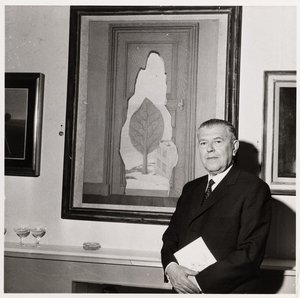
René Magritte
1898 - 1967 , Belçika
Kısa Bilgiler
- Artistic Movement Or Style: Gerçeküstücülük
- Artists Who Influenced This Artist: ['Giorgio de Chirico']
- Date Of Birth: Kasım 21, 1898
- Date Of Death: Ağustos 15, 1967
- Full Name: René François Ghislain Magritte
- Nationality: Belçikalı
- Notable Artworks:
- Les Amants
- Treachery of Images
- Time Transfixed
- Place Of Birth: Lessines, Belçika
İlgili Yazılar
John Constable'ın En İyi 25 Eseri: İngiliz Manzaralarının Büyüsü AllPaintingsStore'ta
John Constable'ın en iyi 25 eserini keşfedin! İngiliz manzara sanatının büyülü dünyasına dalın, romantizm akımını ve kırsal yaşamı yansıtan tablolarla evinizi zenginleştirin. Sanat reproduksiyonları AllPaintingsStore'ta.

Evocations of Place: A Historical Journey Through Landscape Art
Explore the rich history of landscape art with AllPaintingsStore. Discover renowned artists, movements like Impressionism & Romanticism, and expert guidance for collecting timeless pieces. Find your perfect serene escape today!

Evocations of Place: A Historical Journey Through Landscape Art
Explore the rich history of landscape art with AllPaintingsStore. Discover renowned artists, movements like Impressionism & tonalism, and expert guidance for collecting timeless pieces. Find your perfect serene escape today!

Romantik Resmin Zirveleri: Evinizi Sanatla Süsleyen 10 Usta Manzara
Romantizm sanatının en etkileyici 10 başyapıtını keşfedin! Friedrich, Turner gibi ustaların büyüleyici manzaralarıyla evinizi dönüştürün. Sanat tarihi ve dekorasyon rehberi AllPaintingsStore.com'da tüm koleksiyonu inceleyin.

Sürrealizmin İzinde: Sanat Tarihini Derinden Etkileyen 10 Başyapıt
Sürrealizmin büyüleyici dünyasına yolculuk! Dali, Magritte ve daha fazlasıyla sanat tarihini şekillendiren 10 başyapıtı keşfedin. Evinizi benzersiz eserlerle dekore edin. AllPaintingsStore.com'da tüm koleksiyonu inceleyin!


