


 Önizleme yap
 Paylaş
 Paylaş
 Detayları Gör

 İndir
İndir
 Benzerlerini gör
 X-Işını
 Slayt Gösterisi
Without title


 Tümünü Gör
Çevrimiçi önizlemeden çok daha üstün, yüksek çözünürlüklü ve iyileştirilmiş bir dijital görüntü satın alın.
Her dosya, uzman ekibimiz tarafından gelişmiş araçlar ve titiz manuel rötuş teknikleri kullanılarak özenle hazırlanır. Her görüntünün olağanüstü netliğe, kusursuz renk doğruluğuna ve ince ayrıntılara sahip olduğundan emin oluruz.
Son dosya; profesyonel, editoryal ve baskı süreçlerinde anında kullanıma uygun şekilde optimize edilerek 72 saat içinde e-posta yoluyla teslim edilir. Bu, seçkin tasarım stüdyoları, yayıncılar ve galerilerin güvendiği aynı kalite standartlarındadır.
Dijital Görsel
Kişisel sergileme, baskı ve yaratıcı projeleriniz için yüksek çözünürlüklü bir dosya indirin. ( Baskı satın al El yapımı tablo satın al)
Her Dijital Görüntü Siparişinde Dahil Olanlar
Uzman Dijital Teslimat, Garantili
AllPaintingsStore.com seçtiğinizde, sadece bir görsel edinmekle kalmaz; titizlikle hazırlanmış, profesyonelce iyileştirilmiş dijital bir sanat eserine sahip olur ve memnuniyet garantisiyle güvence altına alınırsınız. Siparişinizle birlikte otomatik olarak sunulan her şey şunlardır:

Hızlı E-posta ile Teslimat
Yüksek çözünürlüklü dijital görüntü dosyanız, siparişinizin üzerinden en geç 72 saat geçmeden e-posta ile size gönderilecektir; hemen kullanıma hazırdır.

Yapay Zeka İle İyileştirilmiş Dijital Dosya
Sanat eseriniz; maksimum detay, netlik ve renk doğruluğu sağlamak amacıyla gelişmiş yapay zeka araçları ve manuel düzenleme kullanılarak profesyonelce optimize edilmektedir.

Ömür Boyu Ücretsiz Yeniden Gönderim
Dosyanızı yanlışlıkla mı sildiniz yoksa kayıp mı oldu? Endişelenmeyin; dosyanızı dilediğiniz zaman size ücretsiz olarak tekrar göndereceğiz.

Hiçbir Zaman İthalat Ücreti Ödemeyin
Sanat eserinizin tadını gümrük vergisi, harç veya teslimat ücreti ödemeden anında çıkarın; dijital indirmeler her zaman vergiden muaftır.

Renk Doğruluğu Garantisi
Profesyonel araçlar ve renk yönetimi kullanarak dijital görselinizin orijinal renklere mümkün olduğunca yakın yansıtılmasını sağlıyoruz.

60 Günlük Memnuniyet Garantisi
If you're not satisfied with your digital image, we'll revise it or refund 100% within 60 days - no questions asked.

100% Para İadesi Garantisi
Memnun kalmadınız mı? Dijital dosyanızı aldıktan sonraki 60 gün içinde, hiçbir soru sorulmaksızın tam iade alın.

Toplu Sipariş İndirimleri
Buy 3 images, save 10% - Buy 5, save 15% - Buy 10+, save 20%. Great for creative projects, galleries, and agencies.
Koleksiyon Detayları
The Enigmatic Departure: A Study in Magritte’s Surrealist Landscape
René Magritte's "Without title," painted around 1937, is a quintessential example of the artist’s profound engagement with the subconscious and his masterful manipulation of perception. The scene unfolds with an almost unsettling stillness – a solitary figure, seemingly adrift, steps away from the viewer, leaving behind a meticulously arranged tableau of domestic objects. This isn't merely a depiction of a room; it’s a carefully constructed puzzle designed to challenge our assumptions about reality and representation, hallmarks of Magritte’s distinctive Surrealist style.
- Subject Matter: The painting centers on a man in the act of departure, his posture suggesting both movement and an inherent melancholy. He is framed by a richly detailed interior, populated with familiar objects that simultaneously invite contemplation and provoke unease.
- Composition: Magritte’s compositional choices are deliberate and unsettling. The placement of the vase, chair, clock, and bowl creates a sense of artificiality, disrupting any natural flow or narrative. The receding perspective draws the eye towards the figure's vanishing point, emphasizing his isolation and the ambiguity of his journey.
Technique and Style: A Masterclass in Illusion
Magritte’s technique is characterized by a meticulous attention to detail and a remarkable ability to render objects with photographic realism – a deliberate strategy to heighten the sense of unease. He employed oil paints with a smooth, almost enamel-like finish, creating surfaces that appear both solid and strangely detached. The lighting is soft and diffused, contributing to the painting’s dreamlike quality. His use of color is restrained, primarily consisting of muted tones – browns, greens, and blues – which further enhances the sense of stillness and melancholy. This technique aligns perfectly with his desire to expose the constructed nature of visual experience.
- Realism as Deception: Magritte’s mastery lies in presenting familiar objects within an unfamiliar context, forcing the viewer to question their understanding of what is ‘real.’
- Brushwork: The brushstrokes are generally subtle and blended, contributing to the overall smoothness and illusionistic effect.
Symbolism and Context: Echoes of Loss and Uncertainty
"Without title" resonates with themes prevalent in Magritte’s oeuvre – the exploration of identity, memory, and the subconscious. The figure's departure can be interpreted as a metaphor for loss, alienation, or perhaps even the inherent instability of human experience. The recurring motif of the veiled woman, stemming from his mother’s death, subtly informs this work, suggesting an underlying preoccupation with hidden realities and unresolved grief. Painted during a period of significant social and political upheaval – the rise of fascism in Europe – the painting's quiet contemplation can also be seen as a response to the anxieties of the time.
Historical Context: Magritte’s work emerged within the broader context of Surrealism, a movement that sought to liberate art from the constraints of rational thought and explore the realm of dreams and the unconscious. Influenced by artists like Salvador Dalí and Giorgio de Chirico, Magritte developed his own unique brand of Surrealism, characterized by its intellectual rigor and its unsettling juxtapositions.Emotional Impact and Artistic Legacy
"Without title" possesses a profound emotional impact, inviting viewers to confront their own perceptions of reality. It’s a painting that lingers in the mind long after viewing, prompting questions about identity, memory, and the nature of representation. Magritte's work continues to resonate with audiences today, solidifying his place as one of the 20th century’s most influential artists. A hand-painted reproduction offers an unparalleled opportunity to experience the full power of this enigmatic masterpiece in your own space.
Benzer Eserler


Sanatçı Özgeçmişi
Early Life and the Seeds of Surrealism
René Magritte, born René François Ghislain Magritte on November 21, 1898, in Lessines, Belgium, emerged into a world that would profoundly shape his enigmatic artistic vision. His early years were marked by an unsettling event – the suicide of his mother when he was just thirteen. The image of her body being recovered from the River Sambre, with her dress obscuring her face, became a haunting motif that would subtly permeate his later work, manifesting in veiled figures and a persistent exploration of hidden realities. This early trauma instilled within him a fascination with mystery, loss, and the unsettling power of what remains unseen. While details of his childhood remain somewhat elusive, it’s clear this formative experience laid the groundwork for his lifelong questioning of perception and representation. He began drawing lessons at age ten, revealing an innate inclination towards visual expression, but initially explored Impressionism before embarking on a path that would lead him to become one of the most significant figures in Surrealist art.
Artistic Development and Influences
Magritte’s artistic journey was not immediate or straightforward. He studied at the Académie Royale des Beaux-Arts in Brussels, yet found its traditional methods stifling. His early work experimented with Futurism and Cubism, absorbing elements of these avant-garde movements but ultimately rejecting their purely formal concerns. It wasn't until encountering Giorgio de Chirico’s painting *The Song of Love* in 1922 that Magritte discovered a resonance that would irrevocably alter his artistic course. De Chirico’s dreamlike landscapes and unsettling juxtapositions unlocked within Magritte a new way of seeing – a world where the familiar could be rendered strange, and the ordinary imbued with profound mystery. This encounter sparked his commitment to Surrealism, though he often maintained a unique distance from its more overtly psychological or automatic approaches. He preferred a meticulous, almost clinical precision in his painting, using realistic techniques to depict illogical scenarios.
The Heart of Surrealism: Challenging Reality
By 1926, Magritte had fully embraced the tenets of Surrealism, producing *Le Jockey Perdu (The Lost Jockey)*, widely considered his first truly surrealist work. However, his brand of Surrealism was distinct. He wasn’t interested in exploring the subconscious through free association or dream imagery in the manner of some of his contemporaries. Instead, Magritte sought to challenge viewers' perceptions of reality by presenting ordinary objects in unexpected contexts, forcing them to question their assumptions about the world around them. Iconic works like *The Treachery of Images (This is not a pipe)* (1929) brilliantly deconstructs the relationship between image and object, reminding us that a representation is never the thing itself. *Les Amants (The Lovers)* (1927-1928), with its shrouded figures, echoes the trauma of his mother’s death while simultaneously exploring themes of concealment and intimacy. *Time Transfixed* (1938) presents a locomotive bursting through a brick wall, disrupting our sense of space and time. And *The Human Condition* (1933), a canvas within a canvas, blurs the boundaries between representation and reality, prompting us to consider how we perceive and interpret the world.
Later Life, Recognition, and Enduring Legacy
Despite initial struggles for recognition, Magritte’s work gradually gained prominence, particularly in the United States with exhibitions in 1936 and later retrospective shows at the Museum of Modern Art (1965) and the Metropolitan Museum of Art (1992). He continued to refine his signature style, exploring themes of repetition, illusion, and the power of language in paintings that are both intellectually stimulating and visually arresting. Magritte died on August 15, 1967, leaving behind a body of work that continues to captivate and challenge audiences worldwide. His influence extends far beyond the realm of painting, impacting pop art, minimalist art, conceptual art, and even advertising and film. Today, his paintings are held in major museum collections around the globe, including the Musées royaux des beaux-arts de Belgique in Brussels, which houses the Magritte Museum – dedicated entirely to his work and boasting the world’s largest collection of his creations.
- Museum Collections: Musées royaux des beaux-arts de Belgique, Brussels; Magritte Museum.
Magritte's enduring legacy lies in his ability to make us see the familiar anew, to question our assumptions about reality, and to appreciate the power of art to provoke thought and inspire wonder. He wasn’t simply painting images; he was crafting visual paradoxes that continue to resonate with viewers decades after their creation, solidifying his position as a true master of Surrealism and a pivotal figure in 20th-century art.
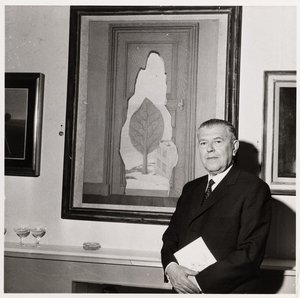
René Magritte
1898 - 1967 , Belçika
Kısa Bilgiler
- Artistic Movement Or Style: Gerçeküstücülük
- Artists Who Influenced This Artist: ['Giorgio de Chirico']
- Date Of Birth: Kasım 21, 1898
- Date Of Death: Ağustos 15, 1967
- Full Name: René François Ghislain Magritte
- Nationality: Belçikalı
- Notable Artworks:
- Les Amants
- Treachery of Images
- Time Transfixed
- Place Of Birth: Lessines, Belçika



