


 Gerçek Boyutta Önizle
 Paylaş
 Paylaş
 Detayları Gör
 Rehber

 İndir
İndir
 Benzer ürünler
 X-Işını
 Slayt Gösterisi
 Q&A
Q&A İstatistikler
Forest scene


 Tümünü Gör
Bu sayfada sergilenen eser telif hakkı yasasıyla korunmaktadır; bu da yasal olarak eserin birebir kopyasını oluşturamayacağımız veya satamayacağımız anlamına gelir. Bu koruma, aşağıdakiler gibi uluslararası anlaşmalar kapsamında uygulanmaktadır: Bern Sözleşmesi ve aşağıdakiler de dahil olmak üzere ulusal yasalarca belirlenen ABD Telif Hakkı Kanunu - 17. Başlık.
Bu yöntem, koruma altındaki sanat eserinin kopyalanmasını veya çoğaltılmasını içermediği için telif hakkı düzenlemelerine tam uyum sağlar. Bunun yerine, yaratıcı bir yeniden yorumlamadır; orijinalinden etkilenen ancak onunla aynı olmayan yeni bir tablodur.
Giclée / Sanat Baskısı
Hızlı üretim ve esnek bitiş seçenekleriyle müze kalitesinde giclée veya kanvas baskı. ( El Yapımı Tablo Satın Al Dijital Görsele Geç)




P118B ₺10

P118H ₺10

P118W ₺10

P438Z ₺10

P508JH ₺12

P508YH ₺12

P805H ₺10

P805Z ₺10

P919BZ ₺10

P919G ₺10

P919XJ ₺10

P959ZH ₺10

P968JZ ₺12

W106C ₺8

W218G ₺10

W218JH ₺8

W218Y ₺10

W307PJ ₺10

W316G ₺10

W316PJ ₺8

W316Y ₺10

W398PJ ₺8

W4111J ₺10

W500HY ₺15

W500JH ₺15

W692G ₺12

W849H ₺8

W940BG ₺15

W953PJ ₺8




Eserin orijinal oranlarıyla uyumlu, önceden belirlenmiş boyutlarımız arasından seçim yapın.

Çerçevenize veya duvarınıza uygun olması için ihtiyacınız olan genişlik ve yüksekliği yazın. Bir baskı yalnızca kesilebilir, görselden daha büyük hale getirilemez; bu nedenle farklı bir formdaki boyut seçimi, görselin bir kısmının kaybına neden olur. Herhangi bir baskı yapmadan önce onaylamanız için size bir dijital taslak gönderiyoruz. Bu sayfada gösterilen resim gerçek kesimi göstermez — bunu yalnızca taslak gösterir.
Dünya Çapında Teslimat (); standart 4/5 hafta yerine 2 haftada. (2 Kasım)

Dünya Çapında Ücretsiz Ekspres Kargo

Yüksek Kaliteli Keten Kanvas

Tam Nakliye Sigortası

Gümrük Vergisi İadesi Garantisi

Gerçek Renk Uyumu Garantisi

100 Günlük İade Politikası (Sadece Kusurlu Ürünler İçin)

%100 Para İade Garantisi

Toplu Alım İndirimi
 Cam seçeneği yalnızca 110 cm altındaki boyutlar için mevcuttur.

Forest scene
Giclée / Sanat Baskısı
Reproduksiyon Boyutu
-


Toplam Tutar
₺ 3146
A Bold Encounter with Nature: The Pop Art Vision of Roy Lichtenstein
In the vast landscape of twentieth-century art, few works capture the tension between commercial aesthetics and natural majesty quite like Roy Lichtenstein’s “Forest Scene.” Created in 1980, this masterpiece serves as a striking testament to the transformative power of Pop Art—a movement that deliberately rejected academic conventions to embrace the vibrant, often overlooked imagery of popular culture. Rather than offering a traditional, romanticized view of the woods, Lichtenstein presents an audacious reimagining of the natural world through his signature visual language. It is not merely a depiction of trees and wildlife; it is a profound intellectual engagement with the way we consume images in a modern, media-saturated age.
The painting invites the viewer into a meticulously constructed reality where the organic meets the industrial. Within this stylized woodland, horses roam through a landscape defined by bold outlines and flat planes of color. The composition is masterfully balanced, featuring figures—a man near the center and others positioned toward the periphery—that interact with the environment in a way that feels both staged and cinematic. This deliberate arrangement creates a sense of stability and rhythm, guiding the eye across the canvas through a symphony of blue, red, and white. For the collector or interior designer, this piece offers a sophisticated focal point, bringing a structured yet energetic presence to any contemporary space.
The Mechanics of Modernity: Technique and Aesthetic
To understand the emotional resonance of “Forest Scene,” one must look closely at Lichtenstein’s revolutionary technique. Heavily influenced by the Ben-Day printing processes found in comic strips and commercial advertising, the artist utilized bold black outlines and a palette of primary hues to flatten perspective. This method deliberately eschews traditional shading and blending, opting instead for a graphic clarity that prioritizes visual impact over photographic accuracy. The use of halftone dots and solid blocks of color creates an illusion of depth without sacrificing the essential flatness characteristic of the Pop Art movement.
This technique serves a deeper symbolic purpose. By reducing the complexity of a forest to its most basic geometric and chromatic components, Lichtenstein strips away the sentimentality often associated with landscape painting. The result is a work that feels incredibly modern and crisp. The juxtaposition of vibrant reds against cool blues creates a visual vibration that captures the viewer's attention instantly. For those seeking to decorate a high-end interior, this artwork provides a perfect blend of nostalgic pop culture references and avant-garde sophistication, making it an ideal choice for spaces that celebrate bold, decisive design.
A Legacy of Innovation
Lichtenstein’s journey from his formal training at the Art Students League to becoming a global icon of the Pop movement is etched into every stroke of this 1980 work. His ability to transform commonplace motifs—the simple shapes of bushes, grass, and animals—into compelling artistic statements allows “Forest Scene” to transcend its subject matter. It stands as a bridge between the high art of the gallery and the low art of the printing press, challenging us to find beauty in the simplified, the mass-produced, and the graphic.
Owning a reproduction of such a significant work is an opportunity to invite a piece of art history into one's home. It is more than a decoration; it is a conversation starter that explores themes of perception, media, and the enduring allure of the natural world reimagined through a human-made lens. Whether placed in a minimalist gallery setting or a vibrant living space, “Forest Scene” continues to pulse with the energy of its era, offering an eternal sense of discovery for the discerning art lover.
Soru ve Cevaplar
"Forest scene" adlı eser, Roy Fox Lichtenstein kariyerinin hangi dönemine ait?
Roy Fox Lichtenstein'in kariyerinde "Forest scene", Mature dönemine denk gelmektedir. Bu evre, eserin sanatçının diğer çalışmalarıyla kıyaslanmasına olanak tanır.
Roy Fox Lichtenstein imzalı "Forest scene" eserinin parlaklık değeri nedir?
Roy Fox Lichtenstein imzalı "Forest scene" için kaydedilen parlaklık değeri Bright Balance'dir.
Roy Fox Lichtenstein imzalı "Forest scene" eserinin görüntüsü serbestçe çoğaltılabilir mi?
Telif hakkı açısından, "Forest scene" eseri telif hakları ile korunmaya devam etmektedir statüsündedir.
Benzer Eserler


Sanatçı Özgeçmişi
The Genesis of a Pop Visionary
Roy Fox Lichtenstein, born in the vibrant metropolis of New York City on October 27, 1923, indelibly altered the landscape of twentieth-century art. Emerging as a pivotal figure within the Pop Art movement, Lichtenstein didn’t simply reflect his era; he actively interrogated it, transforming commonplace imagery into compelling artistic statements. His upbringing in an upper-middle-class Jewish family fostered both a cultural awareness and an early artistic inclination. Childhood exposure to museums and concerts, coupled with a deep appreciation for jazz music, laid the groundwork for a creative spirit that would challenge conventional notions of fine art. Though initially drawn to realistic drawing and painting during his formative years, Lichtenstein’s formal training commenced at the Art Students League in 1939 under Reginald Marsh, followed by studies at Ohio State University – interrupted briefly by wartime service in the Army. These experiences provided a robust technical foundation that would later be brilliantly re-contextualized through the lens of mass culture and commercial aesthetics. The seeds of his signature style weren’t sown within the hallowed halls of artistic tradition but rather in the often-overlooked world of everyday imagery, particularly comic books and advertising.Early Influences and Artistic Exploration
Lichtenstein's formative years were marked by a fascination with European Surrealism, mirroring the stylistic trends prevalent at the time. Artists like René Magritte and Salvador Dalí captivated him with their dreamlike landscapes and paradoxical juxtapositions—influences that subtly shaped his early artistic explorations. However, Lichtenstein swiftly moved beyond Surrealist conventions, recognizing the potential of abstraction as a vehicle for conveying emotion and exploring formal experimentation. His initial drawings showcased meticulous attention to detail and tonal subtlety, demonstrating a mastery of traditional drawing techniques honed during his studies at Ohio State University. Yet, it was Reginald Marsh’s encouragement—particularly regarding capturing the essence of nature—that propelled him toward bolder stylistic choices. This pivotal encounter instilled in Lichtenstein a belief that art could transcend mere representation, striving instead for an expressive distillation of experience. He diligently practiced drawing from life and studying anatomical sketches, cultivating a foundational understanding of artistic principles that would prove invaluable to his subsequent stylistic innovations.The Birth of Pop Art: Comic Books as Inspiration
A transformative moment arrived in 1961 with Lichtenstein’s groundbreaking artwork *Look Mickey*, a bold appropriation of Disney comics imagery. This wasn't merely copying comic strips; it was an act of artistic re-evaluation—a deliberate questioning of established aesthetic hierarchies and a rejection of the subjective expression championed by Abstract Expressionism. Recognizing the pervasive influence of mass media on American society, Lichtenstein embraced the visual language of advertising and comic books as sources of inspiration. He meticulously recreated comic book scenes using techniques mimicking commercial printing processes—a conscious blurring of boundaries between original artwork and mass production. This appropriation wasn’t about celebrating consumerism uncritically but rather examining its impact on cultural identity and challenging traditional artistic conventions. The resulting paintings featured vibrant colors, thick black outlines, and most notably, Ben-Day dots—a technique borrowed directly from comic book printing—representing the very process of reproduction itself.Technique and Conceptual Framework: Mastering Mass Production
Lichtenstein’s artistic vocabulary is instantly recognizable: bold, primary colors, thick black outlines, and crucially, Ben-Day dots—a technique meticulously replicated to mimic commercial printing processes. These dots weren't merely decorative; they were integral to his conceptual framework—a deliberate assertion of objectivity and a rejection of painterly gesture. He painstakingly enlarged details from comic strips to monumental scale, forcing viewers to confront the aesthetic qualities of an art form typically dismissed as trivial. Works like *Whaam!*, *Drowning Girl*, and *Oh, Jeff…I Love You, Too…But…* became iconic representations of Pop Art—capturing anxieties and desires within a rapidly changing consumer culture. These weren’t simply depictions of comic book scenes; they were commentaries on themes of war, romance, and societal expectations—filtered through the visual language of mass media. He aimed to strip away any pretense of artistic subjectivity, presenting his work as objective reflections of American society—a mirror held up to its own manufactured reality. The deliberate flatness and lack of painterly texture further emphasized this detachment—mimicking the impersonal nature of commercial printing.Legacy and Influence: Shaping Contemporary Art
Roy Lichtenstein’s influence extends far beyond the realm of painting, profoundly impacting graphic design, illustration, and visual art across various disciplines. His innovative use of commercial techniques and appropriation paved the way for new generations of artists exploring themes of consumerism, media saturation, and cultural identity—challenging traditional notions of artistic authorship and originality. He championed a radical rethinking of what constitutes “art”—rejecting elitist standards and embracing the accessibility of popular culture as legitimate sources of aesthetic inspiration. His enduring legacy resides in his unwavering conviction that art could engage with social issues—provoking critical dialogue about societal values and confronting uncomfortable truths. Artists like Andy Warhol, Jeff Koons, and Damien Hirst acknowledge Lichtenstein’s pioneering role in redefining artistic boundaries and establishing Pop Art as a dominant stylistic trend.- Notable Achievements: Established Pop Art style; achieved international recognition with groundbreaking exhibitions.
- Major Works: *Whaam!*, *Drowning Girl*, *Oh, Jeff…I Love You, Too…But…*, *Masterpiece*.
- Teaching Career: Influenced aspiring artists at SUNY Oswego and Rutgers University.
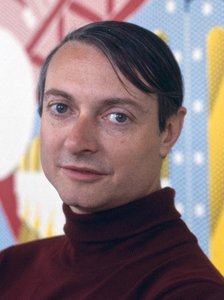
Roy Fox Lichtenstein
1923 - 1997 , Amerika Birleşik Devletleri
Kısa Bilgiler
- Artistic Movement Or Style: Pop Art
- Artists Who Influenced This Artist:
- Reginald Marsh
- Allan Kaprow
- Date Of Birth: 27 Ekim 1923
- Date Of Death: 29 Eylül 1997
- Full Name: Roy Fox Lichtenstein
- Nationality: Amerikalı
- Notable Artworks:
- Whaam!
- Drowning Girl
- Oh, Jeff…I Love You, Too…But…
- Place Of Birth: New York Şehri, ABD
Benzer Yazılar

John Constable'ın En İyi 25 Eseri: İngiliz Manzaralarının Büyüsü AllPaintingsStore'ta
John Constable'ın en iyi 25 eserini keşfedin! İngiliz manzara sanatının büyülü dünyasına dalın, romantizm akımını ve kırsal yaşamı yansıtan tablolarla evinizi zenginleştirin. Sanat reproduksiyonları AllPaintingsStore'ta.

Beyond the Ben-Day Dots: Roy Lichtenstein's Pop Art Revolution & Enduring Legacy
Explore Roy Lichtenstein's revolutionary Pop Art! Discover the story behind Ben-Day dots, iconic works like 'Whaam!', and investment insights for collectors. Expert analysis & high-quality reproductions at AllPaintingsStore.

The Psychology of the Palette: Decoding Roy Lichtenstein's Bold Color Theory
Explore the psychological depth of Roy Lichtenstein's color theory. An expert analysis for art students and collectors on Ben-Day dots, primary palettes, and the intersection of Pop Art with mass media history.

Roy Lichtenstein'ın En İyi 25 Eseri: Pop Art İkonlarının Büyülü Dünyası | AllPaintingsStore
Roy Lichtenstein'ın en ikonik 25 eserini keşfedin! Pop art'ın büyülü dünyasına dalın, benzersiz ben-dot tekniğini ve renkli kompozisyonları inceleyin. Ev dekorasyonunuz için yüksek çözünürlüklü sanat baskıları AllPaintingsStore'ta. Koleksiyonu şimdi keşfedin!

Dots & Screens: The Industrial Secrets Behind 1960s Pop Art Masterpieces
Explore the industrial secrets of 1960s Pop Art. Discover how Ben-Day dots and silk screening transformed mass media into masterpieces by Roy Lichtenstein. An in-depth look at the intersection of mechanical printing and fine art history for students and collectors.


