Para İadesi Garantisi · 100 gün Dünya Çapında Ücretsiz Teslimat
449.587sanat eserleri 30.613sanatçılar 4.660müzeler 32Dil Seçenekleri
Para Birimi
    Dil
      Atölye · Kuruluş 2015 · Paris, Fransa
      AllPaintingsStore
      allpaintingsstore.com
      Catalogue entry

      Standing Rib

      1962. Acrylic On Canvas.

      Fig. 1. Roy Fox Lichtenstein, Standing Rib, 1962. Shown as the reproduction you are specifying: , .

      § 1Catalogue data

      § 2Abstract

      Koleksiyon Açıklaması

      Roy Lichtenstein’s iconic 'Standing Rib' captures the bold colors and graphic style of Pop Art with a close-up view of raw meat on a plate. This 1962 painting showcases Lichtenstein’s signature approach to everyday subjects, offering a unique perspective – discover this vibrant artwork.

      Sanatçı Özgeçmişi

      Roy Lichtenstein (1923-1997): Pop Art akımının önde gelen sanatçısı olarak Ben-Day noktaları tekniğiyle, çizgi romanlarından ilhamıyla ve tüketim kültürüne yönelik cesur yorumlarıyla tanınır. 'Whaam!' gibi eserlerini keşfedin.

      § 3Commentary

      Roy Lichtenstein's "Standing Rib": A Pop Art Icon

      Roy Lichtenstein’s “Standing Rib,” created in 1962, is more than just a painting of meat; it’s a meticulously crafted statement about consumerism, mass culture, and the very nature of representation. This seemingly simple image – a raw beef rib presented on a stark white plate – embodies the core tenets of Lichtenstein's groundbreaking Pop Art style. The work immediately confronts the viewer with its bold, graphic execution, a deliberate departure from the traditional notions of artistic subject matter and technique that had dominated Western art for centuries.

      • Subject Matter: The choice of a commonplace object – a piece of meat – was revolutionary. Lichtenstein elevated the mundane to the level of high art, challenging viewers to reconsider their perceptions of value and beauty.
      • Style & Technique: Executed in Lichtenstein’s signature style, “Standing Rib” employs hard-edge techniques borrowed from commercial printing processes, particularly comic strips. The use of flat planes of color, Ben-Day dots (simulated through carefully placed small circles), and a limited palette – primarily reds, whites, and blacks – creates an illusion of depth and texture while simultaneously flattening the image, mimicking the effect of a printed illustration.

      The Genesis of Pop Art & American Identity

      “Standing Rib” emerged during a pivotal moment in art history: the rise of Pop Art in the 1960s. This movement, spearheaded by artists like Lichtenstein, Andy Warhol, and Claes Oldenburg, reacted against Abstract Expressionism’s emphasis on individual emotion and subjective experience. Instead, Pop Art embraced imagery from popular culture – advertising, comic books, consumer products – reflecting the growing influence of mass media and the burgeoning American economy. The painting's subject matter directly engages with themes prevalent in American society at the time: abundance, consumption, and the idealized image of the ‘American’ meal.

      Lichtenstein’s background also played a crucial role. His early training in realistic drawing instilled a technical proficiency that he then deliberately subverted, using his skills to create deliberately artificial representations. This approach was influenced by his exposure to jazz music – a key element of the burgeoning counterculture – which valued improvisation and disruption of established norms.

      Symbolism & Emotional Impact

      While seemingly straightforward, “Standing Rib” is rich in symbolic meaning. The stark white plate acts as a stage, isolating the meat and emphasizing its presentation. The vibrant red color of the rib draws attention to its texture and form, almost fetishizing the object. The painting’s impact lies not in depicting beauty but in provoking thought about our relationship with consumer culture and the way we are bombarded with images that shape our desires. It's a deceptively simple work that continues to resonate today, prompting questions about authenticity, representation, and the role of art in society.

      The meticulous detail captured in the painting – the sheen of the meat, the subtle variations in color – is a testament to Lichtenstein’s technical skill. It's a powerful reminder that even seemingly banal subjects can be transformed into compelling works of art through careful observation and innovative technique.

      Soru ve Cevaplar

      "Standing Rib" adlı eser, Roy Fox Lichtenstein'in gelişiminin hangi aşamasını temsil ediyor?

      "Standing Rib", Roy Fox Lichtenstein kariyerinin Pop Art dönemine aittir. Bu sınıflandırma, eseri sanatçının gelişim süreciyle ilişkilendirir.

      "Standing Rib" eserini daha detaylı inceleyebilir miyim?

      Roy Fox Lichtenstein imzalı "Standing Rib" eserinin X-Ray görünümü, eserin X-Işını sayfasında yer almaktadır: on bir optik katman aracılığıyla görüntünün interaktif bir incelemesi.

      "Standing Rib" eserinin arkasındaki sanatçı kim?

      "Standing Rib", Roy Fox Lichtenstein tarafından yaratılmıştır. Bu sayfadaki bilgiler Roy Fox Lichtenstein imzalı orijinal esere aittir.
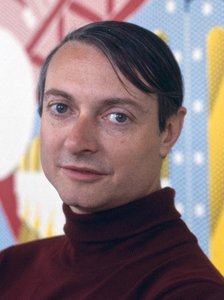
      § 4The artist

      Roy Fox Lichtenstein

      Roy Fox Lichtenstein

      1923 - 1997, Amerika Birleşik Devletleri

      Quick facts about Roy Fox Lichtenstein

      • Artistic Movement Or Style: Pop Art
      • Artists Who Influenced This Artist:
        • Reginald Marsh
        • Allan Kaprow
      • Date Of Birth: 27 Ekim 1923
      • Date Of Death: 29 Eylül 1997
      • Full Name: Roy Fox Lichtenstein
      • Nationality: Amerikalı
      • Notable Artworks:
        • Whaam!
        • Drowning Girl
        • Oh, Jeff…I Love You, Too…But…
      • Place Of Birth: New York Şehri, ABD

      Sanatçı Biyografisi

      The Genesis of a Pop Visionary

      Roy Fox Lichtenstein, born in the vibrant metropolis of New York City on October 27, 1923, indelibly altered the landscape of twentieth-century art. Emerging as a pivotal figure within the Pop Art movement, Lichtenstein didn’t simply reflect his era; he actively interrogated it, transforming commonplace imagery into compelling artistic statements. His upbringing in an upper-middle-class Jewish family fostered both a cultural awareness and an early artistic inclination. Childhood exposure to museums and concerts, coupled with a deep appreciation for jazz music, laid the groundwork for a creative spirit that would challenge conventional notions of fine art. Though initially drawn to realistic drawing and painting during his formative years, Lichtenstein’s formal training commenced at the Art Students League in 1939 under Reginald Marsh, followed by studies at Ohio State University – interrupted briefly by wartime service in the Army. These experiences provided a robust technical foundation that would later be brilliantly re-contextualized through the lens of mass culture and commercial aesthetics. The seeds of his signature style weren’t sown within the hallowed halls of artistic tradition but rather in the often-overlooked world of everyday imagery, particularly comic books and advertising.

      Early Influences and Artistic Exploration

      Lichtenstein's formative years were marked by a fascination with European Surrealism, mirroring the stylistic trends prevalent at the time. Artists like René Magritte and Salvador Dalí captivated him with their dreamlike landscapes and paradoxical juxtapositions—influences that subtly shaped his early artistic explorations. However, Lichtenstein swiftly moved beyond Surrealist conventions, recognizing the potential of abstraction as a vehicle for conveying emotion and exploring formal experimentation. His initial drawings showcased meticulous attention to detail and tonal subtlety, demonstrating a mastery of traditional drawing techniques honed during his studies at Ohio State University. Yet, it was Reginald Marsh’s encouragement—particularly regarding capturing the essence of nature—that propelled him toward bolder stylistic choices. This pivotal encounter instilled in Lichtenstein a belief that art could transcend mere representation, striving instead for an expressive distillation of experience. He diligently practiced drawing from life and studying anatomical sketches, cultivating a foundational understanding of artistic principles that would prove invaluable to his subsequent stylistic innovations.

      The Birth of Pop Art: Comic Books as Inspiration

      A transformative moment arrived in 1961 with Lichtenstein’s groundbreaking artwork *Look Mickey*, a bold appropriation of Disney comics imagery. This wasn't merely copying comic strips; it was an act of artistic re-evaluation—a deliberate questioning of established aesthetic hierarchies and a rejection of the subjective expression championed by Abstract Expressionism. Recognizing the pervasive influence of mass media on American society, Lichtenstein embraced the visual language of advertising and comic books as sources of inspiration. He meticulously recreated comic book scenes using techniques mimicking commercial printing processes—a conscious blurring of boundaries between original artwork and mass production. This appropriation wasn’t about celebrating consumerism uncritically but rather examining its impact on cultural identity and challenging traditional artistic conventions. The resulting paintings featured vibrant colors, thick black outlines, and most notably, Ben-Day dots—a technique borrowed directly from comic book printing—representing the very process of reproduction itself.

      Technique and Conceptual Framework: Mastering Mass Production

      Lichtenstein’s artistic vocabulary is instantly recognizable: bold, primary colors, thick black outlines, and crucially, Ben-Day dots—a technique meticulously replicated to mimic commercial printing processes. These dots weren't merely decorative; they were integral to his conceptual framework—a deliberate assertion of objectivity and a rejection of painterly gesture. He painstakingly enlarged details from comic strips to monumental scale, forcing viewers to confront the aesthetic qualities of an art form typically dismissed as trivial. Works like *Whaam!*, *Drowning Girl*, and *Oh, Jeff…I Love You, Too…But…* became iconic representations of Pop Art—capturing anxieties and desires within a rapidly changing consumer culture. These weren’t simply depictions of comic book scenes; they were commentaries on themes of war, romance, and societal expectations—filtered through the visual language of mass media. He aimed to strip away any pretense of artistic subjectivity, presenting his work as objective reflections of American society—a mirror held up to its own manufactured reality. The deliberate flatness and lack of painterly texture further emphasized this detachment—mimicking the impersonal nature of commercial printing.

      Legacy and Influence: Shaping Contemporary Art

      Roy Lichtenstein’s influence extends far beyond the realm of painting, profoundly impacting graphic design, illustration, and visual art across various disciplines. His innovative use of commercial techniques and appropriation paved the way for new generations of artists exploring themes of consumerism, media saturation, and cultural identity—challenging traditional notions of artistic authorship and originality. He championed a radical rethinking of what constitutes “art”—rejecting elitist standards and embracing the accessibility of popular culture as legitimate sources of aesthetic inspiration. His enduring legacy resides in his unwavering conviction that art could engage with social issues—provoking critical dialogue about societal values and confronting uncomfortable truths. Artists like Andy Warhol, Jeff Koons, and Damien Hirst acknowledge Lichtenstein’s pioneering role in redefining artistic boundaries and establishing Pop Art as a dominant stylistic trend.
      • Notable Achievements: Established Pop Art style; achieved international recognition with groundbreaking exhibitions.
      • Major Works: *Whaam!*, *Drowning Girl*, *Oh, Jeff…I Love You, Too…But…*, *Masterpiece*.
      • Teaching Career: Influenced aspiring artists at SUNY Oswego and Rutgers University.
      Lichtenstein passed away on September 29, 1997—leaving behind a body of work that continues to inspire admiration and provoke contemplation. His art serves as a powerful reminder of the transformative potential of appropriation, the beauty inherent in everyday imagery, and the enduring impact of a truly visionary artist—solidifying his place among the most influential figures in twentieth-century art history.

      § 5Comparanda

      § 6Questions

      Kısa Bilgiler

      • Medium: Oil on Canvas
      • Title: Standing Rib
      • Artistic style: Pop Art Influence
      • Notable elements: Bold colors, shapes
      • Year: 1962

      § 7Cite this entry

      AllPaintingsStore.com, “Roy Fox Lichtenstein, Standing Rib (1962)”, https://allpaintingsstore.com/tr/art/roy-lichtenstein-standing-rib-6WHLN5-en/ArtistReproduction/ (accessed 1 Ekim 2026).

      § 8The reproduction

      El Yapımı Yağlı Boya Reproduksiyon

      Sanatçılarımız tarafından sipariş üzerine hazırlanan; istediğiniz boyut ve çerçevede, tuval üzerine el boyaması yağlı boya. ( Baskı Satışına Geç Dijital Görsel Satışına Geç)

      It is specified on the order sheet in the margin; the present state of that sheet reads as follows.

      Standing Rib

      Baskı Tekniği

      Baskı Boyutu

      -

      Seçkin Kıdemli Sanatçı

      Daha fazla detay, incelik ve ek üretim süresi

      -

      Reproduksiyon Çerçeve Seçenekleri

      -

      -

      Herhangi bir kenarı 105 cm'den (yaklaşık 41 inç) büyük olan sanat eserleri veya reprodüksiyonlar için çerçeve, demonte edilmiş bir kit halinde gönderilecektir. Bu yöntem, güvenli teslimat sağlar ve taşıma sırasında oluşabilecek hasarları önler.

      Profesyonel montaj gereklidir; bu ürün kendin yap (DIY) tarzı bir ürün değildir.
      Kit; ahşap tutkalı (pakete dahil değildir), kanvas germe pensi ve tutkal kururken çıtaların dik durmasını sağlayacak işkenceler kullanılarak, deneyimli bir profesyonel çerçeveci tarafından monte edilmeli ve kanvas gerilmelidir. Hatalı montaj veya dengesiz kanvas gerginliği sanat eserine kalıcı zarar verebilir ve bu durum garantimiz kapsamında değildir.

      • Tüm masif ahşap çıtalar dahildir, montaj için hassas bir şekilde ölçülmüştür.

      • Paket içeriğinde bulunan vidalar ve köşe birleşimleri için çerçeve ustanız tarafından temin edilmesi gereken, ancak pakete dahil olmayan ahşap tutkalı ile monte edilir.

      • Profesyonel araçlar gereklidir ve pakete dahil değildir: bir tuval germe aparatı (gerdirici) ve yapıştırıcı kururken çıtaların dik durmasını sağlayacak kıskaçlar.

      Önemli:
      Köşe bağlantıları için ahşap tutkalı gereklidir; tutkal tamamen kuruyana kadar çıtalar işkenceler ile sabitlenmelidir ve monte edilmiş çerçeve üzerindeki kanvasın gerilmesi için bir kanvas germe pensine ihtiyaç duyulur. Bunların hiçbiri kit içerisinde yer almamaktadır. Lütfen bu boyutu sipariş etmeden önce deneyimli bir profesyonel çerçeve ustası ile anlaşın.

      İsimlik

      -

      -

      Koruyucu Vernik

      Parlak Vernik (renkleri canlandırır; ışığa ve neme karşı koruma sağlar)

      -

      Eserimi Özelleştir

      Değiştirilebilecek örneklere göz atın: Yüzü müşteri fotoğrafıyla değiştirin; Evcil hayvan ekleyin (örneğin, kediyi köpek ile değiştirin); Arka plana gizli bir mesaj dahil edin; Arka plan manzarasını veya öğelerini değiştirin.

      -

      Acil

      Dünya Çapında Teslimat (); standart 5 hafta yerine 3/4 hafta içinde. (29 Ekim). Kaliteden ödün verilmez.

      -

      Hızlı Teslimat

      için dünya çapında teslimat süresi 5 haftadır. (5 Kasım).

      Dahil

      Toplam Fiyat

      ₺ 12654

      Included with every order

      • Dünya Çapında Ücretsiz Ekspres Kargo
      • Yüksek Kaliteli Keten Tuval
      • Tam Nakliye Sigortası
      • Gümrük Vergisi İadesi Garantisi
      • Gerçek Renk Uyumu Garantisi
      • 100 Günlük İade Koşulları (Sadece Üretim Hatalı Ürünler İçin)
      • %100 Para İade Garantisi
      • Toplu Alım Avantajı
      Order sheet