


 Önizle
 Gönder
 Paylaş
 Detaylar
 Rehber

 Dosyayı İndir
 Benzerleri
 X-Işını
 Slayt Gösterisi
 İstatistikler
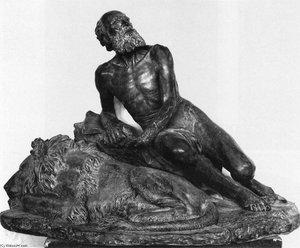
David


 Devamını Oku
Bu sayfada sergilenen eser telif hakkı yasasıyla korunmaktadır; bu da yasal olarak eserin birebir kopyasını oluşturamayacağımız veya satamayacağımız anlamına gelir. Bu koruma, aşağıdakiler gibi uluslararası anlaşmalar kapsamında uygulanmaktadır: Bern Sözleşmesi ve aşağıdakiler de dahil olmak üzere ulusal yasalarca belirlenen ABD Telif Hakkı Kanunu - 17. Başlık.
Bu yöntem, koruma altındaki sanat eserinin kopyalanmasını veya çoğaltılmasını içermediği için telif hakkı düzenlemelerine tam uyum sağlar. Bunun yerine, yaratıcı bir yeniden yorumlamadır; orijinalinden etkilenen ancak onunla aynı olmayan yeni bir tablodur.
Giclée / Sanat Baskısı
Hızlı üretim ve esnek bitiş seçenekleriyle müze kalitesinde giclée veya kanvas baskı. ( El Yapımı Tablo Satın Al Dijital Görsel Satışına Geç)




































Eserin orijinal oranlarıyla uyumlu, önceden belirlenmiş boyutlarımız arasından seçim yapın.

Çerçevenize veya duvarınıza uygun olması için ihtiyacınız olan genişlik ve yüksekliği yazın. Bir baskı yalnızca kesilebilir, görselden daha büyük hale getirilemez; bu nedenle farklı bir formdaki boyut seçimi, görselin bir kısmının kaybına neden olur. Herhangi bir baskı yapmadan önce onaylamanız için size bir dijital taslak gönderiyoruz. Bu sayfada gösterilen resim gerçek kesimi göstermez — bunu yalnızca taslak gösterir.
Dünya Çapında Teslimat (); standart 4/5 hafta yerine 2 haftada. (24 Ekim)

Dünya Çapında Ücretsiz Ekspres Kargo

Yüksek Kaliteli Keten Tuval

Tam Nakliye Sigortası

Gümrük Vergisi İadesi Garantisi

Gerçek Renk Uyumu Garantisi

100 Günlük İade Koşulları (Sadece Üretim Hatalı Ürünler İçin)

%100 Para İade Garantisi

Toplu Alım Avantajı
 Cam seçeneği yalnızca 110 cm altındaki boyutlar için mevcuttur.

David
Giclée / Sanat Baskısı
Baskı Boyutu
-


Toplam Fiyat
₺ 3131
İlgili Eserler



![Buckle [center-right]\ncompact Cases [upper]\ncompact Cases [lower]\ncompact Cases [center-left] — Jules John Dunand, Art Deco](/media/artworks/images-thumb/82/23/8223c28adcb3bc55cd4d8a7b0b618026.jpg)


Sanatçı Biyografisi
A Life Forged in Clay and Myth: The Singular Vision of Stanisław Szukalski
Stanisław Szukalski, a name resonating with increasing force within the annals of 20th-century art, was an artist whose life mirrored the tumultuous currents of his time. Born in 1893 in Warta, Poland, young Stanisław displayed an astonishing aptitude for sculpting from a remarkably early age—an anecdote about a perfectly carved pencil figure captivating local attention speaks volumes about the innate talent that would define his path. This gift propelled him towards formal training, yet Szukalski’s artistic journey was destined to be anything but conventional. In 1907, he immigrated with his mother and stepfather to Chicago, a city poised to become both a crucible and a catalyst for his unique aesthetic development. While briefly enrolled at the School of the Art Institute of Chicago, Szukalski largely remained self-taught, forging an intensely personal style that defied easy categorization. He wasn’t merely learning technique; he was constructing a worldview, one deeply rooted in ancient civilizations and fueled by a restless imagination.Bent Classicism and the Echoes of Antiquity
Szukalski's artistic fingerprint is immediately recognizable: a style dubbed “Bent Classicism.” This wasn’t simply a revival of classical forms; it was a deliberate distortion, a dynamic reimagining that imbued traditional figures with an unsettling energy. His sculptures and paintings alike feature powerfully muscled bodies contorted in dramatic poses, often set against fragmented architectural backdrops or swirling, chaotic landscapes. The influences informing this distinctive vision were remarkably diverse. He drew inspiration from the monumental grandeur of Egyptian art, the intricate symbolism of Slavic folklore, and the raw power of Aztec sculpture. These ancient sources weren’t merely stylistic touchstones; they fed into a broader fascination with origins, with the search for a primal source of human culture. He absorbed elements of Art Nouveau's flowing lines and early 20th-century European movements like Cubism, Expressionism, and Futurism, yet synthesized them into something wholly his own. He frequently approached painting *through* sculpture, imbuing his two-dimensional works with a palpable sense of volume and physicality—a testament to his foundational training as a sculptor.The Chicago Renaissance and the Seeds of Zermatism
During the 1920s and 30s, Szukalski became a central figure in the vibrant artistic community known as the Chicago Renaissance. He was lauded by his peers—artists like Ruth Van Sickle Ford and Edgar Miller recognized the originality and power of his work—and even hailed as Poland’s “greatest living artist.” This period saw significant recognition for Szukalski, with solo exhibitions at the Art Institute of Chicago and widespread critical acclaim. However, it was also during this time that he began to develop *Zermatism*, a complex and idiosyncratic theory that would come to dominate his later work. Zermatism posited that all human culture originated from post-deluge Easter Island, and that humanity was locked in an eternal struggle against the “Sons of Yeti” (Yetinsyny), monstrous offspring of Yetis and humans. While undeniably pseudoscientific, this theory wasn’t merely a fantastical construct; it provided Szukalski with a framework for interpreting history, mythology, and the human condition. It became the lens through which he viewed the world, shaping his artistic themes and iconography in profound ways.Obscurity, Rediscovery, and Lasting Legacy
Despite the initial acclaim, Szukalski’s career experienced periods of relative obscurity. Following a return to Poland in the 1930s—a journey tragically interrupted by the outbreak of World War II and the subsequent loss of much of his early work—he eventually settled in California, where he lived a largely reclusive life. He continued to create art prolifically, driven by his unwavering belief in Zermatism, but struggled for recognition. It wasn’t until recent years that there has been a significant resurgence of interest in his work, fueled in part by the 2018 documentary *Struggle: The Life and Lost Art of Szukalski*. This renewed attention has brought his unique vision to a wider audience, revealing an artist who was far ahead of his time. Szukalski’s influence can now be seen in contemporary artists exploring themes of mythology, folklore, and alternative histories. His art continues to challenge viewers, prompting us to question our assumptions about cultural origins and the very nature of human existence. He remains a compelling figure—a visionary whose work transcends categorization, leaving an indelible mark on the landscape of 20th-century art. His legacy is not merely one of artistic innovation, but of unwavering conviction in the power of imagination.
Stanisław Szukalski
1893 - 1987 , Poland
Kısa Bilgiler
- Artistic Movement Or Style: Bent Classicism
- Artists Or Movements Influenced By This Artist: ['Contemporary artists']
- Artists Who Influenced This Artist:
- Egyptian art
- Slavic cultures
- Aztec civilizations
- Art Nouveau
- Date Of Birth: 1893
- Date Of Death: 1987
- Full Name: Stanisław Szukalski
- Nationality: Polish-American
- Notable Artworks:
- Defense
- Longing
- Place Of Birth: Warta, Poland

