Önizleme yap
 Paylaş
 Paylaş
 Detayları Gör

 İndir
İndir
 Benzerlerini gör
 X-Işını
 Slayt Gösterisi
Division-Unity

 Tümünü Gör
Giclée / Sanat Baskısı
Hızlı üretim ve esnek bitiş seçenekleriyle müze kalitesinde giclée veya kanvas baskı. ( El boyaması versiyona geç Görsele Geç)




P118B $10

P118H $10

P118W $10

P438Z $10

P508JH $12

P508YH $12

P805H $10

P805Z $10

P919BZ $10

P919G $10

P919XJ $10

P959ZH $10

P968JZ $12

W106C $8

W218G $10

W218JH $8

W218Y $10

W307PJ $10

W316G $10

W316PJ $8

W316Y $10

W398PJ $8

W4111J $10

W500HY $15

W500JH $15

W692G $12

W849H $8

W940BG $15

W953PJ $8




Eserin orijinal oranlarıyla uyumlu, önceden belirlenmiş boyutlarımız arasından seçim yapın.

Belirli bir çerçeveye veya alana uyması için kendi ölçülerinizi girebilirsiniz. Seçtiğiniz boyut orijinal görüntünün oranlarıyla eşleşmiyorsa, sanat eserini kırpacağız veya görüntüyü aynalanmış ya da düz dolgulu bir kenarlıkla genişleteceğiz. Üretim başlamadan önce onayınız için bir dijital taslak gönderilecektir.
Lütfen ekrandaki önizlemenin gerçek kırpma veya genişletmeyi yansıtmadığını unutmayın. Nihai kompozisyonu yalnızca taslak doğru bir şekilde gösterecektir.
Özel boyutlar mevcut olsa da, orijinal oranları korumak için önceden tanımlanmış listeden bir boyut seçmenizi öneririz.
Dünya Çapında Teslimat (); standart 4/5 hafta yerine 2 haftada. (5 Ağustos)

Dünya Çapında Ücretsiz Ekspres Kargo

Yüksek Kaliteli Keten Tuval

Tam Kapsamlı Nakliye Sigortası

Gümrük Vergisi İade Garantisi

Gerçek Renk Uyumu Garantisi

60 Günlük İade Politikası (Sadece Kusurlu Ürünler İçin)

%100 Para İade Garantisi

Toplu Alım İndirimi
 Cam seçeneği yalnızca 110 cm altındaki boyutlar için mevcuttur.

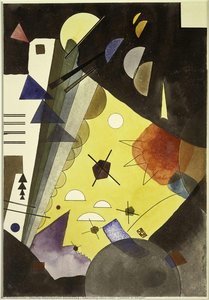
Division-Unity
Giclée / Sanat Baskısı
Reproduksiyon Boyutu
-


Toplam Tutar
$ 64
Eser Açıklaması
Division-Unity: A Symphony of Color and Form
Wassily Kandinsky’s “Division-Unity,” painted in 1934, stands as a cornerstone of abstract expressionism and a testament to the artist's profound exploration of spirituality through visual language. This striking canvas embodies Kandinsky’s revolutionary vision—that art should transcend representational imagery and tap into the realm of pure feeling, mirroring the harmonies of music.
- Subject Matter: The painting depicts two distinct compositions simultaneously presented on a single surface. One features a predominantly blue background adorned with geometric shapes – circles, squares, triangles – arranged in a dynamic interplay that seeks to capture the essence of unity despite its fragmented appearance.
- Style & Technique: Kandinsky employed the technique of “geometric abstraction,” meticulously applying pigment onto canvas using precise brushstrokes and layering colors to achieve textural depth and luminosity. The deliberate fracturing of forms isn’t merely decorative; it's a conceptual device designed to liberate color from its association with objects, allowing it to express itself independently.
- Historical Context: Created during the height of Kandinsky’s Bauhaus period in Weimar, Germany, “Division-Unity” reflects the influential Bauhaus movement’s commitment to uniting art and craft—a radical departure from academic traditions. The painting aligns with Kandinsky's broader philosophical quest for a spiritual dimension within artistic creation, influenced by Eastern mysticism and Jungian psychology.
- Symbolism: The dominant blue hue symbolizes tranquility and spirituality, representing the artist’s aspiration to capture the sublime beauty of the cosmos. The geometric shapes themselves are imbued with symbolic significance—circles embodying wholeness and unity, squares symbolizing stability and order, while triangles conveying dynamism and ascension.
- Emotional Impact: Viewing “Division-Unity” evokes a sense of contemplative wonder and invites viewers to engage in an internal dialogue about color, form, and their capacity to communicate emotion. Kandinsky aimed not for literal depiction but for triggering an intuitive response—a feeling akin to musical harmony—that transcends rational understanding.
Kandinsky: Pioneer of Abstract Art
Wassily Wassilyevich Kandinsky (1866-1944) irrevocably altered the trajectory of modern art, establishing himself as one of the foremost figures in abstract expressionism. Initially drawn to Impressionist painting—particularly Claude Monet’s “Haystacks”—Kandinsky experienced a transformative moment witnessing Wagner's opera "Lohengrin," sparking an unwavering desire to pursue artistic exploration beyond conventional boundaries.
His journey began with formal training at the Moscow State University, where he studied law and economics alongside his burgeoning interest in art. However, it was this encounter with music—specifically Wagner’s dramatic use of color and sound—that fundamentally reshaped Kandinsky's artistic worldview. He recognized that painting could aspire to achieve a similar level of expressive power, mirroring the harmonies of musical composition.
Moving to Munich in 1896, Kandinsky enrolled at Franz von Stuck’s Academy of Fine Arts, continuing his exploration of form and color theory. Influenced by Russian folk art and Eastern mysticism—particularly Rudolf Steiner's Anthroposophy—Kandinsky developed a distinctive aesthetic characterized by spontaneity and intuition.
The Bauhaus Influence
Kandinsky’s involvement with the Bauhaus school in Weimar solidified his commitment to uniting art and craft, challenging prevailing academic conventions. Under Franz Meyer’s guidance, Kandinsky championed the use of geometric abstraction as a means of achieving functional beauty—a principle that resonated throughout the Bauhaus curriculum.
His teaching at Bauhaus instilled in students a belief in the transformative potential of color and form, fostering experimentation with innovative materials and techniques. The Bauhaus ethos profoundly impacted Kandinsky’s artistic practice, shaping his approach to composition and contributing to the development of influential designs for furniture and textiles.
A Legacy of Color and Spirit
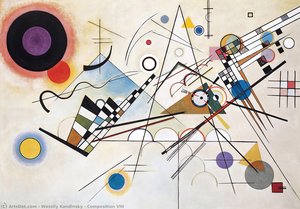
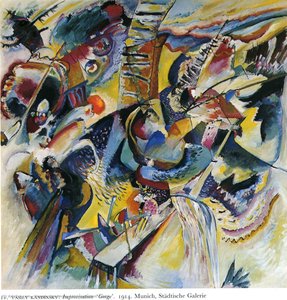
"Division-Unity," alongside other seminal works like “Improvisation No. 28” and “Composition VIII,” exemplifies Kandinsky’s unwavering pursuit of artistic truth—a belief that art should transcend representational illusion and communicate directly with the human soul. His pioneering exploration of abstraction continues to inspire artists and designers worldwide, cementing his place as a visionary whose legacy endures in the vibrant hues and dynamic forms of contemporary visual culture.
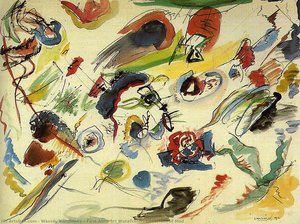
Benzer Eserler


Sanatçı Özgeçmişi
A Life Immersed in Color and Spirit
Wassily Wassilyevich Kandinsky, born December 4, 1866, in Moscow, Russia, was a revolutionary figure who irrevocably altered the course of modern art. His journey wasn’t one of immediate artistic calling; initially destined for a career in law and economics at the University of Moscow, it was a profound encounter with Impressionist painting – specifically Claude Monet's “Haystacks” – and a deeply moving experience witnessing Wagner’s opera "Lohengrin" that ignited within him an irrepressible desire to pursue art. This pivotal moment, occurring around age thirty, marked not merely a career change but a complete transformation of perspective, setting him on a path toward pioneering abstraction. He soon relocated to Munich, enrolling at the prestigious Academy of Fine Arts and studying under Franz von Stuck, though even within formal training, Kandinsky’s spirit yearned for exploration beyond conventional boundaries. Early influences included Russian folk art, gleaned from an ethnographic expedition to the Vologda region in 1889, which instilled a fascination with vibrant color palettes and symbolic imagery. This foundation would prove crucial as he began to develop his unique artistic language. These early explorations weren’t simply about aesthetic preference; they were rooted in a deep cultural connection and a burgeoning understanding of how art could communicate beyond the literal. He experimented with landscapes and portraits, demonstrating considerable skill but always feeling constrained by representational limitations.The Dawn of Abstraction: From Expressionism to Inner Necessity
Kandinsky’s early works reveal a strong expressionistic bent, characterized by bold colors and emotional intensity – pieces like “Papeln (Poplars)” from 1902 exemplify this period. However, he wasn't content with merely representing the external world; he sought to express inner realities, spiritual truths that transcended mere visual depiction. This quest led him gradually away from representational art and toward a revolutionary exploration of color, form, and their emotional resonance. He believed that colors possessed inherent psychological effects, capable of evoking specific feelings and sensations in the viewer. This conviction was deeply intertwined with his burgeoning interest in Theosophy, a spiritual movement emphasizing esoteric knowledge and universal brotherhood. As he delved deeper into these ideas, Kandinsky’s paintings became increasingly non-objective, shedding recognizable forms in favor of abstract compositions driven by an “inner necessity.” This wasn't simply about abandoning representation; it was about discovering a new visual language capable of expressing the intangible realms of emotion and spirituality. He sought to create a visual equivalent of music, where color and form harmonized to evoke profound emotional responses.- Notable Early Works: “Papeln (Poplars),” “Fruitful Tree,” “Moscow Landscape”
- Influences: Impressionism (Monet), Russian Folk Art
Geometric Harmony and Spiritual Resonance
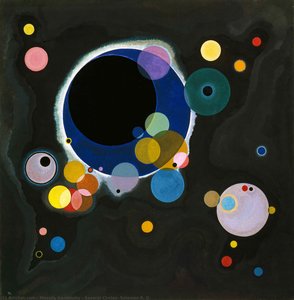
The period following his involvement with the influential artist group Der Blaue Reiter (The Blue Rider), which he co-founded in Munich in 1911, saw a further evolution in Kandinsky’s style. While earlier works often featured fluid, organic shapes, he began to explore geometric abstraction, focusing on the interplay of circles, triangles, and squares. “Several Circles” (140 x 140 cm) stands as a prime example of this phase – a dynamic composition where color and form interact in a harmonious yet energetic dance. He meticulously studied mathematical principles and sought to translate them into visual terms, believing that geometric forms possessed inherent symbolic meaning. This wasn’t cold or sterile geometry; rather, it was imbued with spiritual significance. Kandinsky argued that art should not aim to imitate nature but rather to reveal the artist’s inner world and connect with the viewer on a deeper, more intuitive level.- Key Artistic Developments: Shift from Expressionism to Geometric Abstraction
- Theoretical Writings: “Concerning the Spiritual in Art” (1911)
Bauhaus Influence and Lasting Legacy
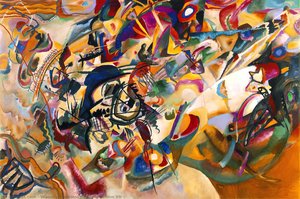
The outbreak of World War I forced Kandinsky's return to Russia in 1914, but following the Russian Revolution, he found himself increasingly at odds with the prevailing artistic climate. In 1920, he accepted a teaching position at the Bauhaus school in Germany, where he profoundly influenced generations of artists with his theories on color, form, and abstraction. The Bauhaus provided an ideal environment for Kandinsky to further develop his ideas and explore new creative avenues. He continued to experiment with geometric forms and vibrant colors, often incorporating layered impasto techniques to create textured surfaces that added depth and complexity to his compositions – as seen in later works like “An Intimate Party” (1942). After the closure of the Bauhaus by the Nazi regime in 1933, Kandinsky moved to France, where he remained for the rest of his life. His impact on modern art is immeasurable; he is widely recognized as a pioneer of abstract expressionism and a key figure in the development of non-representational painting. His works are held in major museums worldwide, including the Tretyakov Gallery in Moscow, which houses his monumental “Composition VII,” a testament to his artistic vision and enduring legacy. Kandinsky died December 13, 1944, in Neuilly-sur-Seine, France.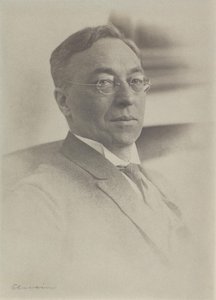
Vasılı Vasılıeviç Kandinskiy
1866 - 1944 , Rusya
Kısa Bilgiler
- Artistic Movement Or Style: Abstr Ekspres
- Artists Or Movements Influenced By This Artist: ['Abs Ekspres']
- Artists Who Influenced This Artist:
- Claude Monet
- Richard Wagner
- Date Of Birth: 1866
- Full Name: Wassily Wassilyevich Kandinsky
- Nationality: Rus
- Notable Artworks:
- Murnau Rainbow
- Tempered Elan
- Several Circles
- Place Of Birth: Moscow, Russia
İlgili Makaleler

Geometrik Soyutlamanın Öncü Eserleri: Sanat Tarihinin İzinde 🖼️🎨
Geometrik Soyutlamanın 10 başyapıtını keşfedin! Mondrian, Malevich ve Kandinsky gibi sanatçıların ikonik eserleriyle modern sanatın derinliklerine yolculuk edin. Evinizi lüks sanat baskılarıyla renklendirin. AllPaintingsStore.com'da tüm koleksiyonu inceleyin!

Chromatic Harmonies & Discord: A History of Color Theory in Art
Explore the fascinating evolution of color theory in art history! Discover Impressionism, Neo-Impressionism & beyond with expert insights for collectors and enthusiasts. Learn about Seurat's techniques & the psychology of color.

Orphism: A Symphony of Color and Form – Exploring the Abstract Roots of Modern Art
Explore Orphism, the vibrant abstract art movement pioneered by Robert & Sonia Delaunay. Discover its unique color theory, lasting influence on modern art, and how to bring this 'symphony of color' into your home with AllPaintingsStore.
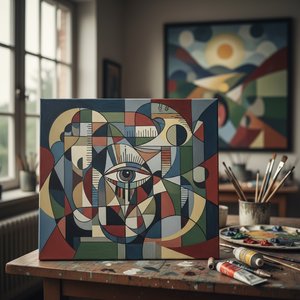
Paul Klee: A Poetics of Form and Color – Exploring the Inner Landscape of a Modern Master
Explore the captivating world of Paul Klee! Discover his innovative art, Bauhaus influence, & unique symbolic language. Expert analysis & high-quality reproductions at AllPaintingsStore.

Beyond Representation: Exploring Emotional Resonance & Formal Innovation in Abstract Art
Explore the profound emotional depth & formal innovations of abstract painting. Discover key artists like Rothko & Kandinsky, understand art collecting insights, and elevate your space with timeless masterpieces. Expert analysis for discerning collectors.