Para İadesi Garantisi · 100 gün Dünya Çapında Ücretsiz Teslimat
449.587sanat eserleri 30.613sanatçılar 4.660müzeler 32Dil Seçenekleri
Para Birimi
    Dil
      Atölye · Kuruluş 2015 · Paris, Fransa
      AllPaintingsStore
      allpaintingsstore.com
      Catalogue entry

      Improvisation 26 (Rowing)

      1912. Acrylic On Canvas, 107.0 x 97.0 cm. Lenbachhaus.

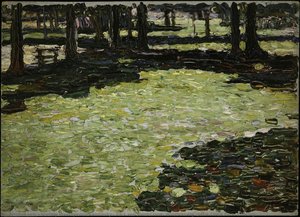
      Fig. 1. Vasılı Vasılıeviç Kandinskiy, Improvisation 26 (Rowing), 1912. Shown as the reproduction you are specifying: , .

      § 1Catalogue data

      § 2Abstract

      Koleksiyon Açıklaması

      Experience the vibrant energy of Wassily Kandinsky's 'Improvisation 26 (Rowing)' – a monumental abstract painting exploring color and form with striking yellow circles and dynamic red & blue lines.

      Sanatçı Özgeçmişi

      Wassily Kandinsky (1866-1944), Rusya’nın önde gelen sanat teorisyeni ve abstrakta sanatın kurucusu olarak tanınır. Monet'in "Çeşitli Çubuklar" eserinden etkilenerek ve Wagner'ın "Lohengrin" operasının izleyişinde yaşadığı duygusal dönüşüm onu renklerin psikolojik gücüne inanmaya yönlendirdi. Bu temel noktadan sonra Kandinsky, renklerin duyguları uyandırmasıyla müzikle eşdeğer bir görsel dil yaratm

      § 3Commentary

      A Symphony in Color: Exploring Kandinsky’s Improvisation 26

      Wassily Wassilyevich Kandinsky stands as an undeniable titan of modern art, a figure whose audacious embrace of abstraction fundamentally reshaped the artistic landscape and continues to inspire awe centuries later. His journey toward this groundbreaking vision wasn't paved with conventional academic pursuits; initially drawn to law and economics at Moscow University—a path deemed respectable by societal expectations—it was a transformative encounter with Claude Monet’s “Haystacks” that sparked his initial fascination with Impressionism, capturing the fleeting beauty of light and atmosphere. Yet, it was an even more profound experience witnessing Wagner's opera "Lohengrin" – a visceral immersion in music and drama – that truly unlocked Kandinsky’s inner artist, propelling him toward a radical departure from representational art. Around thirty years old, he abandoned his legal aspirations for the fervent pursuit of painting, embarking on a path marked by relentless experimentation and unwavering conviction.
      • Early Influences: Russian Folk Art
      • The Academy of Fine Arts in Munich
      • Franz von Stuck’s Guidance
      Kandinsky's artistic evolution wasn’t simply about stylistic shifts; it represented a profound philosophical reimagining of art itself. He rejected the constraints of depicting observable reality, arguing that painting should strive to express inner spiritual states—a concept deeply rooted in Jungian psychology and reflecting his belief in the interconnectedness of consciousness and creativity. This conviction fueled his relocation to Munich, where he enrolled at the Academy of Fine Arts under Franz von Stuck, though even within the framework of formal training, Kandinsky’s spirit chafed against convention, constantly seeking new avenues for artistic exploration. He meticulously studied the works of Cézanne and Picasso, absorbing their innovative approaches to form and composition—artists who similarly challenged established aesthetic norms.

      Analyzing Improvisation 26: Style and Technique

      “Improvisation 26 (Rowing),” created in 1912, exemplifies Kandinsky’s signature style – Abstract Expressionism – characterized by its deliberate rejection of illusionistic representation. The painting abandons any attempt to mimic the visual world, instead prioritizing color and form as primary expressive elements. Kandinsky employed a technique he termed “Gesture Painting,” applying paint with energetic brushstrokes—often impulsive and spontaneous—to create textured surfaces that convey emotional intensity. He utilized a vibrant palette dominated by yellows, reds, and blues, meticulously layering colors to achieve luminous effects and conveying a sense of dynamism and movement. The concentric circles at the center – two prominent yellow discs surrounded by radiating red and blue lines – serve as focal points, drawing the viewer’s eye inward while simultaneously suggesting an outward expansion of energy.

      Symbolism Within Abstraction

      Beyond its formal qualities, “Improvisation 26” is laden with symbolic significance. The circles represent wholeness and unity—a concept central to Kandinsky's spiritual worldview—while the radiating lines symbolize aspiration and transcendence. The juxtaposition of yellow and red – traditionally associated with optimism and passion – underscores the painting’s emotional core, conveying a feeling of exhilaration and vitality. Kandinsky believed that colors possessed inherent psychological properties, capable of evoking specific moods and sensations; he meticulously selected hues to align with his intention to communicate profound spiritual truths.

      Emotional Impact and Legacy

      “Improvisation 26” transcends mere visual aesthetics, resonating deeply within the viewer’s psyche—a testament to Kandinsky's masterful ability to translate inner experience into tangible form. The painting captures a moment of spontaneous creativity—a celebration of color and gesture—that embodies the spirit of artistic liberation. Its influence extends far beyond its own time, shaping subsequent generations of artists who embraced abstraction as a means of conveying emotion and exploring spiritual dimensions. Today, “Improvisation 26” remains a cornerstone of Abstract Expressionism, serving as an enduring emblem of Kandinsky’s pioneering vision and his unwavering commitment to artistic innovation—a symphony in color that continues to captivate audiences worldwide.

      Soru ve Cevaplar

      Orijinal Vasılı Vasılıeviç Kandinskiy imzalı "Improvisation 26 (Rowing)" eserinin boyutları nedir?

      "Improvisation 26 (Rowing)" adlı eserin orijinal boyutları 107 x 97 cm ölçülerindedir. Orijinal boyutlar, bir reprodüksiyon boyutu seçerken yararlı bir referans niteliğindedir.

      "Improvisation 26 (Rowing)" eserinin yazarı ve tarihi nedir?

      Vasılı Vasılıeviç Kandinskiy, "Improvisation 26 (Rowing)" adlı eseri 1912 yılında yaptı.

      Vasılı Vasılıeviç Kandinskiy imzalı "Improvisation 26 (Rowing)" bir yağlı boya tablo mu, çizim mi yoksa baskı mı?

      Vasılı Vasılıeviç Kandinskiy imzalı "Improvisation 26 (Rowing)", WallArt olarak sınıflandırılmaktadır. Bu kategori, eserin orijinalinin hangi türde bir sanat çalışması olduğunu tanımlar.
      § 4The artist

      Quick facts about Vasılı Vasılıeviç Kandinskiy

      • Artistic Movement Or Style: Abstr Ekspres
      • Artists Or Movements Influenced By This Artist: ['Abs Ekspres']
      • Artists Who Influenced This Artist:
        • Claude Monet
        • Richard Wagner
      • Date Of Birth: 1866
      • Full Name: Wassily Wassilyevich Kandinsky
      • Nationality: Rus
      • Notable Artworks:
        • Murnau Rainbow
        • Tempered Elan
        • Several Circles
      • Place Of Birth: Moscow, Russia

      Sanatçı Biyografisi

      A Life Immersed in Color and Spirit

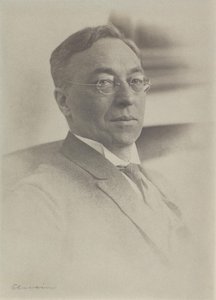
      Wassily Wassilyevich Kandinsky, born December 4, 1866, in Moscow, Russia, was a revolutionary figure who irrevocably altered the course of modern art. His journey wasn’t one of immediate artistic calling; initially destined for a career in law and economics at the University of Moscow, it was a profound encounter with Impressionist painting – specifically Claude Monet's “Haystacks” – and a deeply moving experience witnessing Wagner’s opera "Lohengrin" that ignited within him an irrepressible desire to pursue art. This pivotal moment, occurring around age thirty, marked not merely a career change but a complete transformation of perspective, setting him on a path toward pioneering abstraction. He soon relocated to Munich, enrolling at the prestigious Academy of Fine Arts and studying under Franz von Stuck, though even within formal training, Kandinsky’s spirit yearned for exploration beyond conventional boundaries. Early influences included Russian folk art, gleaned from an ethnographic expedition to the Vologda region in 1889, which instilled a fascination with vibrant color palettes and symbolic imagery. This foundation would prove crucial as he began to develop his unique artistic language. These early explorations weren’t simply about aesthetic preference; they were rooted in a deep cultural connection and a burgeoning understanding of how art could communicate beyond the literal. He experimented with landscapes and portraits, demonstrating considerable skill but always feeling constrained by representational limitations.

      The Dawn of Abstraction: From Expressionism to Inner Necessity

      Kandinsky’s early works reveal a strong expressionistic bent, characterized by bold colors and emotional intensity – pieces like “Papeln (Poplars)” from 1902 exemplify this period. However, he wasn't content with merely representing the external world; he sought to express inner realities, spiritual truths that transcended mere visual depiction. This quest led him gradually away from representational art and toward a revolutionary exploration of color, form, and their emotional resonance. He believed that colors possessed inherent psychological effects, capable of evoking specific feelings and sensations in the viewer. This conviction was deeply intertwined with his burgeoning interest in Theosophy, a spiritual movement emphasizing esoteric knowledge and universal brotherhood. As he delved deeper into these ideas, Kandinsky’s paintings became increasingly non-objective, shedding recognizable forms in favor of abstract compositions driven by an “inner necessity.” This wasn't simply about abandoning representation; it was about discovering a new visual language capable of expressing the intangible realms of emotion and spirituality. He sought to create a visual equivalent of music, where color and form harmonized to evoke profound emotional responses.
      • Notable Early Works: “Papeln (Poplars),” “Fruitful Tree,” “Moscow Landscape”
      • Influences: Impressionism (Monet), Russian Folk Art

      Geometric Harmony and Spiritual Resonance

      The period following his involvement with the influential artist group Der Blaue Reiter (The Blue Rider), which he co-founded in Munich in 1911, saw a further evolution in Kandinsky’s style. While earlier works often featured fluid, organic shapes, he began to explore geometric abstraction, focusing on the interplay of circles, triangles, and squares. “Several Circles” (140 x 140 cm) stands as a prime example of this phase – a dynamic composition where color and form interact in a harmonious yet energetic dance. He meticulously studied mathematical principles and sought to translate them into visual terms, believing that geometric forms possessed inherent symbolic meaning. This wasn’t cold or sterile geometry; rather, it was imbued with spiritual significance. Kandinsky argued that art should not aim to imitate nature but rather to reveal the artist’s inner world and connect with the viewer on a deeper, more intuitive level.
      • Key Artistic Developments: Shift from Expressionism to Geometric Abstraction
      • Theoretical Writings: “Concerning the Spiritual in Art” (1911)

      Bauhaus Influence and Lasting Legacy

      The outbreak of World War I forced Kandinsky's return to Russia in 1914, but following the Russian Revolution, he found himself increasingly at odds with the prevailing artistic climate. In 1920, he accepted a teaching position at the Bauhaus school in Germany, where he profoundly influenced generations of artists with his theories on color, form, and abstraction. The Bauhaus provided an ideal environment for Kandinsky to further develop his ideas and explore new creative avenues. He continued to experiment with geometric forms and vibrant colors, often incorporating layered impasto techniques to create textured surfaces that added depth and complexity to his compositions – as seen in later works like “An Intimate Party” (1942). After the closure of the Bauhaus by the Nazi regime in 1933, Kandinsky moved to France, where he remained for the rest of his life. His impact on modern art is immeasurable; he is widely recognized as a pioneer of abstract expressionism and a key figure in the development of non-representational painting. His works are held in major museums worldwide, including the Tretyakov Gallery in Moscow, which houses his monumental “Composition VII,” a testament to his artistic vision and enduring legacy. Kandinsky died December 13, 1944, in Neuilly-sur-Seine, France.

      § 5Comparanda

      § 6Questions

      Kısa Bilgiler

      • Location: Private Collection
      • Movement: Abstract Expressionism
      • Influences: Russian Folk Art
      • Subject or theme: Musical Inspiration
      • Artistic style: Color Field Painting
      • Notable elements or techniques: Geometric abstraction; Circular forms

      Sanat Bilgisi Testi

      Her soru için yalnızca bir doğru cevap bulunmaktadır.

      Soru 1:
      What artistic movement is Wassily Kandinsky's “Improvisation 26 (Rowing)” considered to be?
      Soru 2:
      In what year was “Improvisation 26 (Rowing)” painted?
      Soru 3:
      The painting prominently features geometric shapes, primarily circles and lines. What is the dominant color scheme employed by Kandinsky?
      Soru 4:
      What influential musical composer inspired Kandinsky's artistic vision?
      Soru 5:
      “Improvisation 26 (Rowing)” exemplifies Kandinsky’s belief in the expressive power of color and form. How does he utilize these elements to convey emotion?

      § 7Cite this entry

      AllPaintingsStore.com, “Vasılı Vasılıeviç Kandinskiy, Improvisation 26 (Rowing) (1912)”, https://allpaintingsstore.com/tr/art/wassily-wassilyevich-kandinsky-improvisation-26-rowing-D3VC86-en/ArtistReproduction/ (accessed 3 Ekim 2026).

      § 8The reproduction

      El Yapımı Yağlı Boya Reproduksiyon

      Sanatçılarımız tarafından sipariş üzerine hazırlanan; istediğiniz boyut ve çerçevede, tuval üzerine el boyaması yağlı boya. ( Baskı Satışına Geç Dijital Görsel Satışına Geç)

      It is specified on the order sheet in the margin; the present state of that sheet reads as follows.

      Improvisation 26 (Rowing)

      Baskı Tekniği

      Baskı Boyutu

      -

      Seçkin Kıdemli Sanatçı

      Daha fazla detay, incelik ve ek üretim süresi

      -

      Reproduksiyon Çerçeve Seçenekleri

      -

      -

      Herhangi bir kenarı 105 cm'den (yaklaşık 41 inç) büyük olan sanat eserleri veya reprodüksiyonlar için çerçeve, demonte edilmiş bir kit halinde gönderilecektir. Bu yöntem, güvenli teslimat sağlar ve taşıma sırasında oluşabilecek hasarları önler.

      Profesyonel montaj gereklidir; bu ürün kendin yap (DIY) tarzı bir ürün değildir.
      Kit; ahşap tutkalı (pakete dahil değildir), kanvas germe pensi ve tutkal kururken çıtaların dik durmasını sağlayacak işkenceler kullanılarak, deneyimli bir profesyonel çerçeveci tarafından monte edilmeli ve kanvas gerilmelidir. Hatalı montaj veya dengesiz kanvas gerginliği sanat eserine kalıcı zarar verebilir ve bu durum garantimiz kapsamında değildir.

      • Tüm masif ahşap çıtalar dahildir, montaj için hassas bir şekilde ölçülmüştür.

      • Paket içeriğinde bulunan vidalar ve köşe birleşimleri için çerçeve ustanız tarafından temin edilmesi gereken, ancak pakete dahil olmayan ahşap tutkalı ile monte edilir.

      • Profesyonel araçlar gereklidir ve pakete dahil değildir: bir tuval germe aparatı (gerdirici) ve yapıştırıcı kururken çıtaların dik durmasını sağlayacak kıskaçlar.

      Önemli:
      Köşe bağlantıları için ahşap tutkalı gereklidir; tutkal tamamen kuruyana kadar çıtalar işkenceler ile sabitlenmelidir ve monte edilmiş çerçeve üzerindeki kanvasın gerilmesi için bir kanvas germe pensine ihtiyaç duyulur. Bunların hiçbiri kit içerisinde yer almamaktadır. Lütfen bu boyutu sipariş etmeden önce deneyimli bir profesyonel çerçeve ustası ile anlaşın.

      İsimlik

      -

      -

      Koruyucu Vernik

      Parlak Vernik (renkleri canlandırır; ışığa ve neme karşı koruma sağlar)

      -

      Eserimi Özelleştir

      Değiştirilebilecek örneklere göz atın: Yüzü müşteri fotoğrafıyla değiştirin; Evcil hayvan ekleyin (örneğin, kediyi köpek ile değiştirin); Arka plana gizli bir mesaj dahil edin; Arka plan manzarasını veya öğelerini değiştirin.

      -

      Acil

      Dünya Çapında Teslimat (); standart 5 hafta yerine 3/4 hafta içinde. (31 Ekim). Kaliteden ödün verilmez.

      -

      Hızlı Teslimat

      için dünya çapında teslimat süresi 5 haftadır. (7 Kasım).

      Dahil

      Toplam Fiyat

      ₺ 12673

      Included with every order

      • Dünya Çapında Ücretsiz Ekspres Kargo
      • Yüksek Kaliteli Keten Tuval
      • Tam Nakliye Sigortası
      • Gümrük Vergisi İadesi Garantisi
      • Gerçek Renk Uyumu Garantisi
      • 100 Günlük İade Koşulları (Sadece Üretim Hatalı Ürünler İçin)
      • %100 Para İade Garantisi
      • Toplu Alım Avantajı
      Temalara, stillere ve özelliklere göre gruplandırılmış sanat eserlerini keşfedin.
      Order sheet