


 Önizleme yap
 Paylaş
 Paylaş
 Detayları Gör

 İndir
İndir
 Benzerlerini gör
 X-Işını
 Slayt Gösterisi
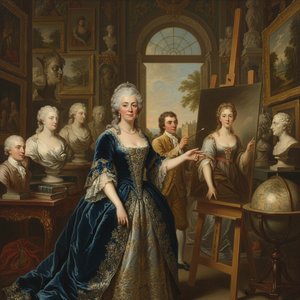
Henry Siddons

 Tümünü Gör
El Yapımı Yağlı Boya Reproduksiyon
Sanatçılarımız tarafından sipariş üzerine hazırlanan; istediğiniz boyut ve çerçevede, tuval üzerine el boyaması yağlı boya. ( Baskıya Geç Görsele Geç)




P118B $10

P118H $10

P118W $10

P438Z $10

P508JH $12

P508YH $12

P805H $10

P805Z $10

P919BZ $10

P919G $10

P919XJ $10

P959ZH $10

P968JZ $12

W106C $8

W218G $10

W218JH $8

W218Y $10

W307PJ $10

W316G $10

W316PJ $8

W316Y $10

W398PJ $8

W4111J $10

W500HY $15

W500JH $15

W692G $12

W849H $8

W940BG $15

W953PJ $8




Eserin orijinal oranlarıyla uyumlu, önceden belirlenmiş boyutlarımız arasından seçim yapın.

Belirli bir çerçeveye veya alana uyması için kendi boyutlarınızı girebilirsiniz. Seçtiğiniz boyut orijinal görüntünün oranlarıyla eşleşmiyorsa, sanat eserini kırparak veya ek el boyaması öğelerle resmi uzatarak ayarlayacağız. Üretim başlamadan önce onayınız için dijital bir taslak gönderilecektir.
Lütfen ekrandaki önizlemenin gerçek kırpmayı veya uzatmayı yansıtmadığını unutmayın. Nihai kompozisyonu yalnızca hazırlanan taslak doğru şekilde gösterecektir.
Özel boyutlar mevcut olsa da, orijinal oranları korumak adına önceden tanımlanmış listeden bir boyut seçmenizi öneririz.
Siparişten sonra, AllPaintingsStore.com ekibi talimatlar için müşteriye e-posta gönderecek ve bir taslak önizleme sunacaktır
Dünya Çapında Teslimat (); standart 5 hafta yerine 3/4 haftada. (9 Ağustos). Kaliteden ödün verilmez.

Dünya Çapında Ücretsiz Ekspres Kargo

Yüksek Kaliteli Keten Tuval

Tam Kapsamlı Nakliye Sigortası

Gümrük Vergisi İade Garantisi

Gerçek Renk Uyumu Garantisi

60 Günlük İade Politikası (Sadece Kusurlu Ürünler İçin)

%100 Para İade Garantisi

Toplu Alım İndirimi
 Cam seçeneği yalnızca 110 cm altındaki boyutlar için mevcuttur.

Henry Siddons
Reproduksiyon Tekniği
Reproduksiyon Boyutu
-


Toplam Tutar
$ 258
Benzer Eserler


Sanatçı Özgeçmişi
The Polymath of the Canvas: The Life and Legacy of William Hamilton
In the vibrant, intellectually charged atmosphere of Georgian Britain, few figures embodied the era's unique synthesis of aesthetic grace and scientific rigor quite like William Hamilton. Born in Chelsea, London, in 1751, Hamilton was far more than a mere painter; he was a true polymath whose life’s work bridged the gap between the delicate nuances of Neoclassical art and the precise observations of natural science. His journey began not with the brush, but with the disciplined eye of an architectural draftsman, a foundation that would later imbue his canvases with an unparalleled structural clarity and meticulous detail.
Hamilton’s artistic evolution was profoundly shaped by his encounters with the masters of his age. His formal training under the legendary Joshua Reynolds—the titan of British portraiture—instilled in him a deep reverence for realism and the idealized beauty characteristic of the Neoclassical tradition. However, his thirst for knowledge led him far beyond the studios of London. His travels through Italy, where he studied under the Venetian artist Antonio Zucchi, expanded his visual vocabulary, allowing him to infuse his work with the classical grandeur of Rome and the luminous light of the Mediterranean.
A Symphony of Art and Science
What truly distinguishes Hamilton from his contemporaries was his refusal to view art as an isolated pursuit. For Hamilton, the canvas was a laboratory for observation. During his time in Naples, commissioned by King George III, he embarked on an ambitious project to document the Neapolitan Royal Collection. This endeavor required him to act as both artist and naturalist; as he painted, he simultaneously immersed himself in the study of botany and geology. The result was a body of work that served as a vital scientific record, where every petal and mineral vein was rendered with an accuracy that satisfied both the poet and the scientist.
This dual passion is most evident in his celebrated portraits and dramatic scenes. While works such as “Portrait of Sarah Siddons” capture the emotive depth and theatrical elegance of the period, they are underpinned by a technical precision that speaks to his scientific training. His ability to blend the sweeping drama of the Rococo with the disciplined observation of the Enlightenment allowed him to create works that were both emotionally resonant and intellectually profound.
Theatrical Grandeur and Historical Impact
As his career progressed, Hamilton became a master of narrative, finding immense success in illustrating the literary giants of his time. He was a pivotal figure in several major publishing ventures, most notably contributing to John Boydell’s Shakespeare Gallery. His ability to translate the epic scale of Shakespearean drama onto canvas made him a favorite among the public, as his illustrations were widely reproduced in popular prints, bringing high art into the homes of the burgeoning middle class.
Beyond the stage and the study, Hamilton’s reach extended to the very pulse of contemporary history. He possessed a rare ability to capture the zeitgeist, painting modern events—such as the tragic execution of Marie Antoinette—with the same gravity and epic composition usually reserved for ancient legends. This capacity to elevate contemporary drama to the level of historical myth solidified his reputation as one of the most versatile artists of the late 18th century.
A Lasting Impression on British Art
By the time of his death in 1801, William Hamilton had secured a permanent place in the annals of the Royal Academy, having risen from an associate to a full member. His legacy is not found merely in individual masterpieces, but in the very spirit of his approach: the idea that art can be a vessel for truth, whether that truth is found in the curve of a human cheek or the intricate structure of a geological specimen.
His contributions can be summarized through several key pillars of his career:
- The Integration of Disciplines: He pioneered a style where artistic beauty and scientific accuracy coexisted seamlessly.
- Literary Illustration: His work for the Shakespeare Gallery helped define the visual language of English literature for generations.
- Architectural Precision: His early training as a draftsman provided a unique structural integrity to his landscapes and theatrical scenes.
- Cultural Documentation: Through his Neapolitan commissions, he preserved the botanical and geological wonders of the era for posterity.
Today, Hamilton remains a symbol of the Enlightenment—a reminder of a time when the boundaries between the arts and sciences were not walls, but windows through which we might better understand the world.

william hamilton
1751 - 1801 , United Kingdom
Kısa Bilgiler
- Artistic Movement Or Style: Rococo Painting Style
- Artists Or Movements Influenced By This Artist: ['Neoclassical Art']
- Artists Who Influenced This Artist: ['Joshua Reynolds']
- Date Of Birth: Chelsea, United Kingdom (1751)
- Date Of Death: 1801
- Full Name: William Hamilton
- Nationality: British
- Notable Artworks:
- Portrait Of William Hamilton
- 2nd Duke Of Hamilton
- A Scene From 'as You Like It' By William Shakespeare
- Place Of Birth: United Kingdom
İlgili Makaleler

18th Century Masters: 10 Artworks That Define an Era | AllPaintingsStore
Journey through 18th century art! Explore 10 iconic paintings – from Rococo elegance to Neoclassical grandeur. Discover Fragonard, David & more. Find museum-quality reproductions and elevate your home decor on AllPaintingsStore.com.

Vigée Le Brun: Portraiture, Patronage & Feminine Identity in 18th-Century France
Explore the life & art of Louise Élisabeth Vigée Le Brun, Marie Antoinette’s renowned portraitist. Discover her Rococo style, self-portraits, and influence on 18th-century French painting. A deep dive into patronage & feminine identity.
Sarah Churchill, Countess of Essex: A Patron's Influence on 18th-Century Art & Identity
Explore the fascinating world of Sarah Churchill, Countess of Essex, a pivotal figure in 18th-century art patronage. Discover her influence on Rococo aesthetics and portraiture, and learn about commissioning artworks as a statement of power & identity.

Henry William Pickersgill: Narrative, Reform & the Victorian Domestic Interior
Explore the life & work of Henry William Pickersgill, a leading Victorian portrait artist. Discover his narrative style, realistic depictions of society, and lasting influence on British art history. Fine art reproductions available at AllPaintingsStore.

George Romney: Portraiture, Patronage & the Shaping of Georgian Society
Explore the life & art of George Romney, leading portraitist of Georgian England. Discover his style, famous patrons like Emma Hamilton, and legacy in British society. Expert insights for collectors.



