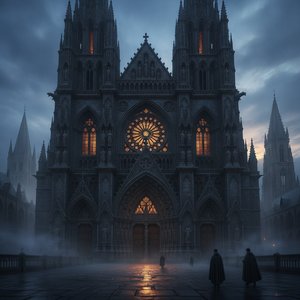
A Master of the Veronese Twilight
In the hallowed, gilded atmosphere of the early fifteenth century, Giovanni Badile da Verona emerged as a luminous figure within the vibrant artistic landscape of Italy. A member of a distinguished dynasty of artists active in Verona from the middle of the 14th to the end of the 16th century, Badile carried the weight of tradition while contributing his own unique vision to the Late Gothic soul. His presence in the historical record is anchored by his activity in Verona, where he established himself as one of the major painters of the era, a contemporary of masters like Pisanello.
The essence of Badile’s artistry lies in his ability to capture the divine hierarchy through a breathtaking blend of spiritual devotion and meticulous craftsmanship. His work often serves as a window into a celestial realm, where the boundaries between the earthly and the eternal seem to dissolve under the glow of precious metals. Through the careful application of tempera layering over prepared gesso, he achieved a profound depth of color, utilizing deep crimsons, royal blues, and earthy browns to breathe life into his sacred subjects.
The Splendor of the Gothic Vision
Badile’s technical mastery is perhaps most exquisitely realized in his use of gold leaf, an element that does far more than mere decoration. In his hands, the shimmering texture creates a sense of unearthly light that transcends physical boundaries, particularly when interacting with the flickering shadows of a candlelit chapel. This technique is central to the Gotico Internazionale style, where rhythmic geometry and a rigid, hierarchical structure guide the viewer’s eye toward the divine.
His compositions often feature a celestial court, arranged in receding rows to denote spiritual importance. A notable example of his ability to balance tender divinity with human charm can be seen in his depictions of the Virgin Mary. In such works, the sweetness of the infant Jesus is presented with an almost endearing, human awkwardness, grounding the monumental scale of the altarpiece in a relatable, emotional reality. This delicate balance between the magnificent and the intimate defines much of his enduring legacy.
Legacy and Artistic Significance
The historical significance of Giovanni Badile da Verona is preserved not only in the grand polyptychs that once graced Italian churches but also in the intimate traces of his hand found in drawings. His contributions to the Veronese school provided a vital point of reference for the development of regional painting, bridging the gap between the late medieval traditions and the burgeoning complexities of the Renaissance. His work remains a testament to an era where every brushstroke was imbued with theological significance, designed to lead the faithful from the physical world into a state of profound spiritual contemplation.
Soru & Cevap
Giovanni Badile Da Verona adlı sanatçının eserlerini atmosfere göre ayrılmış şekilde nerede görebilirim?
Giovanni Badile Da Verona sanatçısının Ruh Haline Göre Oda sayfası, sanatçının eserlerini ruh haline göre düzenleyen bir sayfadır.
Giovanni Badile Da Verona sanatçısının doğum yeri olan şehir ve ülke neresidir?
Giovanni Badile Da Verona, Italy sınırları içerisindeki Verona şehrinde doğmuştur.
Giovanni Badile Da Verona nereli?
Giovanni Badile Da Verona, Italy ülkesinde doğmuştur.