- Додому

- Друк на полотні
- Антон Рафаэль Меньґс
- L'Immaculée Conception

 Замовити репродукцію Купити цифрове зображення
 Надіслати
 Поділитися
 Деталі витвору
 Додати до улюблених

 Завантажити
 Схожі вироби
 Рентгенівське дослідження
 Слайд-шоу
L'Immaculée Conception


 Розгорнути текст
Гікле / Художній принт
Музейна якість друку جيкле або на полотні з оперативним виготовленням та різноманітними варіантами фінішної обробки.




P118B $10

P118H $10

P118W $10

P438Z $10

P508JH $12

P508YH $12

P805H $10

P805Z $10

P919BZ $10

P919G $10

P919XJ $10

P959ZH $10

P968JZ $12

W106C $8

W218G $10

W218JH $8

W218Y $10

W307PJ $10

W316G $10

W316PJ $8

W316Y $10

W398PJ $8

W4111J $10

W500HY $15

W500JH $15

W692G $12

W849H $8

W940BG $15

W953PJ $8




Обирайте з наших стандартних розмірів, що відповідають оригінальним пропорціям твору мистецтва.

Ви можете вказати власні розміри, щоб репродукція ідеально підійшла до конкретної рами або інтер'єру. Якщо обраний вами розмір не відповідає пропорціям оригіналу, ми або обріжемо полотно, або розширимо зображення за допомогою дзеркального відображення чи суцільної заливки країв. Перед початком виробництва вам буде надіслано цифровий макет для затвердження.
Будь ласка, зверніть увагу, що попередній перегляд на екрані не відображає фактичне обрізання або розширення. Тільки макет точно покаже фінальну композицію.
Хоча можливість замовлення індивідуальних розмірів доступна, ми рекомендуємо обирати формат із попередньо визначеного списку, щоб зберегти оригінальні пропорції.
Доставка по всьому світу () за 2 тижні замість стандартних 4/5 тижнів. (22 Липень)

Безкоштовна експрес-доставка по всьому світу

Високоякісне лляне полотно

Повне страхове покриття доставки

Гарантія відшкодування митних зборів

Гарантія точного відтворення кольорів

Політика повернення протягом 60 днів (лише у разі виявлення дефектів)

Гарантія повернення 100% коштів

Знижка на багатоелементні замовлення
 Скляний варіант доступний лише для розмірів до 110 см

L'Immaculée Conception
Гікле / Художній принт
Розмір репродукції
-


Підсумкова ціна
-
Опис експоната
A Portrait of Grace: Anton Raphael Mengs’ “L’Immaculée Conception”
Anton Raphael Mengs' "L’Immaculée Conception" is not merely a depiction of a religious subject; it’s a carefully constructed tableau of serenity, embodying the ideals of Neoclassical art and reflecting the intellectual currents of 18th-century Europe. Painted between 1760 and 1770, this work transcends its devotional origins to offer a profound meditation on purity, humility, and divine grace – qualities that continue to resonate with viewers today. The painting’s quiet power stems from Mengs' masterful command of light, composition, and the subtle language of gesture, all hallmarks of his distinctive artistic vision.
Mengs, a pivotal figure bridging the Baroque and Neoclassical eras, was deeply influenced by the rediscovery of classical antiquity. He sought to revive the principles of balance, clarity, and idealized beauty that characterized ancient Greek and Roman art. This pursuit is vividly evident in “L’Immaculée Conception,” where the subject—likely representing Mary, the Mother of Jesus—is presented with an almost sculptural elegance. Her pose, reminiscent of classical statues, exudes a sense of dignified composure, while her gaze, direct yet gentle, invites contemplation and connection.
A Symphony of Color and Light
The painting’s color palette is deliberately restrained, dominated by soft, muted tones of beige, cream, and pale pink. These subtle hues create an atmosphere of tranquility and reverence, drawing the viewer's eye to the central figure without overwhelming her presence. Mengs employs a delicate layering technique—a hallmark of Neoclassical painting—to achieve nuanced tonal variations and smooth transitions between colors. This meticulous approach results in a surface that appears remarkably luminous and refined, as if illuminated from within.
Light plays a crucial role in shaping the artwork’s mood and highlighting key elements. The lighting is soft and diffused, casting a gentle glow around the figure's face and upper body while leaving the background slightly darker. This strategic use of light creates depth and dimension, emphasizing the subject’s serenity and drawing attention to her serene expression. Notice how the light subtly models the contours of her face, revealing the delicate structure of her features and conveying an impression of ethereal beauty.
Form and Composition: A Study in Balance
The composition of “L’Immaculée Conception” is meticulously balanced, reflecting Mengs' deep understanding of classical principles. The subject is positioned centrally within the frame, creating a sense of stability and formality. Her crossed arms, a gesture of humility and devotion, are perfectly counterbalanced by her serene expression and direct gaze. This harmonious arrangement contributes to the painting’s overall feeling of composure and grace.
Mengs skillfully utilizes lines to define the figure's form and drapery. Soft, flowing lines delineate the contours of her face, hair, and garments, creating a sense of fluidity and movement. These lines are not harsh or angular but rather gentle and curved, contributing to the painting’s overall feeling of elegance and refinement. The circular forms present in her face and the folds of her clothing further enhance this impression of harmony and balance.
Symbolism and Historical Context
“L’Immaculée Conception” is deeply rooted in Christian iconography, representing Mary as conceived without original sin—a doctrine central to Catholic theology. The painting's symbolism extends beyond its religious subject matter, reflecting the broader intellectual currents of the Enlightenment. Mengs’ revival of classical ideals—emphasizing reason, order, and beauty—mirrors the philosophical movement that sought to emulate the achievements of ancient Greece and Rome.
The work was created during a period of significant artistic transition, as Baroque grandeur gave way to Neoclassical restraint. Mengs himself played a crucial role in this shift, advocating for a return to classical forms and principles. His “L’Immaculée Conception” exemplifies this transformation, demonstrating his ability to synthesize the traditions of the past with the ideals of the present.
A Timeless Masterpiece
“L’Immaculée Conception” remains a testament to Anton Raphael Mengs' artistic skill and intellectual vision. Its serene beauty, balanced composition, and subtle symbolism continue to captivate viewers centuries after its creation. Whether admired for its technical mastery or its profound spiritual resonance, this painting stands as a timeless masterpiece of Neoclassical art—a poignant reminder of the enduring power of grace, humility, and divine inspiration.
Схожі витвори мистецтва


Біографія митця
Anton Raphael Mengs (1728–1779): A Bridge Between Baroque Grandeur and Neoclassical Clarity
Anton Raphael Mengs stands as a pivotal figure in the artistic landscape of the late 18th century, marking a decisive transition from the opulent excesses of Baroque to the refined ideals of Neoclassicism. Born in Ústí nad Labem, Bohemia (now Czech Republic) on March 12, 1728, his life was inextricably linked with intellectual currents that reshaped European aesthetics and cemented his legacy as one of the era’s foremost painters.
- Early Life & Family Background: Mengs's father, Ismael Mengs, a Danish painter who had found patronage at Dresden’s court, recognized young Anton’s exceptional talent early on. This recognition propelled him to relocate to Rome in 1741, immersing himself in the study of ancient masterpieces and the works of Renaissance giants like Raphael. His family's unconventional upbringing—a Jewish convert marrying without papal dispensation—contributed to a narrative steeped in intrigue and circumstance.
- Roman Apprenticeship & Raphael’s Influence: Mengs’s formative years were dedicated to meticulous copying, not merely as an exercise in technique but as a profound pilgrimage toward mastering Raphael's genius. He diligently studied Raphael’s frescoes, absorbing the essence of his artistic vision—harmony, balance, and idealized form—principles that would become foundational to his own style.
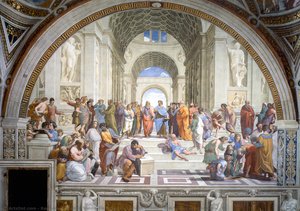
- Career Across Courts: Mengs’s artistic trajectory unfolded across several influential European courts, beginning with Dresden and extending to Madrid. Each patronage shaped his oeuvre, fostering a blend of Baroque grandeur and Neoclassical restraint. Notably, his frescoes for the Villa Albani in Rome—particularly *The School of Athens*—became emblems of the era's aesthetic aspirations.
- Collaboration with Winckelmann & Shaping Neoclassicism: Mengs’s partnership with Johann Joachim Winckelmann proved transformative. Winckelmann championed a return to the perceived purity and simplicity of ancient Greek art, advocating for an aesthetic rooted in reason and order. Together, they debated and refined these ideas, translating them into tangible artistic expressions—a pivotal contribution to the burgeoning Neoclassical movement.
- Legacy & Artistic Impact: Mengs died in Rome in 1779, leaving behind a body of work that transcended mere stylistic innovation. He established himself as a champion of formal arts education and national art academies, fostering a new generation of artists attuned to classical principles. His influence continues to resonate today, reminding us of the enduring power of antiquity to inspire artistic creativity and intellectual discourse.
His paintings exemplify this synthesis—from the dramatic chiaroscuro of *The Dream of Joseph* to the monumental scale of his frescoes in Madrid’s Royal Palace—demonstrating a remarkable ability to blend tradition with innovation.

Антон Рафаэль Меньґс
1728 - 1779 , Чехія
Короткі факти
- Artistic Movement Or Style: Неокласицизм
- Artists Or Movements Influenced By This Artist: ['Жан Жозеф Восьєр']
- Artists Who Influenced This Artist: ['Рафаель']
- Date Of Birth: 12 березня 1728 р.
- Date Of Death: 29 червня 1779 р.
- Full Name: Антон Рафаэль Мэнс
- Nationality: Німецький художник
- Notable Artworks:
- Театр Посейдона
- Парнас
- Place Of Birth: Усті над Лабем, Чехія
Пов'язані статті

Sacred Narratives on Canvas: Exploring Religious Scenes & Their Enduring Influence
Explore the rich history of religious art from Giotto to the Renaissance masters with AllPaintingsStore. Discover symbolism, techniques & enduring legacies. Museum-quality reproductions available.

Топ-10 шедеврів Високого Відродження: мистецтво для вашого дому від AllPaintingsStore
Відкрийте для себе 10 шедеврів Високого Відродження! Леонардо да Вінчі, Рафаель та інші генії. Історія мистецтва, техніки живопису та натхнення для декору вашого дому від AllPaintingsStore.com. Дослідіть повну колекцію онлайн!

From Concept to Canvas: Leveraging Digital Mockups for Precision & Client Satisfaction in Custom Oil Painting Reproduction
Transform your vision into reality with AllPaintingsStore's custom oil painting reproductions. Experience precision & peace of mind through our expert digital mockup process, ensuring a flawless masterpiece tailored to your style. Discover the art of bespoke creation today!

From Concept to Canvas: A Comprehensive Guide to Commissioning Bespoke Paintings for Personal Expression and Artistic Legacy
Commission bespoke paintings with AllPaintingsStore.com! Expert artists create unique artworks tailored to your vision. Secure investment, lasting legacy & 100% satisfaction guaranteed.
Топ-10 шедеврів епохи Відродження: мистецтво гуманізму для вашого дому
Відкрийте для себе 10 шедеврів епохи Відродження, що втілюють дух гуманізму! Дізнайтесь історії Леонардо да Вінчі, Рафаеля та інших геніїв. Купуйте високоякісні репродукції картин на AllPaintingsStore.com для вашого дому.