


 Переглянути в інтер'єрі
 Надіслати як листівку
 Поділитися
 Детальніше

 Завантажити
 Схожі експонати
 Рентгенівське дослідження
 Слайд-шоу
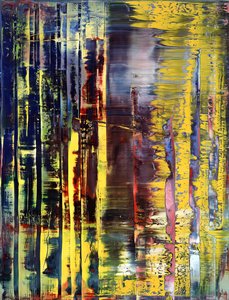
Bunker Coagulation 25
 Abstract Expressionism
 1996
1996 36.0 x 25.0 cm
 Читати далі
Гікле / Художній принт
Музейна якість друку جيкле або на полотні з оперативним виготовленням та різноманітними варіантами фінішної обробки. ( Замовити репродукцію ручної роботи Купити цифрове зображення)




































Обирайте з наших стандартних розмірів, що відповідають оригінальним пропорціям твору мистецтва.

Ви можете вказати власні розміри, щоб репродукція ідеально підійшла до конкретної рами або інтер'єру. Якщо обраний вами розмір не відповідає пропорціям оригіналу, ми або обріжемо полотно, або розширимо зображення за допомогою дзеркального відображення чи суцільної заливки країв. Перед початком виробництва вам буде надіслано цифровий макет для затвердження.
Будь ласка, зверніть увагу, що попередній перегляд на екрані не відображає фактичне обрізання або розширення. Тільки макет точно покаже фінальну композицію.
Хоча можливість замовлення індивідуальних розмірів доступна, ми рекомендуємо обирати формат із попередньо визначеного списку, щоб зберегти оригінальні пропорції.
Доставка по всьому світу () за 2 тижні замість стандартних 4/5 тижнів. (19 Серпень)

Безкоштовна експрес-доставка по всьому світу

Високоякісне лляне полотно

Повне страхове покриття доставки

Гарантія відшкодування митних зборів

Гарантія точного відтворення кольорів

Політика повернення протягом 60 днів (лише у разі виявлення дефектів)

Гарантія повернення 100% коштів

Пропозиція на оптові замовлення
 Скляний варіант доступний лише для розмірів до 110 см

Bunker Coagulation 25
Гікле / Художній принт
Розмір репродукції
-


Підсумкова вартість
$ 64
Схожі твори мистецтва


![Abstract Composition [triptych] — Vaclav Vytlacil, Abstract Expressionism](/media/artworks/images/thumbnails/e5/3d/e53db42ea02644b9a8e722f9d4dd3742.jpg)


Біографія митця
The Architect of Chaos: The Artistic Journey of Barry Le Va
In the late 1960s, a seismic shift occurred in the American art landscape, moving away from the static permanence of traditional sculpture toward a more visceral, temporal experience. At the heart of this revolution stood Barry Le Va, an artist whose work redefined the boundaries between creation and destruction. Born in Long Beach, California, in 1941, Le Va brought a unique intellectual rigor to his practice, rooted in his early formal training in mathematics and architecture at CSU Long Beach. This scientific foundation did not lead him toward rigid structures, but rather provided the precision necessary to orchestrate what would become some of the most profound "process art" of the twentieth century. His journey from the West Coast to the vibrant, experimental atmosphere of New York City allowed him to transform the act of making into a performative event, where the traces of movement and the physics of gravity became his primary medium.
Le Va’s early explorations were deeply rooted in the tactile and the graphic. Before he became known for monumental installations, his hands worked through dense graphite drawings and lithographs that captured a sense of organic tension. Works such as “Strips to Felt Particles” (1967) showcased an incredible ability to use pointillist textures and grid-like backgrounds to evoke a duality of beauty and profound unease. These early pieces were not merely images but explorations of fragmentation, reflecting a fascination with how small, individual elements—be they particles or points—can coalesce into a larger, more unsettling whole. This period of his career laid the groundwork for his later mastery of materials like wood, stone, and felt, as he began to move from the two-dimensional page into the three-dimensional space of the gallery floor.
The Poetry of Process and Distribution
As Le Va transitioned into the realm of installation art, he became a pioneer of what is often termed "post-studio" or "process" art. He moved away from the idea of the finished, polished object, focusing instead on the actions that brought an artwork into being. His groundbreaking "scatter pieces," which began in 1966, challenged the very definition of sculpture. Rather than carving stone or casting bronze, Le Va would disperse materials—powdered cement, chalk, sand, ball bearings, and even shattered glass—across a floor in a way that felt both accidental and meticulously choreographed. One of his most hauntingly beautiful methods involved the use of maroon felt; by tossing, folding, and dropping pieces of fabric, he created installations that existed as a record of a physical performance, a frozen moment of kinetic energy.
This approach turned the viewer into a witness to a completed ritual. The significance of his work lay in its contingency; the art was not just the material on the floor, but the instructions and the physical labor required to distribute it. This period of intense experimentation earned him prestigious recognition, including a Guggenheim Fellowship for Sculpture in 1974 and a National Endowment for the Arts Fellowship in 1976. His participation in landmark exhibitions like Documenta 5 and Documenta 6 solidified his reputation as a leading voice of his generation, proving that art could be found in the debris of action and the ephemeral traces of movement.
Legacy of the Subconscious and the Monumental
In the later stages of his career, Le Va’s work evolved to encompass even more monumental and abstract expressionist qualities. He began to bridge the gap between his early process-based installations and large-scale, evocative paintings and sculptures that explored themes of mythology, ritual, and the subconscious. The massive “Bunker Coagulation 25” (1996) serves as a testament to this evolution, utilizing swirling circles and heavily textured surfaces to confront the viewer with complex emotional states. In these works, the tension between order and chaos—a recurring motif throughout his life—reaches a crescendo, reflecting deeper anxieties about societal decay and the fragility of human structures.
The historical significance of Barry Le Va cannot be overstated. He remains a pivotal figure who helped dismantle the pedestal of traditional sculpture, inviting the audience to engage with art as a living, breathing process rather than a static relic. His ability to blend scientific precision with surrealist landscapes left an indelible mark on contemporary installation art. Through his diverse use of media and his fearless approach to destruction as a creative tool, Le Va ensured that his legacy would forever be etched into the annals of American art—not as a collection of objects, but as a profound exploration of the very essence of existence and change.

Barry Le Va
1941 - 2021 , United States of America
Короткі факти
- Artistic Movement Or Style: Abstract Expressionism; Installation Art
- Artists Or Movements Influenced By This Artist: ['Documenta']
- Artists Who Influenced This Artist: ['Rolf Ricke']
- Date Of Birth: December 28, 1941
- Date Of Death: January 24, 2021
- Full Name: Barry Edward Le Va
- Nationality: American
- Notable Artworks:
- Bunker Coagulation 25
- Strips to Felt Particles
- Place Of Birth: Long Beach, United States
Пов'язані статті

Expressionist Abstraction: A Procurement Guide to Bold Colors and Emotional Impact for Modern Hotel Interiors
Elevate hospitality spaces with Expressionist Abstraction. A professional procurement guide for hotel designers on sourcing bold, large-scale abstract oil paintings to create impactful, high-end modern interiors through reliable bulk-order art solutions.


