Гарантія повернення коштів протягом 100 днів Безкоштовна доставка по всьому світу
449 582витвори мистецтва 30 618художники 4 705музеї 32мова
Валюта
    Мова
      Ательє · Засн. 2015 · Париж, Франція
      AllPaintingsStore
      allpaintingsstore.com
      Переглянути в інтер'єрі Примірка в AR Перейти до друку Перейти до цифрових зображень Надіслати
      Деталі Посібник Додати до улюблених Завантажити Схожі предмети колекціонування Рентгенівське дослідження Слайд-шоу Статистика переглядів

      Lighthouse HIll

      Едвард Хоппер – геній американського реалізму, що вловив самотність та міську атмосферу світлом і тінями. Відкрийте для себе його культові картини, наприклад, «Нічні яструби»!

      Мистецький твір, представлений на цій сторінці, захищений законом про авторське право, що унеможливлює легальне створення або продаж його ідентичної репродукції. Цей захист забезпечується відповідно до міжнародних угод, таких як Бернська конвенція та національним законодавством, зокрема положеннями, що викладені в Законодавство США про авторське право — Розділ 17. Всі права захищені. Будь-яке використання без дозволу заборонено.

      Як шанобливу та законну альтернативу, ми пропонуємо унікальні картини ручної роботи, створені натхненням від оригіналу. Наші досвідчені професійні художники ретельно вивчають стиль, настрій та художню сутність оригіналу, щоб створити новий, неповторний твір, який викликає ті ж почуття, — залишаючись при цьому самобутнім творінням.

      Цей метод повністю відповідає нормам авторського права, оскільки він не передбачає копіювання чи дублювання захищеного твору мистецтва. Натомість це творче переосмислення — створення нового малюнка під впливом оригіналу, який не є його точним відтворенням.

      Олійная репродукція ручної роботи

      Написана вручну олією на полотні у вашому розмірі та рамі, виготовлена на замовлення нашими художниками. ( Перейти до друку Перейти до цифрових зображень)

      Corner sample of the P118B picture frame: moulded polystyrene, 5 cm wide and 3 cm thick
      P118B 10
      Corner sample of the P118H picture frame: moulded polystyrene, 5 cm wide and 3 cm thick
      P118H 10
      Corner sample of the P118W picture frame: moulded polystyrene, 5 cm wide and 3 cm thick
      P118W 10
      Corner sample of the P438Z picture frame: moulded polystyrene, 5.5 cm wide and 3.5 cm thick
      P438Z 10
      Corner sample of the P508JH picture frame: moulded polystyrene, 7 cm wide and 3.5 cm thick
      P508JH 12
      Corner sample of the P508YH picture frame: moulded polystyrene, 7 cm wide and 3.5 cm thick
      P508YH 12
      Corner sample of the P805H picture frame: moulded polystyrene, 5 cm wide and 3.5 cm thick
      P805H 10
      Corner sample of the P805Z picture frame: moulded polystyrene, 5 cm wide and 3.5 cm thick
      P805Z 10
      Corner sample of the P919BZ picture frame: moulded polystyrene, 7 cm wide and 3.5 cm thick
      P919BZ 10
      Corner sample of the P919G picture frame: moulded polystyrene, 7 cm wide and 3.5 cm thick
      P919G 10
      Corner sample of the P919XJ picture frame: moulded polystyrene, 7 cm wide and 3.5 cm thick
      P919XJ 10
      Corner sample of the P959ZH picture frame: moulded polystyrene, 5 cm wide and 3 cm thick
      P959ZH 10
      Corner sample of the P968JZ picture frame: moulded polystyrene, 6 cm wide and 4 cm thick
      P968JZ 12
      Corner sample of the W106C picture frame: solid wood, 5 cm wide and 3 cm thick
      W106C 8
      Corner sample of the W218G picture frame: solid wood, 5 cm wide and 3 cm thick
      W218G 10
      Corner sample of the W218JH picture frame: solid wood, 5 cm wide and 3 cm thick
      W218JH 8
      Corner sample of the W218Y picture frame: solid wood, 5 cm wide and 3 cm thick
      W218Y 10
      Corner sample of the W307PJ picture frame: solid wood, 6 cm wide and 3 cm thick
      W307PJ 10
      Corner sample of the W316G picture frame: solid wood, 6 cm wide and 3 cm thick
      W316G 10
      Corner sample of the W316PJ picture frame: solid wood, 6 cm wide and 3 cm thick
      W316PJ 8
      Corner sample of the W316Y picture frame: solid wood, 6 cm wide and 3 cm thick
      W316Y 10
      Corner sample of the W398PJ picture frame: solid wood, 5 cm wide and 3 cm thick
      W398PJ 8
      Corner sample of the W4111J picture frame: solid wood, 6.5 cm wide and 3.5 cm thick
      W4111J 10
      Corner sample of the W500HY picture frame: solid wood, 7 cm wide and 5 cm thick
      W500HY 15
      Corner sample of the W500JH picture frame: solid wood, 7 cm wide and 5 cm thick
      W500JH 15
      Corner sample of the W692G picture frame: solid wood, 8 cm wide and 4 cm thick
      W692G 12
      Corner sample of the W849H picture frame: solid wood, 5 cm wide and 3 cm thick
      W849H 8
      Corner sample of the W940BG picture frame: solid wood, 7.5 cm wide and 4.5 cm thick
      W940BG 15
      Corner sample of the W953PJ picture frame: solid wood, 6 cm wide and 3.5 cm thick
      W953PJ 8

      Стандартний розмір
      на замовлення
      CM
      INCH

      Обирайте з наших стандартних розмірів, що відповідають оригінальним пропорціям твору мистецтва.

      ширина
      висота

      Ви можете вказати власні розміри, щоб репродукція ідеально підійшла до конкретної рами або інтер'єру. Якщо вибраний вами розмір не відповідає пропорціям оригіналу, ми або обріжемо полотно, або доповнимо картину додатковими елементами, промальованими вручну. Цифровий макет буде надіслано вам на затвердження перед початком виробництва.
      Зверніть увагу, що попередній перегляд на екрані не відображає фактичне обрізання або розширення зображення. Тільки макет точно покаже остаточну композицію.
      Хоча ми можемо виготовити виріб у нестандартному розмірі, для збереження оригінальних пропорцій рекомендуємо обирати варіанти зі встановленого списку.

      Приклади можливих змін: замінити обличчя на фото клієнта; додати домашню тварину (наприклад, замінити кота на собаку); додати приховане повідомлення на фоні; змінити ландшафт або елементи фону.
      Після оформлення замовлення команда AllPaintingsStore.com зв'яжеться з клієнтом електронною поштою для отримання інструкцій та надасть попередній макет

      Доставка по всьому світу () за 3–4 тижні замість стандартних 5 тижнів. (10 Жовтень). Без жодних компромісів у якості.

      Безкоштовна експрес-доставка по всьому світу
      Високоякісне лляне полотно
      Повне страхове покриття доставки
      Гарантія повернення митних зборів
      Гарантія точного відтворення кольорів
      Політика повернення протягом 100 днів (лише у разі виявлення дефектів)
      Гарантія повернення 100% коштів
      Знижка на оптові замовлення

      Загальна вартість

      ₴ 11512

      Lighthouse HIll

      Техніка репродукції

      Розмір репродукції

      -

      Загальна вартість

      ₴ 11512

      Короткі факти

      • Artist: Edward Hopper
      • Movement: Modernism
      • Influences:
        • Chase
        • Henri
      • Notable elements: Lighthouse, houses
      • Artistic style: Realism, Isolation
      • Title: Lighthouse Hill

      Тест на знання мистецтва

      У кожному запитанні лише одна правильна відповідь.

      Запитання 1:
      Based on the description, what is the primary mood or atmosphere conveyed by Edward Hopper’s ‘Lighthouse Hill’?
      Запитання 2:
      The painting was created in 1927. Considering Edward Hopper’s artistic style, what broader movement or trend does ‘Lighthouse Hill’ likely reflect?
      Запитання 3:
      The presence of two houses in front of the lighthouse suggests what about the scene?
      Запитання 4:
      Edward Hopper is known for his use of light and shadow. What effect does the clear blue sky likely have on the overall feeling of ‘Lighthouse Hill’?

      A Study in Solitude: Edward Hopper’s “Lighthouse Hill”

      Edward Hopper's "Lighthouse Hill," painted in 1927, isn’t merely a depiction of a coastal scene; it’s a distilled essence of American loneliness and the quiet contemplation inherent within the vastness of the landscape. This work, rendered with Hopper’s signature meticulous realism and an almost unnerving stillness, invites us to consider the solitary figures—both human and architectural—that populate his canvases. The painting immediately establishes a mood of profound introspection; the clear blue sky, devoid of clouds, feels expansive yet somehow isolating, mirroring the emotional distance within the scene.

      Hopper’s technique is remarkably precise, reflecting his rigorous training under William Merritt Chase. He masterfully employs light and shadow to sculpt form, creating a sense of depth that draws the viewer into the composition. Note the subtle gradations in color – the muted greens and browns of the hillside contrasting with the vibrant blue of the sky – all contributing to an atmosphere of understated drama. The brushstrokes are controlled and deliberate, avoiding any hint of looseness or spontaneity; this reflects a deep understanding of how light interacts with surfaces and how to translate that onto canvas.

      The Architecture of Isolation

      At the heart of “Lighthouse Hill” lies its architectural elements: the lighthouse itself, a sentinel standing proudly against the horizon, and the two modest houses nestled within the landscape. The lighthouse, a symbol of guidance and safety, ironically becomes a representation of isolation. It stands alone, offering no immediate connection to the viewer or the surrounding world. The placement of these structures—one closer to the left, the other more centrally positioned—suggests a deliberate arrangement, perhaps hinting at a narrative of separation or a longing for connection. The houses, small and unassuming, speak to a quiet domesticity, yet their distance from each other reinforces the theme of solitude.

      The choice of a lighthouse as a subject is particularly resonant within Hopper’s oeuvre. He frequently used lighthouses to explore themes of isolation, longing, and the human condition against the backdrop of nature's indifference. It’s a motif that speaks powerfully to the American experience – the frontier spirit tempered by the realization of vastness and the potential for loneliness.

      Historical Context and Hopper’s Vision

      1927 was a pivotal year in Hopper’s artistic development, marking a shift towards greater independence and a more personal style. Following his initial training with Chase and Henri, he began to develop his own unique vision—one characterized by an acute awareness of urban life and the psychological states of its inhabitants. “Lighthouse Hill” exemplifies this emerging sensibility; it's less about documenting a specific location and more about capturing a feeling, a mood – that pervasive sense of quiet melancholy that would become a hallmark of Hopper’s work.

      The painting also reflects the broader cultural anxieties of the post-World War I era. The rapid industrialization and urbanization of America had led to a growing sense of alienation and displacement. Hopper's art, including “Lighthouse Hill,” resonated with this sentiment, offering a poignant reflection on the challenges of navigating modern life.

      A Timeless Resonance: Reproduction and Beyond

      AllPaintingsStore offers meticulously crafted hand-painted reproductions of Edward Hopper’s "Lighthouse Hill," ensuring that the artist's nuanced vision is faithfully preserved. These reproductions capture not only the visual details but also the emotional depth and atmospheric quality of the original painting. Whether adorning a contemporary living space or serving as a thoughtful addition to an art collection, this image evokes a powerful sense of contemplation and invites viewers to consider their own relationship with solitude and the beauty of the natural world. The scale and detail of our reproductions allow you to experience the subtle nuances of Hopper’s technique – the careful layering of paint, the masterful use of light – as if standing before the original masterpiece itself.

      Запитання та відповіді

      Де я можу купити написану вручну репродукцію твору «Lighthouse HIll» Едвард Хопер?

      «Lighthouse HIll» доступна як репродукція олією ручного розпису на лляному полотні. Замовлення можна оформити на ця сторінка, вибравши відповідний розмір.

      У якому році було створено "Lighthouse HIll"?

      Створення «Lighthouse HIll» Едвард Хопер датоване 1927 роком.

      Чи можу я переглянути «Lighthouse HIll» Едвард Хопер перед замовленням?

      Сторінка попереднього перегляду «Lighthouse HIll» (Попередній перегляд) дозволяє ознайомитися з твором перед замовленням.

      Звідки приходять відвідувачі «Lighthouse HIll» Едвард Хопер?

      Для «Lighthouse HIll» існує сторінка Статистика, на якій відображено щомісячну кількість переглядів цього твору та інших робіт митця з розподілом за країнами та мовами.

      Яку емоцію передає твір "Lighthouse HIll" у межах стилю American Realism?

      Melancholic емоційність твору "Lighthouse HIll" супроводжує його стиль American Realism.

      Хто створив "Lighthouse HIll"?

      Автором твору «Lighthouse HIll» є Едвард Хопер. Робота внесена до каталогу під іменем Едвард Хопер.

      Який етап творчого розвитку Едвард Хопер представляє твір "Lighthouse HIll"?

      «Lighthouse HIll» представляє Mature Period Едвард Хопер.


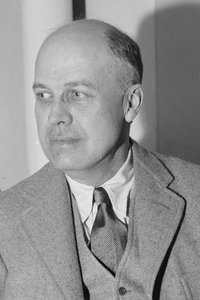
      Біографія митця

      A Solitude Observed: The Life and Art of Edward Hopper

      Edward Hopper, a name inextricably linked to the quietude and subtle melancholy that permeated 20th-century American life, wasn’t simply a painter of scenes; he was a poet of light and shadow, a chronicler of modern isolation. Born in Nyack, New York, in 1882, to middle-class parents of Dutch ancestry, Hopper's early years provided a stable upbringing that nurtured his artistic inclinations. From childhood sketches meticulously dated and signed, it became evident that keen observation and an innate talent for drawing were central to his being. Though initially encouraged towards commercial illustration – a pragmatic suggestion from his parents – Hopper’s ambitions leaned toward fine art, leading him to the New York School of Art where he studied under William Merritt Chase and Robert Henri. These formative years instilled not only technical skill but also an appreciation for realism and a commitment to depicting the world as he saw it—unvarnished and honest. The writings of Ralph Waldo Emerson resonated deeply with Hopper, reinforcing his sense of individualism and acute observation – qualities that would become hallmarks of his artistic vision. Early travels to Paris exposed him to Impressionism, yet Hopper quickly diverged from its fleeting brushstrokes, forging a path uniquely his own.

      Finding His Voice: Realism and the American Scene

      Hopper’s artistic journey wasn't immediate or effortless. He grappled with discovering his distinctive voice, experimenting with various styles before settling into the realism that would define his career. This wasn’t mere replication of reality; it was a distillation of its essence, stripping away extraneous detail to reveal underlying emotional truths. His paintings began to focus on everyday scenes – houses, diners, offices, hotel rooms – imbued with a sense of stillness and often, loneliness. He possessed an extraordinary ability to capture the psychological states of his subjects, hinting at narratives without explicitly stating them. The precise rendering of light and shadow became crucial, not merely as descriptive elements but as emotional cues, creating atmospheres that were both captivating and unsettling. House by the Railroad (1925), an early masterpiece, exemplifies this approach—a seemingly simple composition radiating a profound sense of isolation and mystery. Hopper’s printmaking, often overlooked, ran parallel to his painting, sharing similar themes and stylistic qualities, demonstrating his mastery across mediums. He wasn't interested in grand historical narratives or allegorical symbolism; he focused on the mundane, elevating it through careful observation and emotional resonance.

      Iconic Visions: Nighthawks and Beyond

      While Hopper’s career unfolded gradually, certain works catapulted him to widespread recognition. Nighthawks (1942), arguably his most famous painting, became an instant icon of American culture. The late-night diner scene, bathed in stark fluorescent light, perfectly encapsulates the alienation and anonymity of modern urban life. The figures within are lost in their own thoughts, disconnected from one another despite their proximity—a poignant commentary on the human condition. Gas (1940), with its striking portrayal of a roadside gas station, showcases Hopper’s fascination with American landscapes and the burgeoning automobile culture. Other notable works like *Automat*, *Office in a Small City*, and *Summertime* each offer unique insights into the complexities of 20th-century American society. These paintings weren't merely depictions of places; they were explorations of mood, psychology, and the subtle dramas unfolding within ordinary settings. His wife, Josephine Nivison Hopper, played a vital role not only as his lifelong companion but also as a frequent model, contributing significantly to the characterization of his female figures.

      Themes and Legacy: A Lasting Influence

      Several recurring themes permeate Hopper’s oeuvre. Urban isolation is perhaps the most prominent—the sense of loneliness experienced by individuals even amidst crowds. He explored the American landscape, both rural and urban, often emphasizing its starkness and emptiness. His work delves into psychological realism, probing the inner lives of his subjects with a sensitivity that transcends mere representation. There’s also an undercurrent of nostalgia for a simpler past, juxtaposed with an acknowledgement of the complexities and anxieties of modern life. Hopper's influence on subsequent artists is undeniable. His unique style has inspired countless painters, including Pierre Sanford Ross, and continues to resonate with contemporary artists seeking to capture the essence of human experience. His paintings remain highly sought after by collectors and are exhibited in major museums worldwide, solidifying his place as a pivotal figure in American art history. More than just an artist, Edward Hopper was a visual philosopher, offering profound insights into the human condition through his masterful use of light, shadow, and composition.
      • His legacy lies not only in the beauty of his paintings but also in their enduring ability to provoke thought, evoke emotion, and remind us of the quiet solitude that often defines our lives.
      • Hopper’s work continues to captivate audiences because it speaks to universal themes of loneliness, isolation, and the search for meaning in a rapidly changing world.
      • His paintings have become iconic representations of American culture, often used to symbolize the anxieties and aspirations of the 20th century—and beyond.
      • Hopper’s aesthetic has profoundly influenced filmmakers (like Alfred Hitchcock) and writers, inspiring countless works that explore similar themes of alienation and psychological tension.
      Edward Hopper's ability to capture the essence of modern American life with honesty, sensitivity, and a distinctive artistic vision ensures his place as one of the most important artists of the 20th century.
      Едвард Хопер

      Едвард Хопер

      1931 - 1967 , США

      Довідкова інформація

      • Artistic Movement Or Style: Реалізм
      • Artists Or Movements Influenced By This Artist: ['Пієр Санфорд Росс']
      • Artists Who Influenced This Artist:
        • Вільям Мерріт Чейс
        • Роберт Генрі
      • Date Of Birth: 22 липня 1882
      • Date Of Death: 15 травня 1967
      • Full Name: Edward Hopper
      • Nationality: Американський
      • Notable Artworks:
        • Нічні яструби
        • Будинок біля залізниці
        • Газ
      • Place Of Birth: Няк, США
      Досліджуйте твори мистецтва, впорядковані за темами, стилями та характеристиками.