Гарантія повернення коштів протягом 100 днів Безкоштовна доставка по всьому світу
449 564витвори мистецтва 30 613художники 4 660музеї 32мови
Запис у каталозі

untitled (7572)

Acrylic.

Рис. 1. Едвард Хопер, untitled (7572). Показано як репродукцію, яку ви вказали: , .

§ 1Дані каталогу

§ 2Абстракція

Опис експоната

Hopper’s haunting ‘Untitled (7572)’ captures American Realism's stark beauty—a solitary woman gazing out from a twilight house—reflecting the anxieties of postwar America and inviting you to experience its timeless contemplation.

Біографія митця

Едвард Хоппер – геній американського реалізму, що вловив самотність та міську атмосферу світлом і тінями. Відкрийте для себе його культові картини, наприклад, «Нічні яструби»!

§ 3Коментар

A Study in Quietude: Decoding Edward Hopper’s “Untitled (7572)”

Edward Hopper's "Untitled (7572)" isn’t merely a depiction of a suburban house; it’s a meticulously crafted meditation on the human condition—a snapshot frozen in time that speaks volumes about loneliness, contemplation, and the subtle beauty found within moments of solitude. Painted sometime between 1948 and 1950 during Hopper's prolific period VII.A., this artwork exemplifies his signature style: stark realism infused with a melancholic luminescence that continues to captivate audiences decades later. The photograph accompanying this description reveals a deceptively simple composition—a white clapboard house bathed in the diffused glow of twilight, framed by a single window on each side and dominated by an interior space sparsely populated by furniture and a woman seated at a table. Yet, within this apparent stillness lies a complex tapestry of visual cues that invite careful observation.
  • Style: Hopper’s aesthetic aligns perfectly with American Realism—a movement prioritizing accurate representation over idealized beauty. He eschewed Impressionistic brushstrokes for precise lines and tonal gradations, favoring instead a deliberate flatness that enhances the sense of detachment.
  • Technique: Executed in oil on canvas, “Untitled (7572)” demonstrates Hopper’s mastery of chiaroscuro—the dramatic interplay between light and shadow—a technique he honed throughout his career. Notice how the window casts a cool, bluish hue onto the woman's face and upper torso, creating a visual contrast that underscores her isolation from the outside world.
  • Historical Context: Created during the post-war era, “Untitled (7572)” reflects the anxieties and uncertainties of American society grappling with rapid urbanization and shifting social norms. Hopper’s work captures the pervasive feeling of alienation experienced by individuals navigating these transformative changes—a sentiment that resonates powerfully even today.
Symbolism & Emotional Resonance: The woman seated at the table represents a figure caught in a moment of quiet introspection, seemingly detached from her surroundings and perhaps yearning for connection. The empty chair beside her reinforces this sense of solitude, suggesting an unspoken dialogue between presence and absence. Hopper’s masterful use of light—particularly the cool luminescence emanating from the window—creates an atmosphere of melancholy and invites viewers to contemplate themes of isolation, longing, and the elusive nature of human experience. It's a painting that doesn’t offer answers but rather poses questions about our relationship with ourselves and the world around us.

Beyond Surface Detail: Hopper’s Artistic Vision

Hopper wasn’t simply documenting reality; he was transforming it into art—creating images that linger in the mind long after viewing them. His deliberate cropping, combined with his careful attention to detail—the texture of the wood grain on the table, the subtle folds of fabric—contributes to a sense of immediacy and authenticity. Furthermore, Hopper’s ability to convey emotion through visual language is remarkable. The woman's gaze directs outwards, hinting at an awareness of the world beyond her doorway but simultaneously anchoring her within the confines of her domestic space. This juxtaposition underscores the central theme of the painting—the tension between individual desire and societal constraints.

A Legacy of Quiet Reflection

“Untitled (7572)” stands as a testament to Hopper’s enduring influence on American art history. Its understated elegance, coupled with its profound psychological depth, continues to inspire artists and resonate with audiences worldwide. Reproductions of this iconic artwork offer an opportunity to experience the beauty of Hopper's vision—a poignant reminder that even in moments of apparent stillness, there exists a wealth of emotion and contemplation waiting to be discovered. Consider incorporating it into your interior design scheme – its muted palette and contemplative mood will undoubtedly elevate any space.

Питання та відповіді

Яка орієнтація має «untitled (7572)» роботи Едвард Хопер?

«untitled (7572)» роботи Едвард Хопер — це композиція у форматі Landscape. Перед вибором розміру друку варто перевірити пропорції.

Скільки людей переглядають "untitled (7572)"?

Сторінка Статистика переглядів для роботи «untitled (7572)» роботи Едвард Хопер містить статистику публічних переглядів: кількість щомісячних відвідувань цього твору, порівняння з найбільш популярними роботами митця та географію відвідувачів.

Для чого рекомендується використовувати репродукцію «untitled (7572)» роботи Едвард Хопер?

Рекомендований спосіб використання «untitled (7572)» роботи Едвард Хопер — це Accent. Також він може слугувати для інших цілей.
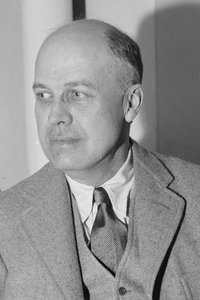
§ 4Художник

Едвард Хопер

Едвард Хопер

1931 - 1967, США

Короткі факти про Едвард Хопер

  • Artistic Movement Or Style: Реалізм
  • Artists Or Movements Influenced By This Artist: ['Пієр Санфорд Росс']
  • Artists Who Influenced This Artist:
    • Вільям Мерріт Чейс
    • Роберт Генрі
  • Date Of Birth: 22 липня 1882
  • Date Of Death: 15 травня 1967
  • Full Name: Edward Hopper
  • Nationality: Американський
  • Notable Artworks:
    • Нічні яструби
    • Будинок біля залізниці
    • Газ
  • Place Of Birth: Няк, США

Біографія митця

A Solitude Observed: The Life and Art of Edward Hopper

Edward Hopper, a name inextricably linked to the quietude and subtle melancholy that permeated 20th-century American life, wasn’t simply a painter of scenes; he was a poet of light and shadow, a chronicler of modern isolation. Born in Nyack, New York, in 1882, to middle-class parents of Dutch ancestry, Hopper's early years provided a stable upbringing that nurtured his artistic inclinations. From childhood sketches meticulously dated and signed, it became evident that keen observation and an innate talent for drawing were central to his being. Though initially encouraged towards commercial illustration – a pragmatic suggestion from his parents – Hopper’s ambitions leaned toward fine art, leading him to the New York School of Art where he studied under William Merritt Chase and Robert Henri. These formative years instilled not only technical skill but also an appreciation for realism and a commitment to depicting the world as he saw it—unvarnished and honest. The writings of Ralph Waldo Emerson resonated deeply with Hopper, reinforcing his sense of individualism and acute observation – qualities that would become hallmarks of his artistic vision. Early travels to Paris exposed him to Impressionism, yet Hopper quickly diverged from its fleeting brushstrokes, forging a path uniquely his own.

Finding His Voice: Realism and the American Scene

Hopper’s artistic journey wasn't immediate or effortless. He grappled with discovering his distinctive voice, experimenting with various styles before settling into the realism that would define his career. This wasn’t mere replication of reality; it was a distillation of its essence, stripping away extraneous detail to reveal underlying emotional truths. His paintings began to focus on everyday scenes – houses, diners, offices, hotel rooms – imbued with a sense of stillness and often, loneliness. He possessed an extraordinary ability to capture the psychological states of his subjects, hinting at narratives without explicitly stating them. The precise rendering of light and shadow became crucial, not merely as descriptive elements but as emotional cues, creating atmospheres that were both captivating and unsettling. House by the Railroad (1925), an early masterpiece, exemplifies this approach—a seemingly simple composition radiating a profound sense of isolation and mystery. Hopper’s printmaking, often overlooked, ran parallel to his painting, sharing similar themes and stylistic qualities, demonstrating his mastery across mediums. He wasn't interested in grand historical narratives or allegorical symbolism; he focused on the mundane, elevating it through careful observation and emotional resonance.

Iconic Visions: Nighthawks and Beyond

While Hopper’s career unfolded gradually, certain works catapulted him to widespread recognition. Nighthawks (1942), arguably his most famous painting, became an instant icon of American culture. The late-night diner scene, bathed in stark fluorescent light, perfectly encapsulates the alienation and anonymity of modern urban life. The figures within are lost in their own thoughts, disconnected from one another despite their proximity—a poignant commentary on the human condition. Gas (1940), with its striking portrayal of a roadside gas station, showcases Hopper’s fascination with American landscapes and the burgeoning automobile culture. Other notable works like *Automat*, *Office in a Small City*, and *Summertime* each offer unique insights into the complexities of 20th-century American society. These paintings weren't merely depictions of places; they were explorations of mood, psychology, and the subtle dramas unfolding within ordinary settings. His wife, Josephine Nivison Hopper, played a vital role not only as his lifelong companion but also as a frequent model, contributing significantly to the characterization of his female figures.

Themes and Legacy: A Lasting Influence

Several recurring themes permeate Hopper’s oeuvre. Urban isolation is perhaps the most prominent—the sense of loneliness experienced by individuals even amidst crowds. He explored the American landscape, both rural and urban, often emphasizing its starkness and emptiness. His work delves into psychological realism, probing the inner lives of his subjects with a sensitivity that transcends mere representation. There’s also an undercurrent of nostalgia for a simpler past, juxtaposed with an acknowledgement of the complexities and anxieties of modern life. Hopper's influence on subsequent artists is undeniable. His unique style has inspired countless painters, including Pierre Sanford Ross, and continues to resonate with contemporary artists seeking to capture the essence of human experience. His paintings remain highly sought after by collectors and are exhibited in major museums worldwide, solidifying his place as a pivotal figure in American art history. More than just an artist, Edward Hopper was a visual philosopher, offering profound insights into the human condition through his masterful use of light, shadow, and composition.
  • His legacy lies not only in the beauty of his paintings but also in their enduring ability to provoke thought, evoke emotion, and remind us of the quiet solitude that often defines our lives.
  • Hopper’s work continues to captivate audiences because it speaks to universal themes of loneliness, isolation, and the search for meaning in a rapidly changing world.
  • His paintings have become iconic representations of American culture, often used to symbolize the anxieties and aspirations of the 20th century—and beyond.
  • Hopper’s aesthetic has profoundly influenced filmmakers (like Alfred Hitchcock) and writers, inspiring countless works that explore similar themes of alienation and psychological tension.
Edward Hopper's ability to capture the essence of modern American life with honesty, sensitivity, and a distinctive artistic vision ensures his place as one of the most important artists of the 20th century.

§ 5Схожі роботи

§ 6Запитання

Основна інформація

  • Medium: Oil on canvas
  • Notable elements or techniques: Evocative light & shadow
  • Influences: Impressionism
  • Movement: American Realism
  • Location: Private Collection

Квіз про мистецтво

У кожному запитанні лише одна правильна відповідь.

Запитання 1:
What is the dominant mood conveyed by Edward Hopper’s ‘untitled (7572)’?
Запитання 2:
The painting depicts a scene primarily set in what type of location?
Запитання 3:
What is the primary color featured prominently on the house’s roof?
Запитання 4:
The woman in ‘untitled (7572)’ appears to be gazing out of her doorway. What does this gesture suggest about her character?
Запитання 5:
Based on Hopper’s artistic style, which technique would most likely be employed to create the painting?

§ 7Цитувати цей запис

AllPaintingsStore.com, “Едвард Хопер, untitled (7572)”, https://allpaintingsstore.com/uk/art/edward-hopper-untitled-7572-9GEU7U-en/ArtistReproduction/ (дата перегляду 8 Жовтень 2026).

§ 8Репродукція

Олійная репродукція ручної роботи

Написана вручну олією на полотні у вашому розмірі та рамі, виготовлена на замовлення нашими художниками. ( Перейти до друку Перейти до цифрових зображень)

Це зазначено на маржі замовного листа; поточний стан цього листа такий:

untitled (7572)

Матеріал репродукції

Розмір репродукції

-

Видатний майстер-художник

Більше деталізації, витонченості та додаткового часу на створення твору

-

Рама для репродукції

-

-

Для творів мистецтва або репродукцій, розмір яких перевищує 105 см (приблизно 41 дюйм) з будь-якого боку, рама доставляється у вигляді розібраного комплекту. Такий метод гарантує безпечну доставку та запобігає пошкодженням під час транспортування.

Потребує професійного збирання — це не продукт для самостійного виготовлення (DIY).
Комплект має бути зібраний, а полотно натягнуте досвідченим майстром багетних робіт із використанням клейового дерева (не входить у комплект), щипців для натягування полотна та затискачів, щоб підрамник залишався рівним під час висихання клею. Неправильне збирання або нерівномірне натягування полотна може призвести до незворотного пошкодження твору мистецтва, що не підпадає під дію нашої гарантії.

  • У комплект входять усі бруски з цільного дерева, точно вирізані за розміром.

  • Збирається за допомогою гвинтів, що входять до комплекту, а також клейового розчину для кутових з'єднань, який не входить до комплекту і має бути підготовлений вашим майстром.

  • Потрібні професійні інструменти, які не входять до комплекту: щипці для натягування полотна (натягувач) та затискачі, щоб утримувати рейки рівно під час висихання клею.

Важливо:
Для з'єднання кутів потрібен клей для дерева, перекладини необхідно затиснути струбцинами до повного висихання клею, а для натягування полотна на зібрану раму знадобляться щипці для натягування полотна. Жоден із цих інструментів не входить до комплекту. Будь ласка, проконсультуйтеся з досвідченим майстром багетного оформлення перед замовленням рами такого розміру.

Етикетка експоната

-

-

Захисний лак

Глянцевий лак (підсилює яскравість кольорів, захищає від світла та вологи)

-

Персоналізувати мій витвір

Приклади можливих змін: заміна обличчя на фото клієнта; додавання домашньої тварини (наприклад, заміна кота на собаку); додавання прихованого повідомлення на фоні; зміна пейзажу або елементів фону.

-

Прискорено

Доставка по всьому світу () за 3–4 тижні замість стандартних 5 тижнів. (5 Листопад). Без компромісів у якості.

-

Експрес-доставка

Доставка по всьому світу () протягом 5 тижнів. (12 Листопад).

Включено в ціну

Підсумкова вартість

₴ 11607

До кожного замовлення додається

  • Безкоштовна експрес-доставка по всьому світу
  • Високоякісне лляне полотно
  • Повне страхове покриття доставки
  • Гарантія повернення митних зборів
  • Гарантія точного відтворення кольорів
  • Політика повернення протягом 100 днів (лише у разі виявлення дефектів)
  • Гарантія повернення 100% коштів
  • Пропозиція на оптові замовлення
Форма замовлення