Акрил на полотні.

§ 1Дані каталогу


§ 2Абстракція
Опис експоната
 Розгорнути текст
Біографія митця
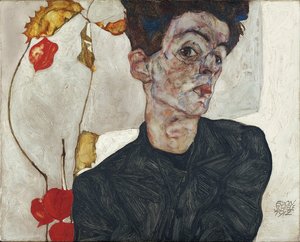
Еґон Шілельє – австрійський экспресіоністський живописець, відомий своїми емоційно насиченими полотнами та символічним зображенням будинку з сухим пранням. Дізнайтесь більше про мистецтво Шілеля!
§ 3Коментар
A Powerful Exploration of Intimacy & Emotion
This captivating artwork presents a profoundly moving depiction of two male figures entwined in an intimate embrace – a testament to the raw emotional power characteristic of Expressionism. Likely created by Egon Schiele, this piece transcends mere representation, delving into the complexities of human connection, vulnerability, and perhaps even conflict. It’s a work that demands attention, provoking thought and stirring deep feelings within the viewer.Expressionistic Style & Technique
Executed with a distinctly Expressionistic style, the artwork showcases distorted forms, intense color contrasts, and visible brushstrokes. These aren't flaws, but deliberate choices by the artist to convey psychological tension and raw emotion. The loose, gestural lines eschew precise anatomical accuracy in favor of emotional truth. Oil paint is applied with a textured quality, layering and scraping creating an uneven surface that enhances the artwork’s tactile presence. This technique, reminiscent of Schiele's signature style, prioritizes feeling over realistic depiction.Subject Matter & Symbolic Resonance
The subject matter – an intimate encounter between two men – is rendered with striking honesty. The positioning of the figures suggests a dynamic interplay of power and vulnerability. One figure lies in a passive, fetal-like pose, turned away, while the other leans dominantly over him, his gaze direct and intense. This contrast invites multiple interpretations: affection, possession, or even a more unsettling exploration of desire. The prominent use of red – in the cloth beneath them and subtle accents on their bodies – symbolizes passion, danger, or perhaps even blood, adding another layer of symbolic weight to the scene.Historical Context & Artistic Influence
This artwork firmly places itself within the context of early 20th-century Expressionism, a movement that sought to express subjective emotions and experiences rather than objective reality. Egon Schiele (1890-1918) was a pivotal figure in this artistic revolution, known for his psychologically charged portraits and unflinching depictions of the human body. His work often challenged societal norms and explored themes of sexuality, mortality, and existential angst. This piece echoes Schiele’s broader exploration of these themes, aligning with contemporaries like Klimt and Kokoschka who were pushing boundaries in Austrian art.Emotional Impact & Interior Design Considerations
The artwork's most striking feature is its emotional intensity. It’s a work that isn’t simply *looked at*; it’s *felt*. The direct gaze of the dominant figure creates an unsettling connection with the viewer, forcing contemplation on the complex emotions depicted. As a statement piece, this reproduction would lend itself well to modern or eclectic interiors seeking depth and intrigue. Its limited color palette – primarily flesh tones contrasted with vibrant reds against a muted background – offers versatility, complementing both minimalist and richly decorated spaces. It’s an artwork that will undoubtedly spark conversation and add a layer of sophisticated emotional resonance to any collection.Питання та відповіді
Де я можу знайти статистику про «untitled (2371)» роботи Еґон Шілельє?
Для «untitled (2371)» існує сторінка Статистика переглядів, на якій відображено щомісячну кількість переглядів цього твору та інших робіт митця з розподілом за країнами та мовами.
Який формат у "untitled (2371)"?
Формат твору "untitled (2371)" — Альбомна орієнтація. Це допоможе вам під час планування місця розміщення репродукції.
Для якого приміщення та з якою метою рекомендується "untitled (2371)"?
«untitled (2371)» роботи Еґон Шілельє рекомендується для Центральний акцент, ідеально — у Вітальня. Поєднання способу використання та простору допоможе визначити, де саме пасуватиме репродукція.


 Перейти до друку


 Для творів мистецтва або репродукцій, розмір яких перевищує 105 см (приблизно 41 дюйм) з будь-якого боку, рама доставляється у вигляді розібраного комплекту. Такий метод гарантує безпечну доставку та запобігає пошкодженням під час транспортування.