

Cubism · 1918
Composition (Фернан Леже, 1918)
Composition — це твір Фернан Леже (1881–1955). Дата створення — 1918. Він належить до напряму Cubism. Виконано в Acrylic On Canvas.
- 1918
- Acrylic On Canvas

 Переглянути в інтер'єрі

 Придбати репродукцію
 Надіслати як листівку
 Поділитися
 Інформаційна картка


 Завантажити
 Схожі екземпляри
 Рентгенівське дослідження
 Слайд-шоу
 Питання та відповіді

 Статистика
Composition: основні характеристики
- Назва
- Composition
- Художник
- Фернан Леже (1881–1955)
- Рік народження митця
- Аржантан, Франція
- Дата
- 1918
- Матеріал
- Acrylic On Canvas
- Рух
- Cubism
- Сюжет
- geometric shapes, bold colors, machine forms, dynamic composition, surreal elements, cubist influence
Що зображено на Composition?
Fernand Léger’s “Composition of the Medallion”: A Symphony of Geometric Form
A Life Forged in Form: The World of Fernand Léger Fernand Léger, born Joseph Fernand Henri Léger in 1881 amidst the rural landscapes of Argentan, Normandy, stands as a pivotal figure in the evolution of modern art. His journey from the farmlands of his youth to the forefront of Parisian avant-garde circles is a testament to an unwavering artistic vision and a relentless pursuit of capturing the spirit of the machine age. Unlike many of his contemporaries who embraced abstraction as a retreat from representation, Léger sought to *integrate* modernity – its dynamism, its mechanical forms, its very essence – into a new visual language that was both powerfully abstract and deeply rooted in the observable world. His early life, steeped in the physicality of agricultural labor, provided a grounding contrast to the industrialized future he would so passionately depict. Initially destined for architecture, Léger’s path shifted towards painting after arriving in Paris around 1900, supporting himself through illustration work while honing his artistic skills.Cubism and Surrealist Influences: Bridging Two Movements
Léger's artistic development was profoundly shaped by the burgeoning movements of Cubism and Surrealism. Initially drawn to Picasso’s pioneering explorations of fractured perspectives – a technique he adopted early in his career – Léger skillfully blended these influences with elements of Surrealist dream imagery. This fusion resulted in canvases that defied conventional notions of realism, prioritizing instead the expressive power of geometric abstraction. The deliberate simplification of forms and the fragmentation of surfaces served not merely as stylistic choices but as conceptual devices aimed at conveying a sense of mechanized repetition and underlying order amidst apparent chaos. Léger wasn’t simply rejecting traditional art; he was actively constructing a new visual vocabulary to articulate the anxieties and aspirations of his time.Technique: Bold Color Palette and Textured Surfaces
Léger's distinctive technique involved applying paint in thick, textured layers—a process known as *impasto*. This method allowed him to imbue his canvases with palpable physicality, mirroring the solidity and rhythm of industrial machinery. He favored a vibrant color palette dominated by reds, yellows, blues, and greens – colors he considered “the colors of the machine.” These hues weren’t blended smoothly but rather juxtaposed boldly, creating visual contrasts that heightened the dynamism of the composition. Léger meticulously crafted surfaces using brushes, knives, and spatulas, achieving remarkable textural variations that enhanced the expressive qualities of his artwork. The resulting canvases pulsate with energy, inviting viewers to engage in a tactile experience alongside their visual perception.Symbolism Within Abstraction: Representing Urban Life
Despite its apparent lack of recognizable imagery, Léger’s “Composition of the Medallion” is laden with symbolic significance. The prominent circles—particularly the large one dominating the upper left corner—represent not merely geometric shapes but also wheels and gears – emblems of industrial progress and relentless movement. These circular forms encapsulate the repetitive cycles inherent in urban life and convey a sense of inescapable momentum. Furthermore, the chair positioned on the right side serves as an anchor point amidst the swirling abstraction, symbolizing human presence within the machine age—a reminder that even amidst technological advancement, humanity retains its grounding in tangible reality. Léger’s intention was to capture not just *what* we see but *how* it feels – the pervasive influence of machinery on our perceptions and experiences.Emotional Impact: Optimism Amidst Uncertainty
Ultimately, “Composition of the Medallion” communicates an enduring message of optimism tempered by awareness of societal anxieties. Léger’s bold color choices and textured surfaces evoke a visceral response, conveying excitement and dynamism while simultaneously hinting at underlying tensions. The artwork's refusal to succumb to sentimentalism speaks to Léger’s conviction that art should confront uncomfortable truths without sacrificing beauty or expressive power. It stands as a testament to the transformative potential of abstraction—its ability to distill complex ideas into compelling visual forms—and invites viewers to contemplate the relationship between humanity and technology in an era defined by rapid industrialization. The painting's enduring appeal lies in its capacity to inspire contemplation and provoke dialogue about our place within the evolving landscape of modern civilization.Composition: графічні файли

Фернан Леже, Composition (1918). Суспільне надбання
Підготовлено на основі зображення з вищою роздільною здатністю з нашої бази даних, а не веб-версії: мінімум 300 DPI. Кольори перевірено на відповідність оригіналу, файл ретушовано цифровим експертом.
Купити зображення у високій роздільній здатностіПитання про Composition
У якому році було створено «Composition» роботи Фернан Леже?
«Composition» роботи Фернан Леже було створено у 1918 році.
Яка техніка використана у творі "Composition"?
«Composition» виконано в техніці Acrylic On Canvas.
Які сюжети зображені у «Composition» роботи Фернан Леже?
Сюжетами твору "Composition" є geometric shapes, bold colors, machine forms, dynamic composition, surreal elements, cubist influence, circular patterns.
Чи не захищений твір "Composition" авторським правом?
Щодо авторського права, «Composition» є є суспільним надбанням — термін дії авторського права закінчився.
Хто є автором "Composition"?
Автором твору «Composition» є Фернан Леже. Робота внесена до каталогу під іменем Фернан Леже.
До якого стилю належить "Composition"?
Мистецький напрям, до якого належить «Composition» роботи Фернан Леже, — це Cubism. Така класифікація дозволяє розмістити цей твір у контексті суміжних митців та творів мистецтва.
До якого періоду творчості Фернан Леже належить твір "Composition"?
У межах творчого шляху Фернан Леже твір "Composition" належить до періоду Mature Period. Ця фаза дозволяє порівняти його з іншими роботами митця.
Скільки років було Фернан Леже, коли створювався твір "Composition" у 1918 році?
Коли у 1918 році було створено «Composition», художнику Фернан Леже (народився/лася у 1881) було 37 років.
Чи є твір «Composition» авторства Фернан Леже суспільним надбанням, і чому?
«Composition» за авторством Фернан Леже перебуває у є суспільним надбанням — термін дії авторського права закінчився. Термін дії авторського права розраховується з року смерті митця; Фернан Леже помер(ла) у 1955.
Про Фернан Леже
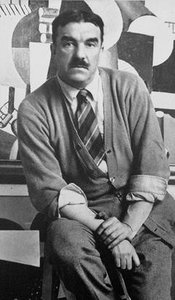
1881–1955, Франція
Фернан Леже
The Life of Fernand Léger The story of Fernand Léger begins in the village of Argentan, located in the Orne region of Lower Normandy. He arrived into this world on February 4, 1881, as an only son. His early years were shaped by the quietude of the French countryside and the presence of his mother, Marie-Adèle Daunou. His father, a man who made his living as a cattle dealer, passed away when Fernand was still a young boy, leaving the child to be raised by his mother in a household marked by her piety and a certain self-effacing nature.
Усі роботи Фернан Леже з розмірами та цінами → Про художника Знамениті твори Фернан Леже
Інші роботи Фернан Леже
 Місто1919
 Механік1920
 Трьох жінок1921
 Нюди в лісі1910
Статті про Composition
 10 Iconic Masterpieces That Defined Geometric AbstractionJourney through the bold shapes and vibrant colors of geometric abstraction. Explore 10 iconic masterpieces from Mondrian to Malevich and f…
 Steel & Soul: 10 Powerful Artworks That Capture the Industrial VibeExplore 10 iconic artworks that define the gritty, powerful industrial aesthetic. From urban landscapes to metallic textures, discover the …
 Mastering the Machine Age: The Top 25 Fernand Léger ArtworksImmerse yourself in the vibrant world of Fernand Léger. Explore 25 iconic Cubist masterpieces, from bold Tubism to machine-age aesthetics. …