


 Переглянути в інтер'єрі
 Надіслати як листівку
 Поділитися
 Детальніше

 Завантажити
 Схожі експонати
 Рентгенівське дослідження
 Слайд-шоу
Still Life


 Читати далі
Придбайте цифрову копію високої роздільної здатності з покращеною якістю, що значно перевершує онлайн-перегляд.
Кожен файл ретельно підготовлений нашими фахівцями за допомогою сучасних інструментів та професійної ручної ретуші. Ми гарантуємо виняткову чіткість, точну передачу кольору та високу деталізацію кожного зображення.
Фінальний файл надсилається електронною поштою протягом 72 годин і оптимізований для негайного використання у професійних виданнях та друкованих матеріалах. Таку якість обирають провідні дизайнерські студії, видавництва та галереї.
Цифрове зображення
Завантажте файл високої роздільної здатності для особистого використання, друку та творчих проєктів. ( Замовити принт Замовити репродукцію ручної роботи)
Переваги кожного замовлення цифрових зображень
Експертна цифрова доставка з гарантією якості
Обираючи AllPaintingsStore.com, ви отримуєте не просто зображення — ви отримуєте професійно вдосконалений цифровий витвір мистецтва, створений з надзвичайною точністю та підкріплений гарантією задоволення. Ось усе, що автоматично додається до вашого замовлення:

Швидка доставка на email
Ваш цифровий файл із зображенням високої роздільної здатності буде надісланий вам електронною поштою протягом 72 годин після оформлення замовлення — він буде готовий до негайного використання.

Цифровий файл із покращенням ШІ
Ваш витвір мистецтва професійно оптимізовано за допомогою передових інструментів штучного інтелекту та ручної корекції, що забезпечує максимальну деталізацію, чіткість і точність передачі кольорів.

Безкоштовне повторне завантаження назавжди
Випадково видалили або втратили файл? Не хвилюйтеся — ми надішлемо його вам повторно в будь-який час безкоштовно.

Без митних зборів — ніколи
Насолоджуйтесь вашим витвором мистецтва миттєво без жодних мит, зборів або плати за доставку — цифрові завантаження завжди не оподатковуються.

Гарантія точності кольорів
Ми гарантуємо максимально точне відтворення оригінальних кольорів на вашому цифровому зображенні завдяки використанню професійних інструментів та систем управління кольором.

Гарантія задоволення протягом 60 днів
Якщо ви не задоволені придбаним цифровим зображенням, ми відкоригуємо його або повернемо 100% вартості протягом 60 днів — без жодних запитань.

Гарантія повернення 100% коштів
Не задоволені покупкою? Отримайте повне повернення коштів протягом 60 днів після отримання цифрового файлу — без жодних запитань.

Знижки на оптові замовлення
Купуйте 3 зображення — заощаджуйте 10% — Купуйте 5 — заощаджуйте 15% — Купуйте 10+ — заощаджуйте 20%. Чудово підходить для творчих проєктів, галерей та агентств.
Опис колекційного об'єкта
A Symphony of Form and Color: The Vibrancy of Fernand Léger’s Still Life
In the realm of modern art, few names resonate with as much mechanical energy and rhythmic vitality as Fernand Léger. His masterpiece, Still Life, serves as a profound window into an era where the boundaries between the organic world and the industrial age began to blur. While many of his contemporaries were retreating into the ethereal realms of pure abstraction, Léger remained anchored to the tangible, finding beauty in the structured essence of everyday objects. This particular work is not merely a depiction of items on a table; it is a carefully orchestrated dance of geometry, where the familiar becomes extraordinary through a lens of bold, primary colors and architectural precision.
The composition invites the viewer into a space that feels simultaneously grounded and dreamlike. At first glance, one recognizes the classic elements of a traditional still life: a wooden table, a bowl of fruit, a vase of lilies, and the humble presence of cutlery. However, Léger employs a technique that defies traditional perspective. Instead of creating an illusion of depth through soft shadows and realistic gradients, he utilizes a flattened plane where shapes overlap and intersect with startling clarity. The objects are deconstructed into their most fundamental geometric components—cylinders, spheres, and cubes—creating a visual texture that feels as much like a blueprint for modern living as it does a painting. This approach captures the very heartbeat of the machine age, celebrating the strength and clarity of defined edges.
Symbolism and the Intersection of Nature and Industry
Beyond its striking visual impact, Still Life carries a deep, underlying narrative rooted in Léger’s personal history and the shifting cultural landscape of the early 20th century. The muted browns and ochres used for the tabletop serve as a poignant nod to his formative years spent amidst the agricultural landscapes of Normandy. This connection to the earth provides a soulful counterpoint to the more vibrant, almost electric colors found in the fruit and flowers. The lilies, rendered in brilliant yellows and oranges, transcend their traditional associations with purity to become symbols of structured vitality, standing as bright beacons within the complex arrangement.
There is an inherent tension in this work between the soft, organic nature of the fruit and the hard-edged, mechanical execution of the forms. This duality reflects Léger’s unique artistic philosophy: the desire to integrate the dynamism of modern technology with the enduring beauty of the natural world. For the collector or interior designer, this piece offers a sophisticated balance. It possesses the intellectual depth of Cubism while maintaining an accessible, decorative warmth that can anchor a room with its commanding presence and rhythmic energy.
An Essential Addition to the Modern Collection
For those seeking to curate a space that inspires movement and thought, a high-quality reproduction of this work offers unparalleled value. The painting’s ability to harmonize disparate elements—the heavy weight of the objects against the lightness of the color palette—makes it a versatile centerpiece for contemporary interiors. Whether placed in a minimalist gallery-style setting or a richly textured classical room, Léger’s Still Life commands attention through its unapologetic joy and structural integrity.
Owning a piece that captures this specific moment in art history means bringing home more than just decor; it is an invitation to experience the pulse of the avant-garde. The interplay of light, the bold use of primary hues, and the masterful command of shape ensure that this artwork remains as visually stimulating today as it was when Léger first applied his brush to the canvas. It is a timeless celebration of life, reconstructed through the magnificent lens of modernism.


Біографія митця
A Life Forged in Form: The World of Fernand Léger
Fernand Léger, born Joseph Fernand Henri Léger in 1881 amidst the rural landscapes of Argentan, Normandy, stands as a pivotal figure in the evolution of modern art. His journey from the farmlands of his youth to the forefront of Parisian avant-garde circles is a testament to an unwavering artistic vision and a relentless pursuit of capturing the spirit of the machine age. Unlike many of his contemporaries who embraced abstraction as a retreat from representation, Léger sought to *integrate* modernity – its dynamism, its mechanical forms, its very essence – into a new visual language that was both powerfully abstract and deeply rooted in the observable world. His early life, steeped in the physicality of agricultural labor, provided a grounding contrast to the industrialized future he would so passionately depict. Initially destined for architecture, Léger’s path shifted towards painting after arriving in Paris around 1900, supporting himself through drafting work while honing his artistic skills. This period was marked by traditional academic training, but it wasn't until encountering the groundbreaking work of Paul Cézanne that a true transformation began to unfold.The Birth of ‘Tubism’ and the Section d’Or
Cézanne’s retrospective in 1907 acted as a catalyst, liberating Léger from conventional representation and propelling him towards a more geometric and structural approach. He began dismantling forms, analyzing their underlying structures, and rebuilding them on canvas with a newfound emphasis on solidity and volume. This exploration quickly led him into the orbit of Cubism, but Léger wasn’t content to simply replicate the styles of Picasso or Braque. Instead, he developed his own distinct idiom – a personal form of Cubism that critics playfully dubbed “Tubism.” Characterized by cylindrical forms, flattened planes, and bold color contrasts, Tubism celebrated the machine aesthetic long before it became a widespread artistic preoccupation. It was an art born from observing the burgeoning industrial world, recognizing beauty in its functional shapes and mechanical rhythms. Léger’s approach differed significantly; he retained a sense of volume and depth that many Cubists had sacrificed for pure abstraction. This wasn't merely about breaking down forms but about reconstructing them with a deliberate emphasis on their essential qualities. The movement was closely linked to the *Section d’Or* (The Golden Section), a group of artists who explored mathematical principles of harmony and proportion, seeking to infuse their art with a sense of order and rationality. Léger actively participated in this circle, alongside figures like Jean Metzinger and Marcel Duchamp, pushing the boundaries of artistic expression through experimentation with geometry and perspective. The *Section d’Or* aimed for a synthesis between art and science, believing that beauty could be found in the application of mathematical ratios to visual form.War, Mechanization, and a New Aesthetic
The outbreak of World War I profoundly impacted Léger’s life and work. Serving at the front from 1914 to 1916 exposed him to the brutal realities of modern warfare – artillery barrages, aerial combat, and the dehumanizing effects of mechanized conflict. This experience didn't lead to disillusionment or a rejection of modernity; rather, it solidified his fascination with machines and their power. Sketches made during his service documented the stark beauty of military technology, transforming instruments of destruction into subjects of artistic contemplation. The repetitive patterns of trenches, the gleaming metal of tanks, and the angular forms of aircraft became sources of inspiration for Léger’s evolving style. Upon returning to civilian life, Léger’s aesthetic underwent a further evolution. His paintings began to reflect a more streamlined, mechanistic sensibility, celebrating the dynamism and efficiency of the industrial world. *Soldier with a Pipe* (1916) exemplifies this shift, showcasing simplified forms and bold colors that evoke the feeling of mechanical precision. This wasn't merely an aesthetic choice; it was a philosophical statement – an affirmation of modernity’s potential for progress and renewal, even in the wake of devastating conflict. He began to incorporate elements of Futurism into his work, embracing speed, movement, and the energy of the machine age.The Development of Style and Major Works
Léger's style continued to evolve throughout the 1920s and beyond. He experimented with various techniques, including collage and sculpture, exploring new ways to represent form and space. His *Paysages animés* (Animated Landscapes) series from 1921 showcased figures and animals seamlessly integrated into streamlined compositions, blurring the boundaries between organic and inorganic forms. These works demonstrated his ability to synthesize disparate elements – human and machine, natural and artificial – into a cohesive visual narrative. Other notable works include *The Great Parade* (1923), which captures the energy of a bustling city street with its bold colors and simplified figures, and *Nudes in the Forest* (1915), an early example of his distinctive style that combined elements of Cubism and Surrealism. Léger’s artistic output was remarkably prolific, encompassing paintings, sculptures, theater designs, and even experimental films. He sought to create a total work of art, integrating visual and spatial elements to evoke a specific atmosphere or mood.Legacy and Lasting Influence
In his post-war years, Léger continued to explore the intersection of art and industry, creating works that celebrated modern life with a unique blend of abstraction and figuration. His later works, characterized by a focus on the heroic aspects of the ordinary individual, reflect his belief in art’s potential for social responsibility and collective benefit. Léger's influence on subsequent generations of artists is undeniable. His bold simplification of form, his embrace of industrial imagery, and his celebration of popular culture anticipated the emergence of Pop Art decades later. Artists like Roy Lichtenstein and Andy Warhol owe a clear debt to Léger’s pioneering work. He bridged the gap between abstract art and figurative representation, demonstrating that it was possible to create works that were both intellectually rigorous and visually engaging. Today, Fernand Léger’s paintings are held in major museums worldwide, including the Musée d'Art et d’Histoire in France and the Musée National Fernand Léger, dedicated solely to his work. He remains a towering figure of 20th-century art – a visionary who dared to find beauty in the machine age and to translate its energy onto canvas with unparalleled boldness and originality. His legacy is not merely as a painter, but as a prophet of modernity. A true pioneer whose work continues to resonate with audiences today.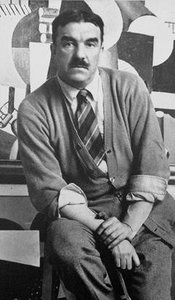
Леже
1881 - 1955 , Франція
Основна інформація
- Artistic Movement Or Style: Кубізм, Тюбізм
- Artists Or Movements Influenced By This Artist: ['Поп-арт']
- Artists Who Influenced This Artist: ['Поль Сезанн']
- Date Of Birth: 4 квв 1881
- Date Of Death: 17 авг 1955
- Full Name: Fernand Léger
- Nationality: Француз
- Notable Artworks:
- «Сіджений жінка»
- Машинний елемент
- Великий парад
- Анімльовані пейзажі
- Place Of Birth: Арґантен, Франція


