Гарантія повернення коштів протягом 100 днів Безкоштовна доставка по всьому світу
449 564витвори мистецтва 30 613художники 4 660музеї 32мови
Запис у каталозі

Study for Cinematic Mural, Study III

1938. Acrylic On Canvas, 51.0 x 38.0 cm.

Рис. 1. Леже, Study for Cinematic Mural, Study III, 1938. Показано як репродукцію, яку ви вказали: , .

§ 1Дані каталогу

Розміри
51.0 x 38.0 cm

§ 2Абстракція

Опис експоната

Fernand Léger’s Study for Cinematic Mural, Study III (1938–39) is a gouache painting depicting a cityscape dominated by a large red building amidst industrial forms and figures. Recognized anonymously at MoMA, it exemplifies Léger's exploration of modern aesthetics and anticipates Pop Art.

Біографія митця

Фернан Леже (1881-1955) – французький художник, піонер кубізму та "Тюбізму". Його картини відображають сучасність, механіку та людську фігуру – передісторія поп-арту!

§ 3Коментар

Fernand Léger: Embracing Industrial Rhythm

Fernand Léger’s “Study for Cinematic Mural Painting,” created in 1938–39, embodies the artist's singular vision of reconciling Cubism with the burgeoning influence of industrial aesthetics—a fusion that would foreshadow the rise of Pop Art decades later. Executed in gouache, ink, colored pencil, and pencil on cardboard, this artwork exemplifies Léger’s commitment to capturing not just visual reality but also the underlying pulse of modern life. Its dimensions – 20 x 14 7/8 inches (50.7 x 37.8 cm) – speak to a monumental ambition, reflecting Léger's desire to transform painting into a powerful tool for communicating ideas and emotions about the transformative era he inhabited.
  • Style: Léger’s style evolved dramatically throughout his career, initially rooted in Cubism’s fragmentation of form but gradually shifting towards a more expressive and simplified aesthetic. “Study for Cinematic Mural Painting” showcases this progression, retaining Cubist principles while prioritizing clarity and visual impact—a deliberate move away from the complex intellectual debates surrounding abstract art.
  • Technique: Léger employed a distinctive technique characterized by bold color palettes and geometric abstraction. He utilized gouache – an opaque watercolor medium – to achieve vibrant hues and create textured surfaces that conveyed movement and dynamism. Precise pencil lines delineated forms, reinforcing the artist’s commitment to structural integrity while simultaneously injecting visual energy into the composition.

A Reflection of Industrial Civilization

The artwork's historical context is inextricably linked to Léger’s fascination with industrial progress—a preoccupation that stemmed from his formative years spent observing the rhythms of rural life alongside the burgeoning factories and machinery of early 20th-century France. Léger saw in the machine age not merely a technological advancement but also a fundamental reshaping of human experience, prompting him to explore how painting could convey this profound transformation. The simplified geometric forms depicted—circles, squares, triangles—mirror the repetitive patterns found in industrial production, symbolizing the artist’s belief that art should engage with the realities of its time.
  • Symbolism: Léger's use of color is laden with symbolic significance. Dominant reds convey passion and energy, mirroring the heat generated by furnaces and engines—a visual metaphor for the transformative power of industrial forces. Blues represent stability and order, contrasting with the chaotic dynamism of the geometric shapes and reinforcing Léger’s conviction that beauty could coexist with functionality.

Emotional Resonance: Dynamism and Optimism

“Study for Cinematic Mural Painting” transcends mere visual representation; it communicates a palpable sense of optimism and vitality—a reflection of Léger's unwavering belief in the potential for human creativity to adapt to and celebrate the challenges posed by modernity. The artwork’s energetic composition captures the rhythm of industrial activity, inviting viewers to contemplate the transformative forces shaping the world around them. Léger’s bold aesthetic choices serve as a testament to his conviction that art could inspire awe and wonder while simultaneously fostering a deeper understanding of the complexities of contemporary life—a legacy that continues to resonate with artists and audiences alike.

Provenance & Reproduction Quality

This artwork, anonymously gifted, is housed at the Solomon R. Guggenheim Museum in New York. Scala Archives ensures the highest quality reproductions, faithful to the original colors and pictorial details that characterize Léger’s art. This commitment goes beyond simple documentation—it's about preserving the respect owed to the work and vision of one of the great masters of the twentieth century.

Питання та відповіді

Які псевдоніми або інші імена має Леже?

Леже також відомий під іншими іменами: Фернан Леже, Жуль Леже, Луї Поль Марія Леже, Поль-Еміль Леже, Ходасевич-Леже Надія Петрівна.

Який формат у "Study for Cinematic Mural, Study III"?

«Study for Cinematic Mural, Study III» роботи Леже — це композиція у форматі Portrait. Перед вибором розміру друку варто перевірити пропорції.

Який розмір друку "Study for Cinematic Mural, Study III" обрати для моєї кімнати?

Для Hotel Lobby рекомендується друк «Study for Cinematic Mural, Study III» у розмірі Large.
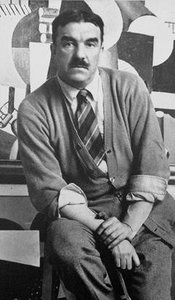
§ 4Художник

Леже

Леже

1881 - 1955, Франція

Короткі факти про Леже

  • Artistic Movement Or Style: Кубізм, Тюбізм
  • Artists Or Movements Influenced By This Artist: ['Поп-арт']
  • Artists Who Influenced This Artist: ['Поль Сезанн']
  • Date Of Birth: 4 квв 1881
  • Date Of Death: 17 авг 1955
  • Full Name: Fernand Léger
  • Nationality: Француз
  • Notable Artworks:
    • «Сіджений жінка»
    • Машинний елемент
    • Великий парад
    • Анімльовані пейзажі
  • Place Of Birth: Арґантен, Франція

Біографія митця

A Life Forged in Form: The World of Fernand Léger

Fernand Léger, born Joseph Fernand Henri Léger in 1881 amidst the rural landscapes of Argentan, Normandy, stands as a pivotal figure in the evolution of modern art. His journey from the farmlands of his youth to the forefront of Parisian avant-garde circles is a testament to an unwavering artistic vision and a relentless pursuit of capturing the spirit of the machine age. Unlike many of his contemporaries who embraced abstraction as a retreat from representation, Léger sought to *integrate* modernity – its dynamism, its mechanical forms, its very essence – into a new visual language that was both powerfully abstract and deeply rooted in the observable world. His early life, steeped in the physicality of agricultural labor, provided a grounding contrast to the industrialized future he would so passionately depict. Initially destined for architecture, Léger’s path shifted towards painting after arriving in Paris around 1900, supporting himself through drafting work while honing his artistic skills. This period was marked by traditional academic training, but it wasn't until encountering the groundbreaking work of Paul Cézanne that a true transformation began to unfold.

The Birth of ‘Tubism’ and the Section d’Or

Cézanne’s retrospective in 1907 acted as a catalyst, liberating Léger from conventional representation and propelling him towards a more geometric and structural approach. He began dismantling forms, analyzing their underlying structures, and rebuilding them on canvas with a newfound emphasis on solidity and volume. This exploration quickly led him into the orbit of Cubism, but Léger wasn’t content to simply replicate the styles of Picasso or Braque. Instead, he developed his own distinct idiom – a personal form of Cubism that critics playfully dubbed “Tubism.” Characterized by cylindrical forms, flattened planes, and bold color contrasts, Tubism celebrated the machine aesthetic long before it became a widespread artistic preoccupation. It was an art born from observing the burgeoning industrial world, recognizing beauty in its functional shapes and mechanical rhythms. Léger’s approach differed significantly; he retained a sense of volume and depth that many Cubists had sacrificed for pure abstraction. This wasn't merely about breaking down forms but about reconstructing them with a deliberate emphasis on their essential qualities. The movement was closely linked to the *Section d’Or* (The Golden Section), a group of artists who explored mathematical principles of harmony and proportion, seeking to infuse their art with a sense of order and rationality. Léger actively participated in this circle, alongside figures like Jean Metzinger and Marcel Duchamp, pushing the boundaries of artistic expression through experimentation with geometry and perspective. The *Section d’Or* aimed for a synthesis between art and science, believing that beauty could be found in the application of mathematical ratios to visual form.

War, Mechanization, and a New Aesthetic

The outbreak of World War I profoundly impacted Léger’s life and work. Serving at the front from 1914 to 1916 exposed him to the brutal realities of modern warfare – artillery barrages, aerial combat, and the dehumanizing effects of mechanized conflict. This experience didn't lead to disillusionment or a rejection of modernity; rather, it solidified his fascination with machines and their power. Sketches made during his service documented the stark beauty of military technology, transforming instruments of destruction into subjects of artistic contemplation. The repetitive patterns of trenches, the gleaming metal of tanks, and the angular forms of aircraft became sources of inspiration for Léger’s evolving style. Upon returning to civilian life, Léger’s aesthetic underwent a further evolution. His paintings began to reflect a more streamlined, mechanistic sensibility, celebrating the dynamism and efficiency of the industrial world. *Soldier with a Pipe* (1916) exemplifies this shift, showcasing simplified forms and bold colors that evoke the feeling of mechanical precision. This wasn't merely an aesthetic choice; it was a philosophical statement – an affirmation of modernity’s potential for progress and renewal, even in the wake of devastating conflict. He began to incorporate elements of Futurism into his work, embracing speed, movement, and the energy of the machine age.

The Development of Style and Major Works

Léger's style continued to evolve throughout the 1920s and beyond. He experimented with various techniques, including collage and sculpture, exploring new ways to represent form and space. His *Paysages animés* (Animated Landscapes) series from 1921 showcased figures and animals seamlessly integrated into streamlined compositions, blurring the boundaries between organic and inorganic forms. These works demonstrated his ability to synthesize disparate elements – human and machine, natural and artificial – into a cohesive visual narrative. Other notable works include *The Great Parade* (1923), which captures the energy of a bustling city street with its bold colors and simplified figures, and *Nudes in the Forest* (1915), an early example of his distinctive style that combined elements of Cubism and Surrealism. Léger’s artistic output was remarkably prolific, encompassing paintings, sculptures, theater designs, and even experimental films. He sought to create a total work of art, integrating visual and spatial elements to evoke a specific atmosphere or mood.

Legacy and Lasting Influence

In his post-war years, Léger continued to explore the intersection of art and industry, creating works that celebrated modern life with a unique blend of abstraction and figuration. His later works, characterized by a focus on the heroic aspects of the ordinary individual, reflect his belief in art’s potential for social responsibility and collective benefit. Léger's influence on subsequent generations of artists is undeniable. His bold simplification of form, his embrace of industrial imagery, and his celebration of popular culture anticipated the emergence of Pop Art decades later. Artists like Roy Lichtenstein and Andy Warhol owe a clear debt to Léger’s pioneering work. He bridged the gap between abstract art and figurative representation, demonstrating that it was possible to create works that were both intellectually rigorous and visually engaging. Today, Fernand Léger’s paintings are held in major museums worldwide, including the Musée d'Art et d’Histoire in France and the Musée National Fernand Léger, dedicated solely to his work. He remains a towering figure of 20th-century art – a visionary who dared to find beauty in the machine age and to translate its energy onto canvas with unparalleled boldness and originality. His legacy is not merely as a painter, but as a prophet of modernity. A true pioneer whose work continues to resonate with audiences today.

§ 5Схожі роботи

§ 6Запитання

Основна інформація

  • Subject or theme: Cityscape
  • Artist: Fernand Léger
  • Title: Study for Cinematic Mural, Study III
  • Dimensions: 51 x 38 cm
  • Artistic style: Industrial aesthetics
  • Location: MoMA

Квіз про мистецтво

У кожному запитанні лише одна правильна відповідь.

Запитання 1:
What artistic movement is Fernand Léger primarily associated with?
Запитання 2:
The painting depicts a prominent architectural element – what is it?
Запитання 3:
When was Fernand Léger born?
Запитання 4:
What is a key characteristic of Léger’s use of color in this artwork?
Запитання 5:
The painting reflects the influence of which historical period?

§ 7Цитувати цей запис

AllPaintingsStore.com, “Леже, Study for Cinematic Mural, Study III (1938)”, https://allpaintingsstore.com/uk/art/fernand-leger-study-for-cinematic-mural-study-iii-AQZTWK-en/ArtistReproduction/ (дата перегляду 7 Жовтень 2026).

§ 8Репродукція

Олійная репродукція ручної роботи

Написана вручну олією на полотні у вашому розмірі та рамі, виготовлена на замовлення нашими художниками. ( Перейти до друку Перейти до цифрових зображень)

Це зазначено на маржі замовного листа; поточний стан цього листа такий:

Study for Cinematic Mural, Study III

Матеріал репродукції

Розмір репродукції

-

Видатний майстер-художник

Більше деталізації, витонченості та додаткового часу на створення твору

-

Рама для репродукції

-

-

Для творів мистецтва або репродукцій, розмір яких перевищує 105 см (приблизно 41 дюйм) з будь-якого боку, рама доставляється у вигляді розібраного комплекту. Такий метод гарантує безпечну доставку та запобігає пошкодженням під час транспортування.

Потребує професійного збирання — це не продукт для самостійного виготовлення (DIY).
Комплект має бути зібраний, а полотно натягнуте досвідченим майстром багетних робіт із використанням клейового дерева (не входить у комплект), щипців для натягування полотна та затискачів, щоб підрамник залишався рівним під час висихання клею. Неправильне збирання або нерівномірне натягування полотна може призвести до незворотного пошкодження твору мистецтва, що не підпадає під дію нашої гарантії.

  • У комплект входять усі бруски з цільного дерева, точно вирізані за розміром.

  • Збирається за допомогою гвинтів, що входять до комплекту, а також клейового розчину для кутових з'єднань, який не входить до комплекту і має бути підготовлений вашим майстром.

  • Потрібні професійні інструменти, які не входять до комплекту: щипці для натягування полотна (натягувач) та затискачі, щоб утримувати рейки рівно під час висихання клею.

Важливо:
Для з'єднання кутів потрібен клей для дерева, перекладини необхідно затиснути струбцинами до повного висихання клею, а для натягування полотна на зібрану раму знадобляться щипці для натягування полотна. Жоден із цих інструментів не входить до комплекту. Будь ласка, проконсультуйтеся з досвідченим майстром багетного оформлення перед замовленням рами такого розміру.

Етикетка експоната

-

-

Захисний лак

Глянцевий лак (підсилює яскравість кольорів, захищає від світла та вологи)

-

Персоналізувати мій витвір

Приклади можливих змін: заміна обличчя на фото клієнта; додавання домашньої тварини (наприклад, заміна кота на собаку); додавання прихованого повідомлення на фоні; зміна пейзажу або елементів фону.

-

Прискорено

Доставка по всьому світу () за 3–4 тижні замість стандартних 5 тижнів. (4 Листопад). Без компромісів у якості.

-

Експрес-доставка

Доставка по всьому світу () протягом 5 тижнів. (11 Листопад).

Включено в ціну

Підсумкова вартість

₴ 11607

До кожного замовлення додається

  • Безкоштовна експрес-доставка по всьому світу
  • Високоякісне лляне полотно
  • Повне страхове покриття доставки
  • Гарантія повернення митних зборів
  • Гарантія точного відтворення кольорів
  • Політика повернення протягом 100 днів (лише у разі виявлення дефектів)
  • Гарантія повернення 100% коштів
  • Пропозиція на оптові замовлення
Форма замовлення