Гарантія повернення коштів протягом 100 днів Безкоштовна доставка по всьому світу
449 587витвори мистецтва 30 613художники 4 660музеї 32мови
Валюта
    Мова
      Ательє · Засн. 2015 · Париж, Франція
      AllPaintingsStore
      allpaintingsstore.com
      Catalogue entry

      Nocturne

      1910. Oil On Canvas, 66.0 x 66.0 cm.

      Fig. 1. Франтішек Купка, Nocturne, 1910. Shown as the reproduction you are specifying: , .

      § 1Catalogue data

      § 2Abstract

      Опис експоната

      Explore Frantisek Kupka’s mesmerizing Nocturne, a cornerstone of Orphism—a bold abstraction that captures the ethereal beauty of twilight hues and marks a pivotal moment in artistic history. Discover this captivating artwork and its legacy at AllPaintingsStore.

      Біографія митця

      Франтішек Купка – видатний чеський художник, піонер абстрактного мистецтва та Орфічного кубізму. Його унікальні полотна, що поєднують колір, форму та музику, вплинули на розвиток сучасного мистецтва.

      § 3Commentary

      A Symphony of Color and Form: Exploring Frantisek Kupka’s Nocturne

      Frantisek Kupka's Nocturne stands as a cornerstone of Orphism, an artistic movement that irrevocably altered the landscape of early 20th-century painting. Born in Opočno, Bohemia, in 1871, Kupka embarked on a transformative journey from traditional academic pursuits to embrace the radical freedom of pure abstraction—a path marked by profound spiritual contemplation and unwavering dedication to visual truth. Initially trained in Prague and Vienna, his early canvases showcased technical prowess but lacked the distinctive artistic voice that would soon characterize his groundbreaking work. The pivotal moment arrived with his relocation to Paris in 1894, where he immersed himself within a dynamic artistic environment—a crucible of intellectual fervor mirroring the broader cultural shifts of fin-de-siècle Europe.

      The Genesis of Orphism: Breaking Free from Representation

      Guillaume Apollinaire’s coinage of “Orphism” – derived from Greek mythology and symbolizing rebirth – perfectly encapsulates the movement's ambition to transcend representational illusion. Rejecting the conventions of realism, Orphists sought to distill painting down to its elemental essence: color and form alone. Kupka, alongside artists like Kandinsky and Marc Chagall, spearheaded this revolution, dismantling established artistic hierarchies and prioritizing subjective experience over objective observation. The influence of Eastern mysticism—particularly Hindu symbolism—became palpable in Kupka’s oeuvre, informing his exploration of geometric abstraction as a means of conveying spiritual concepts.

      Technical Innovation: A Canvas Ablaze with Color

      Nocturne exemplifies Kupka's masterful technique. Executed on canvas in 1910, the painting utilizes oil paints applied in layers to achieve remarkable luminosity and textural depth. The artist’s meticulous attention to detail is evident in the precise arrangement of small squares—a deliberate stylistic choice that underscores Orphism’s core principles. Each square is filled with shades of blue, green, purple, red, yellow, and black – a carefully calibrated palette designed not merely to depict color but to evoke emotion and convey an intangible sense of atmosphere. The resulting pattern covers the entire surface, creating a mesmerizing visual tapestry that draws the viewer into its contemplative realm.

      Historical Context: Embracing Modernity’s Psyche

      The painting emerged during a period of intense intellectual upheaval—the dawn of modernity grappling with anxieties surrounding industrialization and societal transformation. Orphism responded to these concerns by rejecting bourgeois values and embracing an aesthetic rooted in intuition and subconsciousness. Kupka's Nocturne reflects the broader artistic preoccupation with exploring inner landscapes and communicating spiritual truths – themes that resonated deeply within the avant-garde circles of Paris at the time.

      Emotional Resonance: A Journey Into Inner Space

      Ultimately, Nocturne transcends mere visual representation; it invites contemplation and introspection. The artist’s masterful manipulation of color and form generates a palpable sense of serenity—a deliberate attempt to capture the elusive beauty of twilight and convey an experience beyond rational comprehension. It stands as a testament to Kupka's unwavering belief in art’s capacity to illuminate the human spirit and transport us into realms of profound emotional resonance.

      Питання та відповіді

      Що зображено на творі "Nocturne"?

      Сюжетами твору "Nocturne" є abstraction, color palette, geometric pattern, czech art, early 20th century, painting technique, visual language.

      Який рекомендований розмір друку для «Nocturne» роботи Франтішек Купка?

      Для роботи "Nocturne" рекомендується розмір друку Large. Також доступні інші розміри з тими ж пропорціями.

      Який розмір друку "Nocturne" обрати для моєї кімнати?

      Для Living Room рекомендований розмір друку для «Nocturne» роботи Франтішек Купка становить Large.
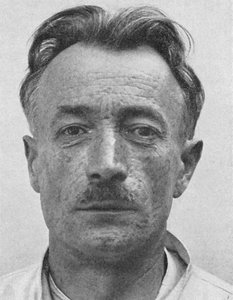
      § 4The artist

      Франтішек Купка

      Франтішек Купка

      1871 - 1957, Чеська Республіка

      Quick facts about Франтішек Купка

      • Artistic Movement Or Style: Абстрактне мистецтво, Орфічний кубізм
      • Artists Or Movements Influenced By This Artist: ['Теософія']
      • Date Of Birth: 23 вересня 1871
      • Date Of Death: 24 червня 1957
      • Full Name: František Kupka
      • Nationality: Чех
      • Notable Artworks:
        • Диски Ньютона
        • Людина-круг
      • Place Of Birth: Опочно, Чехія

      Біографія митця

      František Kupka: A Pioneer of Abstract Vision

      František Kupka, a name now inextricably linked to the dawn of abstract art, was born in 1871 in Opočno, Bohemia – a landscape that would subtly shape his lifelong exploration of form and color. His artistic journey wasn’t a swift transformation but rather a gradual unfolding, deeply rooted in spiritual inquiry and an unwavering pursuit of visual truth. Initially immersed in the traditions of historical and patriotic painting during his studies at the Academy of Fine Arts in Prague and later Vienna, Kupka's early work possessed technical skill, yet lacked the distinctive voice that would soon define him. It was his relocation to Paris in 1894, however, that proved a pivotal catalyst, immersing him within a vibrant artistic milieu – an environment brimming with symbolism, Neo-Impressionism, and the burgeoning excitement of Fauvism – igniting within him a revolutionary creative spirit. This Parisian atmosphere wasn’t merely about formal training; it was a collision of intellectual currents, exposing Kupka to radical ideas that would fundamentally alter his approach to art.

      The Seeds of Abstraction: Influences and Spiritual Awakening

      Kupka's artistic trajectory wasn’t solely driven by aesthetic considerations; it was profoundly shaped by philosophical and spiritual explorations. A significant turning point in his life occurred with his engagement with Theosophy, a mystical system that sought to synthesize Eastern religions and Western esotericism. This belief system posited an underlying unity to all existence – a concept of interconnectedness and hidden realities beyond the realm of ordinary perception. Kupka found resonance within this philosophy, believing it offered a pathway to accessing deeper truths through artistic expression. He began to perceive art not simply as a representation of the visible world but as a means of unlocking these concealed dimensions. This conviction led him away from depicting recognizable objects and towards a more subjective, internal exploration of visual experience – a deliberate rejection of conventional realism in favor of conveying inner states and spiritual concepts. Early experiments involved blurring the boundaries between figuration and abstraction, creating works like *The Beginning of Life*, where symbolic imagery intertwined with nascent geometric forms, hinting at the birth of new ideas and possibilities. Crucially, Kupka wasn’t operating in isolation; he was influenced by contemporary scientific theories concerning color and light, seeking to understand their psychological effects on the viewer – a fusion of spiritual inquiry and empirical observation that would become a defining characteristic of his work. He believed that color possessed an inherent power to evoke emotion and communicate meaning directly, bypassing the need for literal representation.

      The Emergence of Orphic Cubism: A New Visual Language

      By the early 1910s, Kupka had embarked on a path that would ultimately lead him to become one of the pioneers of abstract art. His paintings from this period – works such as *Amorpha: Fugue in Two Colors* (1912) and *Around a Point* (1911-12) – stand as groundbreaking examples of non-representational art, challenging established notions of artistic representation and paving the way for future generations. He wasn’t simply dismantling form; rather, he was constructing a completely new visual language based on pure abstraction. This led to his association with Orphic Cubism (also known as Orphism), a movement spearheaded by Robert Delaunay that emphasized the dynamic interplay of color and light. However, Kupka's approach within this movement differed significantly from Delaunay’s; while both explored abstract forms, Kupka retained a discernible sense of underlying structure and rhythm – evoking musical compositions in his paintings – as evidenced by titles like “fugue” and “disks.” *Disks of Newton*, for instance, depicts circular forms that seem to vibrate with energy, suggesting the fundamental forces governing the universe. He wasn’t merely creating aesthetically pleasing arrangements; he was attempting to visualize underlying cosmic principles. This period also saw him experimenting with techniques inspired by pointillism, further refining his understanding of color and its expressive potential.

      Key Works and Lasting Contributions

      Throughout his career, Kupka produced a remarkable body of work that continues to fascinate and inspire. *The Colored One* (1910) is a prime example of his early explorations into symbolic abstraction, while *Around a Point* (1911-12) showcases his growing mastery of pure geometric forms. His series of “Disks” – *Disks of Newton*, *Disks of Light*, and *Disks of the Sun* – represent a culmination of his research into color theory and its relationship to perception, demonstrating his belief that colors could be arranged to evoke specific emotional responses. Notably, Kupka’s work was recognized internationally during the 1936 “Cubism and Abstract Art” exhibition at the Museum of Modern Art in New York, solidifying his place as a key figure in the development of modern art. He played a vital role in establishing Abstraction-Création in 1931, an international group dedicated to promoting abstract art and fostering dialogue among artists exploring new forms of expression. Despite often being overshadowed by more prominent figures like Kandinsky or Mondrian, František Kupka’s pioneering spirit and unique visual language have secured his legacy as a crucial innovator – a visionary who dared to question the very nature of representation and unlock entirely new possibilities for artistic creation.

      Museum Collections Featuring Kupka's Art

      Several museums around the world house significant collections of František Kupka’s work, offering visitors the opportunity to experience his art firsthand:
      • Solomon R. Guggenheim Museum (New York, United States)
      • The Paris Museum of Modern Art (Paris, France)
      • Galerie Manés (Prague, Czech Republic)

      § 5Comparanda

      § 6Questions

      Основна інформація

      • Notable elements or techniques: Geometric squares
      • Artist: Frantisek Kupka
      • Title: Nocturne
      • Subject or theme: Nightscape
      • Dimensions: 66 x 66 cm

      § 7Cite this entry

      AllPaintingsStore.com, “Франтішек Купка, Nocturne (1910)”, https://allpaintingsstore.com/uk/art/frantisek-kupka-nocturne-8XY3F3-en/ArtistReproduction/ (accessed 2 Жовтень 2026).

      § 8The reproduction

      Олійная репродукція ручної роботи

      Написана вручну олією на полотні у вашому розмірі та рамі, виготовлена на замовлення нашими художниками. ( Перейти до друку Перейти до цифрових зображень)

      It is specified on the order sheet in the margin; the present state of that sheet reads as follows.

      Nocturne

      Матеріал репродукції

      Розмір репродукції

      -

      Видатний майстер-художник

      Більше деталізації, витонченості та додаткового часу на створення твору

      -

      Рама для репродукції

      -

      -

      Для творів мистецтва або репродукцій, розмір яких перевищує 105 см (приблизно 41 дюйм) з будь-якого боку, рама доставляється у вигляді розібраного комплекту. Такий метод гарантує безпечну доставку та запобігає пошкодженням під час транспортування.

      Потребує професійного збирання — це не продукт для самостійного виготовлення (DIY).
      Комплект має бути зібраний, а полотно натягнуте досвідченим майстром багетних робіт із використанням клейового дерева (не входить у комплект), щипців для натягування полотна та затискачів, щоб підрамник залишався рівним під час висихання клею. Неправильне збирання або нерівномірне натягування полотна може призвести до незворотного пошкодження твору мистецтва, що не підпадає під дію нашої гарантії.

      • У комплект входять усі бруски з цільного дерева, точно вирізані за розміром.

      • Збирається за допомогою гвинтів, що входять до комплекту, а також клейового розчину для кутових з'єднань, який не входить до комплекту і має бути підготовлений вашим майстром.

      • Потрібні професійні інструменти, які не входять до комплекту: щипці для натягування полотна (натягувач) та затискачі, щоб утримувати рейки рівно під час висихання клею.

      Важливо:
      Для з'єднання кутів потрібен клей для дерева, перекладини необхідно затиснути струбцинами до повного висихання клею, а для натягування полотна на зібрану раму знадобляться щипці для натягування полотна. Жоден із цих інструментів не входить до комплекту. Будь ласка, проконсультуйтеся з досвідченим майстром багетного оформлення перед замовленням рами такого розміру.

      Етикетка експоната

      -

      -

      Захисний лак

      Глянцевий лак (підсилює яскравість кольорів, захищає від світла та вологи)

      -

      Персоналізувати мій витвір

      Приклади можливих змін: заміна обличчя на фото клієнта; додавання домашньої тварини (наприклад, заміна кота на собаку); додавання прихованого повідомлення на фоні; зміна пейзажу або елементів фону.

      -

      Прискорено

      Доставка по всьому світу () за 3–4 тижні замість стандартних 5 тижнів. (30 Жовтень). Без компромісів у якості.

      -

      Експрес-доставка

      Доставка по всьому світу () протягом 5 тижнів. (6 Листопад).

      Включено в ціну

      Підсумкова вартість

      ₴ 11566

      Included with every order

      • Безкоштовна експрес-доставка по всьому світу
      • Високоякісне лляне полотно
      • Повне страхове покриття доставки
      • Гарантія повернення митних зборів
      • Гарантія точного відтворення кольорів
      • Політика повернення протягом 100 днів (лише у разі виявлення дефектів)
      • Гарантія повернення 100% коштів
      • Пропозиція на оптові замовлення
      Order sheet