

Акрил на полотні.

§ 1Дані каталогу


Цей твір захищено авторським правом
Мистецький твір, представлений на цій сторінці, захищений законом про авторське право, що унеможливлює легальне створення або продаж його ідентичної репродукції. Цей захист забезпечується відповідно до міжнародних угод, таких як Бернська конвенція та національним законодавством, зокрема положеннями, що викладені в Законодавство США про авторське право — Розділ 17. Всі права захищені. Будь-яке використання без дозволу заборонено.
Як шанобливу та законну альтернативу, ми пропонуємо унікальні картини ручної роботи, створені натхненням від оригіналу. Наші досвідчені професійні художники ретельно вивчають стиль, настрій та художню сутність оригіналу, щоб створити новий, неповторний твір, який викликає ті ж почуття, — залишаючись при цьому самобутнім творінням.
Цей метод повністю відповідає нормам авторського права, оскільки він не передбачає копіювання чи дублювання захищеного твору мистецтва. Натомість це творче переосмислення — створення нового малюнка під впливом оригіналу, який не є його точним відтворенням.
 Читати далі
§ 2Абстракція
Опис експоната
Explore Georges Braque’s ‘untitled (1705)’ – a striking Cubist sketch of a cello & Bach aria. Geometric abstraction, raw lines, and minimalist design. A unique artwork for collectors.
Біографія митця
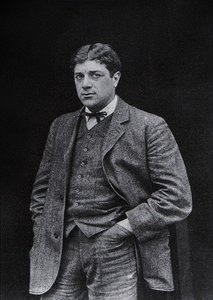
Георг Брак (1882-1963): піонер кубізму та майстер фувізму. Його новаторські картини, зокрема "Будинки в Л'Естак", відкривають світ геометричних форм та багатогранних перспектив. Відкрийте для себе мистецтво Брока!
§ 3Коментар
A Glimpse into Genesis: Deconstructing Form with Braque’s Untitled Cello (c. 1705)
Georges Braque's untitled sketch of around 1705 isn’t merely a study; it is a pivotal moment captured on paper, a visual articulation of the seismic shift occurring within the artist’s mind and, consequently, in the trajectory of modern art. It exists as a powerful precursor to Cubism, a delicate balance between representation and abstraction where the familiar forms of a cello and sheet music are dissected and re-presented through a lens of geometric inquiry. The work doesn't offer the comforting illusion of reality; instead, it presents us with fragments, planes, and lines that demand intellectual engagement rather than passive observation.
The Language of Lines and Planes
The composition is strikingly austere. A cello, dominating the upper left quadrant, isn’t rendered as a sensuous, organic form but as an assembly of angular shapes defined by rich red-brown tones. The strings are suggested not through texture or shading, but with precise, parallel lines—a deliberate emphasis on linearity over tactile sensation. Below it, a pale cream rectangle bearing the inscription ‘Aria de Bach’ overlaps with the cello's structure, creating a dynamic interplay of positive and negative space that disrupts traditional depth perception. This overlapping isn’t accidental; it is a key element in Braque’s dismantling of conventional pictorial space. The neutral grey background serves not as an environment but as an isolating force, intensifying the visual impact of these fragmented forms. Executed with visible pencil strokes, the sketch possesses a raw, unfinished quality that underscores its exploratory nature. This isn't a preparatory drawing *for* something else; it *is* the exploration itself—a rapid unfolding of thought manifested in line and plane.
Braque’s Intellectual Journey & The Dawn of Cubism
Born into a family of painters, Braque initially followed a traditional path before seeking a more intellectually rigorous approach to art. His early work flirted with Fauvism's bold colors, but he quickly moved beyond its purely emotional expression, drawn instead towards the structural foundations of painting. This untitled cello sketch falls squarely within this transitional period, preceding his full immersion into Cubism alongside Pablo Picasso. It demonstrates a growing fascination with reducing objects to their essential geometric components—an idea that would become central to the Cubist revolution. The choice of a cello and Bach’s music is significant; both represent order, structure, and intellectual discipline. By deconstructing these symbols, Braque seems to be questioning the very nature of harmony and representation itself. He isn't attempting to capture the joy of music or the beauty of an instrument but rather to analyze their underlying forms and challenge our perceptions.
A Statement for Modern Spaces
For collectors and designers, this piece—or a meticulously crafted reproduction—offers a sophisticated statement. Its monochromatic palette and geometric abstraction lend themselves seamlessly to modern and minimalist interiors. Beyond its aesthetic appeal, the artwork’s historical significance and intellectual depth make it a compelling conversation starter, appealing to those who appreciate art history and the evolution of abstract thought. It is a work that rewards close observation and contemplation—a testament to Braque's enduring legacy as a pioneer who dared to dismantle convention and forge a new visual language.
Питання та відповіді
Чи можна переглянути «untitled (1705)» роботи Жорж Брак у форматі слайд-шоу?
Слайд-шоу до твору «untitled (1705)» можна переглянути на сторінці Слайд-шоу цього витвору.
З якої країни походить твір у стилі Cubism під назвою "untitled (1705)"?
«untitled (1705)» була створена Жорж Брак, який народився в Франція і працював у межах течії Cubism. Походження митця пов'язує цей твір із напрямом Cubism у тому вигляді, як його представляли художники з Франція.
Яке історичне місце посідає «untitled (1705)»?
«untitled (1705)» роботи Жорж Брак належить до течії Cubism, що охоплює період — Модерн. Разом вони визначають місце цього твору в історії мистецтва.


 Перейти до друку


 Для творів мистецтва або репродукцій, розмір яких перевищує 105 см (приблизно 41 дюйм) з будь-якого боку, рама доставляється у вигляді розібраного комплекту. Такий метод гарантує безпечну доставку та запобігає пошкодженням під час транспортування.


