Гарантія повернення коштів протягом 100 днів Безкоштовна доставка по всьому світу
449 587витвори мистецтва 30 613художники 4 660музеї 32мови
Валюта
    Мова
      Ательє · Засн. 2015 · Париж, Франція
      AllPaintingsStore
      allpaintingsstore.com
      Catalogue entry

      Townscape Madrid

      1968. Акрил на полотні.

      Fig. 1. Герхард Ріхтер, Townscape Madrid, 1968. Shown as the reproduction you are specifying: , .

      § 1Catalogue data

      § 2Abstract

      Опис експоната

      Біографія митця

      Гельдер Ріхтер – німецький художник, відомий своїми абстрактними та фотореалістичними картинами, концепцією «Капіталіст Реалізм» та кольоровими діаграмами. Його творчість вплинула на сучасне мистецтво.

      § 3Commentary

      A Silent Symphony of Concrete and Gray: Exploring Gerhard Richter’s Townscape Madrid

      Gerhard Richter, a titan amongst contemporary artists, continues to captivate audiences with his singular approach—a masterful fusion of photorealism and abstraction that defies easy categorization. Among his seminal works stands “Townscape Madrid,” painted in 1968, an unassuming black and white canvas that belies its profound depth and invites contemplation on the essence of urban existence. This piece isn’t merely a depiction of a cityscape; it's an embodiment of Richter’s artistic philosophy—a questioning gaze at reality itself.

      Composition and Technique: Capturing Atmosphere Through Gesture

      Richter’s “Townscape Madrid” exemplifies his signature technique, characterized by loose brushstrokes that imbue the image with palpable texture and movement despite its monochrome palette. The absence of vibrant hues forces the viewer to focus on the intricate details of architectural forms—buildings rising against a hazy sky—creating an illusion of depth that transcends mere representation. Unlike traditional landscapes striving for visual splendor, Richter prioritizes capturing the mood and atmosphere of the urban environment. The photograph served as his starting point, prompting him to transform it into something more than just a mirror image; he actively reshaped it through artistic intervention.

      Historical Context: Echoes of Postwar Anxiety

      Painted in the aftermath of World War II, “Townscape Madrid” resonates with the anxieties and uncertainties of its time. Richter’s stylistic choices—the muted tones, the fragmented composition—reflect a broader trend within New European Painting, which sought to grapple with the trauma of history while simultaneously rejecting representational conventions. The painting subtly references aerial photographs taken during the war years, hinting at the devastation endured by cities across Europe. This deliberate allusion underscores Richter’s fascination with capturing not just what is seen but also what is felt—the unspoken emotions embedded within a visual scene.

      Symbolism: Absence Speaks Volumes

      The stark simplicity of “Townscape Madrid” is itself laden with symbolic significance. The deserted streets, illuminated by traffic lights, represent the quietude and solitude that can characterize urban life, even amidst activity. Richter’s masterful use of grayscale amplifies this sense of melancholy, inviting viewers to consider themes of isolation and contemplation. Furthermore, the buildings depicted—varied in size and shape—symbolize the complexity and dynamism of architectural heritage—a reminder of past glories juxtaposed against the present moment.

      Emotional Impact: A Meditation on Perception

      Ultimately, “Townscape Madrid” transcends mere visual description; it’s an invitation to engage in a dialogue with the viewer's own perceptions. Richter’s technique deliberately obscures boundaries between photography and painting, questioning the very notion of originality while highlighting the transformative power of artistic expression. Like many of his works, this piece encourages introspection—a consideration of how we interpret what we see and how art can illuminate hidden truths about our experience of the world. It's a testament to Richter’s enduring legacy as an artist who dares to challenge conventions and explore the profound connections between reality and representation.

      Питання та відповіді

      До якого періоду творчості Герхард Ріхтер належить твір "Townscape Madrid"?

      «Townscape Madrid» належить до Mature Period Герхард Ріхтер.

      Кольори у творі "Townscape Madrid" виглядають насиченими чи ніжними?

      Насиченість кольорів у творі «Townscape Madrid» — Монохромний. Насиченість описує, наскільки яскравими та виразними є кольори.

      Який розмір репродукції рекомендується для «Townscape Madrid» роботи Герхард Ріхтер?

      Для роботи "Townscape Madrid" рекомендується розмір друку Великий формат. Також доступні інші розміри з тими ж пропорціями.
      § 4The artist

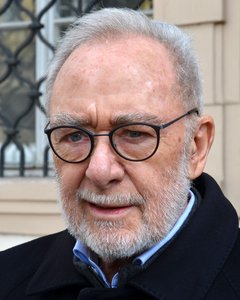
      Герхард Ріхтер

      Герхард Ріхтер

      1932 - , Німеччина

      Quick facts about Герхард Ріхтер

      • Artistic Movement Or Style:
        • Фотореалізм
        • Абстракція
        • Капіталіст реалізм
      • Artists Or Movements Influenced By This Artist: ['Сучасні художники']
      • Artists Who Influenced This Artist:
        • Пабло Пікассо
        • Сіґмар Полке
      • Date Of Birth: 9 лютого 1932
      • Full Name: Gerhard Richter
      • Nationality: Німецький
      • Notable Artworks:
        • Абстрактне зображення 610-1
        • Gilbert
        • S. з дитиною
        • Жовтень 18, 1977
      • Place Of Birth: Дрезден, Німеччина

      Біографія митця

      A Life Shaped by Division: The Early Years and Artistic Formation of Gerhard Richter

      Gerhard Richter’s story is inextricably linked to the fractured history of 20th-century Germany. Born in Dresden in 1932, his childhood unfolded under the shadow of a rising National Socialist regime. This formative period, marked by displacement – his family moved several times during the war years – instilled within him a profound sense of uncertainty and a questioning spirit that would permeate his artistic practice for decades to come. The idyllic landscapes of his early upbringing in Reichenau and Waltersdorf were soon disrupted by conflict, leaving an indelible mark on his psyche. His father, though not a fervent supporter of the Nazi party, navigated the complexities of life under authoritarian rule as a schoolteacher, while his mother fostered a love for literature and music within the family. This duality – a pragmatic acceptance of circumstance alongside a yearning for cultural expression – became a defining characteristic of Richter’s own artistic approach. He began formal training at the Dresden Academy of Fine Arts in 1951, initially immersed in the tradition of socialist realism demanded by the East German state. However, even within this constrained environment, a desire for artistic freedom simmered beneath the surface, fueled by a growing dissatisfaction with ideological constraints and a longing to explore more expansive creative possibilities.

      Escaping Constraints: Düsseldorf and the Exploration of Style

      The year 1961 proved pivotal. Richter, along with his wife Marianne Eufinger, made the daring decision to flee East Germany, seeking refuge in the burgeoning art scene of Düsseldorf. This move marked a radical shift in his artistic trajectory. The West German landscape offered a liberating environment where experimentation and innovation were not only permitted but actively encouraged. In Düsseldorf, he encountered a vibrant community of artists grappling with questions of identity, representation, and the legacy of history. He quickly began to dismantle the rigid stylistic conventions of socialist realism, embarking on a period of intense exploration that would define his early mature work. This era saw him oscillate between seemingly disparate approaches – from photorealism, meticulously recreating photographic images with astonishing precision, to abstract compositions characterized by bold colors and dynamic brushstrokes. His collaboration with Sigmar Polke led to the coining of the term ‘Capitalist Realism,’ a deliberately ambiguous label that reflected their shared skepticism towards established artistic norms and their appropriation of imagery from advertising and mass media. This period wasn’t about finding *a* style, but rather questioning the very notion of stylistic coherence, embracing contradiction as a fundamental principle.

      Blurring Boundaries: Photorealism, Abstraction, and the Power of Chance

      Richter's artistic vocabulary expanded throughout the 1960s and beyond, encompassing a remarkable range of techniques and themes. His photorealistic paintings, often based on family photographs or newspaper images, are not merely copies of reality but rather investigations into the nature of perception and representation. By meticulously rendering these images with an almost clinical detachment, he forces viewers to confront the inherent ambiguity of photographic truth. Simultaneously, Richter delved deeper into abstraction, creating canvases layered with vibrant colors and gestural marks. These abstract works are often created using a unique technique involving squeegees – tools typically used for cleaning windows – which he drags across the surface of the canvas, manipulating the paint in unpredictable ways. This embrace of chance and spontaneity is central to his artistic philosophy, allowing him to relinquish control and invite unexpected outcomes. His ‘Color Charts,’ systematic arrangements of colored squares, further challenge traditional notions of artistic expression, questioning the very definition of painting itself. These works are not about individual aesthetic preferences but rather about exploring the inherent properties of color and its organizational possibilities.

      The Weight of History: From Dresden to Berlin

      Richter’s early life was profoundly shaped by the tumultuous events of mid-20th century Germany. Growing up in Dresden, a city repeatedly devastated during World War II, instilled within him a deep awareness of loss and destruction. The constant rebuilding efforts, the displacement of families, and the pervasive atmosphere of uncertainty left an enduring mark on his psyche. His father’s experience as a teacher under the Nazi regime – navigating a complex and often oppressive system – further contributed to Richter's critical perspective on authority and ideology. This historical context is subtly woven into many of his works, particularly those exploring themes of memory, identity, and the relationship between art and history. The destruction of Dresden in 1945 served as a powerful catalyst for artistic exploration, prompting Richter to grapple with questions about representation, truth, and the impossibility of fully capturing reality on canvas. Later, after moving to West Germany, he continued to confront these themes through his engagement with photographic imagery, often juxtaposing images of destruction with scenes of everyday life.

      A Legacy of Innovation: Influence and Recognition

      Gerhard Richter’s impact on contemporary art is undeniable. His willingness to challenge conventions, his relentless experimentation with technique, and his profound engagement with historical and political themes have established him as one of the most important artists of our time. He has consistently resisted easy categorization, defying attempts to pigeonhole his work into a single stylistic framework. This refusal to be defined, coupled with his technical virtuosity and intellectual rigor, has earned him widespread critical acclaim and commercial success – his paintings regularly fetch record prices at auction. Beyond the market value, however, lies a deeper significance. Richter’s art speaks to the complexities of modern existence, grappling with issues of memory, identity, and the search for meaning in a fragmented world. He doesn't offer answers but rather poses questions, prompting viewers to confront their own preconceptions and engage in critical dialogue. His influence can be seen in the work of countless artists who have followed in his footsteps, drawn to his innovative techniques and his unwavering commitment to artistic exploration. Richter’s legacy is not simply about creating beautiful objects; it's about expanding the possibilities of painting itself. He remains a vital force in contemporary art, continuing to inspire and provoke audiences with his challenging and deeply resonant work.

      § 5Comparanda

      § 6Questions

      § 7Cite this entry

      AllPaintingsStore.com, “Герхард Ріхтер, Townscape Madrid (1968)”, https://allpaintingsstore.com/uk/art/gerhard-richter-townscape-madrid-8XY4LC-en/ArtistReproduction/ (accessed 2 Жовтень 2026).

      § 8The reproduction

      Олійная репродукція ручної роботи

      Написана вручну олією на полотні у вашому розмірі та рамі, виготовлена на замовлення нашими художниками. ( Перейти до друку Перейти до цифрових зображень)

      It is specified on the order sheet in the margin; the present state of that sheet reads as follows.

      Townscape Madrid

      Матеріал репродукції

      Розмір репродукції

      -

      Видатний майстер-художник

      Більше деталізації, витонченості та додаткового часу на створення твору

      -

      Рама для репродукції

      -

      -

      Для творів мистецтва або репродукцій, розмір яких перевищує 105 см (приблизно 41 дюйм) з будь-якого боку, рама доставляється у вигляді розібраного комплекту. Такий метод гарантує безпечну доставку та запобігає пошкодженням під час транспортування.

      Потребує професійного збирання — це не продукт для самостійного виготовлення (DIY).
      Комплект має бути зібраний, а полотно натягнуте досвідченим майстром багетних робіт із використанням клейового дерева (не входить у комплект), щипців для натягування полотна та затискачів, щоб підрамник залишався рівним під час висихання клею. Неправильне збирання або нерівномірне натягування полотна може призвести до незворотного пошкодження твору мистецтва, що не підпадає під дію нашої гарантії.

      • У комплект входять усі бруски з цільного дерева, точно вирізані за розміром.

      • Збирається за допомогою гвинтів, що входять до комплекту, а також клейового розчину для кутових з'єднань, який не входить до комплекту і має бути підготовлений вашим майстром.

      • Потрібні професійні інструменти, які не входять до комплекту: щипці для натягування полотна (натягувач) та затискачі, щоб утримувати рейки рівно під час висихання клею.

      Важливо:
      Для з'єднання кутів потрібен клей для дерева, перекладини необхідно затиснути струбцинами до повного висихання клею, а для натягування полотна на зібрану раму знадобляться щипці для натягування полотна. Жоден із цих інструментів не входить до комплекту. Будь ласка, проконсультуйтеся з досвідченим майстром багетного оформлення перед замовленням рами такого розміру.

      Етикетка експоната

      -

      -

      Захисний лак

      Глянцевий лак (підсилює яскравість кольорів, захищає від світла та вологи)

      -

      Персоналізувати мій витвір

      Приклади можливих змін: заміна обличчя на фото клієнта; додавання домашньої тварини (наприклад, заміна кота на собаку); додавання прихованого повідомлення на фоні; зміна пейзажу або елементів фону.

      -

      Прискорено

      Доставка по всьому світу () за 3–4 тижні замість стандартних 5 тижнів. (30 Жовтень). Без компромісів у якості.

      -

      Експрес-доставка

      Доставка по всьому світу () протягом 5 тижнів. (6 Листопад).

      Включено в ціну

      Підсумкова вартість

      ₴ 11566

      Included with every order

      • Безкоштовна експрес-доставка по всьому світу
      • Високоякісне лляне полотно
      • Повне страхове покриття доставки
      • Гарантія повернення митних зборів
      • Гарантія точного відтворення кольорів
      • Політика повернення протягом 100 днів (лише у разі виявлення дефектів)
      • Гарантія повернення 100% коштів
      • Пропозиція на оптові замовлення
      Order sheet