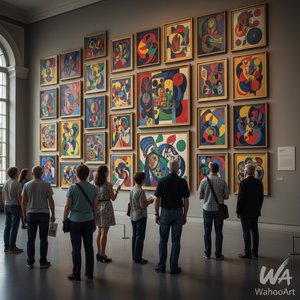
Олія на полотні.

§ 1Catalogue data


Цей твір захищено авторським правом
Мистецький твір, представлений на цій сторінці, захищений законом про авторське право, що унеможливлює легальне створення або продаж його ідентичної репродукції. Цей захист забезпечується відповідно до міжнародних угод, таких як Бернська конвенція та національним законодавством, зокрема положеннями, що викладені в Законодавство США про авторське право — Розділ 17. Всі права захищені. Будь-яке використання без дозволу заборонено.
Як шанобливу та законну альтернативу, ми пропонуємо унікальні картини ручної роботи, створені натхненням від оригіналу. Наші досвідчені професійні художники ретельно вивчають стиль, настрій та художню сутність оригіналу, щоб створити новий, неповторний твір, який викликає ті ж почуття, — залишаючись при цьому самобутнім творінням.
Цей метод повністю відповідає нормам авторського права, оскільки він не передбачає копіювання чи дублювання захищеного твору мистецтва. Натомість це творче переосмислення — створення нового малюнка під впливом оригіналу, який не є його точним відтворенням.
 Читати далі
§ 2Abstract
Опис експоната
Gerhard Richter's 'Wand (Wall)' is an abstract masterpiece of vibrant red and blue stripes, showcasing his innovative use of texture and color. Explore the dynamic composition and rich impasto technique.
Біографія митця
Гельдер Ріхтер – німецький художник, відомий своїми абстрактними та фотореалістичними картинами, концепцією «Капіталіст Реалізм» та кольоровими діаграмами. Його творчість вплинула на сучасне мистецтво.
§ 3Commentary
Gerhard Richter's Wand (Wall): A Deep Dive
- Artist: Gerhard Richter
- Title: Wand (Wall)
- Date: 1994
- Medium: Oil on Canvas
- Size: Unknown
Subject and Composition
Gerhard Richter's "Wand (Wall)" presents a captivating close-up view of a canvas surface, inviting viewers into an intimate exploration of texture and color. The painting eschews representational imagery, instead focusing on the interplay of red and blue hues arranged in vertical stripes. These aren’t uniform bands; rather, they are dynamically blended and layered, creating a sense of movement and depth within the abstract composition. Richter's deliberate flattening of perspective eliminates traditional spatial cues, drawing attention solely to the surface qualities of the paint itself. The overall impression is one of controlled chaos – a vibrant yet contained energy emanating from the canvas.Artistic Technique: Impasto and Layering
Richter’s mastery lies in his technique, particularly evident in "Wand (Wall)." He employs a thick impasto application of oil paints, creating a highly textured surface that catches light in varied ways. The brushstrokes are visible yet blended, suggesting both spontaneity and meticulous control. This layering effect contributes to the painting's depth and dimensionality, transforming what might otherwise be a simple color field into a complex visual experience. Richter’s process seems to involve building up layers of paint, allowing previous applications to peek through, creating subtle shifts in tone and hue that reward close observation.Historical Context and "Capitalist Realism"
“Wand (Wall” was created during a period when Richter's work began to be associated with the term “Capitalist Realism,” coined by Hal Foster. This concept refers to Richter’s exploration of everyday imagery, consumer culture, and the blurring lines between abstraction and representation in post-war Germany. While "Wand (Wall)" is purely abstract, it can be seen as reflecting this broader engagement with the visual landscape of a rapidly changing society. The painting's lack of overt symbolism allows for multiple interpretations, mirroring the ambiguity and complexity of contemporary life. Richter’s work often challenges traditional notions of artistic expression, questioning the role of the artist in a world saturated with images.Emotional Impact and Symbolic Resonance
Despite its abstract nature, "Wand (Wall)" evokes a powerful emotional response. The vibrant red and blue palette creates a dynamic tension – the warmth of red contrasting with the coolness of blue. This interplay generates a sense of energy and movement, while the textured surface invites tactile engagement. While devoid of explicit symbolic meaning, the painting’s title—"Wand," or "Wall"—suggests themes of enclosure, boundaries, and perhaps even introspection. The wall can be interpreted as both a barrier and a canvas for expression, reflecting the complexities of human experience. Ultimately, Richter's work encourages viewers to engage with color and texture on a purely sensory level, allowing them to project their own emotions and interpretations onto the artwork.Питання та відповіді
Яку кольорову гармонію демонструє «Wand (Wall)» роботи Герхард Ріхтер?
«Wand (Wall)» роботи Герхард Ріхтер демонструє Висока колірна єдність колірну гармонію.
Як я можу переглянути репродукцію твору «Wand (Wall)» роботи Герхард Ріхтер?
Попередній перегляд «Wand (Wall)» роботи Герхард Ріхтер доступний на сторінці Перегляд у інтер'єрі твору.
Як я можу придбати цифровий файл «Wand (Wall)» роботи Герхард Ріхтер?
«Wand (Wall)» доступний у форматі завантаження цифрового зображення високої роздільної здатності, який можна придбати безпосередньо на сторінці Цифрове зображення високої якості.



 Перейти до друку


 Для творів мистецтва або репродукцій, розмір яких перевищує 105 см (приблизно 41 дюйм) з будь-якого боку, рама доставляється у вигляді розібраного комплекту. Такий метод гарантує безпечну доставку та запобігає пошкодженням під час транспортування.