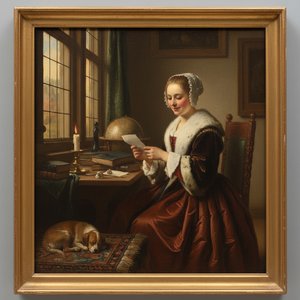
1652. Олія на полотні, 112.0 x 83.0 cm. Музей Бойманса-ван-Бёнінгена.

§ 1Дані каталогу

- 112.0 x 83.0 cm


§ 2Абстракція
Опис експоната
Discover Gerrit Dou’s ‘Portrait of an Old Woman Reading.’ A meticulously detailed 1635 oil painting showcasing Baroque light & wisdom. Explore this Dutch Golden Age masterpiece!
 Розгорнути текст
Біографія митця
Розкрийте вишукане мистецтво нідерландського золотого віку Гейрада Дуя (1613-1675). Відомий своєю ретельною технікою фійншільдері та жанровими сценами, а також майстерним використанням світла в свічках. Відкрийте спадок художника та його шедеври!
§ 3Коментар
A Window Into Dutch Golden Age Life: The Allure of Gerrit Dou’s “The Quack”
In the heart of the seventeenth-century Netherlands, a period defined by unparalleled mercantile success and intellectual curiosity, there existed a fascination with the theater of everyday life. Gerrit Dou’s 1652 masterpiece, “The Quack,” serves as a breathtaking portal into this vibrant era. As one of the most esteemed pupils of Rembrandt, Dou did not merely replicate reality; he refined it through the meticulous lens of the Leiden fijnschilders—the "fine painters." This work is far more than a simple depiction of a street vendor; it is a psychological study of human vulnerability and the colorful deceptions that once populated the bustling marketplace squares of Holland.
< p>The scene unfolds with a dramatic, almost cinematic tension. At the center of this social tableau stands the quack doctor, a charismatic figure peddling his mysterious vials and herbal concoctions to an expectant crowd. Through Dou’s masterful use of chiaroscuro, the light does not merely illuminate; it sculpts. The artist directs a focused glow onto the central figures, highlighting the textures of period attire—the heavy folds of fabric and the sheen of glass bottles—while allowing the periphery to recede into deep, contemplative shadows. This interplay of light and dark creates an atmosphere that is simultaneously lively and somber, inviting the viewer to lean in and witness the quiet drama of a transaction that may be more about hope than medicine.Mastery of Detail and the Art of Illusion
For the discerning collector or interior designer, the true magic of “The Quack” lies in its staggering technical precision. Dou was a virtuoso of trompe l'oeil, an artist capable of tricking the eye into perceiving tangible depth. Every element within the composition—from the rough, weathered bark of the ancient tree to the delicate reflections dancing upon the apothecary’s glass—is rendered with superhuman care. This level of detail provides a rich, tactile quality that makes the painting feel less like a flat canvas and more like a window into a living, breathing world.
The palette is a sophisticated arrangement of earth tones, muted golds, and deep shadows, lending the piece a timeless elegance that integrates seamlessly into both classical and contemporary interiors. The composition is balanced yet dynamic, capturing a fleeting moment of urban interaction that feels eternally preserved. To possess a reproduction of such a work is to bring a sense of historical weight and intellectual depth into a space, offering a conversation piece that celebrates the enduring legacy of the Dutch Golden Age.
Symbolism and Emotional Resonance
Beyond its surface beauty, “The Quack” resonates with profound symbolic undertones. The itinerant healer represents the universal human desire for relief and the perennial tension between scientific advancement and superstition. The bustling crowd, caught in various states of observation and skepticism, mirrors the social complexities of a society on the brink of modern enlightenment. There is an inherent intimacy in Dou’s work; despite the public setting, the painting captures private emotions—the greed of the seller, the desperation of the seeker, and the curiosity of the bystander.
For those seeking to inspire awe within a curated collection, this artwork offers an emotional journey. It evokes a sense of nostalgia for a lost world while demanding respect for the technical prowess required to capture it. Whether placed in a grand gallery or as a focal point in a sophisticated study, “The Quack” remains a testament to the power of art to transform a simple observation of life into a profound meditation on the human condition.
Питання та відповіді
Де я можу купити написану вручну репродукцію твору «The Quack» роботи Геррит Доу?
«The Quack» доступна як олійна репродукція ручного розпису на лляному полотні. Замовлення можна оформити на сторінці Репродукція ручного письма олією, вибравши відповідний розмір.
Який формат у "The Quack"?
«The Quack» роботи Геррит Доу має Портретна орієнтація формат. Формат визначає пропорції композиції.
Яка техніка була використана для створення «The Quack» і коли цей твір було створено?
«The Quack» було створено у 1652 році, техніка: Олія на полотні.


 Перейти до друку


 Для творів мистецтва або репродукцій, розмір яких перевищує 105 см (приблизно 41 дюйм) з будь-якого боку, рама доставляється у вигляді розібраного комплекту. Такий метод гарантує безпечну доставку та запобігає пошкодженням під час транспортування.