- Додому

- Репродукція картини олією
- Джіввані Белліні
- The Assassination of Saint Peter Martyr
 Замовити друк Купити цифрове зображення
 Надіслати
 Поділитися
 Деталі витвору
 Додати до улюблених

 Завантажити
 Схожі вироби
 Рентгенівське дослідження
 Слайд-шоу
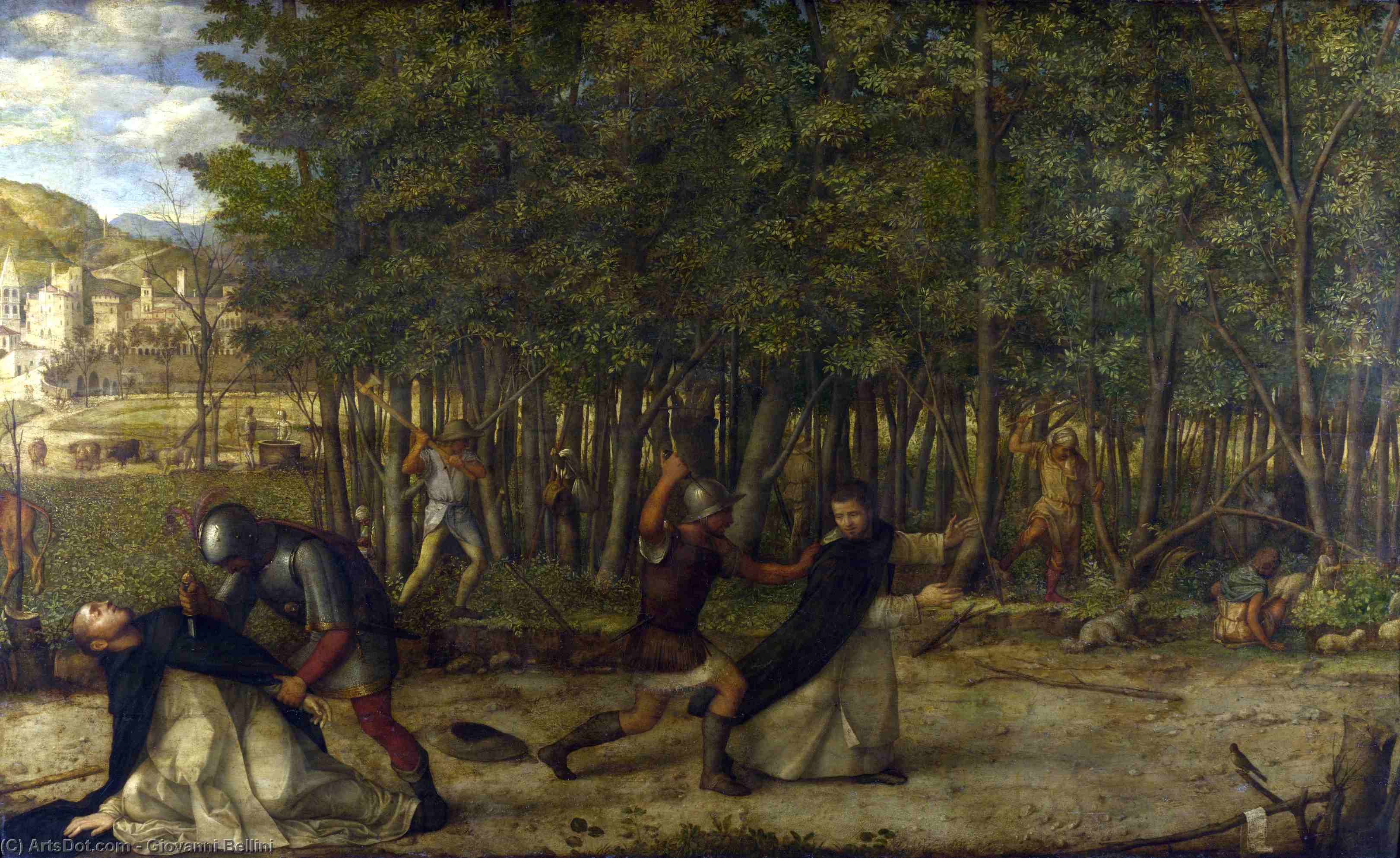
The Assassination of Saint Peter Martyr


 Розгорнути текст
Олійная репродукція ручної роботи
Написана вручну олією на полотні у вашому розмірі та рамі, виготовлена на замовлення нашими художниками.




P118B $10

P118H $10

P118W $10

P438Z $10

P508JH $12

P508YH $12

P805H $10

P805Z $10

P919BZ $10

P919G $10

P919XJ $10

P959ZH $10

P968JZ $12

W106C $8

W218G $10

W218JH $8

W218Y $10

W307PJ $10

W316G $10

W316PJ $8

W316Y $10

W398PJ $8

W4111J $10

W500HY $15

W500JH $15

W692G $12

W849H $8

W940BG $15

W953PJ $8




Обирайте з наших стандартних розмірів, що відповідають оригінальним пропорціям твору мистецтва.

Ви можете вказати власні розміри, щоб репродукція підійшла до конкретної рами або інтер'єру. Якщо вибраний вами розмір не відповідає пропорціям оригіналу, ми або обріжемо полотно, або доповнимо картину додатковими елементами, промальованими вручну. Цифровий макет буде надіслано вам на затвердження перед початком виробництва.
Зверніть увагу, що попередній перегляд на екрані не відображає фактичне обрізання або розширення зображення. Тільки макет точно покаже остаточну композицію.
Хоча ми можемо виготовити виріб у нестандартному розмірі, для збереження оригінальних пропорцій рекомендуємо обирати варіанти зі встановленого списку.
Після оформлення замовлення команда AllPaintingsStore.com зв'яжеться з клієнтом електронною поштою для отримання інструкцій та надасть попередній макет
Доставка по всьому світу () за 3–4 тижні замість стандартних 5 тижнів. (16 Липень). Без жодних компромісів у якості.

Безкоштовна експрес-доставка по всьому світу

Високоякісне лляне полотно

Повне страхове покриття доставки

Гарантія відшкодування митних зборів

Гарантія точного відтворення кольорів

Політика повернення протягом 60 днів (лише у разі виявлення дефектів)

Гарантія повернення 100% коштів

Знижка на багатоелементні замовлення
 Скляний варіант доступний лише для розмірів до 110 см

The Assassination of Saint Peter Martyr
Матеріал репродукції
Розмір репродукції
-


Підсумкова ціна
-
Опис твору
A Moment Frozen in Violence and Grace
In the heart of the Venetian Renaissance, few works capture the raw, visceral tension of human conflict as profoundly as The Assassination of Saint Peter Martyr. This masterpiece by the legendary Giovanni Bellini serves as a window into a period where the spiritual and the terrestrial collided with breathtaking intensity. The scene unfolds with a harrowing clarity, depicting the brutal moment a 13-century Dominican friar is struck down by a group of assailants. As you gaze upon this composition, the eye is immediately drawn to the central figure—the saint himself—caught in the midst of a fatal struggle. Around him, a gathering of thirteen figures creates a swirling vortex of motion and malice, their silhouettes etched against a dramatic sky that seems to mirror the turmoil on earth.
The painting is not merely a depiction of a historical martyrdom; it is a masterclass in the use of chiaroscuro and atmospheric depth. Bellini, a pioneer of the Venetian school, utilizes light not just to illuminate, but to sculpt. The way the light catches the glint of a blade or the furrowed brow of an attacker creates a sense of three-dimensional volume that was revolutionary for its time. This interplay of shadow and brilliance lends the canvas a heavy, palpable atmosphere, making the viewer feel less like a distant observer and more like an accidental witness to the unfolding tragedy.
The Mastery of Venetian Color and Composition
To behold this work is to experience the very essence of Bellini’s technical genius. The artist employs a rich, vibrant palette that breathes life into the canvas, utilizing oil on canvas to achieve a depth of color that remains striking even centuries later. His ability to blend soft, luminous transitions with sharp, dramatic contrasts allows for a narrative flow that guides the viewer through the chaos. While the composition possesses an underlying simplicity in its structural arrangement, it achieves a complex emotional resonance through the careful placement of figures and the sweeping landscape that frames the violence.
For the discerning collector or interior designer, this piece offers more than just historical significance; it provides a profound focal point for any sophisticated space. The painting’s ability to evoke both dread and reverence makes it an extraordinary addition to a collection focused on the dramatic traditions of European art. Whether displayed in a gallery setting or as a centerpiece in a curated room, the work commands attention through its sheer emotional weight and the timeless beauty of its execution.
A Legacy of Devotion and Artistry
Beyond the technical prowess, The Assassination of Saint Peter Martyr carries a deep symbolic weight. The landscape, often characterized by a sense of vastness and divine presence, serves as a silent witness to the frailty of human life and the endurance of faith. Bellini’s work bridges the gap between the rigid traditions of Byzantine iconography and the burgeoning humanism of the Renaissance, infusing a sacred event with a deeply human, almost cinematic, quality. It is this unique ability to marry the divine with the visceral that ensures the painting remains a cornerstone of art history.
Owning a high-quality reproduction of such a significant work allows one to bring the spirit of the Venetian masters into the modern home. Each brushstroke in a faithful oil painting recreation seeks to honor Bellini’s original intent, preserving the dramatic tension and the luminous textures that define this iconic moment in the annals of Western art.
Схожі витвори мистецтва


![Життя Святого Франциска - [01] - Стигматизація Святого Франциска — Джотто Ді Бондоне](/media/artworks/images/thumbnails/68/e7/68e773fce913428a98b163c2afe68ed8.jpg)


Біографія митця
A Venetian Master: The Life and Legacy of Giovanni Bellini
Giovanni Bellini, a name synonymous with the blossoming Renaissance in Venice, stands as a pivotal figure bridging the gap between the traditions of Byzantine art and the innovative spirit that would define the 16th century. Born around 1430 – though some sources suggest 1433 – into a family deeply entrenched in the artistic world, Bellini’s journey was one of continuous evolution, marked by a profound sensitivity to color, light, and the burgeoning humanism of his era. The precise nature of his familial relationships has been debated; for years Jacopo Bellini was considered his father, but modern scholarship increasingly points towards Jacopo being Giovanni's elder half-brother, with Gentile Bellini as his nephew rather than sibling. Regardless of these intricacies, young Giovanni grew up immersed in a workshop brimming with creativity and technical expertise, absorbing the foundations of painting from an early age. His initial training likely involved the traditional tempera techniques favored at the time, but it was his innate talent for observation and emotional expression that would set him apart.Early Influences and Artistic Development
The artistic landscape of 15th-century Venice was a unique blend of influences. The city’s position as a major trading hub exposed its artists to diverse styles and ideas, while the Byzantine heritage continued to exert a strong pull. Bellini's early works reflect this duality. Initially, his style bore the mark of his father and brother, Gentile, with compositions often characterized by meticulous detail and a somewhat restrained emotional palette. However, even in these early pieces, hints of his future brilliance began to emerge – a delicate handling of light, a growing interest in naturalistic settings, and an ability to imbue religious figures with a palpable sense of human pathos. The influence of Andrea Mantegna, his brother-in-law, is also readily apparent during this period, particularly in the clarity of line and sculptural forms. Bellini’s early commissions often involved collaborative projects, such as his contributions to the Scuola di San Marco alongside Gentile and other prominent Venetian artists. These large-scale works provided invaluable experience and allowed him to hone his skills while working alongside some of the most talented painters of the day.Revolutionizing Venetian Painting: Color, Light, and Oil
Bellini’s true revolution lay in his embrace of oil paint. While not the inventor of the technique, he was among the first Venetian artists to fully exploit its potential. Unlike tempera, which dried quickly and demanded a precise, linear approach, oil paint allowed for greater blending, richer colors, and subtle gradations of tone. This newfound freedom enabled Bellini to create paintings with an unprecedented depth and luminosity. His use of color became increasingly sophisticated, moving away from the bright, often harsh hues of earlier Venetian painting towards a more nuanced and harmonious palette. He masterfully captured the effects of light and atmosphere, imbuing his landscapes with a sense of serenity and realism that was groundbreaking for its time. This mastery of oil paint not only transformed his own work but also laid the foundation for the distinctive style that would come to define the Venetian school – a style celebrated for its sensuousness, coloristic richness, and atmospheric perspective. His paintings began to radiate an inner glow, reflecting a spiritual depth that resonated with viewers.Mature Works and Lasting Influence
As Bellini matured, his artistic vision continued to evolve. His altarpieces, such as those created for the churches of San Zaccaria and Santa Corona, demonstrate his ability to create complex compositions filled with symbolic meaning and emotional resonance. The *Transfiguration*, now housed in the Capodimonte Museum in Naples, exemplifies his mature style – a serene spirit combined with ripened artistic powers. He also served as conservator of the paintings in Doge’s Palace, further solidifying his reputation as Venice's leading artist. His influence extended far beyond his own lifetime. He became a mentor to a generation of younger painters, including Giorgione and Titian, who would carry on his legacy and push the boundaries of Venetian art even further. These pupils absorbed Bellini’s techniques and aesthetic principles, adapting them to their own individual styles and contributing to the golden age of Venetian painting. Bellini's impact can be seen in the works of countless artists who followed, solidifying his place as a true master of the Renaissance. He died in Venice in 1516, leaving behind a body of work that continues to inspire awe and admiration centuries later.A Legacy Enduring Through Time
Giovanni Bellini’s significance extends beyond his technical innovations and artistic achievements. He captured the spirit of a changing world – a world grappling with new ideas about humanity, spirituality, and the relationship between art and nature. His paintings are not merely representations of religious scenes; they are profound meditations on faith, beauty, and the human condition. His ability to imbue his figures with dignity and grace, combined with his masterful use of color and light, created a visual language that resonated deeply with his contemporaries and continues to captivate audiences today. *Bellini’s legacy is not simply one of artistic brilliance; it is a testament to the power of art to transcend time and connect us to the enduring values of human experience.* From the serene beauty of his Madonnas to the dramatic intensity of his religious scenes, Bellini's work remains a cornerstone of Western art history.
Джіввані Белліні
1433 - 1516 , Італія
Короткі факти
- Artistic Movement Or Style: Рінесанс, Венеціанська школа
- Artists Or Movements Influenced By This Artist:
- Джорджоне
- Тіціан
- Artists Who Influenced This Artist:
- Джакопо Белліні
- Дженте Белліні
- Андреа Мантegna
- Date Of Birth: c. 1430
- Date Of Death: 1516
- Full Name: Giovanni Bellini
- Nationality: Італійський
- Notable Artworks:
- Святий Єрмоген у пустині
- Трансфігурація
- Свята коронація Діви Марії
- Place Of Birth: Венеція, Італія
Пов'язані статті
Топ-10 шедеврів Ренесансу: мистецтво, що змінили світ | AllPaintingsStore.com
Відкрийте для себе 10 шедеврів Ренесансу від Леонардо да Вінчі, Рафаеля та Мікеланджело! Історія мистецтва, техніки живопису та натхнення для вашого дому. Репродукції картин високої якості – AllPaintingsStore.com
Топ-10 шедеврів Ренесансу: мистецтво, що змінило світ | AllPaintingsStore.com
Відкрийте для себе 10 шедеврів Ренесансу! Дізнайтесь історії Леонардо да Вінчі, Рафаеля та інших геніїв епохи. Купуйте високоякісні репродукції картин Ренесансу для вашого дому на AllPaintingsStore.com. Дослідіть колекцію онлайн!

Venetian Renaissance: The Golden Age of Color, Light, and Luminous Artistry
Embark on a journey through the Venetian Renaissance. Discover how masters like Giorgione and Titian revolutionized art through luminous color and light. Explore the profound legacy of the Venetian School and its enduring influence on the world of fine art.

The Golden Light of Innovation: Exploring the Venetian Renaissance Art Movement (1430–1580)
Explore the Golden Age of Venetian art (1430–1580). Discover Giorgione, Titian & Tintoretto's techniques, the 'colorito' revolution, and lasting influence. Expert insights for collectors & enthusiasts.

Якопо Тінторетто: 25 шедеврів венесенського майстра | AllPaintingsStore
Відкрийте 25 захопливих шедеврів Якопо Тінторетто! Венесенський ренесанс, бароко, емоційні композиції та світлотінь. Купуйте високоякісні репродукції картин на AllPaintingsStore.com – мистецтво для вашого дому.