Гарантія повернення коштів протягом 100 днів Безкоштовна доставка по всьому світу
449 564витвори мистецтва 30 613художники 4 660музеї 32мови
Запис у каталозі

Composition with Animals

Watercolor. Австрійська національна бібліотека.

Рис. 1. Арчимбольдо, Composition with Animals. Показано як репродукцію, яку ви вказали: , .

§ 1Дані каталогу

§ 2Абстракція

Опис експоната

Composition with Animals by Giuseppe Arcimboldo: This watercolor masterpiece showcases an astonishing assemblage of fruits and vegetables arranged to form human faces—a revolutionary technique that exemplifies the Renaissance spirit of innovation and symbolic representation.

Біографія митця

Йозеф Арчимбольдо – видатний італійський художник, відомий своїми унікальними портретами-композиціями з фруктів, овочів та інших об'єктів. Його сюрреалістичні твори, що поєднують мистецтво та символізм, захоплюють своєю витонченістю та глибоким змістом.

§ 3Коментар

A Symphony of Fauna: The Enchanting Vision of Arcimboldo

In the vast tapestry of the Renaissance, few threads are as vibrant or as enigmatic as those woven by Giuseppe Arcimboldo. His masterpiece, Composition with Animals, serves as a breathtaking window into a mind that saw no boundary between the natural world and the realm of pure imagination. At first glance, the viewer is met with a striking arrangement of creatures—horses, dogs, and a majestic deer—that seem to coalesce into a singular, harmonious entity. This is not merely a study of zoology, but a profound exploration of how individual forms can be reimagined to create a collective whole. The painting possesses an almost hypnotic quality, drawing the eye through a labyrinth of fur, muscle, and gaze, inviting us to look closer at the delicate balance between reality and artifice.

The technique employed in this work is nothing short of miraculous. Utilizing the subtle, luminous properties of watercolor, Arcimboldo achieves a level of detail that breathes life into every subject. One can almost feel the softness of the dog's coat and the sturdy strength of the central horses. The artist’s ability to manipulate light and shadow creates an ethereal atmosphere, where the pale, neutral background acts as a stage, allowing the rich textures of the animals to emerge with startling clarity. For the collector or the interior designer, this piece offers a unique textural depth; it is a work that changes character depending on the light of the room, offering a soft, dreamlike quality during the day and a more profound, sculptural presence under evening illumination.

Symbolism and the Renaissance Spirit

To understand Composition with Animals, one must delve into the intellectual currents of the late 16th century. Arcimboldo was a master of the scherzo—the playful, the witty, and the allegorical. While his most famous works involve faces constructed from vegetables, this animal composition speaks to a different facet of his genius: the ability to find hidden structures within nature itself. The symmetry of the two horses facing one another suggests a cosmic order, a reflection of the Renaissance belief in a structured, purposeful universe. Each creature acts as a building block in a larger, more complex narrative about the interconnectedness of all living things.

For those seeking to bring inspiration into a curated space, this artwork provides a sophisticated intellectual anchor. It is a conversation piece that transcends mere decoration. The presence of the deer, often a symbol of grace and spiritual aspiration, juxtaposed with the loyal, grounded nature of the dogs, creates an emotional resonance that is both calming and stimulating. It is a work that rewards contemplation, making it an ideal centerpiece for a library, a study, or a grand salon where art is intended to provoke thought and spark wonder.

A Timeless Legacy for the Modern Collector

Owning a reproduction of such a significant work allows one to host a piece of history within the modern home. Arcimboldo’s legacy is one of innovation—he challenged the very definition of portraiture and composition long before the advent of surrealism. By bringing this Composition with Animals into a contemporary interior, you are not just displaying a beautiful image; you are celebrating the enduring human capacity for creativity and the eternal fascination with the wild wonders of our planet.

Whether you are an art historian captivated by his Mannerist precision or a designer looking to introduce a sense of whimsical elegance to a room, this painting offers unparalleled versatility. It bridges the gap between the classical and the avant-garde, making it a timeless addition to any collection dedicated to the profound beauty of the natural world.

Питання та відповіді

Які емоції викликають кольори «Composition with Animals» роботи Арчимбольдо?

У творі "Composition with Animals" кольори Neutrals створюють Reflective настрій.

До якого періоду творчості Арчимбольдо належить твір "Composition with Animals"?

«Composition with Animals» належить до High Renaissance Арчимбольдо.

Яка орієнтація має «Composition with Animals» роботи Арчимбольдо?

Формат твору "Composition with Animals" — Landscape. Це допоможе вам під час планування місця розміщення репродукції.
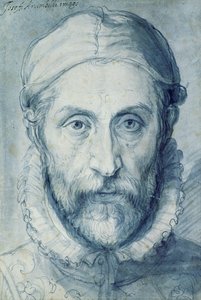
§ 4Художник

Арчимбольдо

Арчимбольдо

1527 - 1593, Італія

Короткі факти про Арчимбольдо

  • Artistic Movement Or Style: Манієризм, сюрреалізм
  • Artists Or Movements Influenced By This Artist: ['Сальвадор Далі']
  • Artists Who Influenced This Artist: ['Леонардо да Вінчі']
  • Date Of Birth: 5 квiтня 1527
  • Date Of Death: 11 липня 1593
  • Full Name: Giuseppe Arcimboldo
  • Nationality: Італійський
  • Notable Artworks:
    • Вертумнус
    • Чотири пори року
    • Бібліотекар
  • Place Of Birth: Мілан, Італія

Біографія митця

Giuseppe Arcimboldo: A Master of Illusion and Symbol

Giuseppe Arcimboldo, a name that echoes through the halls of art history, conjures images both delightfully whimsical and profoundly enigmatic. Born in Milan in 1527, his life unfolded against the backdrop of a Europe brimming with intellectual curiosity, religious upheaval, and an insatiable desire to understand the natural world. Initially recognized for his skill in creating frescoes for cathedrals and portraits adhering to established courtly standards, Arcimboldo’s enduring legacy rests upon a series of astonishing composite heads—masterpieces constructed entirely from meticulously arranged objects: fruits, vegetables, flowers, books, musical instruments, and even entire animals. These weren't mere playful tricks; they were complex allegories, imbued with layers of symbolism that resonated deeply within the Renaissance worldview and continue to captivate viewers today. His father, Biagio Arcimboldo, a painter in the service of the Milanese Duomo, provided young Giuseppe with his early artistic training, likely instilling a foundational appreciation for detail and design—qualities that would become central to his distinctive style.

Courtly Patronage and the Birth of a Unique Vision

Arcimboldo’s career trajectory took a dramatic turn in 1562 when he was appointed court portraitist to Ferdinand I, the Archduke of Austria, at the Habsburg court in Vienna. This appointment marked a pivotal moment, catapulting him into an environment of refined taste and intellectual ferment—a setting perfectly suited to his burgeoning artistic vision. Over the next two decades, he served three successive Habsburg rulers: Maximilian II, Rudolf II, and ultimately, Ferdinand III. Beyond simply painting portraits – though even these often possessed subtle eccentricities – Arcimboldo’s duties encompassed costume design for elaborate court festivals, the creation of stunning stage sets, and the organization of the imperial collections, which included a vast array of exotic artifacts, rare animals, and precious artworks. It was within this stimulating atmosphere that his signature style began to truly flourish. The Habsburg court's demand for novelty and spectacle provided an ideal breeding ground for experimentation, allowing Arcimboldo to move beyond traditional portraiture and explore the possibilities of creating entirely new forms of representation. He drew inspiration from a variety of sources—Renaissance *trompe l’oeil* techniques, classical mythology, and the burgeoning interest in alchemy and symbolism—weaving them together into a unique visual language that challenged conventional notions of beauty and realism.

Decoding the Language of Objects: Symbolism and Allegory

Arcimboldo's portraits are not simply visually arresting; they are rich in symbolic meaning. Each object carefully selected, laden with layers of interpretation related to the sitter’s character, profession, or social status. Consider *The Librarian* (1566), a portrait seemingly constructed entirely from books—a clever commentary on scholarly pursuits and the accumulation of knowledge. The rows of stacked volumes aren't merely decorative; they represent the weight of learning, while the scattered papers suggest the chaos of intellectual inquiry. Similarly, his portraits of the seasons – particularly *Vertumnus*, depicting Emperor Rudolf II as the Roman god of gardens and change – are brimming with botanical symbolism, reflecting the emperor’s patronage of science and natural history. The arrangement of fruits, flowers, and vegetables isn't arbitrary; it speaks to the cyclical nature of life, the abundance of the harvest, and the interconnectedness of all things. Arcimboldo wasn’t simply creating pretty pictures; he was crafting complex allegories designed to provoke contemplation and invite viewers to unravel layers of meaning hidden within the seemingly playful arrangement of objects. The very act of constructing a human likeness from inanimate matter served as a meditation on the fundamental principles of Renaissance philosophy—the belief in an underlying harmony of the universe, accessible through careful observation and symbolic representation.

The Influence of Mannerism and Beyond

Arcimboldo’s style is often categorized within the broader movement of Mannerism, characterized by its emphasis on artificiality, exaggeration, and a deliberate departure from naturalistic representation. However, his work transcends simple categorization, incorporating elements of both Renaissance humanism and proto-Surrealist aesthetics. He drew inspiration from earlier artists who experimented with *trompe l’oeil* effects and distorted perspectives, but he synthesized these influences into something entirely his own—a unique visual language that challenged conventional notions of representation. His work also reflects the influence of Renaissance Neoplatonism, which emphasized the interconnectedness of all things through a shared divine source. The meticulous arrangement of objects in his portraits can be interpreted as an attempt to recreate this harmonious order, reflecting the underlying unity of the universe. Furthermore, Arcimboldo’s innovative use of perspective and spatial illusion foreshadowed developments in later artistic movements, particularly Surrealism, which embraced dreamlike imagery and unexpected juxtapositions.

Legacy and Rediscovery: A Precursor to Surrealism

Despite his considerable success during his lifetime, Arcimboldo's reputation waned considerably after his death in 1593. His work was often dismissed as mere curiosities—appreciated for its technical skill but lacking serious artistic merit. It wasn’t until the early 20th century that a renewed appreciation for his art emerged, fueled by the rise of Surrealism. Artists like Salvador Dalí recognized in Arcimboldo a kindred spirit—a visionary who dared to challenge conventional perceptions and explore the subconscious through unexpected juxtapositions of imagery. The influence of Arcimboldo can be seen in Dalí’s own dreamlike compositions and his fascination with metamorphosis and illusion. Today, Giuseppe Arcimboldo is celebrated as a pivotal figure in art history—a precursor to Surrealism whose innovative use of symbolism and playful distortion continues to inspire artists and captivate audiences worldwide. His paintings are housed in prestigious museums such as the Kunsthistorisches Museum in Vienna and the Louvre in Paris, ensuring that his unique vision will continue to resonate for generations to come. *His legacy stands as a testament to the enduring power of imagination and the ability of art to transform our understanding of the world around us.*

§ 5Схожі роботи

§ 6Запитання

Основна інформація

  • Subject or theme: Allegory; Animal symbolism
  • Year: 1593
  • Title: Composition with Animals
  • Movement: Renaissance
  • Artistic style: Realistic

Квіз про мистецтво

У кожному запитанні лише одна правильна відповідь.

Запитання 1:
What artistic technique is primarily employed in Giuseppe Arcimboldo’s ‘Composition with Animals’?
Запитання 2:
Where is the original painting 'Composition with Animals' currently housed?
Запитання 3:
What is the predominant style of Arcimboldo’s artwork?
Запитання 4:
The image description highlights a specific detail about the animals depicted – what is it?
Запитання 5:
What does the title 'Composition with Animals' suggest about Arcimboldo’s artistic intentions?

§ 7Цитувати цей запис

AllPaintingsStore.com, “Арчимбольдо, Composition with Animals”, https://allpaintingsstore.com/uk/art/giuseppe-arcimboldo-composition-with-animals-8XZ9AX-en/ArtistReproduction/ (дата перегляду 6 Жовтень 2026).

§ 8Репродукція

Олійная репродукція ручної роботи

Написана вручну олією на полотні у вашому розмірі та рамі, виготовлена на замовлення нашими художниками. ( Перейти до друку Перейти до цифрових зображень)

Це зазначено на маржі замовного листа; поточний стан цього листа такий:

Composition with Animals

Матеріал репродукції

Розмір репродукції

-

Видатний майстер-художник

Більше деталізації, витонченості та додаткового часу на створення твору

-

Рама для репродукції

-

-

Для творів мистецтва або репродукцій, розмір яких перевищує 105 см (приблизно 41 дюйм) з будь-якого боку, рама доставляється у вигляді розібраного комплекту. Такий метод гарантує безпечну доставку та запобігає пошкодженням під час транспортування.

Потребує професійного збирання — це не продукт для самостійного виготовлення (DIY).
Комплект має бути зібраний, а полотно натягнуте досвідченим майстром багетних робіт із використанням клейового дерева (не входить у комплект), щипців для натягування полотна та затискачів, щоб підрамник залишався рівним під час висихання клею. Неправильне збирання або нерівномірне натягування полотна може призвести до незворотного пошкодження твору мистецтва, що не підпадає під дію нашої гарантії.

  • У комплект входять усі бруски з цільного дерева, точно вирізані за розміром.

  • Збирається за допомогою гвинтів, що входять до комплекту, а також клейового розчину для кутових з'єднань, який не входить до комплекту і має бути підготовлений вашим майстром.

  • Потрібні професійні інструменти, які не входять до комплекту: щипці для натягування полотна (натягувач) та затискачі, щоб утримувати рейки рівно під час висихання клею.

Важливо:
Для з'єднання кутів потрібен клей для дерева, перекладини необхідно затиснути струбцинами до повного висихання клею, а для натягування полотна на зібрану раму знадобляться щипці для натягування полотна. Жоден із цих інструментів не входить до комплекту. Будь ласка, проконсультуйтеся з досвідченим майстром багетного оформлення перед замовленням рами такого розміру.

Етикетка експоната

-

-

Захисний лак

Глянцевий лак (підсилює яскравість кольорів, захищає від світла та вологи)

-

Персоналізувати мій витвір

Приклади можливих змін: заміна обличчя на фото клієнта; додавання домашньої тварини (наприклад, заміна кота на собаку); додавання прихованого повідомлення на фоні; зміна пейзажу або елементів фону.

-

Прискорено

Доставка по всьому світу () за 3–4 тижні замість стандартних 5 тижнів. (3 Листопад). Без компромісів у якості.

-

Експрес-доставка

Доставка по всьому світу () протягом 5 тижнів. (10 Листопад).

Включено в ціну

Підсумкова вартість

₴ 11628

До кожного замовлення додається

  • Безкоштовна експрес-доставка по всьому світу
  • Високоякісне лляне полотно
  • Повне страхове покриття доставки
  • Гарантія повернення митних зборів
  • Гарантія точного відтворення кольорів
  • Політика повернення протягом 100 днів (лише у разі виявлення дефектів)
  • Гарантія повернення 100% коштів
  • Пропозиція на оптові замовлення
Форма замовлення
