Гарантія повернення коштів протягом 100 днів Безкоштовна доставка по всьому світу
449 587витвори мистецтва 30 613художники 4 660музеї 32мови
Валюта
    Мова
      Ательє · Засн. 2015 · Париж, Франція
      AllPaintingsStore
      allpaintingsstore.com
      Catalogue entry

      Tree-Man

      Ink, 277.0 x 211.0 cm. Графічна колекція Альбертіна.

      Fig. 1. Ієронім Босх, Tree-Man. Shown as the reproduction you are specifying: , .

      § 1Catalogue data

      § 2Abstract

      Опис експоната

      A haunting monochrome vision of a surreal anthropomorphic figure dominates this 1505 pen drawing by Hieronymus Bosch, inviting you to explore the profound mysteries and intricate details of his legendary masterpiece.

      Біографія митця

      Ієронім Босх (1450-1516) – геніальний нідерландський художник, відомий своїми сюрреалістичними та символічними картинами, що досліджують темні сторони людської природи та вічні моральні випробування.

      § 3Commentary

      A Descent into Surreal Delight: The Vision of Bosch’s Tree-Man

      In the quiet, haunting corridors of art history, few images possess the unsettling magnetism of Hieronymus Bosch’s "Tree-Man." Created around 1505, this monochrome masterpiece serves as a profound window into a psyche that danced on the edge of the medieval and the modern. As a pen drawing of extraordinary technical precision, it does not merely depict a landscape; it invites the viewer into a fever dream where the boundaries between the organic and the grotesque dissolve. The work stands as a singular testament to Bosch’s ability to weave moral allegory with a surrealist sensibility that predates the formal Surrealist movement by centuries. To gaze upon this piece is to encounter a world where every line carries the weight of spiritual consequence, making it an irresistible focal point for those who appreciate art that challenges the soul and stimulates the intellect.

      The composition is dominated by the eponymous Tree-Man, an anthropomorphic entity whose hollowed trunk forms a vessel for a strange, miniature civilization. Its roots burrow deep into a rocky, primordial earth, suggesting a primal connection to the very foundations of existence. Surrounding this central figure, the landscape teasingly unfolds with birds circling a turbulent sky and diminutive human figures engaged in activities that oscillate between innocent play and profound corruption. This intricate layering of life creates a sense of overwhelming complexity, where the eye is constantly led from the textured bark of the central figure to the distant, atmospheric hills. For the collector or interior designer, this piece offers a profound depth; its dense, detailed nature allows it to command a room, acting as a conversational anchor that rewards prolonged contemplation.

      Mastery of Line and the Language of Symbolism

      The technical brilliance of "Tree-Man" lies in Bosch’s masterful command of hatching and cross-hatching. Using only the precision of a pen, the artist builds up tonal values with astonishing subtlety, creating a range of grays that evoke everything from the stark brightness of a cloudy sky to the deepest, most impenetrable shadows within the tree's hollow core. This meticulous technique lends a startling realism to an otherwise fantastical subject. The textures are palpable—one can almost feel the rough, weathered bark and the cold, stony base upon which the figure rests. It is this marriage of technical rigor and imaginative freedom that gives the artwork its enduring power; it feels grounded in reality even as it depicts the impossible.

      Beyond its aesthetic splendor, the work is a dense tapestry of symbolic meaning. The Tree-Man itself has been interpreted by scholars as a mirror of humanity’s vulnerability to sin—a grotesque parody of divine creation that reflects the struggle between earthly desires and spiritual salvation. The birds, often seen as symbols of wandering souls, add a layer of existential unease to the scene. This emotional complexity makes the artwork particularly poignant for modern spaces; it brings an element of historical gravity and philosophical depth. Whether rendered as a high-quality reproduction in a private study or as a striking statement piece in a contemporary gallery, "Tree-Man" continues to evoke a sense of wonder and mystery, reminding us of the eternal human fascination with the shadows of the subconscious.

      Питання та відповіді

      Якою технікою виконано "Tree-Man" та який його розмір?

      Техніка виконання твору «Tree-Man» роботи Ієронім Босх — Ink, а його розміри становлять 277 x 211 cm.

      Де можна придбати написані вручну репродукції «Tree-Man» роботи Ієронім Босх?

      Написані вручну копії «Tree-Man» роботи Ієронім Босх можна придбати на цей сайт: олійна репродукція ручного розпису на лляному полотні, замовивши їх на сторінці Репродукція ручного письма олією.

      Яка сприймається яскравість твору «Tree-Man» роботи Ієронім Босх?

      Відчутна яскравість твору «Tree-Man» роботи Ієронім Босх становить brilliant. Її можна підібрати відповідно до освітлення в запланованому інтер'єрі.
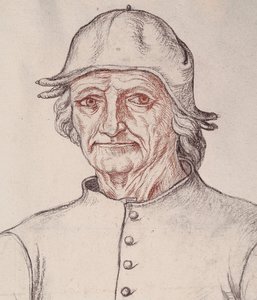
      § 4The artist

      Ієронім Босх

      Ієронім Босх

      1450 - 1516, Нідерланди

      Quick facts about Ієронім Босх

      • Artistic Movement Or Style: Сюрреалізм, Символізм
      • Artists Or Movements Influenced By This Artist:
        • Пітер Брюггель Старший
        • Сюрреалізм
      • Date Of Birth: c. 1450
      • Date Of Death: 1516
      • Full Name: Hieronymus Bosch
      • Nationality: Нідерландський
      • Notable Artworks:
        • Сад земних задоволень
        • Останній Суд
        • Сім гріхів
      • Place Of Birth: Делфт, Нідерланди

      Біографія митця

      A Netherlandish Enigma: The Life and Art of Hieronymus Bosch

      Born around 1450 in the vibrant, bustling town of ’s-Hertogenbosch in the Netherlands—then part of Brabant—Hieronymus Bosch, originally Jheronimus van Aken, remains one of art history’s most compelling and mysterious figures. His world was steeped in late medieval religious fervor, folklore, and a growing sense of societal unease, all of which would profoundly shape his uniquely unsettling artistic vision. Coming from a family with a long tradition of painting—his grandfather, Jan van Aken, and father, Anthonius van Aken, were both artists—Bosch likely received his earliest training within the family workshop, absorbing the techniques and conventions of Netherlandish painting. However, even in his formative years, he began to diverge from established norms, hinting at the extraordinary imagination that would define his career. Biographical details are frustratingly scarce; records are fragmented, leaving much open to speculation and interpretation, adding to the aura of mystique surrounding both the man and his work. He married Aleyt Goyaerts van den Meerveen sometime before 1481, a union that provided him with some financial security through her family’s holdings, but little else is known about their personal life.

      Fantastical Visions and Symbolic Depths

      Bosch's artistic style is instantly recognizable—a captivating blend of meticulous detail and wildly imaginative imagery. He primarily worked with oil on oak panels, demonstrating a masterful command of the medium, achieving luminous colors and intricate textures. While his early works show influences from traditional Netherlandish painting, particularly in their realism and attention to detail, he quickly moved beyond mere imitation, developing a profoundly original vision. His paintings are not simply representations of reality; they are allegorical landscapes populated by bizarre creatures, hybrid beings, and unsettling scenes that seem plucked from dreams—or nightmares. Religious themes form the core of much of his work, but these are rarely straightforward depictions of biblical stories. Instead, Bosch uses symbolism to explore complex moral and theological concepts, often focusing on the dangers of sin, the fragility of earthly pleasures, and the inevitability of divine judgment. His creatures—grotesque demons, fantastical animals, and strangely human figures—are not merely decorative elements; they are embodiments of vice, temptation, and spiritual corruption. The blending of the sacred and the profane, the beautiful and the grotesque, creates a uniquely unsettling effect that continues to captivate viewers centuries later.

      Masterpieces of Moral Allegory

      Among Bosch’s most celebrated achievements is The Garden of Earthly Delights (c. 1490-1510), a triptych that remains one of the most enigmatic and debated works in art history. When opened, it presents a panoramic vision of paradise, earthly life, and hell—a complex allegorical representation of humanity’s fall from grace. The left panel depicts the Garden of Eden, teeming with fantastical creatures and lush vegetation; the central panel portrays a world consumed by sensual pleasure and unrestrained desire; and the right panel offers a terrifying glimpse into the torments of hell. The Triptych of the Last Judgement (c. 1480-1490) is another powerful example of his skill in portraying both heavenly bliss and infernal torment, while The Ascent of the Blessed (c. 1480-1490) demonstrates his ability to create ethereal and dreamlike scenes. Even smaller works like Epiphany (c. 1495) showcase his innovative use of oil on wood and complex symbolism, revealing a mind constantly grappling with profound questions about faith, morality, and the human condition.

      Influences and Artistic Techniques

      Identifying Bosch’s direct influences is a challenging task, given the originality of his vision. Scholars suggest possible connections to medieval folklore, religious texts—particularly those emphasizing apocalyptic themes—and the prevailing anxieties of the time, including fears of heresy and social upheaval. However, it's clear that he synthesized these elements into something entirely new and uniquely his own. His use of oil paint allowed for incredible detail and luminosity, while his meticulous rendering of textures and patterns created a sense of both realism and unreality. Bosch’s compositions are often complex and layered, with multiple levels of meaning and symbolism. He frequently employed perspective techniques to create the illusion of depth and space, drawing viewers into his fantastical worlds. The recurring motifs in his work—such as animals, fruits, and musical instruments—carry symbolic weight, adding layers of interpretation to his narratives.

      Legacy and Enduring Influence

      Bosch’s art continues to fascinate and provoke debate centuries after its creation. He is considered a pioneer of surrealism, anticipating many of the themes and techniques that would later be explored by artists such as Salvador Dalí and Max Ernst. His unsettling visions have resonated with audiences for generations, prompting questions about morality, faith, and the nature of human existence. The Prado Museum in Madrid houses some of his most famous works, attracting visitors from around the world who come to marvel at his extraordinary imagination and technical skill. Hieronymus Bosch remains a towering figure in art history—a master of symbolism, a visionary artist, and an enduring enigma whose work continues to challenge and inspire us today. His paintings offer valuable insights into the religious, social, and psychological climate of the late 15th and early 16th centuries, challenging conventional norms and paving the way for new forms of artistic expression.

      § 5Comparanda

      § 6Questions

      Основна інформація

      • Artist: Hieronymus Bosch
      • Subject or theme: Fantastical allegory; Humanity's connection to nature
      • Title: Tree-Man
      • Notable elements or techniques: Detailed pen drawing; Hatching and crosshatching
      • Dimensions: 277 x 211 cm

      Квіз про мистецтво

      У кожному запитанні лише одна правильна відповідь.

      Запитання 1:
      What artistic technique is predominantly used in ‘Tree-Man’?
      Запитання 2:
      The Garden of Earthly Delights, a painting by Bosch alongside 'Tree-Man', explores themes related to:
      Запитання 3:
      What is the dominant tonal range of the photograph?
      Запитання 4:
      Bosch’s style is characterized by:
      Запитання 5:
      The image depicts a landscape dominated by what prominent element?

      § 7Cite this entry

      AllPaintingsStore.com, “Ієронім Босх, Tree-Man”, https://allpaintingsstore.com/uk/art/hieronymus-bosch-tree-man-8Y3U24-en/ArtistReproduction/ (accessed 1 Жовтень 2026).

      § 8The reproduction

      Олійная репродукція ручної роботи

      Написана вручну олією на полотні у вашому розмірі та рамі, виготовлена на замовлення нашими художниками. ( Перейти до друку Перейти до цифрових зображень)

      It is specified on the order sheet in the margin; the present state of that sheet reads as follows.

      Tree-Man

      Матеріал репродукції

      Розмір репродукції

      -

      Видатний майстер-художник

      Більше деталізації, витонченості та додаткового часу на створення твору

      -

      Рама для репродукції

      -

      -

      Для творів мистецтва або репродукцій, розмір яких перевищує 105 см (приблизно 41 дюйм) з будь-якого боку, рама доставляється у вигляді розібраного комплекту. Такий метод гарантує безпечну доставку та запобігає пошкодженням під час транспортування.

      Потребує професійного збирання — це не продукт для самостійного виготовлення (DIY).
      Комплект має бути зібраний, а полотно натягнуте досвідченим майстром багетних робіт із використанням клейового дерева (не входить у комплект), щипців для натягування полотна та затискачів, щоб підрамник залишався рівним під час висихання клею. Неправильне збирання або нерівномірне натягування полотна може призвести до незворотного пошкодження твору мистецтва, що не підпадає під дію нашої гарантії.

      • У комплект входять усі бруски з цільного дерева, точно вирізані за розміром.

      • Збирається за допомогою гвинтів, що входять до комплекту, а також клейового розчину для кутових з'єднань, який не входить до комплекту і має бути підготовлений вашим майстром.

      • Потрібні професійні інструменти, які не входять до комплекту: щипці для натягування полотна (натягувач) та затискачі, щоб утримувати рейки рівно під час висихання клею.

      Важливо:
      Для з'єднання кутів потрібен клей для дерева, перекладини необхідно затиснути струбцинами до повного висихання клею, а для натягування полотна на зібрану раму знадобляться щипці для натягування полотна. Жоден із цих інструментів не входить до комплекту. Будь ласка, проконсультуйтеся з досвідченим майстром багетного оформлення перед замовленням рами такого розміру.

      Етикетка експоната

      -

      -

      Захисний лак

      Глянцевий лак (підсилює яскравість кольорів, захищає від світла та вологи)

      -

      Персоналізувати мій витвір

      Приклади можливих змін: заміна обличчя на фото клієнта; додавання домашньої тварини (наприклад, заміна кота на собаку); додавання прихованого повідомлення на фоні; зміна пейзажу або елементів фону.

      -

      Прискорено

      Доставка по всьому світу () за 3–4 тижні замість стандартних 5 тижнів. (30 Жовтень). Без компромісів у якості.

      -

      Експрес-доставка

      Доставка по всьому світу () протягом 5 тижнів. (6 Листопад).

      Включено в ціну

      Підсумкова вартість

      ₴ 11542

      Included with every order

      • Безкоштовна експрес-доставка по всьому світу
      • Високоякісне лляне полотно
      • Повне страхове покриття доставки
      • Гарантія повернення митних зборів
      • Гарантія точного відтворення кольорів
      • Політика повернення протягом 100 днів (лише у разі виявлення дефектів)
      • Гарантія повернення 100% коштів
      • Пропозиція на оптові замовлення
      Досліджуйте твори мистецтва, впорядковані за темами, стилями та характеристиками.
      Order sheet