Гарантія повернення коштів протягом 100 днів Безкоштовна доставка по всьому світу
449 587витвори мистецтва 30 613художники 4 660музеї 32мови
Валюта
    Мова
      Ательє · Засн. 2015 · Париж, Франція
      AllPaintingsStore
      allpaintingsstore.com
      Catalogue entry

      Roman Ruins

      1760. Oil On Canvas. Worcester Art Museum.

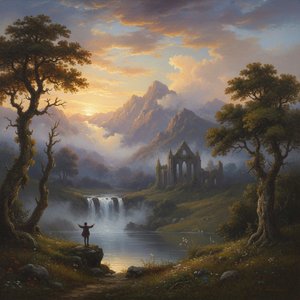
      Fig. 1. Гюберт Роберт, Roman Ruins, 1760. Shown as the reproduction you are specifying: , .

      § 1Catalogue data

      § 2Abstract

      Опис експоната

      Discover "Roman Ruins" by Hubert Robert (1760). A Romantic masterpiece showcasing crumbling architecture & pastoral life. Oil on canvas, dramatic lighting & serene beauty. Perfect for art lovers!

      Біографія митця

      Гюберт Роберт (1733-1808): французький художник, відомий своїми епічними пейзажами та фантастичними картинами руїн. Його мистецтво – поєднання історії, розбрату та уяви!

      § 3Commentary

      A Symphony of Decay and Eternal Beauty

      In the quietude of Hubert Robert’s Roman Ruins, one finds more than a mere depiction of crumbling stone; one encounters a profound meditation on the relentless passage of time. Created around 1760, this masterpiece serves as a window into the heart of the Romantic imagination, where the grandeur of antiquity meets the soft, persistent embrace of nature. The canvas invites the viewer to wander through a landscape where monumental architecture—once the pride of an empire—now yields to the slow, rhythmic pulse of vegetation and light. It is a scene that captures a fleeting moment of ethereal beauty, frozen in the amber of oil on canvas, offering a sense of pastoral tranquility that resonates deeply with the modern soul seeking refuge from the frenetic pace of contemporary life.

      The composition is masterfully orchestrated to draw the eye deep into a world of architectural wonder and quiet human drama. A majestic, weathered archway stands as the central protagonist, its heavy columns and fractured masonry framing a vista that stretches toward an infinite horizon. Through this portal, the viewer perceives a vast, open space where the boundaries between man-made structures and the wild landscape begin to blur. The foreground is alive with the gentle rhythms of everyday existence: figures engaged in quiet contemplation, a woman tending to livestock, and children playing amidst the rocky outcrops. This juxtaposition—the monumental scale of the ruins against the intimate, humble activities of life—establishes a poignant dialogue between historical glory and the enduring continuity of the human spirit.

      The Artistry of the Romantic Capriccio

      Robert’s technical prowess is most evident in his command of light and texture, elements that elevate this work from a topographical study to a capriccio—a genre of imaginative fantasy. Utilizing the rich, versatile medium of oil paint, the artist achieves a remarkable tonal range that breathes life into the scene. Warm ochres, deep browns, and radiant golds dominate the palette, bathing the ruins in a sun-drenched glow that evokes a sense of nostalgic warmth. His brushwork is both deliberate and expressive; while the architectural elements are defined by structured lines, the foliage and distant clouds are rendered with a looser, more spontaneous touch. This interplay of precision and fluidity creates a dynamic atmosphere, where the light seems to dance across the textured surfaces of stone and leaf alike.

      For the discerning collector or interior designer, Roman Ruins offers an unparalleled emotional depth that transcends mere decoration. The painting functions as a symbolic vessel, carrying themes of memory, loss, and the sublime power of nature. It evokes a sense of "melancholic grandeur"—a feeling of being moved by the beauty of what has passed while finding peace in the persistence of life. Integrating such a high-quality reproduction into a curated space provides more than just a visual focal point; it introduces a narrative of timelessness and sophistication. Whether placed in a sunlit library or a grand salon, Robert’s vision of the Roman past serves as an enduring inspiration, reminding us that even amidst decay, there is a profound and lasting splendor to be found.

      Питання та відповіді

      Хто створив "Roman Ruins" і в якому році?

      Гюберт Роберт створив(ла) «Roman Ruins» у 1760 році.

      Чи знаходиться «Roman Ruins» роботи Гюберт Роберт у рідній країні митця?

      Ні — твір зберігається за кордоном. Твір "Roman Ruins" зберігається в Сполучені Штати Америки, тоді як Гюберт Роберт народився(-лася) в Франція.

      Де я можу завантажити «Roman Ruins» роботи Гюберт Роберт?

      Для твору «Roman Ruins» доступне завантаження: на сторінці Завантажити цифрове зображення ви можете завантаження цифрового зображення високої роздільної здатності.

      § 4The artist

      Гюберт Роберт

      Гюберт Роберт

      1733 - 1808, Франція

      Quick facts about Гюберт Роберт

      • Artistic Movement Or Style: Романтизм, Неокласицизм
      • Artists Or Movements Influenced By This Artist: ['Романтизм']
      • Artists Who Influenced This Artist:
        • Джованні Паніні
        • П'єре-Огюст Рено
      • Date Of Birth: 22 травня 1733
      • Date Of Death: 15 квітня 1808
      • Full Name: Hubert Robert
      • Nationality: Француз
      • Notable Artworks:
        • Порт Риму
        • Політ Галатеї
      • Place Of Birth: Париж, Франція

      Біографія митця

      Hubert Robert: A Painter of Ruins and Visions

      Hubert Robert, a name inextricably linked to the evocative beauty of decaying grandeur, stands as a singular figure in 18th-century French art. Born in Paris in 1733, his life unfolded against a backdrop of dramatic artistic shifts – from the opulent excesses of the Rococo to the burgeoning ideals of Neoclassicism – and ultimately, through the tumultuous upheaval of the French Revolution. Robert wasn’t merely an observer of ruins; he was a visionary interpreter, skillfully blending meticulous observation with boundless imagination to conjure scenes that resonated with both a poignant nostalgia for the past and a tantalizing anticipation of the future. His artistic journey began within the structured confines of formal training, initially under the tutelage of sculptor Michel-Ange Slodtz, who recognized Robert’s innate talent but wisely steered him towards painting, sensing his true calling lay in capturing the ephemeral dance of light, atmosphere, and the subtle poetry of form.

      Roman Reveries: Shaping an Artistic Identity

      The defining moment in Robert's artistic development arrived with his extended sojourn to Rome between 1754 and 1765. This period wasn’t simply a vacation; it was a profound immersion into a world saturated with history, architectural magnificence, and the ghosts of antiquity. Accompanying Étienne-François de Choiseul, Robert found himself enveloped in the heart of the Roman Empire's legacy – its crumbling temples, majestic arches, and overgrown gardens became his constant studio. He didn’t merely replicate what he saw; rather, he meticulously studied, reimagined, and imbued these ancient spaces with a distinctly melancholic beauty. His early works, often categorized as *capricci*, reflected this approach—fantastical compositions that juxtaposed classical ruins with contemporary life, creating an intriguing dialogue between past and present. A pivotal influence during this time was Giovanni Paolo Panini, whose mastery of landscape and architectural detail profoundly shaped Robert’s technique. However, Robert quickly transcended mere imitation, developing a unique style characterized by extraordinary precision, atmospheric perspective, and a remarkable sensitivity to the interplay of light and shadow. He wasn't simply painting ruins; he was capturing time itself, distilling the essence of transience and the enduring power of memory into his canvases. His extensive sketchbook collection from this period offers invaluable insights into his artistic process – detailed studies of Roman landmarks like the Villa d’Este and Caprarola, revealing a keen eye for architectural nuance and landscape composition.

      Parisian Acclaim and Royal Patronage

      Robert's triumphant return to Paris in 1765 marked a significant elevation in his career. He swiftly gained recognition within the artistic circles of the city, securing admission to the Académie Royale de Peinture et de Sculpture with “The Port of Rome, Ornamented with Different Monuments of Architecture, Ancient and Modern.” This success was followed by a series of exhibitions at the Salon, where his evocative depictions of ruins and picturesque landscapes captivated audiences. The critic Denis Diderot famously lauded Robert’s ability to transport viewers to another time and place, recognizing the profound emotional resonance of his work. This widespread acclaim led to prestigious commissions – including decorative projects for grand residences and appointments as “Designer of the King's Gardens” and later, “Keeper of the King’s Pictures.” He became a highly sought-after artist, not only for his easel paintings but also for his innovative designs for gardens and palatial interiors. Robert’s work resonated deeply with the prevailing taste for *capriccio* painting – a genre that appealed to collectors fascinated by history, archaeology, and the romantic allure of the picturesque – yet he infused it with a distinctive sensibility, elevating it beyond mere decorative art.

      Revolution, Resilience, and Lasting Legacy

      The French Revolution presented an unprecedented challenge for Robert, forcing him to navigate a period of immense political instability and social upheaval. While many artists struggled to adapt to these turbulent times, Robert demonstrated remarkable resilience, continuing to paint prolifically despite the dangers and uncertainties surrounding him. He even endured imprisonment during the Reign of Terror – a harrowing experience that undoubtedly informed his later works exploring themes of confinement and vulnerability. Following the Revolution, Robert was appointed curator of the newly established Muséum Central des Arts—the future Musée du Louvre—a testament to his expertise and dedication to preserving France’s artistic heritage. He played a crucial role in organizing and cataloging the museum's vast collection, ensuring that its treasures were safeguarded for generations to come. Hubert Robert died in Paris in 1808, leaving behind an extraordinary body of work – over 300 paintings, drawings, and engravings – that continues to captivate viewers with its blend of historical accuracy, imaginative vision, and profound emotional depth. His legacy extends beyond his technical mastery; he pioneered a genre of painting that celebrated both the beauty of decay and the enduring power of human creativity, solidifying his place as a pivotal figure bridging the Rococo and Neoclassicism periods, and anticipating aspects of Romanticism with his fascination for history and imagination.
      • Key Influences: Giovanni Paolo Panini, Piranesi, the architectural landscape of Rome.
      • Major Themes: Ruins, landscapes, *capriccio* paintings, historical memory, the passage of time.
      • Artistic Style: Meticulous detail, atmospheric perspective, evocative lighting, blending observation with imagination.

      § 5Comparanda

      § 6Questions

      Основна інформація

      • Title: Roman Ruins
      • Medium: Oil on Canvas
      • Subject or theme: Ancient Architecture & Pastoral Life
      • Movement: Romanticism
      • Year: 1760

      Квіз про мистецтво

      У кожному запитанні лише одна правильна відповідь.

      Запитання 1:
      What artistic movement is Hubert Robert’s "Roman Ruins" primarily associated with?
      Запитання 2:
      Describe the dominant color palette used in "Roman Ruins". How does it contribute to the overall mood of the artwork?
      Запитання 3:
      What is a key characteristic of Hubert Robert’s painting technique – specifically regarding the brushstrokes?
      Запитання 4:
      The image description mentions ‘atmospheric perspective,’ what does this technique achieve?
      Запитання 5:
      What symbolic element is present in "Roman Ruins" that reflects broader themes related to time and memory?

      § 7Cite this entry

      AllPaintingsStore.com, “Гюберт Роберт, Roman Ruins (1760)”, https://allpaintingsstore.com/uk/art/hubert-robert-roman-ruins-8YDS5F-en/ArtistReproduction/ (accessed 2 Жовтень 2026).

      § 8The reproduction

      Олійная репродукція ручної роботи

      Написана вручну олією на полотні у вашому розмірі та рамі, виготовлена на замовлення нашими художниками. ( Перейти до друку Перейти до цифрових зображень)

      It is specified on the order sheet in the margin; the present state of that sheet reads as follows.

      Roman Ruins

      Матеріал репродукції

      Розмір репродукції

      -

      Видатний майстер-художник

      Більше деталізації, витонченості та додаткового часу на створення твору

      -

      Рама для репродукції

      -

      -

      Для творів мистецтва або репродукцій, розмір яких перевищує 105 см (приблизно 41 дюйм) з будь-якого боку, рама доставляється у вигляді розібраного комплекту. Такий метод гарантує безпечну доставку та запобігає пошкодженням під час транспортування.

      Потребує професійного збирання — це не продукт для самостійного виготовлення (DIY).
      Комплект має бути зібраний, а полотно натягнуте досвідченим майстром багетних робіт із використанням клейового дерева (не входить у комплект), щипців для натягування полотна та затискачів, щоб підрамник залишався рівним під час висихання клею. Неправильне збирання або нерівномірне натягування полотна може призвести до незворотного пошкодження твору мистецтва, що не підпадає під дію нашої гарантії.

      • У комплект входять усі бруски з цільного дерева, точно вирізані за розміром.

      • Збирається за допомогою гвинтів, що входять до комплекту, а також клейового розчину для кутових з'єднань, який не входить до комплекту і має бути підготовлений вашим майстром.

      • Потрібні професійні інструменти, які не входять до комплекту: щипці для натягування полотна (натягувач) та затискачі, щоб утримувати рейки рівно під час висихання клею.

      Важливо:
      Для з'єднання кутів потрібен клей для дерева, перекладини необхідно затиснути струбцинами до повного висихання клею, а для натягування полотна на зібрану раму знадобляться щипці для натягування полотна. Жоден із цих інструментів не входить до комплекту. Будь ласка, проконсультуйтеся з досвідченим майстром багетного оформлення перед замовленням рами такого розміру.

      Етикетка експоната

      -

      -

      Захисний лак

      Глянцевий лак (підсилює яскравість кольорів, захищає від світла та вологи)

      -

      Персоналізувати мій витвір

      Приклади можливих змін: заміна обличчя на фото клієнта; додавання домашньої тварини (наприклад, заміна кота на собаку); додавання прихованого повідомлення на фоні; зміна пейзажу або елементів фону.

      -

      Прискорено

      Доставка по всьому світу () за 3–4 тижні замість стандартних 5 тижнів. (30 Жовтень). Без компромісів у якості.

      -

      Експрес-доставка

      Доставка по всьому світу () протягом 5 тижнів. (6 Листопад).

      Включено в ціну

      Підсумкова вартість

      ₴ 11566

      Included with every order

      • Безкоштовна експрес-доставка по всьому світу
      • Високоякісне лляне полотно
      • Повне страхове покриття доставки
      • Гарантія повернення митних зборів
      • Гарантія точного відтворення кольорів
      • Політика повернення протягом 100 днів (лише у разі виявлення дефектів)
      • Гарантія повернення 100% коштів
      • Пропозиція на оптові замовлення
      Order sheet