Гарантія повернення коштів протягом 100 днів Безкоштовна доставка по всьому світу
449 564витвори мистецтва 30 613художники 4 660музеї 32мови
Запис у каталозі

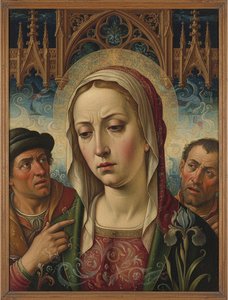
The Fall

1467. Акрил на полотні, 33.0 x 23.0 cm. Kunsthistorisches Museum.

Рис. 1. Гуго ван дер Гойс, The Fall, 1467. Показано як репродукцію, яку ви вказали: , .

§ 1Дані каталогу

Розміри
33.0 x 23.0 cm

§ 2Абстракція

Опис експоната

Inspired by Rogier van der Weyden and Jan van Eyck.

Біографія митця

"Ukrainian Meta Description": "Гуґо ван дер Гойс – видатний фламандський художник епохи Відродження, відомий реалістичними полотнами та вражаючою глибиною емоцій. Його твори, зокрема Альтар Портинарі, вплинули на розвиток італійського живопису."

§ 3Коментар

Hugo van der Goes’s “The Fall”: A Testament to Northern Renaissance Mastery

“The Fall,” painted between 1467 and 1468 by Hugo van der Goes, stands as an unparalleled achievement of Early Netherlandish art—a monumental depiction of the biblical narrative that transcends mere illustration, embodying profound psychological depth and masterful artistic execution. Housed within the Kunsthistorisches Museum in Vienna, Austria, this oil on oak panel masterpiece continues to captivate viewers with its breathtaking realism and enduring symbolic resonance.

Composition and Technique: A Symphony of Light and Shadow

Van der Goes’s compositional brilliance is immediately apparent. He presents a dramatic tableau featuring Adam and Eve after their transgression against God's commandment—a scene fraught with emotion and imbued with an astonishing level of detail. The artist skillfully employs chiaroscuro, manipulating light and shadow to sculpt the figures and landscape alike, creating a palpable sense of three-dimensionality that was revolutionary for its time. Each brushstroke meticulously renders musculature, skin texture, and drapery folds, demonstrating Van der Goes’s unwavering commitment to anatomical accuracy—a hallmark of his distinctive style. The oak panel itself serves as an integral element of the artwork's aesthetic impact, grounding the scene in materiality and enhancing its visual presence.

Symbolism: Decoding Layers of Meaning

Beyond its technical prowess, “The Fall” is rich in symbolism that speaks to fundamental theological concepts. The serpent, coiled around the Tree of Knowledge, embodies temptation and deceit—a recurring motif within Christian iconography. Eve’s gaze towards Adam reflects vulnerability and remorse as she confronts the consequences of her actions. The apple itself symbolizes forbidden knowledge and represents humanity's loss of innocence. Furthermore, the lush foliage surrounding the figures underscores the idyllic beauty of Eden before the Fall, serving as a poignant reminder of what has been irrevocably lost. Van der Goes’s deliberate use of color—primarily earthy tones—contributes to the painting’s somber mood, mirroring the spiritual anguish experienced by Adam and Eve.

Historical Context: Pioneering Realism in a Turbulent Era

Created during the height of the Northern Renaissance, “The Fall” represents a pivotal moment in artistic history. Unlike its Italian counterparts, which often prioritized idealized beauty and mythological grandeur, Flemish painting—particularly under Van der Goes’s influence—embraced realism with unprecedented fervor. Rogier van der Weyden and Jan van Eyck, contemporaries of Van der Goes, had already established new standards for detail and naturalism; however, Hugo van der Goes elevated these achievements to an entirely different level. The painting reflects the intellectual ferment of the period, fueled by humanist scholarship and a renewed interest in classical art—a confluence that propelled artists toward exploring human psychology and conveying emotional intensity with unparalleled sensitivity.

Emotional Impact: A Profound Reflection on Human Condition

“The Fall” continues to resonate powerfully with audiences today because it confronts fundamental questions about morality, faith, and the human condition. The painting’s depiction of Adam and Eve's despair captures the universal experience of regret and remorse—a timeless reminder that even in moments of transgression, humanity retains a capacity for compassion and vulnerability. Its masterful execution elevates it beyond mere narrative illustration, transforming it into an enduring meditation on spiritual struggle and the consequences of disobedience. Viewing this artwork evokes contemplation and invites viewers to consider the complexities of human behavior and the enduring power of symbolism.
  • Artist: Hugo van der Goes
  • Date: 1467-68
  • Medium: Oil on Oak Panel
  • Location: Kunsthistorisches Museum, Vienna

For more information on Hugo Van Der Goes and his works, visit AllPaintingsStore.com and explore our collection of handmade oil painting reproductions.

Питання та відповіді

До якого художнього напряму належить «The Fall» роботи Гуго ван дер Гойс?

Мистецький напрям, до якого належить «The Fall» роботи Гуго ван дер Гойс, — це Northern Renaissance. Така класифікація дозволяє розмістити цей твір у контексті суміжних митців та творів мистецтва.

Яка техніка виконання та розміри твору «The Fall» роботи Гуго ван дер Гойс?

«The Fall» виконана в техніці Акрил на полотні, її оригінальний розмір становить 33 x 23 cm.

Як мені завантажити зображення «The Fall» роботи Гуго ван дер Гойс?

Для твору «The Fall» доступне завантаження: на сторінці Завантажити цифрове зображення ви можете завантаження цифрового зображення високої роздільної здатності.

§ 4Художник

Гуго ван дер Гойс

Гуго ван дер Гойс

1440 - 1482, Бельгія

Короткі факти про Гуго ван дер Гойс

  • Artistic Movement Or Style: Ранній нідерландський живопис
  • Artists Or Movements Influenced By This Artist:
    • Донателло Гірландяйо
    • Італійський Ренесанс
  • Artists Who Influenced This Artist:
    • Ян ван Ейк
    • Дірк Боутс
  • Date Of Birth: c. 1440
  • Date Of Death: 1482
  • Full Name: Hugo van der Goes
  • Nationality: Фламандський
  • Notable Artworks:
    • Адавіація Королів
    • Алтар Гольфштейна
    • Поклоніння пастухам
  • Place Of Birth: Гент, Бельгія

Біографія митця

A Pioneer of Flemish Realism: The Life and Art of Hugo van der Goes

Born around 1440 in the vibrant artistic hub of Ghent, Belgium, Hugo van der Goes emerged as a pivotal figure in the Northern Renaissance. Though shrouded in some mystery—details of his early life remain scarce—his impact on the development of painting during the latter half of the 15th century is undeniable. Van der Goes wasn’t merely a painter; he was an innovator who profoundly altered the course of artistic expression, influencing masters both within Flanders and across the burgeoning Italian Renaissance. He entered the Ghent painters' guild in 1467, marking his formal establishment as a master craftsman, yet it was his unique vision—a blend of intense realism, psychological depth, and dramatic composition—that would set him apart. Before Van der Goes, Flemish painting, while technically brilliant, often adhered to established conventions; he dared to break from these traditions, imbuing his work with an unprecedented level of human emotion and tangible reality.

Innovation and Artistic Style

Van der Goes’s artistic signature lies in his ability to infuse religious scenes with a startling sense of immediacy and emotional weight. He moved beyond the stylized conventions of earlier Flemish painting, imbuing his figures with a weighty presence and individualized character. His use of color was deliberate and often somber, creating a sense of gravity and spiritual intensity. This wasn’t simply about replicating appearances; it was about conveying inner states—awe, sorrow, reverence—through subtle gestures, expressive faces, and the careful manipulation of light and shadow. His monumental style, characterized by large-scale compositions and imposing figures, further amplified this emotional impact. He didn't shy away from portraying imperfections; his figures often possess a raw, almost unsettling realism that distinguishes them from the more idealized representations common in earlier art. This commitment to depicting humanity in all its complexity was revolutionary for its time, influencing artists who sought to move beyond mere technical skill and explore the depths of human experience. The influence of Jan van Eyck’s meticulous detail is evident, but Van der Goes transcends imitation, forging a style uniquely his own. He skillfully combined elements of realism with symbolic representation, creating works that were both visually stunning and deeply meaningful.

Masterpieces and Lasting Influence

Perhaps Van der Goes’s most celebrated work is the Portinari Altarpiece, commissioned by Tommaso Portinari, an Italian banker residing in Bruges. Completed around 1475, this magnificent triptych—now housed in the Uffizi Gallery in Florence—is a testament to his mastery of composition, color, and psychological insight. The scene depicting the Nativity is particularly striking, with its dramatic lighting, realistic portrayal of humble figures, and palpable sense of wonder. The altarpiece’s arrival in Italy had a profound effect on Florentine artists, including Domenico Ghirlandaio, who were captivated by its innovative realism and emotional power. Another significant work is The Adoration of the Magi (Monforte Altarpiece), currently residing in Berlin's Gemäldegalerie. This piece showcases his skill in creating dynamic scenes filled with intricate detail and symbolic meaning. Beyond these iconic works, Van der Goes contributed to numerous civic projects, including heraldic decorations for Charles the Bold’s ceremonial entries into Ghent, demonstrating his versatility as an artist. His influence extended beyond painting; he impacted the development of book illustration through his designs which were disseminated by artists like Alexander Bening.

A Life Transformed: From Workshop to Monastery

In a surprising turn of events, at the height of his artistic success in 1477, Van der Goes abruptly closed his bustling workshop and entered the Roode Klooster monastery near Auderghem. This decision remains something of an enigma, though it’s believed to have been driven by a deep spiritual yearning or perhaps a struggle with mental health. Despite taking religious vows as a lay brother, he continued to accept painting commissions, even undertaking the task of evaluating unfinished works by Dieric Bouts for the city of Leuven. However, his final years were marked by increasing bouts of depression and psychological distress. Accounts suggest that he suffered a severe breakdown in 1482, tragically taking his own life shortly thereafter. This poignant end to a brilliant career adds another layer of complexity to the legacy of Hugo van der Goes—a man whose art explored the depths of human emotion while grappling with inner turmoil. The circumstances surrounding his death have fueled speculation for centuries, adding to the mystique that surrounds this remarkable artist.

A Legacy Enduring Through Time

Hugo van der Goes’s influence extended far beyond his relatively short lifetime. His innovative techniques and profound psychological insights paved the way for future generations of artists, both in Flanders and Italy. His work can be found today in prestigious museums such as the Musées royaux des Beaux-Arts in Brussels, offering a glimpse into the genius of this pioneering Flemish master. He remains a compelling figure—a testament to the power of art to capture the complexities of the human condition and to transcend cultural boundaries. His legacy continues to inspire awe and admiration, solidifying his place as one of the most important artists of the Northern Renaissance.
  • His emphasis on realism influenced subsequent generations.
  • The Portinari Altarpiece remains a landmark achievement in art history.
  • His exploration of psychological depth set a new standard for portraiture and religious painting.

§ 5Схожі роботи

§ 6Запитання

§ 7Цитувати цей запис

AllPaintingsStore.com, “Гуго ван дер Гойс, The Fall (1467)”, https://allpaintingsstore.com/uk/art/hugo-van-der-goes-the-fall-8Y3SEF-en/ArtistReproduction/ (дата перегляду 6 Жовтень 2026).

§ 8Репродукція

Олійная репродукція ручної роботи

Написана вручну олією на полотні у вашому розмірі та рамі, виготовлена на замовлення нашими художниками. ( Перейти до друку Перейти до цифрових зображень)

Це зазначено на маржі замовного листа; поточний стан цього листа такий:

The Fall

Матеріал репродукції

Розмір репродукції

-

Видатний майстер-художник

Більше деталізації, витонченості та додаткового часу на створення твору

-

Рама для репродукції

-

-

Для творів мистецтва або репродукцій, розмір яких перевищує 105 см (приблизно 41 дюйм) з будь-якого боку, рама доставляється у вигляді розібраного комплекту. Такий метод гарантує безпечну доставку та запобігає пошкодженням під час транспортування.

Потребує професійного збирання — це не продукт для самостійного виготовлення (DIY).
Комплект має бути зібраний, а полотно натягнуте досвідченим майстром багетних робіт із використанням клейового дерева (не входить у комплект), щипців для натягування полотна та затискачів, щоб підрамник залишався рівним під час висихання клею. Неправильне збирання або нерівномірне натягування полотна може призвести до незворотного пошкодження твору мистецтва, що не підпадає під дію нашої гарантії.

  • У комплект входять усі бруски з цільного дерева, точно вирізані за розміром.

  • Збирається за допомогою гвинтів, що входять до комплекту, а також клейового розчину для кутових з'єднань, який не входить до комплекту і має бути підготовлений вашим майстром.

  • Потрібні професійні інструменти, які не входять до комплекту: щипці для натягування полотна (натягувач) та затискачі, щоб утримувати рейки рівно під час висихання клею.

Важливо:
Для з'єднання кутів потрібен клей для дерева, перекладини необхідно затиснути струбцинами до повного висихання клею, а для натягування полотна на зібрану раму знадобляться щипці для натягування полотна. Жоден із цих інструментів не входить до комплекту. Будь ласка, проконсультуйтеся з досвідченим майстром багетного оформлення перед замовленням рами такого розміру.

Етикетка експоната

-

-

Захисний лак

Глянцевий лак (підсилює яскравість кольорів, захищає від світла та вологи)

-

Персоналізувати мій витвір

Приклади можливих змін: заміна обличчя на фото клієнта; додавання домашньої тварини (наприклад, заміна кота на собаку); додавання прихованого повідомлення на фоні; зміна пейзажу або елементів фону.

-

Прискорено

Доставка по всьому світу () за 3–4 тижні замість стандартних 5 тижнів. (3 Листопад). Без компромісів у якості.

-

Експрес-доставка

Доставка по всьому світу () протягом 5 тижнів. (10 Листопад).

Включено в ціну

Підсумкова вартість

₴ 11628

До кожного замовлення додається

  • Безкоштовна експрес-доставка по всьому світу
  • Високоякісне лляне полотно
  • Повне страхове покриття доставки
  • Гарантія повернення митних зборів
  • Гарантія точного відтворення кольорів
  • Політика повернення протягом 100 днів (лише у разі виявлення дефектів)
  • Гарантія повернення 100% коштів
  • Пропозиція на оптові замовлення
Форма замовлення