Гарантія повернення коштів протягом 100 днів Безкоштовна доставка по всьому світу
449 587витвори мистецтва 30 613художники 4 660музеї 32мови
Валюта
    Мова
      Ательє · Засн. 2015 · Париж, Франція
      AllPaintingsStore
      allpaintingsstore.com
      Catalogue entry

      Telemachus And Eucharis

      Oil On Canvas.

      Fig. 1. Жак-Луї Давид, Telemachus And Eucharis. Shown as the reproduction you are specifying: , .

      § 1Catalogue data

      § 2Abstract

      Опис експоната

      A tender Neoclassical moment of romantic devotion unfolds in Jacques-Louis David's The Farewell of Telemachus and Eucharis, a masterpiece of emotional depth inviting you to explore the beauty of classical myth.

      Біографія митця

      Жак-Луї Давид – видатний французький художник епохи революції та Наполеонівської імперії. Відомий картинами "Клятви Горатіїв", його творчість відображає героїзм, драматизм та класичні ідеали.

      § 3Commentary

      A Portrait of Resolve Amidst Romantic Sentiment

      Jacques-Louis David’s “The Farewell of Telemachus and Eucharis” stands as a testament to the Neoclassical movement's preoccupation with moral virtue and heroic ideals—a striking juxtaposition against the burgeoning passion of its subject matter. Painted circa 1784, this monumental canvas captures a poignant moment between Telemachus, son of Odysseus, and Eucharis, his beloved, embodying the spirit of reconciliation after a perilous journey. The painting resides within the Getty Center’s collection, offering visitors an unparalleled opportunity to experience David's masterful execution firsthand.
      • Subject Matter: The scene depicts Telemachus comforting Eucharis as he prepares to depart on his quest for news of his father’s return from Troy—a narrative drawn directly from Homer’s Odyssey. This retelling of the epic tale prioritized moral fortitude and duty over mere romantic indulgence, reflecting the broader artistic concerns of the era.
      • Style: David adhered rigorously to Neoclassical principles, rejecting the frivolity of Rococo aesthetics in favor of clarity, restraint, and idealized forms reminiscent of ancient Greece and Rome. The composition is carefully balanced, emphasizing symmetry and geometric precision—elements designed to convey stability and grandeur.
      • Technique: Executed with oil paints on canvas, David employed a meticulous layering technique known as sfumato, subtly blending colors to create soft transitions and atmospheric depth. This masterful manipulation of light contributes significantly to the painting’s emotional resonance, highlighting Telemachus's compassionate gaze and Eucharis’s serene acceptance of his impending absence.

      Historical Context: The Enlightenment’s Moral Compass

      “The Farewell” emerged during a period of profound intellectual transformation—the Enlightenment—where philosophers championed reason, virtue, and civic duty as guiding forces for human conduct. David's artistic choices mirrored these philosophical currents, aligning with the Royal Academy’s emphasis on portraying historical narratives imbued with moral significance. The painting served as a deliberate rebuke to Rococo decadence, asserting the supremacy of classical ideals in shaping artistic expression and societal values.

      Symbolism: Gesture and Emotion – Keys to Understanding

      David skillfully utilizes gesture and facial expressions to convey Telemachus’s unwavering devotion to Eucharis—a palpable demonstration of paternal love amidst adversity. The positioning of the figures, with Telemachus supporting Eucharis's head, symbolizes protection and reassurance. Furthermore, David’s deliberate depiction of Eucharis’s calm countenance underscores the importance of inner fortitude in confronting life’s challenges—a theme central to Homeric heroism and resonating powerfully within the Neoclassical framework.

      Emotional Impact: A Moment Frozen in Time

      Ultimately, “The Farewell” transcends mere visual representation; it evokes a profound emotional response in the viewer. The painting captures a tender yet solemn tableau—a poignant reminder of the enduring bonds between father and daughter, and the bittersweet acceptance inherent in parting ways. David’s masterful artistry ensures that this timeless scene continues to inspire contemplation on themes of love, duty, and resilience—solidifying its place as an iconic masterpiece of Neoclassical art.

      Питання та відповіді

      Чи є твір «Telemachus And Eucharis» авторства Жак-Луї Давид суспільним надбанням, і чому?

      Статус авторського права на твір "Telemachus And Eucharis" — є суспільним надбанням — термін дії авторського права закінчився — визначається датою смерті митця у 1800.

      Чи можу я детальніше розглянути "Telemachus And Eucharis"?

      «Telemachus And Eucharis» можна досліджувати шар за шаром на сторінці Рентгенівське дослідження твору — це інтерактивний візуалізатор, натхненний освітлювальним столом реставратора, що пропонує одинадцять оптичних пластів зображення.

      Чи можу я побачити «Telemachus And Eucharis» роботи Жак-Луї Давид на власній стіні перед покупкою?

      Сторінка Перегляд в AR для твору «Telemachus And Eucharis» роботи Жак-Луї Давид використовує технологію доповненої реальності, щоб показати витвір у вашому власному просторі за допомогою сумісного пристрою.
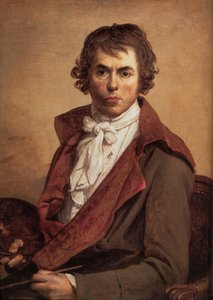
      § 4The artist

      Жак-Луї Давид

      Жак-Луї Давид

      1748 - 1800, Франція

      Quick facts about Жак-Луї Давид

      • Artistic Movement Or Style: Неокласицизм
      • Artists Or Movements Influenced By This Artist:
        • Рококо
        • Імпресіонізм
      • Artists Who Influenced This Artist:
        • Жан-Авґаст Дюмаєр
        • Жозеф-Марі Віен
      • Date Of Birth: 30 серпня 1748
      • Date Of Death: 29 грудня 1825
      • Full Name: Jacques-Louis David
      • Nationality: Француз
      • Notable Artworks:
        • Обет орлят
        • Смерть Марата
        • Наполеон перетинає Альпи
      • Place Of Birth: Париж, Франція

      Біографія митця

      A Brushstroke Across Revolution: The Life and Art of Jacques-Louis David

      Jacques-Louis David, born in Paris in 1748, was more than just a painter; he was a visual chronicler of an era defined by upheaval, idealism, and the relentless pursuit of new orders. His life mirrored the dramatic shifts unfolding across France – from the waning opulence of the Rococo to the austere clarity of Neoclassicism, and ultimately, through the tumultuous years of revolution and Napoleonic glory. A childhood marked by the early loss of his father and a facial impediment that initially hindered his speech seemed only to sharpen his observational skills and fuel an unwavering dedication to artistic mastery. Though initially apprenticed to François Boucher, David quickly found himself drawn to the more morally resonant work of Joseph-Marie Vien, whose emphasis on history painting and classical subjects resonated with a burgeoning sense of purpose within the young artist. His early attempts to win the prestigious Prix de Rome were fraught with frustration, yet these repeated setbacks only intensified his resolve, forging a relentless perfectionism that would characterize his entire career.

      The Birth of Neoclassical Drama

      David’s artistic evolution wasn't merely a stylistic shift; it was a philosophical statement. He rejected the frivolous ornamentation and playful themes of the Rococo, embracing instead the clarity, order, and moral seriousness inherent in classical antiquity. This commitment was profoundly influenced by archaeological discoveries at Pompeii and Herculaneum, which unveiled a world of Roman art and architecture previously lost to time. These unearthed ruins ignited within him a profound respect for the rationalism and civic virtue of the Roman Republic – values he believed were desperately needed in his own era. His breakthrough came with “Oath of the Horatii” (1784), a painting that transcended mere artistic skill to become an emblem of civic virtue and patriotic sacrifice. The stark composition, dramatic lighting, and precise draftsmanship were revolutionary, signaling a decisive break from the past. It wasn’t simply *what* he painted but *how* – a deliberate construction designed to evoke powerful emotional responses and inspire contemplation on themes of duty, honor, and self-sacrifice. The figures are rendered with an almost sculptural quality, their bodies idealized according to classical principles, while the scene unfolds with a dramatic intensity that captures the essence of heroic commitment. This work didn't just announce a new style; it foreshadowed the ideological currents that would soon sweep across France.

      Revolution and Remembrance: Art as Political Weapon

      As the French Revolution erupted in 1789, David was not merely an observer but an active participant. A fervent supporter of the revolutionary cause and a close associate of Maximilien Robespierre, he saw art as a powerful tool for shaping public opinion and immortalizing the ideals of the new republic. His paintings during this period became potent symbols of revolutionary martyrdom and republican fervor. Perhaps his most iconic work from this era is “The Death of Marat” (1793), a hauntingly realistic depiction of the assassinated journalist, transformed into a secular saint. The pale body, the makeshift desk, the poignant letter clutched in Marat's hand – all contribute to an image of profound sorrow and heroic sacrifice. David deliberately stripped away any trace of personal identification, elevating Marat to the status of a martyr for the revolution. He served on the Committee of Public Safety during the Reign of Terror, even signing Robespierre’s death warrant, demonstrating his deep entanglement with the political machinations of the time. This period reflects a willingness to use art as a tool for propaganda and social control – a controversial aspect of David's legacy.

      From Revolution to Empire: Serving Napoleon

      The fall of Robespierre marked another turning point in David’s career. With remarkable adaptability, he navigated the shifting political landscape and aligned himself with Napoleon Bonaparte, becoming the First Consul’s official court painter. This new patronage ushered in a period of grand-scale commissions designed to glorify Napoleon’s victories and achievements. “Napoleon Crossing the Alps” (1801-1805) is perhaps the most famous example – a masterful piece of propaganda that presents Napoleon as a heroic, almost mythical figure conquering both nature and adversity. The dramatic lighting, the dynamic composition, and the carefully chosen details all contribute to an image of unparalleled power and authority. “The Coronation of Napoleon” (1807), an immense canvas capturing the opulence and grandeur of the imperial ceremony, further cemented David’s position as the preeminent artist of the Napoleonic era. During this time, his palette subtly shifted, incorporating warmer Venetian colors while maintaining the precision and clarity that defined his style – a reflection of Napoleon's ambition to emulate the glories of Rome.

      Exile, Legacy, and Enduring Influence

      The Bourbon Restoration in 1814 brought renewed peril for David, whose association with the fallen Napoleon made him a target of persecution. He chose exile in Brussels in 1816, where he continued to paint and teach until his death on December 29, 1825. Even in exile, his influence remained profound. He trained numerous pupils, including Jean-Auguste-Dominique Ingres, who would become one of the most important neoclassical painters of the 19th century. David’s emphasis on draftsmanship, composition, and historical accuracy left an indelible mark on French art. *His legacy extends beyond mere imitation*; his expressive distortions of form and space even foreshadowed the innovations of later artists like Henri Matisse and Pablo Picasso. Jacques-Louis David was not simply a painter of his time; he *defined* it, capturing its spirit of revolution, ambition, and enduring ideals on canvas for generations to come.
      • Major Achievements: Established Neoclassicism as the dominant style in French painting.
      • Historical Significance: Created iconic images that captured the spirit of the French Revolution and the Napoleonic era.
      • Influence: Trained a generation of influential artists who carried on his legacy.

      § 5Comparanda

      § 6Questions

      Основна інформація

      • Title: The Farewell of Telemachus and Eucharis
      • Location: Getty Center
      • Movement: Neoclassicism
      • Subject or theme: Romantic Relationship
      • Medium: Oil on Canvas

      Квіз про мистецтво

      У кожному запитанні лише одна правильна відповідь.

      Запитання 1:
      What artistic movement is Jacques-Louis David’s ‘The Farewell of Telemachus and Eucharis’ primarily associated with?
      Запитання 2:
      According to the description, what emotion does the painting aim to evoke?
      Запитання 3:
      The image depicts a scene featuring two figures dressed in what garment?
      Запитання 4:
      What is the predominant technique used by David in this painting?
      Запитання 5:
      Based on the information provided, what was Jacques-Louis David’s early artistic influence?

      § 7Cite this entry

      AllPaintingsStore.com, “Жак-Луї Давид, Telemachus And Eucharis”, https://allpaintingsstore.com/uk/art/jacques-louis-david-telemachus-and-eucharis-8EWK2Z-en/ArtistReproduction/ (accessed 2 Жовтень 2026).

      § 8The reproduction

      Олійная репродукція ручної роботи

      Написана вручну олією на полотні у вашому розмірі та рамі, виготовлена на замовлення нашими художниками. ( Перейти до друку Перейти до цифрових зображень)

      It is specified on the order sheet in the margin; the present state of that sheet reads as follows.

      Telemachus And Eucharis

      Матеріал репродукції

      Розмір репродукції

      -

      Видатний майстер-художник

      Більше деталізації, витонченості та додаткового часу на створення твору

      -

      Рама для репродукції

      -

      -

      Для творів мистецтва або репродукцій, розмір яких перевищує 105 см (приблизно 41 дюйм) з будь-якого боку, рама доставляється у вигляді розібраного комплекту. Такий метод гарантує безпечну доставку та запобігає пошкодженням під час транспортування.

      Потребує професійного збирання — це не продукт для самостійного виготовлення (DIY).
      Комплект має бути зібраний, а полотно натягнуте досвідченим майстром багетних робіт із використанням клейового дерева (не входить у комплект), щипців для натягування полотна та затискачів, щоб підрамник залишався рівним під час висихання клею. Неправильне збирання або нерівномірне натягування полотна може призвести до незворотного пошкодження твору мистецтва, що не підпадає під дію нашої гарантії.

      • У комплект входять усі бруски з цільного дерева, точно вирізані за розміром.

      • Збирається за допомогою гвинтів, що входять до комплекту, а також клейового розчину для кутових з'єднань, який не входить до комплекту і має бути підготовлений вашим майстром.

      • Потрібні професійні інструменти, які не входять до комплекту: щипці для натягування полотна (натягувач) та затискачі, щоб утримувати рейки рівно під час висихання клею.

      Важливо:
      Для з'єднання кутів потрібен клей для дерева, перекладини необхідно затиснути струбцинами до повного висихання клею, а для натягування полотна на зібрану раму знадобляться щипці для натягування полотна. Жоден із цих інструментів не входить до комплекту. Будь ласка, проконсультуйтеся з досвідченим майстром багетного оформлення перед замовленням рами такого розміру.

      Етикетка експоната

      -

      -

      Захисний лак

      Глянцевий лак (підсилює яскравість кольорів, захищає від світла та вологи)

      -

      Персоналізувати мій витвір

      Приклади можливих змін: заміна обличчя на фото клієнта; додавання домашньої тварини (наприклад, заміна кота на собаку); додавання прихованого повідомлення на фоні; зміна пейзажу або елементів фону.

      -

      Прискорено

      Доставка по всьому світу () за 3–4 тижні замість стандартних 5 тижнів. (30 Жовтень). Без компромісів у якості.

      -

      Експрес-доставка

      Доставка по всьому світу () протягом 5 тижнів. (6 Листопад).

      Включено в ціну

      Підсумкова вартість

      ₴ 11566

      Included with every order

      • Безкоштовна експрес-доставка по всьому світу
      • Високоякісне лляне полотно
      • Повне страхове покриття доставки
      • Гарантія повернення митних зборів
      • Гарантія точного відтворення кольорів
      • Політика повернення протягом 100 днів (лише у разі виявлення дефектів)
      • Гарантія повернення 100% коштів
      • Пропозиція на оптові замовлення
      Order sheet