


 Переглянути в інтер'єрі
 Надіслати
 Поділитися
 Деталі
 Посібник

 Завантажити
 Схожі предмети колекціонування
 Рентгенівське дослідження
 Слайд-шоу
 Статистика переглядів
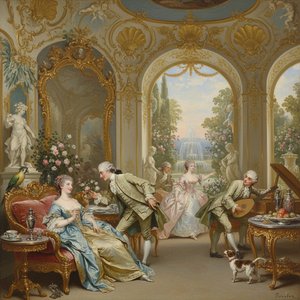
Psyche Showing Her Sisters Her Gifts from Cupid
 Oil On Canvas
- WallArt
- Baroque
 1753
1753 168.0 x 192.0 cm
 Національна галерея
 Читати далі
Олійная репродукція ручної роботи
Написана вручну олією на полотні у вашому розмірі та рамі, виготовлена на замовлення нашими художниками. ( Перейти до друку Перейти до цифрових зображень)




































Обирайте з наших стандартних розмірів, що відповідають оригінальним пропорціям твору мистецтва.

Ви можете вказати власні розміри, щоб репродукція ідеально підійшла до конкретної рами або інтер'єру. Якщо вибраний вами розмір не відповідає пропорціям оригіналу, ми або обріжемо полотно, або доповнимо картину додатковими елементами, промальованими вручну. Цифровий макет буде надіслано вам на затвердження перед початком виробництва.
Зверніть увагу, що попередній перегляд на екрані не відображає фактичне обрізання або розширення зображення. Тільки макет точно покаже остаточну композицію.
Хоча ми можемо виготовити виріб у нестандартному розмірі, для збереження оригінальних пропорцій рекомендуємо обирати варіанти зі встановленого списку.
Після оформлення замовлення команда AllPaintingsStore.com зв'яжеться з клієнтом електронною поштою для отримання інструкцій та надасть попередній макет
Доставка по всьому світу () за 3–4 тижні замість стандартних 5 тижнів. (21 Вересень). Без жодних компромісів у якості.

Безкоштовна експрес-доставка по всьому світу

Високоякісне лляне полотно

Повне страхове покриття доставки

Гарантія повернення митних зборів

Гарантія точного відтворення кольорів

Політика повернення протягом 100 днів (лише у разі виявлення дефектів)

Гарантія повернення 100% коштів

Знижка на оптові замовлення
 Скляний варіант доступний лише для розмірів до 110 см

Psyche Showing Her Sisters Her Gifts from Cupid
Техніка репродукції
Розмір репродукції
-


Загальна вартість
$ 358
Psyche Showing Her Sisters Her Gifts from Cupid – A Baroque Masterpiece
The painting “Psyche Showing Her Sisters Her Gifts From Cupid,” attributed to Jean-Honoré Fragonard, stands as a testament to the opulent aesthetic of the Rococo era and embodies the spirit of sensual beauty that captivated European audiences in the mid-18th century. Executed in 1753, this monumental oil on canvas – measuring 168 x 192 cm – transcends mere visual representation; it’s a carefully crafted narrative designed to evoke emotion and celebrate idealized love.A Symphony of Light and Gesture
Fragonard's masterful technique is immediately apparent upon observation. He employs extensive glazing—a layering process where thin washes of translucent paint are applied over subsequent layers—to achieve an unparalleled luminosity and depth. This painstaking method allows for subtle gradations of color, creating a shimmering surface that captures the ethereal quality characteristic of Baroque art’s embrace of chiaroscuro. The brushwork itself is loose and expressive, prioritizing gesture and movement rather than precise anatomical detail. Instead of striving for photographic realism, Fragonard prioritized conveying feeling—the palpable excitement of desire and the joyous celebration of affection.The Rococo Context: Excess and Delight
To understand “Psyche Showing Her Sisters Her Gifts From Cupid,” one must appreciate its place within the broader artistic landscape of the Rococo period. Following the grandeur of Louis XIV’s reign, France experienced a shift towards aristocratic indulgence and playful ornamentation. The Rococo championed elegance, frivolity, and an idealized vision of pastoral life—themes powerfully reflected in Fragonard's depiction. The painting’s setting – a secluded garden pavilion – reinforces this atmosphere of carefree pleasure, populated by figures engaged in intimate interactions bathed in dappled sunlight. This deliberate contrast with the more solemn religious art of previous generations underscores the Rococo’s rejection of moral seriousness and embrace of sensual experience.Symbolism Woven into Fabric
Beyond its visual splendor, “Psyche Showing Her Sisters Her Gifts From Cupid” is rich in symbolic references. The central figures—a young woman presenting flowers to her sisters—represent idealized love and feminine beauty. The cherubs ascending towards the upper right corner symbolize divine grace and reinforce the mythological narrative underpinning the scene. Cupid’s arrow piercing Psyche's breast signifies passion and desire, highlighting the transformative power of romantic affection. Furthermore, the drapery – voluminous and richly ornamented – embodies the Rococo obsession with decorative excess, mirroring the lavish tastes of the French aristocracy.Emotional Resonance: Capturing the Essence of Desire
Ultimately, Fragonard’s masterpiece succeeds in capturing the very essence of desire—a feeling rendered with breathtaking sensitivity and artistic virtuosity. The painting's expressive brushwork conveys a palpable sense of movement and emotion, inviting viewers to immerse themselves in the scene’s sensual atmosphere. It speaks to a timeless fascination with beauty, love, and the complexities of human relationships. “Psyche Showing Her Sisters Her Gifts From Cupid” remains an enduring symbol of Rococo artistry—a celebration of pleasure, grace, and the transformative power of emotion that continues to inspire admiration centuries later.Схожі твори мистецтва


Біографія митця
A Life Bathed in Light: The World of Jean-Honoré Fragonard
Born amidst the fragrant fields of Grasse, France, in 1732, Jean-Honoré Fragonard’s artistic journey began not with grand ambition but a quiet relocation to Paris with his family. It was there, under the initial guidance of Jean Siméon Chardin – a master of everyday life and subtle observation – that young Fragonard first encountered the possibilities of paint and canvas. However, it was within the atelier of François Boucher, the celebrated painter to the court of Louis XV, that his true stylistic foundations were laid. Boucher’s influence instilled in Fragonard a love for graceful forms, delicate colors, and the playful spirit that would come to define his oeuvre. Winning the prestigious Prix de Rome in 1752 marked a pivotal moment, affording him the opportunity to immerse himself in the classical world of Italy for several years. This period wasn’t merely about copying ancient masters; it was an awakening – a chance to absorb the vibrancy and sensuality that would later infuse his own unique vision.The Rococo Master: A Celebration of Pleasure and Intrigue
Upon returning to Paris, Fragonard swiftly established himself as a leading figure in the burgeoning Rococo movement. This wasn’t simply about adopting a style; it was about embodying an entire worldview – one that celebrated pleasure, intimacy, and the fleeting beauty of life. His paintings weren't intended for grand public display but rather for the private salons of aristocrats seeking works that whispered secrets and hinted at hidden desires. The Swing, perhaps his most iconic creation, perfectly encapsulates this spirit. A young woman playfully kicks off her shoe as a bishop pushes her swing, while a hidden lover gazes up from below – it’s a scene brimming with mischievous energy and veiled eroticism. Other works like The Bolt and Love Vow continue this exploration of clandestine encounters and the delicate dance between attraction and restraint. Fragonard didn't merely depict scenes of love; he created an atmosphere, a mood – one that was both alluring and slightly dangerous. His brushwork became increasingly fluid and spontaneous, capturing not just appearances but also the very essence of fleeting moments. He skillfully blended light and shadow, creating a sense of movement and drama within his compositions. The pastel hues of his palette—soft pinks, blues, and greens—further enhanced the dreamlike quality of his paintings, evoking a feeling of romance and indulgence.Beyond the Salon: Experimentation and Evolving Styles
While Fragonard achieved considerable success within the established art world, he wasn’t one to remain confined by its conventions. He experimented with different genres and techniques throughout his career, demonstrating a remarkable versatility. His early attempts at history painting, though initially praised, didn't fully satisfy him; he found greater freedom in exploring more intimate and personal subjects. A brief flirtation with Neoclassicism – evident in portraits like that of Denis Diderot – showcased his willingness to engage with contemporary artistic trends, but it was the Rococo sensibility that ultimately defined his legacy. He also excelled as a draftsman, producing countless sketches and drawings that reveal his masterful command of line and form. These weren’t merely preparatory studies; they were often works of art in their own right, capturing fleeting impressions and intimate moments with remarkable sensitivity. His drawings are characterized by a loose, expressive style, reflecting the spontaneity and fluidity of his paintings.Influences and Artistic Connections
Fragonard's artistic development was shaped by a number of key influences. The meticulous observation and subtle realism of Jean Siméon Chardin provided him with a foundation in depicting everyday life. However, it was François Boucher who truly molded his style, introducing him to the principles of Rococo painting—graceful forms, delicate colors, and an emphasis on sensuality. The Italian masters, particularly those of the Baroque period, also played a significant role in his artistic education. He spent several years studying their works in Rome, absorbing their techniques and embracing their dramatic use of light and shadow. Furthermore, Fragonard’s close association with Boucher allowed him to learn from one of the most influential artists of his time, shaping his approach to composition, color, and subject matter.A Legacy Enduring Through Time
The French Revolution brought a dramatic shift in artistic tastes, and Fragonard's lighthearted, aristocratic style fell out of favor. He retreated to his hometown of Grasse for a time, returning to Paris only after the political turmoil subsided. Though he held administrative positions at the Louvre during this period, his creative output diminished. However, his influence continued to resonate through subsequent generations of artists. His emphasis on color, light, and sensuality paved the way for Impressionism, while his playful spirit and rejection of academic constraints inspired a more liberated approach to artmaking. Today, Fragonard’s works are celebrated in museums around the world – from the Louvre in Paris to the National Gallery of Art in Washington D.C. His paintings continue to captivate audiences with their beauty, wit, and enduring appeal, reminding us of a time when life was meant to be savored, and pleasure was considered an art form itself.Notable Works & Collections
- The Swing (L'Escarpolette): Wallace Collection, London – A quintessential example of Rococo exuberance.
- The Bolt: View on AllPaintingsStore - A captivating scene of domestic intrigue and playful tension.
- Love Vow: Discover more about Fragonard’s works on AllPaintingsStore – A tender depiction of romantic commitment.
- Young Girl Reading: Featured in artworks databases, showcasing his mastery of portraiture and light.
- Works are also prominently displayed at the Musée du Louvre, Grasse Cathedral, The Metropolitan Museum of Art, and The Frick Collection.

Жан-Онуар Фрагонар
1732 - 1806 , Франція
Довідкова інформація
- Artistic Movement Or Style: Рококо
- Artists Or Movements Influenced By This Artist: ['Неокласицизм']
- Artists Who Influenced This Artist:
- Бшерон
- Шардан
- Date Of Birth: 5 квітня 1732
- Date Of Death: 22 серпня 1806
- Full Name: Jean-Honoré Fragonard
- Nationality: Француз
- Notable Artworks:
- Карусель
- Юна дівчина
- Рінальдо
- Place Of Birth: Гrasse, Франція
Схожі статті

Baroque vs. Rococo: A Definitive Guide to the Drama of Grandeur and the Elegance of Grace
Explore the profound differences between Baroque drama and Rococo elegance. Our expert guide delves into art history, chiaroscuro, and the evolution of European masterpieces for collectors and enthusiasts seeking deep historical context.

The Rococo Reverie of Fragonard: Love, Leisure & Pleasure in 18th-Century France
Explore the captivating world of Jean-Honoré Fragonard! Discover his Rococo masterpieces, intimate portraits & the allure of 18th-century French art. Learn about 'The Progress of Love' and more at AllPaintingsStore.

Топ-10 шедеврів рококо: мистецтво для вашого інтер'єру від AllPaintingsStore.com
Відкрийте для себе 10 шедеврів рококо від Буше, Фрагонара та Ватто! Історія мистецтва, вишукані техніки та натхнення для декору вашого дому. Репродукції картин високої якості – AllPaintingsStore.com.

From Grandeur to Grace: Exploring the Evolution of Baroque & Rococo Art
Explore the captivating evolution from Baroque's drama to Rococo's grace! Discover key artists, characteristics & lasting influence of these art movements with expert insights at AllPaintingsStore.
The Rococo Aesthetic: Opulence, Rebellion & the Pursuit of Pleasure in 18th-Century Art
Explore the opulent world of Rococo art! Discover its origins, key artists like Watteau & Boucher, and lasting influence on design. Expert insights for collectors & enthusiasts.


