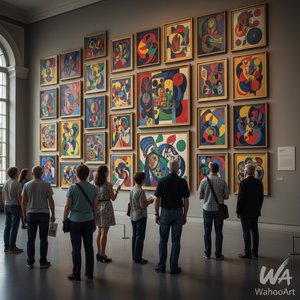
1914. Акрил на полотні, 65.0 x 50.0 cm.

§ 1Catalogue data
 Акрил на полотні
- Настінний декор
- Fauvism
 1914
1914- — Модерн
 65.0 x 50.0 cm
Цей твір захищено авторським правом
Мистецький твір, представлений на цій сторінці, захищений законом про авторське право, що унеможливлює легальне створення або продаж його ідентичної репродукції. Цей захист забезпечується відповідно до міжнародних угод, таких як Бернська конвенція та національним законодавством, зокрема положеннями, що викладені в Законодавство США про авторське право — Розділ 17. Всі права захищені. Будь-яке використання без дозволу заборонено.
Як шанобливу та законну альтернативу, ми пропонуємо унікальні картини ручної роботи, створені натхненням від оригіналу. Наші досвідчені професійні художники ретельно вивчають стиль, настрій та художню сутність оригіналу, щоб створити новий, неповторний твір, який викликає ті ж почуття, — залишаючись при цьому самобутнім творінням.
Цей метод повністю відповідає нормам авторського права, оскільки він не передбачає копіювання чи дублювання захищеного твору мистецтва. Натомість це творче переосмислення — створення нового малюнка під впливом оригіналу, який не є його точним відтворенням.
 Читати далі
§ 2Abstract
Опис експоната
Explore Joan Miró’s ‘The Farmer’ (1914), a Fauvist masterpiece! Bold colors & expressive brushstrokes evoke emotion. A key work in modern art history – view now!
Біографія митця
Жартівливе поєднання геометрії та відчуттів у картині Жана Міро «Нюд з дзеркалом». Елегантність, таємниця та дослідження підсвідомості. Відкрийте для себе мистецтво 20-го століття!
§ 3Commentary
A Glimpse into Rural Spain: Joan Miró’s ‘The Farmer’ (1914)
Joan Miró's *The Farmer*, painted in 1914, is more than just a portrait; it’s a pivotal work marking the artist’s early foray into modernism and a fascinating precursor to his later Surrealist explorations. Measuring 65 x 50 cm, this oil on canvas captures a seated man – a Catalan farmer – with an arresting directness that belies the complex artistic currents swirling around Miró at the time.Fauvism & The Dawn of Modern Expression
While often associated with Surrealism, *The Farmer* is firmly rooted in the principles of Fauvism. This short-lived but influential movement, spearheaded by Henri Matisse and André Derain, championed intense, non-naturalistic color and energetic brushwork as a means of expressing emotion. Miró, still developing his unique voice, absorbed these lessons, employing a bold palette – particularly the striking red jacket worn by the farmer – to imbue the scene with a palpable sense of drama. The painting reflects a broader shift in Western art at the turn of the 20th century, moving away from representational accuracy towards subjective experience and expressive form. Artists like Van Gogh, Cézanne, and Seurat had already laid the groundwork for this revolution, paving the way for movements that prioritized feeling over fidelity to reality.Decoding the Composition & Technique
The composition is deceptively simple. A man sits squarely facing the viewer, arms crossed in a gesture of quiet contemplation or perhaps weary resignation. He’s positioned against a vaguely defined interior – a couch and another figure are hinted at but remain secondary to the central subject. Miró's technique is characterized by loose, gestural brushstrokes and an emphasis on texture achieved through *impasto*—the thick application of paint. This tactile quality adds depth and physicality to the work, drawing the viewer into its emotional landscape. The flattened perspective further intensifies the painting’s impact, eliminating any sense of traditional spatial recession.Symbolism & Emotional Resonance
Beyond its stylistic features, *The Farmer* invites deeper interpretation. The figure isn't merely a depiction of rural life; he embodies a certain stoicism and connection to the land. The intense coloration – particularly the vibrant red – could symbolize passion, vitality, or even hardship. The man’s crossed arms suggest both defensiveness and introspection. Miró wasn’t aiming for photographic realism but rather sought to capture an *essence* of his subject—a psychological portrait that speaks to universal themes of labor, identity, and human existence.Miró's Artistic Journey & Lasting Influence
This early work provides crucial insight into Miró’s artistic development. While *The Farmer* demonstrates a clear affinity with Fauvism, it also foreshadows his later explorations of abstraction and Surrealism. Paintings like *The Farm* (1922) and *The Tilled Field* (1924) build upon the foundations laid in this earlier piece, pushing further into dreamlike imagery and symbolic representation. Miró’s influence extends far beyond these specific works; he remains a towering figure of 20th-century art, inspiring generations of artists with his innovative approach to form, color, and emotion.Collecting & Interior Design Considerations
A reproduction of *The Farmer* offers a compelling statement piece for any collection or interior space. Its bold colors and expressive energy can inject vibrancy into a modern living room, study, or office. The painting’s relatively small size makes it versatile – suitable for both intimate settings and larger galleries. Its historical significance and artistic merit ensure its enduring appeal to art lovers and collectors alike.- Style: Fauvism, Early Modernism
- Artist: Joan Miró (1893-1983)
- Medium: Oil on Canvas
- Dimensions: 65 x 50 cm
- Consider pairing with works from the same period or exploring Miró’s later Surrealist pieces for a cohesive collection.
Питання та відповіді
Де найкраще повісити репродукцію «The Farmer» роботи Жоан Міро?
Формат Портретна орієнтація для твору «The Farmer» роботи Жоан Міро рекомендовано розміщувати у Вітальня. Поєднання формату та простору допоможе вам ідеально підібрати місце для репродукції.
Які розміри оригіналу "The Farmer"?
«The Farmer» має розмір 65 x 50 cm в оригіналі. Оригінальні розміри є корисним орієнтиром під час вибору розміру репродукції.
Звідки приходять відвідувачі «The Farmer» роботи Жоан Міро?
Для «The Farmer» існує сторінка Статистика переглядів, на якій відображено щомісячну кількість переглядів цього твору та інших робіт митця з розподілом за країнами та мовами.


 Перейти до друку


 Для творів мистецтва або репродукцій, розмір яких перевищує 105 см (приблизно 41 дюйм) з будь-якого боку, рама доставляється у вигляді розібраного комплекту. Такий метод гарантує безпечну доставку та запобігає пошкодженням під час транспортування.