


 Переглянути в інтер'єрі
 Надіслати як листівку
 Поділитися
 Детальніше

 Завантажити
 Схожі експонати
 Рентгенівське дослідження
 Слайд-шоу
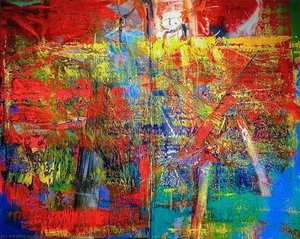
Abstract Composition


 Читати далі
Гікле / Художній принт
Музейна якість друку جيкле або на полотні з оперативним виготовленням та різноманітними варіантами фінішної обробки. ( Замовити репродукцію ручної роботи Купити цифрове зображення)




































Обирайте з наших стандартних розмірів, що відповідають оригінальним пропорціям твору мистецтва.

Ви можете вказати власні розміри, щоб репродукція ідеально підійшла до конкретної рами або інтер'єру. Якщо обраний вами розмір не відповідає пропорціям оригіналу, ми або обріжемо полотно, або розширимо зображення за допомогою дзеркального відображення чи суцільної заливки країв. Перед початком виробництва вам буде надіслано цифровий макет для затвердження.
Будь ласка, зверніть увагу, що попередній перегляд на екрані не відображає фактичне обрізання або розширення. Тільки макет точно покаже фінальну композицію.
Хоча можливість замовлення індивідуальних розмірів доступна, ми рекомендуємо обирати формат із попередньо визначеного списку, щоб зберегти оригінальні пропорції.
Доставка по всьому світу () за 2 тижні замість стандартних 4/5 тижнів. (20 Серпень)

Безкоштовна експрес-доставка по всьому світу

Високоякісне лляне полотно

Повне страхове покриття доставки

Гарантія відшкодування митних зборів

Гарантія точного відтворення кольорів

Політика повернення протягом 60 днів (лише у разі виявлення дефектів)

Гарантія повернення 100% коштів

Пропозиція на оптові замовлення
 Скляний варіант доступний лише для розмірів до 110 см

Abstract Composition
Гікле / Художній принт
Розмір репродукції
-


Підсумкова вартість
$ 64
Схожі твори мистецтва







Біографія митця
Konrad Ernst Otto Zuse: Pioneer of Computing
Early Life and Education
- Konrad Ernst Otto Zuse was born on June 22, 1910, in Berlin, Germany.
- He studied mechanical engineering at the Technical University of Braunschweig, graduating in 1933.
- Even during his studies, Zuse demonstrated a keen interest in automation and calculation, laying the groundwork for his future innovations.
The Genesis of Computing: Early Machines
- Driven by frustration with repetitive calculations during his engineering work, Zuse began designing calculating machines in the 1930s.
- His first creation was the Z1 (1936-1938), a mechanical binary computer using floating-point numbers and limited programmability. Though mechanically unreliable, it demonstrated key concepts.
- The Z2 (1939) improved upon the Z1 with electromechanical relays, offering greater reliability but was destroyed during World War II.
The Z3: The First Functional Programmable Computer
- In May 1941, Zuse completed the Z3, widely considered the world’s first functional program-controlled Turing-complete computer.
- It was electromechanical, using relays, and operated with binary floating-point arithmetic.
- The Z3 was destroyed during a bombing raid in 1943, but its design principles were revolutionary.
Further Developments: The Z4 and Beyond
- Zuse continued his work, developing the Z4 (completed in 1945), which became the world’s first commercial computer. It was sold to the Aerodynamische Versuchsanstalt (AVA) for aerodynamic calculations.
- He founded one of the earliest computer businesses, Zuse KG, to produce and sell computers.
Plankalkül: A Visionary Programming Language
- Between 1943 and 1945, amidst wartime conditions, Zuse designed Plankalkül, the first high-level programming language.
- It was remarkably advanced for its time, featuring concepts like data structures and conditional statements. However, it remained largely unimplemented during his lifetime due to lack of resources and computing power.
Later Life and Theoretical Work
- In 1969, Zuse published Rechnender Raum (Calculating Space), proposing the concept of a computation-based universe – a precursor to digital physics.
- He received belated recognition for his pioneering work in the latter part of his life, including the Turing Award in 1968.
- Konrad Zuse died in Hünfeld, Germany, on December 18, 1995.
Historical Significance and Legacy
- Zuse’s work was largely overlooked during World War II due to the conflict and limited communication with Allied researchers.
- His contributions were crucial in laying the foundations for modern computing, influencing subsequent generations of computer scientists and engineers.
- He is rightfully regarded as a founding father of computer science, whose vision extended beyond mere calculation to encompass the very nature of reality itself.

konrad ernst otto zuse
1910 - 1995 , Germany
Короткі факти
- Birth Date: 1910
- Birth Place: Berlin, Germany
- Death Date: 1995
- Movement: Early Computing / Pioneer of Computer Science
- Name: Konrad Ernst Otto Zuse
- Nationality: German
- Notable Works:
- Z3
- Plankalkül
- Z4


