Гарантія повернення коштів протягом 100 днів Безкоштовна доставка по всьому світу
449 564витвори мистецтва 30 613художники 4 660музеї 32мови
Запис у каталозі

Untitled

1945. Oil On Canvas, 34.0 x 45.0 cm.

Рис. 1. Марк Ротко, Untitled, 1945. Показано як репродукцію, яку ви вказали: , .

§ 1Дані каталогу

Розміри
34.0 x 45.0 cm

§ 2Абстракція

Опис експоната

Explore Mark Rothko’s ‘Untitled’ (1945) – a fragmented abstract expressionist masterpiece in dark tones & bold colors. Discover its dynamic composition & emotive power.

Біографія митця

Пориньте у світ емоційного кольору! Картина Марка Рота з 1952 року – шедевр абстрактного експресіонізму, що запрошує до роздумів та спокусив світ мистецтва.

§ 3Коментар

A Descent into Shadow and Color: Mark Rothko’s “Untitled”

Mark Rothko's "Untitled," painted in 1945, isn’t merely a depiction of objects; it’s an immersion into a realm of profound emotion. Born Markus Yakovlevich Rothkowitz in Dvinsk, Latvia – a landscape etched with the anxieties of early 20th-century Jewish life – Rothko carried within him a sensitivity to human suffering that would become a defining characteristic of his work. This early experience, coupled with his family’s immigration to Portland and subsequent struggles with assimilation, fueled an ongoing exploration of existential themes: loss, displacement, and the persistent search for meaning in a world often devoid of easy answers. “Untitled” embodies this deeply personal quest, offering not a visual narrative but rather a visceral response to the complexities of the human condition.

The Language of Color Field Painting

This particular work exemplifies Rothko’s signature style – what is now recognized as Color Field painting. Abandoning traditional representational techniques, he reduced his subjects to vast, luminous rectangles of color. The dominant hues in “Untitled” are deeply saturated and deliberately muted, leaning heavily into shades of dark brown, black, and crimson, punctuated by flashes of yellow. These aren’t simply colors; they're carefully calibrated emotional tones. Rothko believed that these blocks of pure color could evoke a direct experience of feeling—a sense of awe, melancholy, or even spiritual transcendence. The deliberate lack of detail forces the viewer to engage with the painting on an intuitive level, allowing their own emotions and associations to shape the interpretation.

Deconstructing Form: Composition and Technique

The composition of “Untitled” is deliberately unbalanced, drawing the eye downwards into a dense, almost claustrophobic space. The lower left quadrant dominates, creating a sense of weight and gravity. Lines are thick, gestural, and often overlapping, suggesting movement and dynamism despite the overall stillness. Rothko employed a technique known as ‘alla prima,’ working directly onto the canvas with layers of oil paint applied in thick impasto—a visible texture that adds to the painting’s tactile quality. The edges of the rectangular forms are deliberately soft and blurred, creating an atmospheric effect and further dissolving any sense of precise definition. This blurring contributes to a dreamlike quality, as if the scene is perpetually on the verge of shifting or transforming.

Symbolism in Absence: A Meditation on Mortality

While Rothko resisted explicit interpretations of his work, “Untitled” undeniably evokes themes of mortality and loss. The dark colors – reminiscent of night or decay – suggest a sense of sadness and introspection. The fragmented forms, hinting at obscured objects, could be interpreted as representations of shattered memories or the remnants of a lost world. The subtle flashes of yellow, like embers in the darkness, offer a glimmer of hope or remembrance. Rothko himself described his paintings as “windows on another world,” suggesting that they weren’t meant to provide answers but rather to open up space for contemplation and emotional resonance. The painting's quiet intensity invites viewers to confront their own anxieties about existence and the passage of time.

A Legacy in Light: Reproductions and Interior Design

Reproductions of “Untitled” are highly sought after by collectors and interior designers alike, valued for their ability to infuse a space with atmosphere and emotion. The painting’s powerful color palette and evocative imagery make it an ideal choice for creating contemplative environments—whether in a gallery, a meditation room, or simply a personal sanctuary. AllPaintingsStore offers meticulously crafted hand-painted reproductions that faithfully capture the essence of Rothko's original vision, allowing you to bring this profound work of art into your own home and experience its enduring impact.

Питання та відповіді

Яке місце посідає «Untitled» роботи Марк Ротко в історії мистецтва?

Історично «Untitled» є твором у стилі Abstract Expressionism, що належить до ширшої епохи High Medieval.

Чи можу я замовити олійну репродукцію «Untitled»?

Ви можете замовити написану вручну репродукцію твору «Untitled» роботи Марк Ротко безпосередньо на його сторінці Репродукція ручного письма олією: олійна репродукція ручного розпису на лляному полотні, під замовлення.

Які кольори переважають у творі «Untitled» роботи Марк Ротко?

Колірна ідентичність «Untitled» роботи Марк Ротко: палітра у стилі Earthy, де домінує Phthalo Green (#30271b).
§ 4Художник

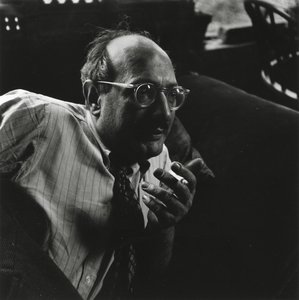
Марк Ротко

Марк Ротко

1903 - 1970, Латвія

Короткі факти про Марк Ротко

  • Artistic Movement Or Style: Поле кольору
  • Artists Or Movements Influenced By This Artist: ['Мінімалізм']
  • Date Of Birth: 25 вересня 1903 р.
  • Date Of Death: 25 лютого 1970 р.
  • Full Name: Маркус Якововвич Ротако́вський
  • Nationality: Американський
  • Notable Artworks:
    • №10 (1950)
    • Мюрали Се́грамм
    • Хаппель Ро́тка
  • Place Of Birth: Девґавпільс, Латвія

Біографія митця

Early Life and the Seeds of Artistic Vision

Mark Rothko, born Markus Yakovlevich Rothkowitz in Dvinsk, Latvia, in 1903, carried within him from the outset a sense of displacement that would profoundly shape his artistic journey. His early years were marked by the anxieties of a Jewish family living within the Pale of Settlement, shadowed by pogroms and political unrest. This atmosphere instilled a deep sensitivity to human suffering, a theme that would resonate throughout his oeuvre. The 1913 immigration to Portland, Oregon, represented not just a geographical shift but a cultural upheaval for the young Rothko. While his father, a pharmacist and intellectual with socialist leanings, fostered a home filled with debate and learning, the loss of Jacob Rothkowitz shortly after their arrival cast a long shadow. This early experience of loss, coupled with the challenges of assimilation, fueled a lifelong exploration of existential themes – mortality, trauma, and the search for meaning in a chaotic world. Though he excelled academically at Yale University, Rothko found himself drawn more to the vibrant energy of New York City, abandoning formal studies to pursue his passion for art at the Art Students League. These formative years laid the groundwork for an artistic vision that would ultimately challenge conventional notions of painting and redefine the emotional power of color.

From Figurative Beginnings to Abstract Expressionism

Rothko’s initial artistic explorations were firmly rooted in realism, depicting urban scenes and portraits with a keen eye for detail. However, these early works already hinted at the psychological depth that would become his hallmark. As the 1940s unfolded, and the world grappled with the horrors of World War II, Rothko’s art underwent a dramatic transformation. Influenced by Surrealism and mythology, he began to move away from representational imagery, seeking instead to express universal human emotions through symbolic forms. This period saw the emergence of multi-form paintings – canvases populated by ambiguous, biomorphic shapes that seemed to hover between figuration and abstraction. These works were not merely experiments in form; they were deeply felt responses to the anxieties and uncertainties of a world at war. By the late 1940s, Rothko had arrived at his signature style: large-scale canvases featuring rectangular blocks of color that appeared to float and resonate with one another. He stripped away all vestiges of recognizable imagery, focusing instead on the pure emotional impact of color and form. This marked a pivotal moment in the development of Abstract Expressionism, and established Rothko as a leading figure in this groundbreaking movement.

The Color Field and the Pursuit of Transcendence

Rothko’s mature work is defined by what came to be known as “Color Field” painting – vast expanses of luminous color that envelop the viewer in an immersive experience. These paintings are not about *what* they depict, but rather *how* they make you feel. Rothko believed that art should engage the viewer viscerally, bypassing intellectual analysis and speaking directly to the emotions. He meticulously layered thin washes of paint, creating subtle variations in tone and texture that seemed to emanate from within the canvas. The edges of his rectangular forms are often blurred, allowing them to blend and interact with one another, creating a sense of depth and movement. Rothko deliberately avoided titles beyond numbers – “No. 1,” “No. 6” – encouraging viewers to confront the paintings without preconceived notions and allow their own emotional responses to guide their experience. He sought to create a space for contemplation, a sanctuary where viewers could connect with something larger than themselves. His ambition was nothing less than to evoke profound spiritual experiences through the language of color.

Major Achievements and Lasting Legacy

Among Rothko’s most significant achievements are “No. 10 (1950),” a pivotal work that exemplifies his evolving style, and the Seagram Murals (1958). Commissioned for the Four Seasons Restaurant in New York City, these murals were ultimately rejected by Rothko, who felt they would be compromised by their intended environment. He instead donated them to the Tate Gallery in London, where they continue to inspire awe and contemplation. Perhaps his most ambitious project was the Rothko Chapel (1971) in Houston, Texas – a non-denominational sanctuary housing fourteen of his paintings. Designed as a space for quiet reflection, the chapel is considered a sacred place by many, embodying Rothko’s belief in the spiritual power of art. Rothko's influence on subsequent generations of artists has been immense. He paved the way for Minimalist art and continues to inspire contemporary painters who explore the emotional possibilities of abstraction. Despite struggling with depression throughout his life, culminating in his tragic suicide in 1970, Mark Rothko remains one of the most important and influential artists of the 20th century – a master of color whose work continues to resonate with audiences around the world.
  • Rothko’s paintings are celebrated for their ability to convey universal human emotions—tragedy, ecstasy, despair, and hope.
  • His exploration of color as a vehicle for emotional expression revolutionized abstract painting.
  • The Rothko Chapel stands as a testament to his belief in the spiritual power of art.
  • He remains a pivotal figure in Abstract Expressionism and a major influence on contemporary artists.

§ 5Схожі роботи

§ 6Запитання

Основна інформація

  • Year: 1945
  • Location: Private Collection
  • Subject or theme: Existentialism, Mood
  • Influences:
    • Rothko
    • Surrealism
  • Medium: Oil on Canvas
  • Dimensions: 34 x 45 cm

Квіз про мистецтво

У кожному запитанні лише одна правильна відповідь.

Запитання 1:
What is the dominant style of Mark Rothko’s ‘Untitled’ painting?
Запитання 2:
The dark color palette in ‘Untitled’ is most likely intended to evoke which emotion?
Запитання 3:
In what year was ‘Untitled’ created?
Запитання 4:
What technique is most evident in the creation of ‘Untitled’?
Запитання 5:
Mark Rothko's early life was significantly shaped by which experience?

§ 7Цитувати цей запис

AllPaintingsStore.com, “Марк Ротко, Untitled (1945)”, https://allpaintingsstore.com/uk/art/mark-rothko-untitled-D38RM5-en/ArtistReproduction/ (дата перегляду 10 Жовтень 2026).

§ 8Репродукція

Олійная репродукція ручної роботи

Написана вручну олією на полотні у вашому розмірі та рамі, виготовлена на замовлення нашими художниками. ( Перейти до друку Перейти до цифрових зображень)

Це зазначено на маржі замовного листа; поточний стан цього листа такий:

Untitled

Матеріал репродукції

Розмір репродукції

-

Видатний майстер-художник

Більше деталізації, витонченості та додаткового часу на створення твору

-

Рама для репродукції

-

-

Для творів мистецтва або репродукцій, розмір яких перевищує 105 см (приблизно 41 дюйм) з будь-якого боку, рама доставляється у вигляді розібраного комплекту. Такий метод гарантує безпечну доставку та запобігає пошкодженням під час транспортування.

Потребує професійного збирання — це не продукт для самостійного виготовлення (DIY).
Комплект має бути зібраний, а полотно натягнуте досвідченим майстром багетних робіт із використанням клейового дерева (не входить у комплект), щипців для натягування полотна та затискачів, щоб підрамник залишався рівним під час висихання клею. Неправильне збирання або нерівномірне натягування полотна може призвести до незворотного пошкодження твору мистецтва, що не підпадає під дію нашої гарантії.

  • У комплект входять усі бруски з цільного дерева, точно вирізані за розміром.

  • Збирається за допомогою гвинтів, що входять до комплекту, а також клейового розчину для кутових з'єднань, який не входить до комплекту і має бути підготовлений вашим майстром.

  • Потрібні професійні інструменти, які не входять до комплекту: щипці для натягування полотна (натягувач) та затискачі, щоб утримувати рейки рівно під час висихання клею.

Важливо:
Для з'єднання кутів потрібен клей для дерева, перекладини необхідно затиснути струбцинами до повного висихання клею, а для натягування полотна на зібрану раму знадобляться щипці для натягування полотна. Жоден із цих інструментів не входить до комплекту. Будь ласка, проконсультуйтеся з досвідченим майстром багетного оформлення перед замовленням рами такого розміру.

Етикетка експоната

-

-

Захисний лак

Глянцевий лак (підсилює яскравість кольорів, захищає від світла та вологи)

-

Персоналізувати мій витвір

Приклади можливих змін: заміна обличчя на фото клієнта; додавання домашньої тварини (наприклад, заміна кота на собаку); додавання прихованого повідомлення на фоні; зміна пейзажу або елементів фону.

-

Прискорено

Доставка по всьому світу () за 3–4 тижні замість стандартних 5 тижнів. (7 Листопад). Без компромісів у якості.

-

Експрес-доставка

Доставка по всьому світу () протягом 5 тижнів. (14 Листопад).

Включено в ціну

Підсумкова вартість

₴ 11583

До кожного замовлення додається

  • Безкоштовна експрес-доставка по всьому світу
  • Високоякісне лляне полотно
  • Повне страхове покриття доставки
  • Гарантія повернення митних зборів
  • Гарантія точного відтворення кольорів
  • Політика повернення протягом 100 днів (лише у разі виявлення дефектів)
  • Гарантія повернення 100% коштів
  • Пропозиція на оптові замовлення
Форма замовлення