- Додому

- Репродукція картини олією
- Паоло Веронезе
- Unfaithfulness

 Замовити друк Купити цифрове зображення
 Надіслати
 Поділитися
 Деталі витвору
 Додати до улюблених

 Завантажити
 Схожі вироби
 Рентгенівське дослідження
 Слайд-шоу
Unfaithfulness
 Acrylic
- WallArt
- Baroque Opulence
 1575
1575 189.0 x 189.0 cm
 Національна галерея
 Розгорнути текст
Олійная репродукція ручної роботи
Написана вручну олією на полотні у вашому розмірі та рамі, виготовлена на замовлення нашими художниками.




P118B $10

P118H $10

P118W $10

P438Z $10

P508JH $12

P508YH $12

P805H $10

P805Z $10

P919BZ $10

P919G $10

P919XJ $10

P959ZH $10

P968JZ $12

W106C $8

W218G $10

W218JH $8

W218Y $10

W307PJ $10

W316G $10

W316PJ $8

W316Y $10

W398PJ $8

W4111J $10

W500HY $15

W500JH $15

W692G $12

W849H $8

W940BG $15

W953PJ $8




Обирайте з наших стандартних розмірів, що відповідають оригінальним пропорціям твору мистецтва.

Ви можете вказати власні розміри, щоб репродукція підійшла до конкретної рами або інтер'єру. Якщо вибраний вами розмір не відповідає пропорціям оригіналу, ми або обріжемо полотно, або доповнимо картину додатковими елементами, промальованими вручну. Цифровий макет буде надіслано вам на затвердження перед початком виробництва.
Зверніть увагу, що попередній перегляд на екрані не відображає фактичне обрізання або розширення зображення. Тільки макет точно покаже остаточну композицію.
Хоча ми можемо виготовити виріб у нестандартному розмірі, для збереження оригінальних пропорцій рекомендуємо обирати варіанти зі встановленого списку.
Після оформлення замовлення команда AllPaintingsStore.com зв'яжеться з клієнтом електронною поштою для отримання інструкцій та надасть попередній макет
Доставка по всьому світу () за 3–4 тижні замість стандартних 5 тижнів. (16 Липень). Без жодних компромісів у якості.

Безкоштовна експрес-доставка по всьому світу

Високоякісне лляне полотно

Повне страхове покриття доставки

Гарантія відшкодування митних зборів

Гарантія точного відтворення кольорів

Політика повернення протягом 60 днів (лише у разі виявлення дефектів)

Гарантія повернення 100% коштів

Знижка на багатоелементні замовлення
 Скляний варіант доступний лише для розмірів до 110 см

Unfaithfulness
Матеріал репродукції
Розмір репродукції
-


Підсумкова ціна
-
Опис твору
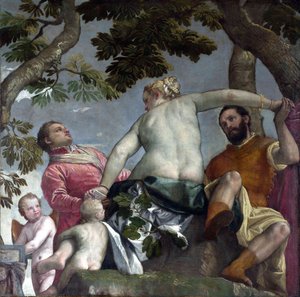
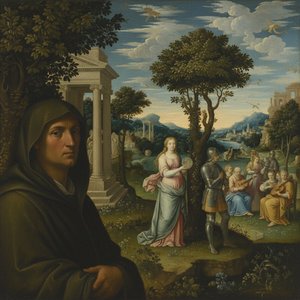
A Venetian Dance of Desire and Deception: Unfaithfulness by Paolo Veronese
Paolo Veronese’s “Unfaithfulness,” painted in 1575, is not merely a depiction of a scene; it's an immersive theatrical experience rendered in oil on canvas. Measuring a substantial 189 x 189 cm, the painting immediately commands attention with its sheer scale and lavish detail – hallmarks of Veronese’s signature style. The work pulsates with life, capturing a moment suspended between pleasure and peril, suspicion and indulgence. It's a scene brimming with figures engaged in conversation, music, feasting, and what appears to be clandestine glances, all set within an opulent interior that feels both Venetian and subtly allegorical.
At the heart of the composition is a woman seated on a rock, partially nude yet draped in luxurious fabrics. Her pose, combined with the watchful gazes of several men surrounding her, immediately evokes the central theme: infidelity. The prevailing theory suggests this painting explores the complexities of love triangles and secret liaisons – a common subject matter within the allegorical tradition of the time. Cupid, positioned prominently on the left, acts as a silent witness to these unfolding dramas, his presence reinforcing the painting’s thematic core. The inclusion of two birds, one near the top left corner and another towards the bottom right, adds an intriguing layer of symbolism, often interpreted as representing temptation or messengers of fate.
Masterful Technique and Venetian Grandeur
Veronese's technical prowess is immediately apparent in “Unfaithfulness.” He employs a masterful use of color – rich reds, deep blues, and shimmering golds dominate the palette – creating an atmosphere of opulence and sensuality. His brushwork is remarkably smooth and layered, particularly evident in the rendering of fabrics and architectural details. The artist’s ability to capture light and shadow is exceptional, lending depth and realism to the figures and setting. Notice how he uses *sfumato*, a technique borrowed from Leonardo da Vinci, to soften edges and create an ethereal quality, especially around the woman's form.
- Compositional Brilliance: Veronese expertly utilizes perspective and spatial relationships to draw the viewer into the scene. The figures are arranged in a dynamic, almost chaotic manner, mirroring the turbulent emotions at play.
- Architectural Detail: The backdrop is a meticulously rendered Venetian interior, complete with columns, arches, and elaborate decorations – a testament to Veronese’s deep understanding of architectural design.
- Color Harmony: The carefully chosen color scheme contributes significantly to the painting's overall mood, evoking feelings of luxury, intrigue, and perhaps even danger.
Historical Context and Allegorical Intent
“Unfaithfulness” was likely commissioned for a grand interior setting, possibly a ceiling in a wealthy patron’s residence – potentially within the confines of the Prague Castle during the reign of Ferdinand I or Maximilian II, or perhaps even a Venetian palazzo. The presence of Van Dyck's sketchbook referencing details from this painting suggests a wider circulation and influence within the artistic community. The 1570s date aligns with a period of significant social and political change in Europe, marked by shifting power dynamics and evolving attitudes towards morality and sexuality. Allegorical paintings like “Unfaithfulness” served as visual metaphors for these complex issues, offering audiences a safe distance to contemplate themes of love, betrayal, and temptation.
Emotional Resonance and Timeless Appeal
Beyond its historical context and technical brilliance, “Unfaithfulness” possesses a profound emotional resonance. The painting’s ambiguity – the precise nature of the relationships depicted remains open to interpretation – invites viewers to project their own feelings and experiences onto the scene. It's a captivating portrayal of human desire, vulnerability, and the consequences of transgression. Today, this work continues to fascinate art lovers with its dramatic composition, vibrant colors, and enduring exploration of timeless themes. A high-quality reproduction by AllPaintingsStore.com offers a remarkable opportunity to experience the artistry and drama of Veronese’s masterpiece in your own home or office – a stunning addition to any collection or interior design scheme.




Біографія митця
A Venetian Visionary: The Life and Art of Paolo Veronese
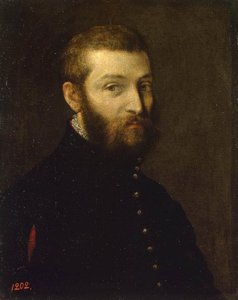
Paolo Caliari, known to the world as Paolo Veronese, emerged from the vibrant artistic landscape of 16th-century Venice as a master of color, composition, and opulent spectacle. Born in Verona in 1528, the son of a stonecutter, his early life was steeped in the visual richness of his surroundings – the classical architecture, sculpted forms, and burgeoning humanist ideals that characterized the region. His initial training under Antonio Badile and Giovanni Francesco Caroto laid a foundation in traditional techniques, but it was his move to Venice in the 1550s that truly ignited his artistic genius. The city itself became his muse, its bustling marketplaces, grand palazzi, and shimmering waterways informing the scale and drama of his work. He quickly absorbed the influences of established Venetian masters like Titian, whose mastery of color profoundly impacted Veronese’s palette, yet he forged a distinct style characterized by an unparalleled sense of theatricality and grandeur.The Painter of Feasts and Grand Narratives
Veronese's reputation rests upon his monumental paintings, particularly those depicting lavish feasts and biblical scenes transformed into dazzling displays of Venetian life. The Wedding at Cana, completed in 1563 for the Benedictine monastery of San Giorgio Maggiore, stands as a testament to his skill. This colossal canvas isn’t merely an illustration of the miracle; it's a vibrant panorama of 16th-century society, teeming with elegantly dressed figures, musicians, and architectural details rendered with breathtaking precision. The painting is not just about what happened at Cana but *how* it would have looked if it had occurred in Venice during Veronese’s time – a remarkable feat of historical imagination. Similarly, The Feast in the House of Levi, originally titled The Last Supper, caused controversy with the Inquisition due to its inclusion of contemporary figures and a seemingly irreverent atmosphere. Veronese defended his artistic license, asserting that painters were entitled to the same creative freedom as poets and jesters – a bold statement reflecting his belief in art’s power to interpret and reimagine sacred narratives. These works weren't simply religious depictions; they were celebrations of life, wealth, and the splendor of Venice itself. He wasn’t interested in austere spirituality but rather in capturing the joy and abundance of existence. His ability to seamlessly blend historical accuracy with imaginative embellishment set him apart from many of his contemporaries.Influences and Artistic Development
While Titian’s influence on Veronese’s colorism is undeniable, his artistic development was a complex interplay of various influences. The architectural precision he brought to his compositions owes much to the classical tradition prevalent in Verona during his formative years, particularly the work of architects like Michele Sanmicheli. He also absorbed elements from Central Italian masters such as Raphael and Parmigianino, evident in the graceful lines and harmonious arrangements within his paintings. However, Veronese didn’t simply imitate these influences; he synthesized them into a uniquely Venetian style characterized by its dramatic use of light, vibrant color palettes, and meticulous attention to detail. He excelled at creating illusions of space and depth, employing perspective techniques to draw viewers into the heart of his elaborate scenes. His mastery of oil painting allowed him to achieve an unparalleled luminosity and richness of texture. He also ran a large workshop, with contributions from his brother Benedetto and sons Gabriele and Carlo (or 'Carletto'), ensuring that his style continued to flourish even after his death in 1588.Major Achievements and Notable Works
Veronese’s career was marked by a succession of ambitious and influential commissions. His decoration of the Venetian church of S. Sebastiano between 1555 and around 1570 is considered one of his most significant achievements, showcasing his mastery of color and composition. The ceiling paintings for the library of S. Marco (1556–57) and the Ducal Palace (early 1550s and 1575–82) further cemented his reputation as a leading Venetian artist. Perhaps most famously, he created the *Feast in the House of Levi* (originally *The Last Supper*) for the Benedictine monastery of San Giorgio Maggiore, a monumental work that pushed the boundaries of artistic convention and sparked controversy with the Inquisition. His depictions of mythological subjects, such as *Venus and Adonis*, also demonstrate his versatility and technical skill. Throughout his career, Veronese consistently produced works of exceptional scale and grandeur, solidifying his place among the most celebrated artists of the Venetian Renaissance.Legacy and Historical Significance
Paolo Veronese’s impact extends far beyond the realm of Renaissance art. His work has resonated through centuries, inspiring artists across various disciplines. His dramatic compositions and vibrant color schemes have been cited as influences on everything from Baroque painting to modern cinema – even finding echoes in the visual aesthetics of Spaghetti Westerns. He was part of the “great trio” of Venetian painters—alongside Titian and Tintoretto—each contributing uniquely to the city’s artistic legacy, yet Veronese often stands apart for his sheer exuberance and celebration of earthly pleasures. His paintings continue to captivate audiences with their grandeur and spectacle, offering a glimpse into the opulent world of 16th-century Venice.- He redefined historical painting by imbuing it with contemporary life.
- His use of color remains influential for artists today.
- His work embodies the spirit of Renaissance humanism and celebration of earthly beauty.
Паоло Веронезе
1528 - 1588 , Італія
Короткі факти
- Artistic Movement Or Style: Ренесанс, Маньєризм
- Artists Or Movements Influenced By This Artist: ['Манерес']
- Artists Who Influenced This Artist: ['Тіціан']
- Date Of Birth: 1528
- Date Of Death: 1588
- Full Name: Паоло Веронезе
- Nationality: Італійський
- Notable Artworks:
- Сніданок при Кана
- Обід у будинку Леві
- Place Of Birth: Верона, Італія
Пов'язані статті

The Golden Light of Innovation: Exploring the Venetian Renaissance Art Movement (1430–1580)
Explore the Golden Age of Venetian art (1430–1580). Discover Giorgione, Titian & Tintoretto's techniques, the 'colorito' revolution, and lasting influence. Expert insights for collectors & enthusiasts.
Топ-10 шедеврів Ренесансу: мистецтво, що змінили світ | AllPaintingsStore.com
Відкрийте для себе 10 шедеврів Ренесансу від Леонардо да Вінчі, Рафаеля та Мікеланджело! Історія мистецтва, техніки живопису та натхнення для вашого дому. Репродукції картин високої якості – AllPaintingsStore.com
Giorgione: Enigma and Innovation in Early Venetian Renaissance Painting
Explore the enigmatic world of Giorgione, a pivotal figure in the Venetian Renaissance. Discover his innovative techniques, iconic paintings like 'The Tempest', and lasting influence on art history. Learn more at AllPaintingsStore.

Paolo Veronese: A Renaissance Master of Color, Composition, and Venetian Splendor
Explore the vibrant world of Paolo Veronese, a Renaissance master renowned for his opulent compositions, masterful use of color, and dramatic Venetian scenes. Discover key artworks & legacy.

Від миттєвого знімка до вічного полотна: мистецтво перетворення туристичної фотографії на безсмертний олійний живопис
Перетворіть ваші улюблені фотографії на безсмертні олійні живописи ручної роботи! Професійні художники, висока якість, індивідуальний підхід. Замовте ексклюзивний подарунок або прикрасьте свій інтер'єр шедевром від AllPaintingsStore.com.