


 Переглянути в інтер'єрі
 Надіслати як листівку
 Поділитися
 Деталі витвору
 Посібник

 Завантажити
 Схожі екземпляри
 Рентгенівське дослідження
 Слайд-шоу
 Питання та відповіді
 Статистика
Landscape


 Розгорнути текст
Мистецький твір, представлений на цій сторінці, захищений законом про авторське право, що унеможливлює легальне створення або продаж його ідентичної репродукції. Цей захист забезпечується відповідно до міжнародних угод, таких як Бернська конвенція та національним законодавством, зокрема положеннями, що викладені в Законодавство США про авторське право — Розділ 17. Всі права захищені. Будь-яке використання без дозволу заборонено.
Цей метод повністю відповідає нормам авторського права, оскільки він не передбачає копіювання чи дублювання захищеного твору мистецтва. Натомість це творче переосмислення — створення нового малюнка під впливом оригіналу, який не є його точним відтворенням.
Гікле / Художній принт
Друк جيкле або на полотні музейної якості з оперативним виготовленням та різноманітними варіантами фінішної обробки. ( Замовити картину ручної роботи Перейти до цифрових зображень)




P118B ₴10

P118H ₴10

P118W ₴10

P438Z ₴10

P508JH ₴12

P508YH ₴12

P805H ₴10

P805Z ₴10

P919BZ ₴10

P919G ₴10

P919XJ ₴10

P959ZH ₴10

P968JZ ₴12

W106C ₴8

W218G ₴10

W218JH ₴8

W218Y ₴10

W307PJ ₴10

W316G ₴10

W316PJ ₴8

W316Y ₴10

W398PJ ₴8

W4111J ₴10

W500HY ₴15

W500JH ₴15

W692G ₴12

W849H ₴8

W940BG ₴15

W953PJ ₴8




Обирайте з наших стандартних розмірів, що відповідають оригінальним пропорціям твору мистецтва.

Введіть необхідну ширину та висоту, щоб принт ідеально підійшов до вашої рами або стіни. Принт можна лише обрізати, але не можна зробити більшим за оригінал, тому при зміні пропорцій частина зображення буде втрачена. Перед друком ми надсилаємо вам цифровий макет для затвердження. Зображення на цій сторінці не відображає реальну обрізку — її можна побачити лише на макеті.
Доставка по всьому світу () за 2 тижні замість стандартних 4/5 тижнів. (6 Листопад)

Безкоштовна експрес-доставка по всьому світу

Високоякісне лляне полотно

Повне страхове покриття доставки

Гарантія повернення митних зборів

Гарантія точного відтворення кольорів

Політика повернення протягом 100 днів (лише у разі виявлення дефектів)

Гарантія повернення 100% коштів

Пропозиція на оптові замовлення
 Скляний варіант доступний лише для розмірів до 110 см

Landscape
Гікле / Художній принт
Розмір репродукції
-


Підсумкова вартість
₴ 2915
A Descent into the Unseen: René Magritte’s “Landscape”
René Magritte's "Landscape," painted in 1926, is not merely a depiction of a scene; it’s an immersion into the unsettling realm of the subconscious. This arresting work, emerging from the fertile ground of early Surrealism, immediately confronts the viewer with a profoundly disquieting image: a nude woman standing atop a precipice, her back intertwined with the gnarled roots of trees that seem to erupt directly from her form. The vast ocean and distant mountains provide a dramatic backdrop, yet it is the intimate, almost claustrophobic relationship between the figure and the landscape that commands our attention, demanding contemplation long after the initial visual impact has faded.
- Surrealist Roots: Created at the dawn of Magritte’s career, “Landscape” exemplifies the movement's core tenets – a deliberate disruption of reality to expose hidden anxieties and challenge conventional perceptions. It aligns with the broader Surrealist interest in dreams, mythology, and the irrational, seeking to unlock the power of the unconscious mind.
- Technical Mastery: Magritte’s meticulous technique is evident in the incredibly detailed rendering of both the woman's form and the surrounding natural elements. The smooth blending of colors, characteristic of his style, creates a sense of almost photographic realism that only amplifies the unsettling nature of the scene. He employed oil paints on canvas with careful attention to light and shadow, achieving a remarkable level of detail despite the surreal subject matter.
Symbolism and the Weight of Memory
The symbolism within “Landscape” is layered and profoundly personal, deeply rooted in Magritte’s own life experiences. The most potent element is undoubtedly the naked woman, a recurring motif in his work – a direct echo of his mother's death. Her exposed form, combined with the tree roots emerging from her back, evokes a sense of vulnerability, loss, and perhaps even a confrontation with mortality. The ocean, often associated with the unconscious, adds to this feeling of depth and mystery. The trees themselves can be interpreted as symbols of life, growth, and connection – yet here, they are inextricably linked to the woman’s body, blurring the boundaries between the natural world and the human psyche.
- The Mother's Shadow: Art historians frequently link this image to Magritte’s childhood trauma. The depiction of his mother’s corpse in the River Sambre – her dress obscuring her face – became a powerful, haunting memory that informed his artistic vision throughout his career.
- Juxtaposition and Discomfort: Magritte expertly utilizes juxtaposition to create discomfort and provoke thought. The seemingly natural setting is rendered utterly unnatural by the woman’s presence, forcing the viewer to question the stability of reality itself.
Historical Context and Artistic Influence
"Landscape" was created during a period of significant artistic experimentation in Europe. Magritte was influenced by the works of artists like Giorgio de Chirico, whose metaphysical paintings explored similar themes of illusion and disorientation. However, unlike de Chirico’s often more overtly theatrical style, Magritte favored a quieter, more restrained approach – one that prioritized psychological impact over overt narrative. The painting reflects the growing interest in psychoanalysis during the 1920s, which encouraged artists to explore the hidden depths of the human mind.
- Early Surrealism: This work represents a crucial early example of Surrealist art, demonstrating Magritte’s commitment to challenging conventional artistic norms and exploring the realm of dreams and the unconscious.
- Impact on Later Artists: “Landscape” has had a lasting influence on subsequent generations of artists, particularly those working in surrealism and conceptual art.
Emotional Resonance and Artistic Value
“Landscape” transcends mere visual representation; it’s an emotionally charged experience. The painting's unsettling beauty evokes feelings of unease, mystery, and perhaps even a sense of profound sadness. It invites the viewer to confront uncomfortable truths about mortality, identity, and the nature of reality. As a significant work from one of the 20th century’s most influential artists, “Landscape” holds considerable artistic value – a testament to Magritte's innovative vision and his ability to capture the complexities of the human condition. A hand-painted reproduction offers an unparalleled opportunity to bring this iconic image into your space, sparking conversation and contemplation for years to come.
Питання та відповіді
Чи можу я переглянути «Landscape» роботи Рене Маґрітт перед замовленням?
Щоб переглянути репродукцію «Landscape» роботи Рене Маґрітт, відкрийте сторінку попереднього перегляду Перегляд у інтер'єрі цього твору.
Для якої кімнати рекомендується «Landscape» роботи Рене Маґрітт?
Репродукція «Landscape» чудово підійде для Living Room.
«Landscape» роботи Рене Маґрітт — це портретна, пейзажна чи квадратна композиція?
«Landscape» роботи Рене Маґрітт має Portrait формат. Формат визначає пропорції композиції.
Схожі твори мистецтва


Біографія митця
Early Life and the Seeds of Surrealism
René Magritte, born René François Ghislain Magritte on November 21, 1898, in Lessines, Belgium, emerged into a world that would profoundly shape his enigmatic artistic vision. His early years were marked by an unsettling event – the suicide of his mother when he was just thirteen. The image of her body being recovered from the River Sambre, with her dress obscuring her face, became a haunting motif that would subtly permeate his later work, manifesting in veiled figures and a persistent exploration of hidden realities. This early trauma instilled within him a fascination with mystery, loss, and the unsettling power of what remains unseen. While details of his childhood remain somewhat elusive, it’s clear this formative experience laid the groundwork for his lifelong questioning of perception and representation. He began drawing lessons at age ten, revealing an innate inclination towards visual expression, but initially explored Impressionism before embarking on a path that would lead him to become one of the most significant figures in Surrealist art.Artistic Development and Influences
Magritte’s artistic journey was not immediate or straightforward. He studied at the Académie Royale des Beaux-Arts in Brussels, yet found its traditional methods stifling. His early work experimented with Futurism and Cubism, absorbing elements of these avant-garde movements but ultimately rejecting their purely formal concerns. It wasn't until encountering Giorgio de Chirico’s painting *The Song of Love* in 1922 that Magritte discovered a resonance that would irrevocably alter his artistic course. De Chirico’s dreamlike landscapes and unsettling juxtapositions unlocked within Magritte a new way of seeing – a world where the familiar could be rendered strange, and the ordinary imbued with profound mystery. This encounter sparked his commitment to Surrealism, though he often maintained a unique distance from its more overtly psychological or automatic approaches. He preferred a meticulous, almost clinical precision in his painting, using realistic techniques to depict illogical scenarios.The Heart of Surrealism: Challenging Reality
By 1926, Magritte had fully embraced the tenets of Surrealism, producing *Le Jockey Perdu (The Lost Jockey)*, widely considered his first truly surrealist work. However, his brand of Surrealism was distinct. He wasn’t interested in exploring the subconscious through free association or dream imagery in the manner of some of his contemporaries. Instead, Magritte sought to challenge viewers' perceptions of reality by presenting ordinary objects in unexpected contexts, forcing them to question their assumptions about the world around them. Iconic works like *The Treachery of Images (This is not a pipe)* (1929) brilliantly deconstructs the relationship between image and object, reminding us that a representation is never the thing itself. *Les Amants (The Lovers)* (1927-1928), with its shrouded figures, echoes the trauma of his mother’s death while simultaneously exploring themes of concealment and intimacy. *Time Transfixed* (1938) presents a locomotive bursting through a brick wall, disrupting our sense of space and time. And *The Human Condition* (1933), a canvas within a canvas, blurs the boundaries between representation and reality, prompting us to consider how we perceive and interpret the world.Later Life, Recognition, and Enduring Legacy
Despite initial struggles for recognition, Magritte’s work gradually gained prominence, particularly in the United States with exhibitions in 1936 and later retrospective shows at the Museum of Modern Art (1965) and the Metropolitan Museum of Art (1992). He remained politically engaged throughout his life, advocating for artistic autonomy. He continued to refine his signature style, exploring themes of repetition, illusion, and the power of language in paintings that are both intellectually stimulating and visually arresting. Magritte died on August 15, 1967, leaving behind a body of work that continues to captivate and challenge audiences worldwide. His influence extends far beyond the realm of painting, impacting pop art, minimalist art, conceptual art, and even advertising and film. Today, his paintings are held in major museum collections around the globe, including the Musées royaux des beaux-arts de Belgique in Brussels, which houses the Magritte Museum – dedicated entirely to his work and boasting the world’s largest collection of his creations.- Museum Collections: Musées royaux des beaux-arts de Belgique, Brussels; Magritte Museum.
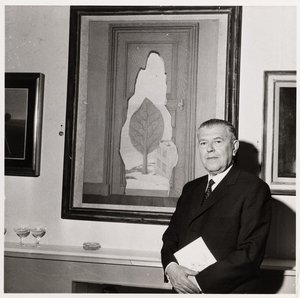
Рене Маґрітт
1898 - 1967 , Бельгія
Короткі факти
- Artistic Movement Or Style: Сюрреалізм
- Artists Or Movements Influenced By This Artist:
- Поп-арт
- Мінімалізм
- Концептуальне мистецтво
- Artists Who Influenced This Artist: ['Джорджо де Кіріко']
- Date Of Birth: 21 листопада 1898
- Date Of Death: 15 серпня 1967
- Full Name: René François Ghislain Magritte
- Nationality: Бельгійський
- Notable Artworks:
- Любовні
- Обман зображень
- Застиглий час
- Умова людини
- Place Of Birth: Лесене, Бельгія
Пов'язані статті

Arboreal Echoes: A Historical & Artistic Exploration of Trees in Painting
Explore the rich history of trees in painting! Discover symbolism, Romantic masterpieces by Caspar David Friedrich & beyond. A curated journey for art enthusiasts.

25 шедеврів Кацусіки Хокусая: мистецтво Японії для вашого дому | AllPaintingsStore
Відкрийте 25 культових робіт Кацусіки Хокусая! Гравюри укійо-е, легендарна "Хвиля", пейзажі Фудзі та неймовірний світ японського мистецтва. Репродукції картин преміум-класу для вашого дому на AllPaintingsStore.com.

Arboreal Echoes: A Historical & Artistic Exploration of Trees in Painting
Explore the rich history of trees in painting! Discover symbolism, Romantic masterpieces by Caspar David Friedrich & beyond. A curated journey for art enthusiasts.

Топ-25 шедеврів Джона Констебла: пейзажі Англії для вашого дому | AllPaintingsStore
Відкрийте для себе 25 найкращих шедеврів Джона Констебла! Англійські пейзажі, романтизм та емоційне світло в живописі. Репродукції картин високої якості для вашого дому від AllPaintingsStore.com. Дослідіть повну колекцію онлайн!

Топ-10 шедеврів романтичного пейзажу: мистецтво, що захоплює дух | AllPaintingsStore
Відкрийте для себе 10 шедеврів романтичного пейзажу! Каспар Давид Фрідріх, Тернер та інші майстри. Історія мистецтва, емоційні кольори природи та ідеї декору з AllPaintingsStore.com. Дослідіть колекцію онлайн!


