Гарантія повернення коштів протягом 100 днів Безкоштовна доставка по всьому світу
449 564витвори мистецтва 30 613художники 4 660музеї 32мови
Запис у каталозі

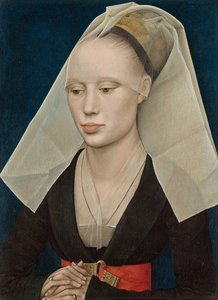
Visitation

1445. Oil On Canvas, 57.0 x 36.0 cm. Museum der bildenden Künste.

Рис. 1. Рогорій ван дер Вейден, Visitation, 1445. Показано як репродукцію, яку ви вказали: , .

§ 1Дані каталогу

Розміри
57.0 x 36.0 cm

§ 2Абстракція

Опис експоната

Біографія митця

Рогорій ван дер Вейден (1400-1464) – видатний майстер ранньої нідерландської живопису, відомий емоційними релігійними полотнами, насиченим кольором та реалістичним зображенням. Відкрийте для себе ‘Плачування’ та інші шедеври!

§ 3Коментар

A Moment of Grace: Rogier van der Weyden’s “Visitation” – A Window into Early Netherlandish Devotion

Rogier van der Weyden's "Visitation," painted in 1445, isn’t merely a depiction of a biblical scene; it’s a profound meditation on faith, familial connection, and the quiet miracle at the heart of Christian belief. This intimate panel, measuring just 57 x 36 cm, radiates an almost palpable serenity, achieved through Van der Weyden's masterful command of detail and his revolutionary approach to portraying human emotion. The painting captures the moment when Mary receives a visit from Elizabeth, foretold in the Old Testament prophecies – a pivotal event that sets the stage for the arrival of John the Baptist and ultimately, the birth of Jesus Christ. The scene unfolds within a modestly furnished interior, suggesting a domestic setting rather than a grand religious space, which immediately draws the viewer into a sense of personal connection with this sacred narrative.

Technical Brilliance and the Art of Texture

Van der Weyden’s reputation rests firmly on his unparalleled skill in rendering texture and form. Observe meticulously how he builds up the fabrics – the voluminous folds of Mary's robe, the delicate draping around Elizabeth – not with broad strokes but with countless layers of thin paint, creating an illusion of incredible depth and tactile realism. This technique, perfected through his earlier experience as a goldsmith, is evident in every shimmering thread and subtle crease. The use of *sfumato*, a hazy effect achieved by blending colors subtly, softens the edges and contributes to the painting’s overall sense of atmosphere and intimacy. The artist's attention to detail extends beyond the figures themselves; note the meticulously rendered wooden beams of the architectural background, the delicate leaves of the potted plants – each element contributing to the illusionistic space.

  • Oil Paint Innovation: “Visitation” is considered a landmark work in the development of oil painting. Van der Weyden’s use of oil allowed for greater luminosity and richer colors than previous tempera techniques, enhancing the realism he sought.
  • Modeling with Light & Shadow: The subtle play of light across the figures and objects creates a powerful sense of volume and depth, further emphasizing the three-dimensionality of the scene.

Symbolism Woven into the Scene – Birds, Plants, and the Language of Faith

Beyond the central narrative, “Visitation” is rich in symbolic detail. The two birds soaring above the figures are often interpreted as representing the Holy Spirit, a divine messenger connecting Mary and Elizabeth across time and space. The presence of the three potted plants – a lily, a rose, and a plant with rounded leaves – adds a layer of botanical symbolism. Lilies traditionally represent purity and virginity, while roses symbolize love and devotion. The third plant, often identified as a rue or similar herb, may allude to repentance and humility. The very act of greeting and conversation between the two women underscores the importance of community and mutual support within the Christian faith.

Emotional Resonance: A Portrait of Maternal Grace

What truly elevates “Visitation” is its ability to evoke a profound sense of empathy and connection. Van der Weyden masterfully captures the quiet dignity and gentle affection between Mary and Elizabeth. Their expressions are not overtly ecstatic, but rather convey a deep understanding and mutual respect born from shared faith and divine grace. The painting speaks to the enduring power of family bonds – both earthly and spiritual – and the transformative nature of belief. It’s a scene that invites contemplation on themes of hope, lineage, and the quiet miracles that shape our lives. This reproduction allows you to bring this powerful image into your home, experiencing its emotional depth and technical brilliance firsthand.

Питання та відповіді

Який розмір друку рекомендується для «Visitation»?

Для роботи «Visitation» роботи Рогорій ван дер Вейден рекомендується репродукція розміром Medium. Розмір можна змінювати, зберігаючи пропорції.

Чи є "Visitation" відомим твором Early Netherlandish Painting?

«Visitation» роботи Рогорій ван дер Вейден має рівень популярності Recognized і належить до течії Early Netherlandish Painting.

Для якої кімнати рекомендується «Visitation» роботи Рогорій ван дер Вейден, враховуючи її кольорову гаму?

Враховуючи його кольорову гаму Earthy, роботу «Visitation» рекомендується розміщувати в Living Room.
§ 4Художник

Рогорій ван дер Вейден

Рогорій ван дер Вейден

1400 - 1464, Бельгія

Короткі факти про Рогорій ван дер Вейден

  • Artistic Movement Or Style: Ранньонідерландське живопис
  • Artists Or Movements Influenced By This Artist:
    • Італьянський Ренесанс
    • Іспанська живопис
  • Artists Who Influenced This Artist:
    • Робер Кампін
    • Ян ван Ейк
  • Date Of Birth: c. 1400
  • Date Of Death: 1464
  • Full Name: Rogier van der Weyden
  • Nationality: Бельгійський
  • Notable Artworks:
    • Скорбна сцена
    • Плачуща Діва
    • Поховання Христа
  • Place Of Birth: Tournai, Бельгія

Біографія митця

A Master of Emotion: The Life and Legacy of Rogier van der Weyden

Rogier de la Pasture – known to history as Rogier van der Weyden – emerged from the bustling city of Tournai, Belgium, around 1400, as a pivotal figure in the burgeoning world of Early Netherlandish painting. While the details of his early life remain somewhat shrouded in mystery, it’s believed he initially honed his skills not with brush and pigment alone, but through a rigorous apprenticeship as a goldsmith. This formative training instilled within him an unwavering dedication to meticulous detail and a refined sensibility for craftsmanship – qualities that would become instantly recognizable hallmarks of his artistic style. The precision demanded by working with precious metals undoubtedly translated into the exquisite rendering of textures, fabrics, and expressions that define his most celebrated masterpieces. He wasn’t merely depicting reality; he was meticulously recreating it, imbued with an almost reverent attention to detail, striving to capture not just what *was*, but how it *felt*.

From Tournai to Brussels: A Rising Star

By 1427, van der Weyden had ascended to the rank of master within the esteemed Guild of Saint Luke in Tournai – a significant milestone that solidified his position as a professional artist and opened doors to prestigious commissions. His rise continued dramatically when he entered the service of Philip the Good, Duke of Burgundy, in 1435 – a patronage that would profoundly shape his career for the remainder of his life. Serving as court painter afforded him not only financial security and access to an elite circle of influence but also exposure to some of the most discerning eyes of the era. It was during this period, amidst the opulent courts of Burgundy, that van der Weyden’s artistic vision truly began to mature, moving away from the somewhat rigid conventions of earlier Netherlandish painters towards a more emotionally resonant and naturalistic approach. He wasn't simply painting religious scenes; he was striving to evoke genuine feeling in the viewer, to create an experience that transcended mere observation – a profound shift in the way art engaged with its audience.

The Language of Feeling: Style and Technique

Rogier van der Weyden’s artistic signature is immediately recognizable through several defining characteristics. His palette was remarkably rich and diverse, a vibrant tapestry of colors carefully chosen to avoid repetition and create depth and complexity within his compositions. He possessed an extraordinary ability to convey profound emotion – *pathos* – particularly in depictions of religious subjects like the *Lamentation*, where grief and sorrow are palpable. This emotional intensity wasn’t achieved through dramatic gestures or exaggerated expressions; rather, it was subtly woven into the very fabric of the painting, conveyed through delicate nuances of facial expression, body language, and composition. His figures, while adhering to the conventions of the time – often depicted with a dignified, almost sculptural quality – demonstrate a growing interest in realistic representation – not just in anatomy and drapery, but also in capturing the psychological states of his subjects. They possess an air of solemnity and reverence, lending them a timeless quality. He masterfully employed oil paint, building up layers of translucent glazes to achieve luminous effects and create a sense of depth and realism that was revolutionary for its time. The use of *chiaroscuro* – the dramatic interplay of light and shadow – further heightened the emotional impact of his works.

Notable Works and Enduring Masterpieces

Throughout his prolific career, van der Weyden produced numerous works that stand as testaments to his artistic prowess. *St Luke Drawing a Portrait of the Madonna*, housed in the Museum of Fine Arts, Boston, showcases his mastery of oil on panel and meticulous observation. The *Lamentation*, residing in the Musée des Beaux-Arts Tournai, Belgium, is perhaps his most celebrated work – a powerfully emotive depiction of Christ’s mourning, renowned for its dramatic use of *chiaroscuro* and its ability to evoke profound sorrow in the viewer. Multiple versions of *The Deposition* exist, each demonstrating his skill in conveying grief and drama with breathtaking sensitivity. The *Annunciation*, a masterpiece of refined style and attention to detail, exemplifies his ability to imbue even the most traditional subjects with a sense of freshness and vitality. And finally, the intricate and richly detailed *Bladelin Triptych* stands as a monumental achievement – a complex altarpiece that showcases the full range of van der Weyden’s artistic abilities. These works, and many others, continue to captivate audiences today, solidifying his position as one of the most important painters of the 15th century.

Lasting Influence: A Legacy Forged in Paint

Van der Weyden's influence extended far beyond the borders of his native Flanders. His works were highly sought after throughout Europe, particularly in Italy and Spain, where they introduced a new level of emotional depth and naturalism to local artistic traditions. Although his fame experienced a period of relative decline in the 17th century, a rediscovery during the 19th century cemented his place as one of the most important painters of the 15th century. He stands alongside Jan van Eyck and Robert Campin as one of the “three great” Early Flemish masters, each contributing uniquely to the development of Northern Renaissance art. His innovative techniques and emotionally charged compositions paved the way for future generations of artists, inspiring countless imitators and influencing the course of Western painting for centuries to come. He helped establish oil painting as the dominant medium and elevated the status of the artist within society, transforming them from skilled craftsmen into revered creators. Rogier van der Weyden’s legacy continues to resonate today, a testament to his enduring genius and his profound understanding of the human condition.

§ 5Схожі роботи

§ 6Запитання

Основна інформація

  • Artist: Rogier van der Weyden
  • Dimensions: 57 x 36 cm
  • Artistic style: Realistic detail
  • Notable elements: Birds, plants
  • Year: 1445

Квіз про мистецтво

У кожному запитанні лише одна правильна відповідь.

Запитання 1:
The painting ‘Visitation’ by Rogier van der Weyden primarily depicts which biblical event?
Запитання 2:
What is a notable characteristic of Rogier van der Weyden’s artistic style, evident in ‘Visitation’?
Запитання 3:
The presence of birds in the background of ‘Visitation’ likely symbolizes which concept?
Запитання 4:
In what year was ‘Visitation’ painted, according to the provided information?
Запитання 5:
Rogier van der Weyden’s early training as a goldsmith influenced his artistic approach. What specific quality did this training likely contribute to his work?

§ 7Цитувати цей запис

AllPaintingsStore.com, “Рогорій ван дер Вейден, Visitation (1445)”, https://allpaintingsstore.com/uk/art/rogier-van-der-weyden-visitation-8Y3M4W-en/ArtistReproduction/ (дата перегляду 6 Жовтень 2026).

§ 8Репродукція

Олійная репродукція ручної роботи

Написана вручну олією на полотні у вашому розмірі та рамі, виготовлена на замовлення нашими художниками. ( Перейти до друку Перейти до цифрових зображень)

Це зазначено на маржі замовного листа; поточний стан цього листа такий:

Visitation

Матеріал репродукції

Розмір репродукції

-

Видатний майстер-художник

Більше деталізації, витонченості та додаткового часу на створення твору

-

Рама для репродукції

-

-

Для творів мистецтва або репродукцій, розмір яких перевищує 105 см (приблизно 41 дюйм) з будь-якого боку, рама доставляється у вигляді розібраного комплекту. Такий метод гарантує безпечну доставку та запобігає пошкодженням під час транспортування.

Потребує професійного збирання — це не продукт для самостійного виготовлення (DIY).
Комплект має бути зібраний, а полотно натягнуте досвідченим майстром багетних робіт із використанням клейового дерева (не входить у комплект), щипців для натягування полотна та затискачів, щоб підрамник залишався рівним під час висихання клею. Неправильне збирання або нерівномірне натягування полотна може призвести до незворотного пошкодження твору мистецтва, що не підпадає під дію нашої гарантії.

  • У комплект входять усі бруски з цільного дерева, точно вирізані за розміром.

  • Збирається за допомогою гвинтів, що входять до комплекту, а також клейового розчину для кутових з'єднань, який не входить до комплекту і має бути підготовлений вашим майстром.

  • Потрібні професійні інструменти, які не входять до комплекту: щипці для натягування полотна (натягувач) та затискачі, щоб утримувати рейки рівно під час висихання клею.

Важливо:
Для з'єднання кутів потрібен клей для дерева, перекладини необхідно затиснути струбцинами до повного висихання клею, а для натягування полотна на зібрану раму знадобляться щипці для натягування полотна. Жоден із цих інструментів не входить до комплекту. Будь ласка, проконсультуйтеся з досвідченим майстром багетного оформлення перед замовленням рами такого розміру.

Етикетка експоната

-

-

Захисний лак

Глянцевий лак (підсилює яскравість кольорів, захищає від світла та вологи)

-

Персоналізувати мій витвір

Приклади можливих змін: заміна обличчя на фото клієнта; додавання домашньої тварини (наприклад, заміна кота на собаку); додавання прихованого повідомлення на фоні; зміна пейзажу або елементів фону.

-

Прискорено

Доставка по всьому світу () за 3–4 тижні замість стандартних 5 тижнів. (3 Листопад). Без компромісів у якості.

-

Експрес-доставка

Доставка по всьому світу () протягом 5 тижнів. (10 Листопад).

Включено в ціну

Підсумкова вартість

₴ 11628

До кожного замовлення додається

  • Безкоштовна експрес-доставка по всьому світу
  • Високоякісне лляне полотно
  • Повне страхове покриття доставки
  • Гарантія повернення митних зборів
  • Гарантія точного відтворення кольорів
  • Політика повернення протягом 100 днів (лише у разі виявлення дефектів)
  • Гарантія повернення 100% коштів
  • Пропозиція на оптові замовлення
Форма замовлення